Why the Traditional Latin Mass and the SSPX Are Growing — And the Ancient Churches Hiding in Plain Sight
Liturgy • Young Catholics • Growth Data • Eastern Catholic Churches • The Maronite Tradition
Why the Traditional Latin Mass and the SSPX Are Growing — And the Ancient Churches Hiding in Plain Sight
The numbers are no longer anecdotal. Latin Mass parishes are filling with young Catholics, and the SSPX has nearly quadrupled its priesthood since 1988. But supply has not kept pace with demand, and reverent, ancient worship is still hard to find. There is a second door standing wide open that most Catholics never think to knock on: the twenty-three Eastern Catholic churches, which Rome itself commanded to stay ancient. The Maronite Church, which prays the words of consecration in a language kin to the one Christ Himself spoke, is only one example.
At a Glance
- TLM Attendance
- 98% weekly Mass attendance among 18–39-year-old TLM attendees, per a Diocese of Bridgeport survey
- SSPX Growth Since 1988
- 202 → 733 priests worldwide, roughly a 3.6-fold increase
- SSPX Mass Locations
- 798 worldwide as of Nov. 2025, plus 79 more via affiliated communities
- The Bottleneck
- ~450 active TLM venues nationwide, after the 2021 and 2023 Vatican restrictions
- Vatican II’s Instruction
- Orientalium Ecclesiarum (1964) told Eastern Catholics to restore, not abandon, their ancient traditions
- The Overlooked Answer
- 23 Eastern Catholic churches, fully Catholic, fully in communion with Rome
- The Example
- The Maronite Church — Patriarchate of Antioch, never latinized into the Roman Rite
- The Language
- Syriac — the closest living liturgical relative of the Aramaic Christ spoke
- Good to Know
- Attending any Eastern Catholic Divine Liturgy fulfills a Catholic’s Sunday obligation
A Wider Revival: Young Americans Are Returning to Church
Before looking at the Latin Mass specifically, it helps to see the larger picture it belongs to. Across the United States, dioceses are reporting conversion numbers that have not been seen in decades. The Archdiocese of Newark reports a 72 percent increase in adult conversions over the past three years. The Diocese of Mobile, Alabama saw 447 converts in 2025, its highest count since at least 2014, and 603 in 2026, a 35 percent jump over the year before. The Diocese of Altoona-Johnstown, Pennsylvania recorded 188 converts entering the Church in 2026, an 84 percent increase over 2025’s 102. An ongoing Harvard election study found the share of Gen Z respondents identifying as Catholic rose from 15 percent in 2022 to 21 percent in 2023, surpassing the millennial share for the first time.
The pattern is not confined to America. In England, church attendance among 18-to-24-year-olds quadrupled from 4 percent in 2018 to 16 percent in 2024. In France, adult Catholic baptisms hit a record 10,384 at Easter 2025, a 45 percent increase over 2024, with 18-to-25-year-olds forming the largest single age group among new converts for the first time. Eastern Orthodoxy, a separate Christian communion not in communion with Rome, has reported its own surge: one widely cited report found a 78 percent increase in converts to Orthodoxy in 2022 compared with 2019, concentrated heavily among young men, even though Orthodox Christians still make up only about 1 percent of the American population according to Pew Research.
Researchers who study this trend keep landing on the same word: tradition. Sociologist Kristy Nabhan-Warren of the University of Iowa has observed that the churches drawing the highest rates of attendance tend to be the ones with, in her words, a strong sense of “tradition — capital T.” Within that wider movement, two specific traditionalist Catholic phenomena stand out for how well they are documented: the Traditional Latin Mass, and the Society of Saint Pius X.
Part II
The Traditional Latin Mass: The Numbers Behind the Movement
Something unexpected has been happening in parishes that still offer the old rite. The pews are not full of elderly Catholics remembering their childhood. They are full of young families, converts, and twenty-somethings who never once attended the pre-1970 Mass before deciding to go looking for it. A survey conducted by Fr. Donald Kloster of the Diocese of Bridgeport, covering nearly 1,800 respondents across 39 states, found weekly Mass attendance among 18-to-39-year-olds who attend the Traditional Latin Mass running close to 98 percent, at a time when weekly attendance among the same age group in the Church at large sits closer to a quarter. When Fr. Kloster asked what drew them, the single largest answer, named by more respondents than any other reason, was simple: reverence.
The pattern is not confined to America. A 2022 study by the Canadian research group Cardus found young Catholics twice as likely as their parents’ generation to attend Mass at least monthly, with researchers noting that parishes offering the Latin Mass were, in the words of one priest interviewed, “not only growing, they are bursting at the seams.” In Miami, the Latin Mass community that now worships at the Belen Jesuit chapel has nearly tripled in six years, from an average of 112 congregants in 2017 to 320 in 2023. And every Pentecost weekend, tens of thousands of young Catholics walk the sixty miles from Paris to Chartres behind the old Missal; the 2025 pilgrimage drew roughly 19,000 people with an average age of just 20, a record that grew again from the year before.
The reasons young Catholics give are strikingly consistent: silence instead of noise, mystery instead of explanation, continuity instead of constant revision, sacrifice instead of performance. Many were raised in a Church that spent five decades reinventing its own liturgy every few years, and they are tired of worship that feels improvised. What they are looking for, whether or not they use the word, is tradition — worship handed down rather than workshopped.
Part III
The SSPX: A Society That Has Nearly Quadrupled Since 1988
Whatever one makes of the Society of Saint Pius X’s canonical situation, its own published statistics tell an unambiguous growth story. In 1988, the year its founder, Archbishop Marcel Lefebvre, consecrated four bishops without papal mandate, the Society counted 202 priests, 213 seminarians, 28 oblates, and 13 brothers worldwide. By 2013, that had grown to 575 priests and 217 seminarians, operating out of 105 priories and serving 525 chapels and mission stations, along with 112 schools, including two universities and six seminaries.
The growth has continued since. As of November 1, 2025, the SSPX reports 733 priests, 264 seminarians, 145 brothers, 250 sisters, and 88 oblate sisters, a total membership of 1,482 spanning 50 nationalities. Its worldwide Mass locations now number 798, with a further 79 served through affiliated “Friendly Communities.” That is roughly a 3.6-fold increase in priests in under forty years, and a jump of more than 270 additional Mass locations in just the twelve years between 2013 and 2025.
In the United States specifically, the SSPX’s own August 2026 statistics report 25 priories, 120 chapels, and 2 retreat centers spread across 40 of the 50 states, served by 142 priests and 110 seminarians, with an estimated 35,000 laity attending chapels regularly. Whatever a reader’s view of the Society’s canonical standing, the demand it is meeting is real, sustained, and growing across nearly four decades.
Part IV
Why Reverent Latin Worship Is Still Hard to Find
The demand is real, but the diocesan and FSSP/ICKSP supply of the old rite has been shrinking, not growing, over the same years the SSPX has expanded. In July 2021, Pope Francis issued Traditionis Custodes, placing the old Mass under the direct authority of diocesan bishops and requiring Vatican approval for new locations. In February 2023, a further set of restrictions tightened the rules again, removing much of the discretion bishops had used to keep parish-based Latin Masses open. The practical result, reported in diocese after diocese since, has been closures: communities relocated out of parish churches into side chapels, seminary buildings, or, in some cases, communities that simply lost their Mass altogether.
The Latin Mass Directory, the most complete public listing available, currently tracks roughly 450 active Traditional Latin Mass venues across the entire United States — diocesan parishes, along with communities like the Fraternity of Saint Peter (FSSP) and the Institute of Christ the King Sovereign Priest (ICKSP) that celebrate the old rite exclusively. Spread across fifty states and more than three thousand US counties, that is not many, and it stands in direct contrast to the SSPX’s own 120 U.S. chapels, which operate outside the same restrictions because they answer to their own internal structure rather than to diocesan bishops. For a growing number of Catholics, especially outside major metro areas, the nearest diocesan or FSSP Traditional Latin Mass is an hour or more away, offered once a month, or not offered at all.
So the honest question a lot of readers are asking is not “is the Latin Mass growing” but “what do I do if I still can’t find one near me.” And the answer most Catholics never consider is sitting closer than they think.
Part V
The Overlooked Answer: Any Eastern Catholic Church
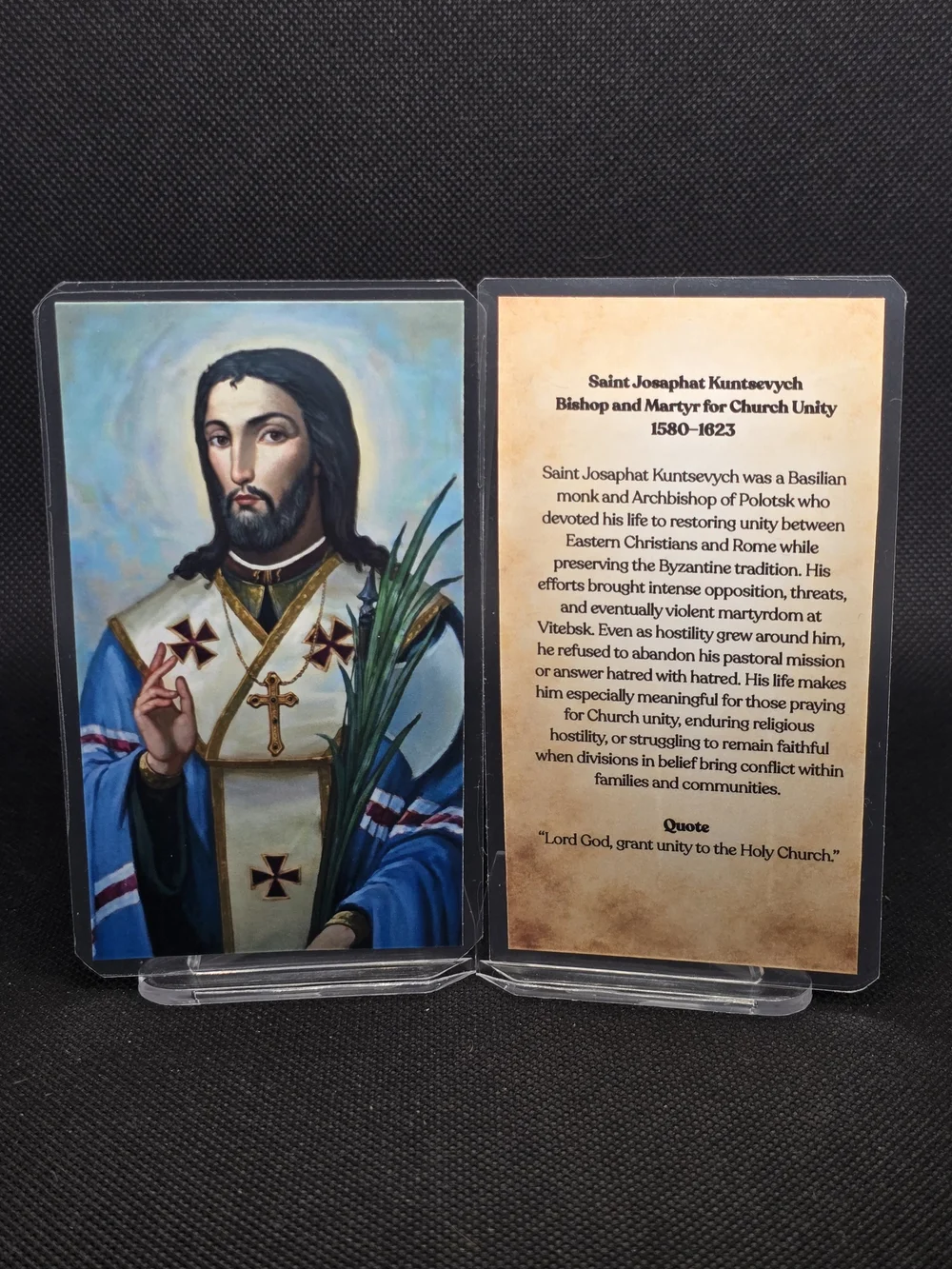
Here is the detail almost nobody explains to Catholics searching for the old Latin Mass: the Roman Rite was not the only rite at the Second Vatican Council, and it was not the only rite the council spoke to. While the Latin Church went on to reform its liturgy into what became the Novus Ordo Mass in 1969 and 1970, the council issued a separate decree, Orientalium Ecclesiarum, in November 1964, addressed specifically to the twenty-three Eastern Catholic churches — churches fully Catholic, fully in communion with the Pope, sharing the same sacraments and the same Eucharist as the Latin Church, but worshipping according to their own ancient traditions: Byzantine, Alexandrian, Armenian, Chaldean, and Antiochene.
Instead of asking these churches to modernize alongside Rome, the council did the opposite. It instructed them to preserve and, where it had been eroded by centuries of Latin influence, to restore their own ancient patrimony. Their liturgies were never touched by the reforms of 1969 and 1970. A Melkite, Ukrainian, Chaldean, Ruthenian, or Maronite Divine Liturgy celebrated in an American parish today is substantially the same liturgy celebrated in that tradition a thousand years ago, in many of its elements reaching back to the apostolic era.
That means a Catholic who cannot find a Traditional Latin Mass does not actually need to find one. A Catholic in full communion with Rome fulfills the Sunday obligation at any Catholic Divine Liturgy, in any of the twenty-three sui iuris churches, Latin or Eastern. For readers who want the reverence, the incense, the ancient chant, and the unbroken continuity that drew them to the Latin Mass in the first place, an Eastern Catholic parish near them, of whichever tradition happens to be closest, may already be doing, openly and without controversy, everything they went looking for. This article uses the Maronite Church as one detailed example further below, but Melkite, Ukrainian Greek Catholic, Chaldean, Syro-Malabar, Ruthenian Byzantine, Romanian Greek Catholic, and Syro-Malankara parishes all offer the same fundamental gift.
Part VI
Honest Numbers: Where Eastern Catholic Growth Is Real (and Where It Isn’t)
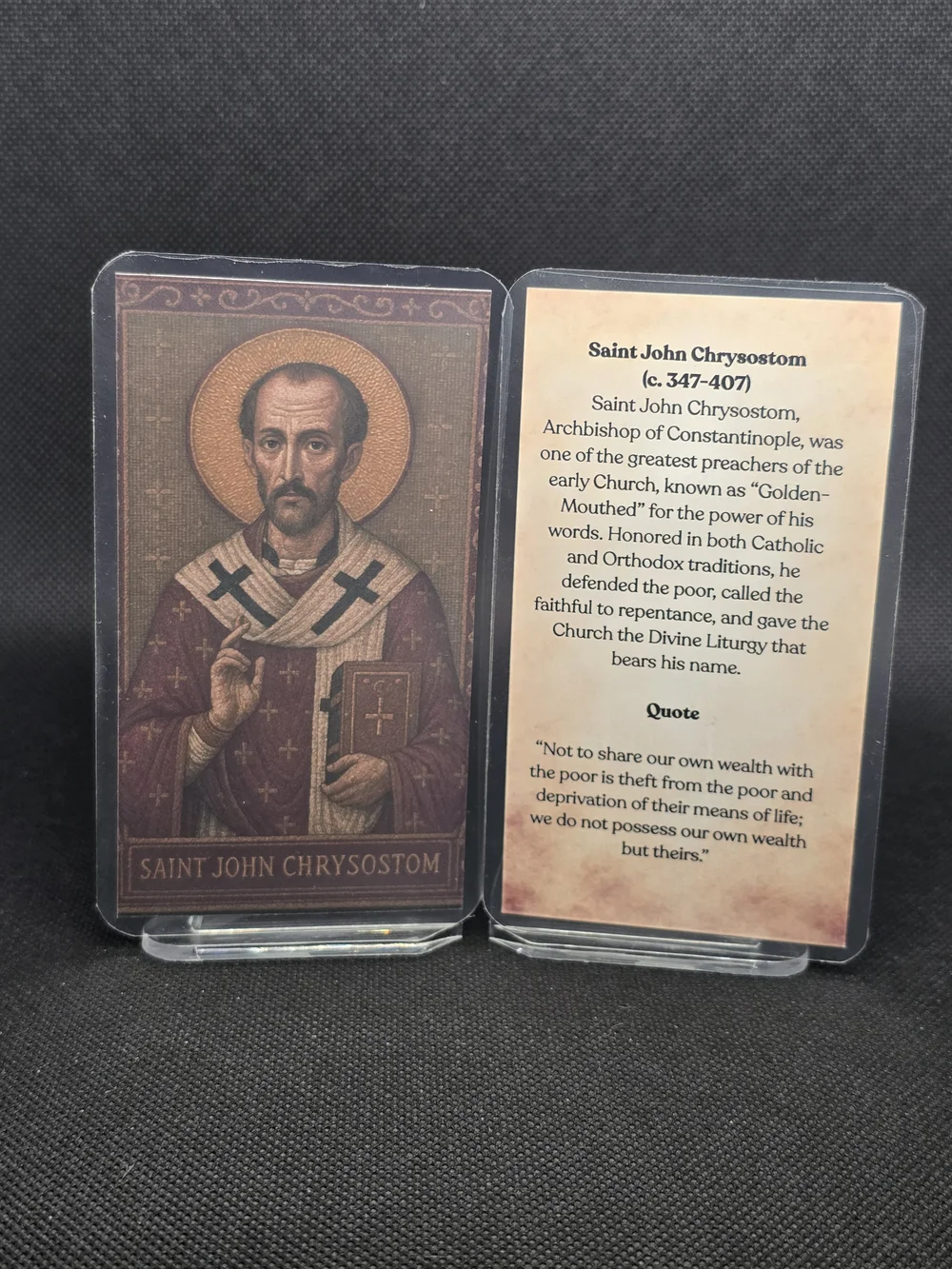
It would be easy, and dishonest, to claim every Eastern Catholic parish in America is booming. The real picture is more interesting than that, and worth stating plainly. CNEWA, the Catholic Near East Welfare Association, a papal agency that has reported on Eastern Christianity for decades, documented in its magazine ONE that Eastern Catholic congregations in North America have been growing with new members who have no family or historic ties to these churches at all — a trend distinct from the immigration-driven growth some parishes have also seen from Ukraine and Lebanon in recent years.
One example from that reporting: a Roman Catholic raised in a French-Canadian family was drawn to the Ukrainian Greek Catholic Church by the beauty of its liturgy, had his children baptized there, and eventually changed his own canonical ascription to the Ukrainian Church. At the Ukrainian Greek Catholic Shrine of Saint John the Baptist he now attends, non-Ukrainians make up close to half the congregation. Similar convert-driven growth has been reported within Melkite Greek Catholic communities in North America, including outreach missions started from scratch by families with no prior connection to the tradition.
At the same time, some smaller Eastern Catholic communities, particularly older Ruthenian Byzantine Catholic parishes built around a single immigrant population decades ago, have faced real decline as that original ethnic base ages, a pattern acknowledged openly within the Ruthenian Church itself. The honest conclusion is not that every Eastern Catholic parish is thriving, but that meaningful, convert-driven growth is genuinely happening in a number of these traditions, and the only way to know what is happening at the parish nearest you is to visit it.
Part VII
One Example: The Maronite Church of Antioch
Among the twenty-three Eastern Catholic churches, the Maronite Church makes an especially good example, because of how directly it traces back to the earliest days of the faith. Its origin lies with Saint Maron, a hermit monk who lived near Antioch in Syria in the late fourth and early fifth centuries — the very city where, according to the Acts of the Apostles, believers were first called Christians. Disciples gathered around his memory after his death, forming a monastic community that grew into a church of its own. Saint John Maron, consecrated as the first Maronite Patriarch of Antioch around the year 685, organized and led that community through a turbulent period of imperial and doctrinal conflict, and it was in this era that the Maronites withdrew into the mountains of Lebanon, where geography offered the protection Byzantine and later Muslim rule could not.
A Church That Claims It Never Broke Away
Unlike most Eastern Catholic churches, which trace a specific historical reunion with Rome after a period of separation from the Orthodox churches they had once belonged to, the Maronite Church holds that it has never been out of communion with the See of Peter at all. It is a claim central to Maronite identity, and while some historians of the medieval period debate how continuous that communion truly was before ties were formally reaffirmed through contact with the Crusaders in the twelfth century, the Maronite Church remains the only Eastern Catholic church with no Orthodox counterpart — no parallel body that split away from it. There is no such thing as a “Maronite Orthodox Church.” There is only the Maronite Church, fully Catholic from its own account of its beginning to today.
Today the Maronite Patriarch of Antioch and All the East resides at Bkerke, overlooking the Mediterranean north of Beirut, and leads roughly three million Maronite faithful worldwide, a majority of them now living outside Lebanon in a global diaspora that reaches the United States, Brazil, Australia, Canada, and beyond.
Part VIII
The Language of Christ: Syriac in the Maronite Liturgy
This is the detail that sets the Maronite Church apart from every other option on this list, including the Latin Mass itself. The Roman Rite prays in Latin, the liturgical language of the empire that ruled over, tried, and crucified Christ. The Maronite Church prays, in large part, in Syriac — a language that belongs to the same Aramaic family Jesus Himself spoke as He walked, taught, and prayed in Galilee and Judea.
The precise relationship deserves honesty rather than exaggeration: Christ spoke a Galilean dialect of western Aramaic, while liturgical Syriac descends from the eastern Aramaic dialect once spoken around Edessa, a few centuries removed and a different region over. They are not literally identical. But they are close kin within a small family of languages, closer to one another than either is to Latin, Greek, or English, and much of the core vocabulary is unchanged. The Syriac word for “body,” pagra, and the word for “blood,” dma, are essentially the same words that would have left Christ’s own lips at the Last Supper. When a Maronite priest chants the words of consecration in Syriac, he is praying in a tongue linguistically closer to the language Jesus actually spoke than any Mass offered in Latin, Greek, or English has ever been.
One of the oldest hymns in continuous Christian use, the Trisagion, is still sung in Syriac at the beginning of the Maronite Holy Qurbono, the Divine Liturgy, exactly as it has been sung for roughly fifteen hundred years.
Qadishat Aloho, Qadishat Hayeltono, Qadishat Lomoyuto.
Holy God, Holy Mighty One, Holy Immortal One, have mercy on us.
Sung by Christians in this same language for roughly fifteen centuries, and still sung today in Maronite parishes across the United States and around the world.
Part IX
What Ancient Worship Feels Like
Walk into a Maronite parish, or a Melkite, Ukrainian, or Chaldean one, on a Sunday and the resemblance to the reverence Latin Mass Catholics describe is immediate: incense rising before the altar, chant carrying the prayers instead of spoken announcement, a priest facing the altar for significant portions of the liturgy, and a structure that has not been redesigned by a committee in living memory. The philosopher Charles Malik once described the spirit of the Maronite liturgy specifically as belonging to the people rather than imposed from above — simple, sung, and sincere, free of what he called “human embellishments.” The same could be said, in its own idiom, of nearly every Eastern Catholic tradition.
Most American Maronite parishes today pray the Liturgy of the Word in English or Arabic, so visitors are not left guessing at the readings or homily. But the heart of the Mass — the Anaphora, the words of consecration, and ancient hymns such as the Trisagion above — still carry the Syriac that has marked this liturgy since its earliest centuries. For a Catholic drawn to the old Latin Mass because it feels unbroken, handed down rather than composed, the Maronite Holy Qurbono, and its Eastern Catholic counterparts in other traditions, offer that same unbroken quality.
Part X
Saints of the Lebanese Mountain
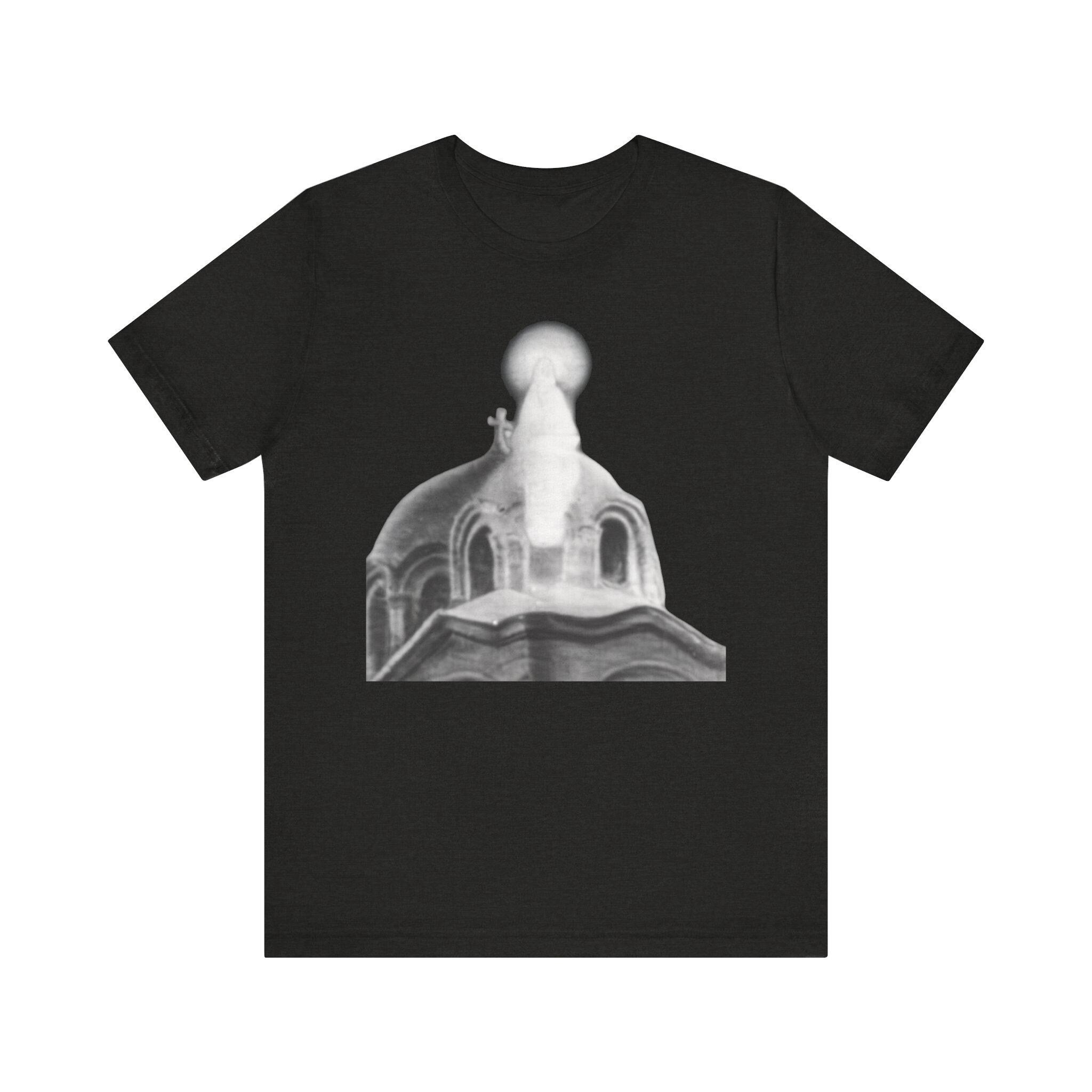
A church is known by the holiness it produces, and the Maronite tradition has produced saints whose stories carry the same weight of endurance that marks its history. Saint Rafqa (Rebecca Choboq Ar-Rayès, 1832–1914) was a Maronite religious sister who, after praying to share in Christ’s suffering, lost her sight and was eventually paralyzed, offering her decades of physical affliction in silence and prayer until her canonization by Pope John Paul II in 2001. She is invoked today especially by the sick and suffering.
The Massabki Brothers — Francis, Raphael, and Abdel Mooti Massabki — were laymen, not clergy, martyred in Damascus in 1860 for refusing to renounce their Catholic faith during a wave of anti-Christian violence. Beatified in 1926, they stand as a reminder that Maronite sanctity was never confined to monasteries; it was lived, and died for, in ordinary homes and workshops. Every Eastern Catholic tradition carries saints of its own with this same character, and getting to know the saints of a nearby Eastern Catholic parish is often the most natural first step into its worship.
Part XI
How to Find an Eastern Catholic Parish Near You
For readers who want to start with the Maronite Church specifically, the United States is divided into two Maronite eparchies. The Eparchy of Saint Maron of Brooklyn covers the eastern half of the country, and the Eparchy of Our Lady of Lebanon of Los Angeles covers the western half. Both maintain parish directories that list every Maronite church under their care, and a search for “Maronite Catholic Church near me” will usually turn up the nearest community even in cities without a large Lebanese-American population.
Honesty is worth including here, too: Maronite parishes, like Latin Mass parishes, are not evenly spread across the country. They cluster where Lebanese-American communities settled — the Northeast, the Rust Belt, South Florida, Texas, and Southern California in particular — and readers in other regions may need to drive some distance, just as many Latin Mass Catholics already do. If a Maronite parish is not within reach, widen the search to any Eastern Catholic parish nearby — Melkite, Ukrainian Greek Catholic, Syro-Malabar, Chaldean, Ruthenian Byzantine, or Romanian Greek Catholic communities all offer the same essential gift: an ancient, unbroken liturgy, fully Catholic, fully reverent, and fully open to any Catholic who walks through the door. A simple search for “Eastern Catholic church near me,” or a look at your own diocese’s list of parishes for any non-Roman rite listed, is often all it takes to find one.
A Resource
Go Deeper: How the War Inside the Church Reached the Liturgy
Readers who want to understand why the decades around Vatican II left so many Catholics feeling like something ancient had been quietly dismantled will find a careful, source-by-source investigation in The War Within the Church: Communism, Infiltration, Persecution, Resistance, and the Spiritual Battle for Catholicism. Drawing on the opened archives of postwar Eastern Europe, the book traces documented Communist intelligence penetration of seminaries, episcopal delegations, and Church institutions, while explicitly refusing to overclaim: it distinguishes a proven agent from a mere surveillance target, and influence upon a commission from proof that a single hidden hand wrote Catholic teaching. It is the same standard of evidence this article tries to hold itself to, applied across four hundred pages of documented history.

Appendix
Frequently Asked Questions
The Door Was Never Closed. It Was Simply Never Pointed Out.
Every Sunday, in parishes most Catholics drive past without a second glance, priests stand before altars chanting words that have not changed in fifteen hundred years, in languages kin to the ones the earliest Christians prayed in. You do not need a special dispensation to walk in. You do not need to wait for a bishop to expand access, or drive two hours to the nearest Traditional Latin Mass, or hope a diocese does not close the one parish that still offers it. The ancient churches that Rome commanded to stay ancient have been open the whole time, in dozens of traditions, all across the country.
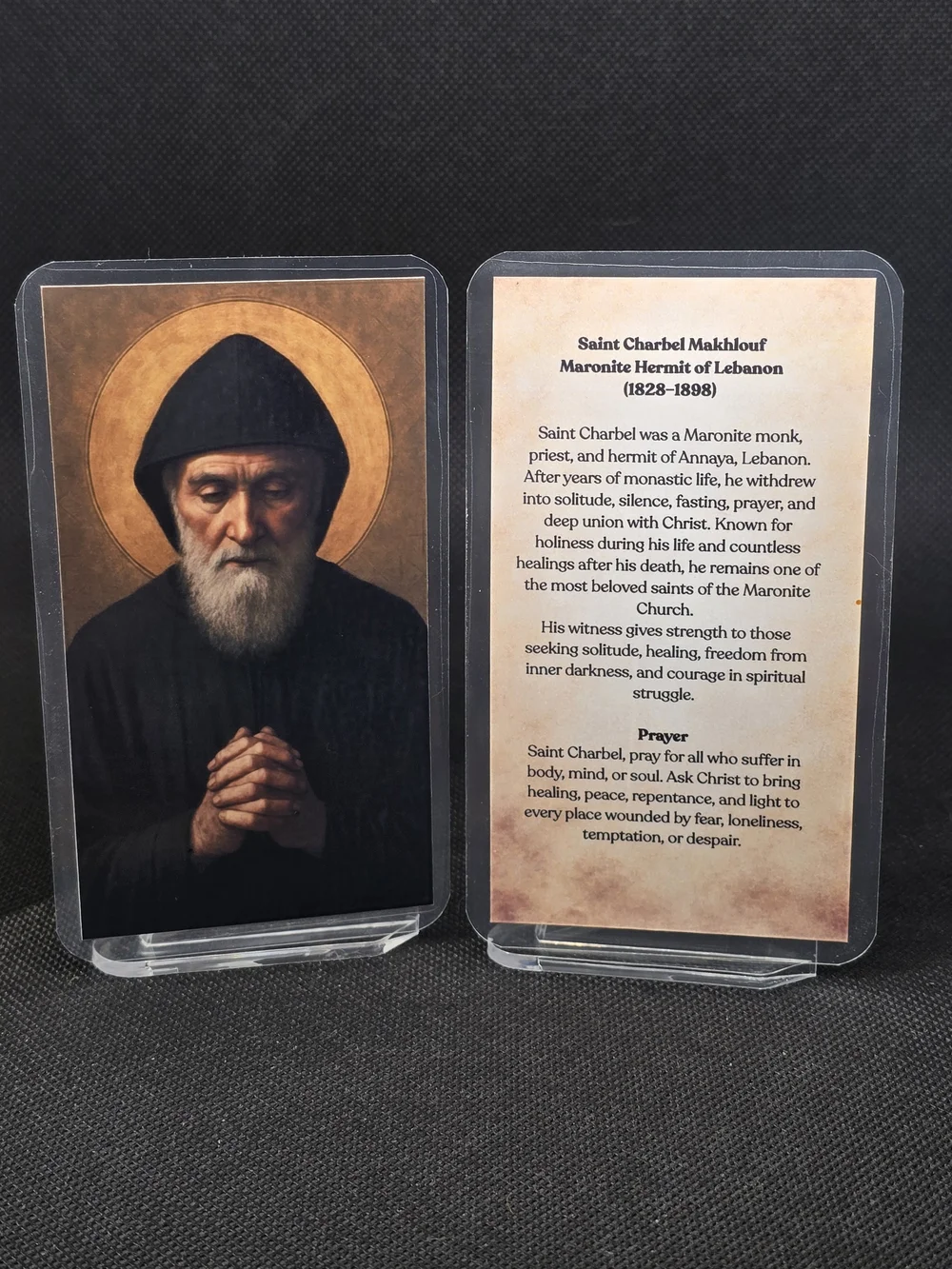
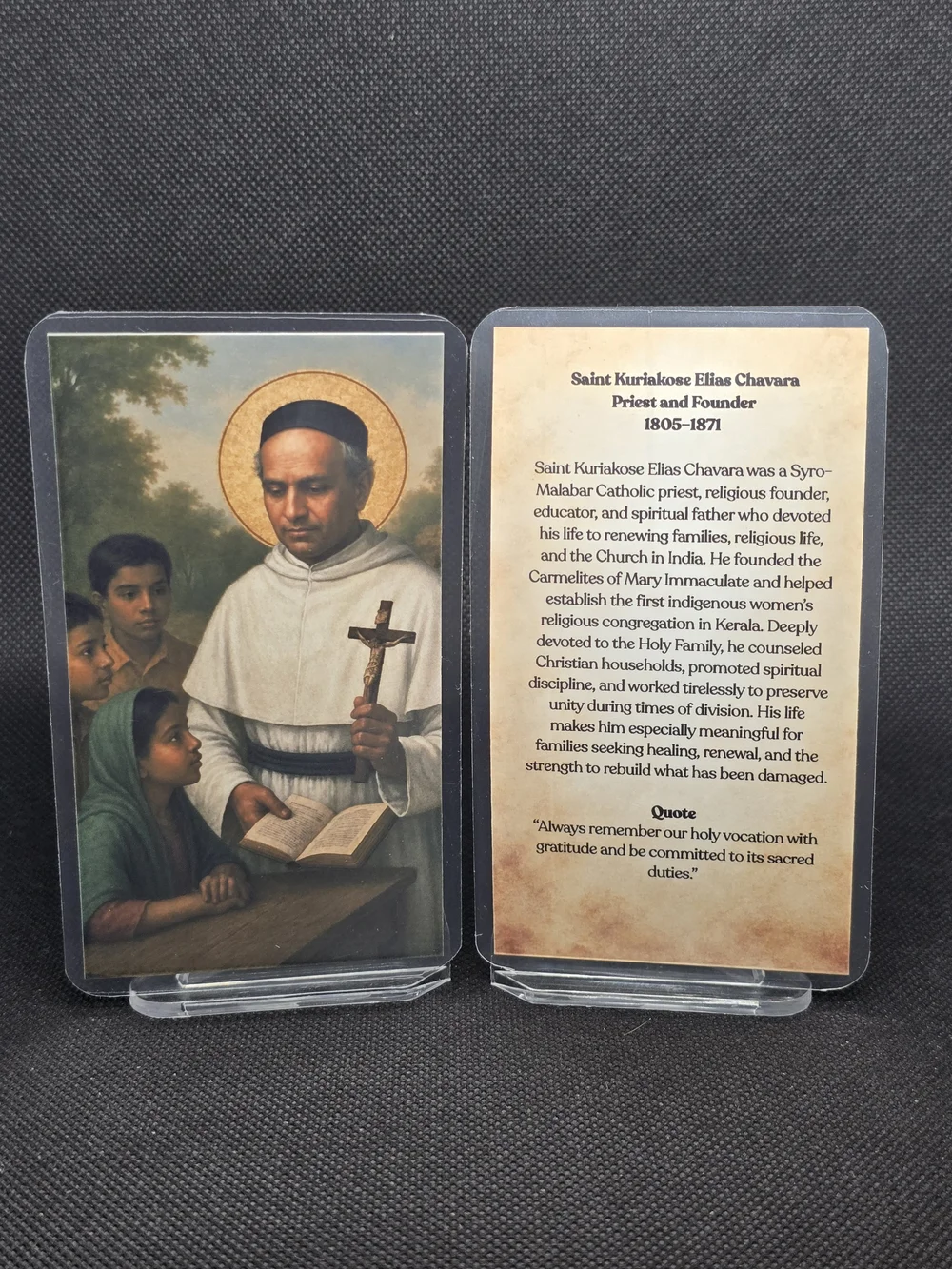
Begin with the saints who walked one of those traditions before you. Carry Saint Charbel’s prayer card into your own search for silence and reverence, and let Saint Rafqa’s intercede for whatever you carry that words cannot fully name.
Get the Saint Charbel Prayer Card →