Our Lady of Reconciliation at Finca Betania: The Complete Guide
Roman Catholic • Approved Apparition • March 25, 1976 – 1990 • Finca Betania, Miranda State, Venezuela • Approved November 21, 1987
Our Lady of Reconciliation at Finca Betania: The Complete Guide — 150 Simultaneous Witnesses, the Mystic María Esperanza, a Farm Named Bethany, the Most Rapidly Approved Marian Apparition of the 20th Century, and the Message That the World Has Never Needed More
On a Sunday afternoon in March 1984, on a Venezuelan farm named after the village where Jesus raised Lazarus from the dead, approximately 150 people of every age and profession ran to a grotto by a tropical waterfall and saw the Virgin Mary appear and disappear seven times. She called herself the Reconciler of All Peoples and Nations. The bishop investigated for three years, interviewed nearly 500 witnesses himself, gathered 381 sworn declarations, and approved it. This is everything about the most consequential and least-known approved Marian apparition of the twentieth century.
Our Lady of Reconciliation at Finca Betania — At a Glance
- Location
- Finca Betania, near Cuá, Miranda State, Venezuela • ~65 km from Caracas
- Apparition Period
- March 25, 1976 (first) through 1990 • 31 apparitions to primary seer
- Primary Seer
- María Esperanza Medrano de Bianchini • Born November 22, 1928 • Died August 7, 2004
- Major Public Apparition
- March 25, 1984 • Feast of the Annunciation • ~150 simultaneous witnesses • 7 appearances, 3:00 PM–dusk
- Total Witnesses
- ~1,000–2,000 over full period • 381 sworn declarations gathered • ~490 interviewed by bishop
- Witnesses’ Diversity
- Children • Physicians • Psychiatrists • Engineers • Judges • Military officers • Psychologists • College students
- Our Lady’s Title
- “Mary, Virgin and Mother Reconciler of All Peoples and Nations”
- Her Appearance
- White robe • Blue sash • Veil revealing hair • Arms open • Rays from hands • Miraculous Medal around her neck
- Core Message
- Reconciliation • Conversion • Rosary • Sacrament of Reconciliation • Eucharist • Prayer for world peace • Care for the poor
- Church Approval
- November 21, 1987 • Bishop Pío Bello Ricardo, Diocese of Los Teques • 3 years after major apparition
- Declaration
- “Authentic, of supernatural character and divine origin” • Fastest major Marian approval of 20th century
- The Site
- Grotto by a tropical waterfall • Tarma River • Dense vegetation • Open chapel • Now a Diocesan Marian Sanctuary
- María Esperanza
- Mystic • Wife • Mother of 7 • Grandmother of 20 • Stigmata • Miraculous roses • Declared Venerable June 21, 2021
- Feast Day
- March 25 (Feast of the Annunciation — date of both first and major public apparition)
What Is Our Lady of Reconciliation at Finca Betania? The Apparition the World Has Yet to Fully Discover
On the afternoon of Sunday, March 25, 1984 — the Feast of the Annunciation, the feast celebrating the moment when God became flesh in the womb of a woman who said yes — approximately 150 people in a Venezuelan farm near Caracas ran from their lunch toward a tropical grotto by a small waterfall and saw the Virgin Mary. They did not see a glow in the distance or a shimmer in the air. They saw her clearly and distinctly. She appeared seven times over the course of that afternoon and into the evening. Every person who was there gave a consistent written and oral account of what they had seen. Their accounts were personally investigated by a bishop who interviewed nearly 500 witnesses himself, gathered 381 sworn declarations, consulted Rome, and declared the event supernatural on November 21, 1987 — three years after it occurred.
The woman who appeared over the waterfall at Finca Betania gave herself a name: Mary, Virgin and Mother Reconciler of All Peoples and Nations. This is not a name she had used at Lourdes or Fátima or Knock or Kibeho. She chose it for Venezuela, in 1984, in the middle of the Cold War, in the middle of a century that had been defined by division — between nations, between ideologies, between families, between the Church and the world, between God and the hearts that had forgotten him. She came to reconcile. And she chose for her primary messenger a Venezuelan mystic named María Esperanza Medrano de Bianchini, who had been preparing for this mission since childhood, who had met Padre Pio at San Giovanni Rotondo, who had been married in a side chapel of St. Peter's Basilica by Pope Pius XII's personal authorization, who bore the stigmata, who produced miraculous roses, who read souls, who raised seven children, and who spent decades pointing everyone who would listen toward a waterfall in Miranda State and the Lady who appeared there.
Our Lady of Reconciliation at Finca Betania is the most significant and the least known of the approved Marian apparitions of the twentieth century in the English-speaking world. This article exists to change that. What follows is the most complete English-language account of the Betania apparitions: every verifiable detail of every aspect of the event, the full life of its primary seer, the Church investigation, the bishop's declaration, the theological significance, and the prayers that this Lady who came to reconcile all peoples has been asking for since she first appeared at a tropical grotto in Venezuela and said — with open arms, rays from her hands, and a medal around her neck — that she had come to reconcile them all.
Part II
Venezuela and the World in 1984: The Context of the Reconciliation
To understand why Our Lady chose to come to Venezuela in 1984 calling herself the Reconciler of All Peoples and Nations, you need to understand the world of 1984 and the specific world of Latin America within it.
The Cold War in 1984 was not a geopolitical abstraction; it was a lived reality in Latin America. The continent had been the theatre of American and Soviet competition for ideological and strategic influence throughout the 1970s and into the 1980s. Nicaragua had its Sandinista revolution in 1979; El Salvador was in a devastating civil war; Guatemala’s government was conducting operations against indigenous populations; Argentina was recovering from its military dictatorship and its disappeared. Colombia’s drug violence was escalating into a crisis that would define the decade. In 1984, the United States under President Ronald Reagan and the Soviet Union under Konstantin Chernenko were in the deepest freeze of Cold War hostility since the Cuban Missile Crisis: Reagan had just deployed missiles in Europe, nuclear war scenarios were widely discussed in popular culture, and the fear of an imminent global conflict was not irrational. The world in 1984 needed, with urgency, a Reconciler.
Venezuela itself in 1984 was more stable than many of its neighbors but was navigating its own tensions: the country’s oil-based economy was under significant strain as oil prices fell, social tensions were increasing, and the political system that had characterized Venezuela since 1958 was beginning to show the strains that would produce a very different political landscape in the following decades. Venezuela was also a deeply Catholic country, one where Marian devotion was deeply embedded in family and social culture — which meant that when 150 people of every profession and age simultaneously witnessed something supernatural on a farm near Caracas, the cultural framework to receive and interpret the event was firmly in place.
Why the Reconciler Comes to Latin America
Our Lady’s choice of Latin America for this particular apparition is theologically coherent on multiple levels. Latin America was the continent that had received the most powerful Marian apparitions in the New World: Guadalupe in Mexico in 1531, which evangelised an entire continent; and now Betania in Venezuela in the late twentieth century, which addressed the fractures of that same continent as it faced a different set of existential challenges. The apparition at Betania carried a global title — Reconciler of All Peoples and Nations — but it came to a specifically Latin American location, to a Latin American seer, in a Latin American cultural context. This is consistent with the pattern of all the major approved apparitions: they address the universal in the particular, speaking to the whole human family through the specific language and culture of the people to whom they come.
Part III
Finca Betania — The Farm Named Bethany
The farm is called Finca Betania — “Bethany Farm” in English — and the name carries more theological weight than any human planner could have arranged. Betania is the Spanish rendering of Bethany, the village in the Judean hills that appears in three of the four Gospels as the place closest to Jerusalem where Jesus was most at home. Bethany was where Mary and Martha and Lazarus lived. It was where Martha ran to greet the Lord while Mary stayed at home weeping. It was where Jesus wept before the tomb. It was where he called: Lazarus, come out. And it was where Mary of Bethany sat at Jesus’s feet and chose the better part, the part that would not be taken from her.
The farm already had this name when the Bianchini and partner families purchased it in 1974. They did not name it; they found it already named. And María Esperanza, who had been told by Our Lady that she would find a particular piece of land in the north-central part of Venezuela — a land with an old house, a sugar mill, and a grotto with crystal clear water — understood immediately when she saw it that the name was part of the sign. This was to be a new Bethany: a place where the spiritually dead would be called back to life, where a weeping world would find the Lord who refuses to leave the dead in their tombs, where the contemplative part — Mary’s part — and the active part — Martha’s part — would both be honored in the mission of reconciliation.
The Physical Description of the Site
Finca Betania is located on the road between Cúa and San Casimiro, in the Miranda State of Venezuela — about 65 kilometres from Caracas and 12 kilometres from the town of Cúa. The farm lies in a valley surrounded by small hills, covered in the dense tropical vegetation of central Venezuela. Through the property flows the Tarma River, a brook that crosses the farm from west to east. Near the foot of one of the surrounding hills, the brook forms a small waterfall or cascade, and at this point the dense tropical vegetation creates a natural tunnel — a green cathedral of tropical plants, dim and cool, through which the water flows and the light filters. It is within this vegetal tunnel, at the foot of the cascade, that the grotto was recognized — and it is here that the apparitions have consistently occurred.
When you stand at the grotto of Betania, surrounded by tropical vegetation with the sound of the waterfall and the brook in your ears and the humidity of a Venezuelan valley on your skin, you are standing in one of the most physically beautiful apparition sites in the history of Marian visits to the world. The natural beauty of the place is part of its character: Our Lady chose to appear not in a city or an institutional building but in a piece of living creation — water, stone, plant, light — as if to say that the reconciliation she offers is as real and as present as the natural world, and as freely available to anyone who comes to the place where she stands.
Part IV
The Blue Butterfly: How God Chose This Land
The story of how Finca Betania was identified as the chosen place begins not with a real estate search but with a series of prophetic communications to María Esperanza spanning decades. From 1938 onward — when she was ten years old — María Esperanza received repeated messages about a land that would be of great spiritual importance, a land that Our Lady described in specific terms: it would be in the north-central part of Venezuela, it would have a river or stream, an old house, a sugar mill, and a grotto with crystal clear water. She was to find this land and bring it under the care of the Church. For thirty-six years, she carried this description without knowing where to look.
On March 29, 1974, the Bianchini family and their partners — the Andreu and Castellano families — went with the owner and the vendor to inspect a farm that had been offered for purchase in the Valles del Tuy region of Miranda State. María Esperanza went with them. When she arrived and walked the property, every detail matched the description she had been carrying for thirty-six years: the old house, the sugar cane and coffee plantation, the former sugar mill, the brook running to a grotto with crystal clear water. There was no question in her mind. She confirmed to the families that this was the chosen place.
The Blue Butterfly
Then came the sign. As the group prepared to leave the property, a blue butterfly appeared — appearing suddenly, of unusual size and distinctive beauty, in a spot that made it impossible to miss. María Esperanza had been told that the sign confirming the land would be a blue butterfly. The butterfly appeared. The land was purchased.
The blue butterfly at Betania is a small detail that the broader tradition of Marian apparitions tends to overlook, but it is one of the most theologically beautiful elements in the entire Betania narrative. The butterfly in Christian iconography is an image of resurrection — of transformation from one form of life to a radically different and more beautiful one. A blue butterfly — blue being the color of heaven, of the mantle of the Virgin Mary, of the sea and sky that speak of the vast goodness of God — appearing precisely as the sign that this was the place where resurrection would happen: it is the kind of detail that only God arranges.
Part V
María Esperanza Medrano de Bianchini: Who She Was
Her name means Mary Hope — and she was exactly that. María Esperanza Medrano was born on November 22, 1928, in Barrancas, in the State of Monagas in southeastern Venezuela, near the Orinoco River. The birth itself was extraordinary: her mother was on a river boat when labor began, the delivery was painful and prolonged, and throughout the pregnancy her mother had prayed before a picture of the Blessed Mother — offering her child to Mary and promising to name a daughter Maria Esperanza. The child was born on the feast of Saint Cecilia, the patron of music, whose association with harmony and beauty would prove symbolic for a life defined by the harmony she sought to create between God and his people.
From the very earliest days of her life, María Esperanza was not like other children in a way that those who knew her consistently described but struggled to fully articulate. She was warm, joyful, and deeply loving — not the severity of a great ascetic but the fullness of a person in whom the divine life was simply more visible than it usually is. She drew people to her not through special performances of piety but through the quality of attention she gave to the person in front of her, as if each person she met was the most important person in the world at that moment. This quality — which those who are close to authentic holiness recognize immediately — was present from her earliest years and never left her.
She suffered from serious illnesses during childhood that were inexplicably and miraculously healed, establishing from early on the pattern of her relationship with God: suffering that produced spiritual fruit rather than mere physical pain. She was, in the classical Catholic vocabulary, a victim soul — one whose suffering was taken up into the economy of redemption and made fruitful for others. But she was also, simultaneously, one of the most joyful and life-giving people in any room she inhabited. The combination of deep suffering and extravagant joy — so characteristic of the greatest Catholic saints, most especially Padre Pio, whom she would later know — was the signature of her spiritual life from its beginning.
Part VI
A Childhood Saturated with the Supernatural
María Esperanza’s supernatural experiences began so early that they were part of the fabric of her ordinary childhood rather than dramatic departures from it. By the time she was five years old, she had her first documented vision: she saw Saint Thérèse of Lisieux, the Little Flower — the young French Carmelite who had died in 1897 and been canonized in 1925, whose spirituality of spiritual childhood and trust in God’s love would become one of the defining influences of María Esperanza’s entire spiritual journey. By age twelve she had an apparition of the Virgin Mary herself. These were not terrifying experiences; they were, in her account and the accounts of those who knew her, simply part of what her childhood was.
There was a specific event from her childhood that those who later knew her came to see as paradigmatic: she fell into a river as a young child and was saved from drowning in a way that those present described as miraculous. The river she was born near — the Orinoco — and the river she nearly drowned in: water was the recurring element of her life, as if God was marking her from early on with the element of baptism, of death and resurrection, of the cleansing and giving of life that would characterize her entire mission. The grotto at Finca Betania, where Our Lady appeared, was beside a brook and a waterfall. The connection between María Esperanza and water — supernatural, near-fatal, ultimately life-giving — runs through her story from beginning to end.
The Gift of Reading Souls
From her early adulthood, María Esperanza manifested what the Catholic mystical tradition calls infused knowledge — the supernatural awareness of realities hidden from ordinary sense perception, including the interior spiritual state of other persons. This manifested primarily as what those around her described as the ability to “read souls”: to know what a person was carrying spiritually, including sins not yet confessed, griefs not yet named, wounds not yet acknowledged, vocations not yet recognized. This gift drew people to her in large numbers even before the Betania apparitions began, and it was exercised not through any dramatic performance but through the quiet, attentive quality of presence that characterized all her interactions. People would spend an afternoon with María Esperanza and find themselves, without quite knowing how, having said things they had never said to anyone, having named things they had never allowed themselves to name.
Part VII
The Child Who Saw Saint Thérèse at Age Five
The first of María Esperanza’s recorded visions was of Saint Thérèse of Lisieux — and this is worth pausing on, because the choice of Thérèse as the first visionary encounter of a child who would grow into one of the twentieth century’s most significant Marian seers is not accidental. Saint Thérèse — who died at twenty-four, who had entered Carmel at fifteen, who described the Little Way of spiritual childhood as the path to holiness available to ordinary people without extraordinary penances or mystical experiences (which she had anyway, without seeking them) — is the patron of missions alongside Saint Francis Xavier, and she promised to spend her heaven doing good on earth, letting fall a shower of roses.
A five-year-old Venezuelan girl sees Thérèse. Decades later, that girl becomes a seer of the Virgin Mary who would produce miraculous roses — roses that bloomed from near her heart — throughout her life. The shower of roses that Thérèse promised, the Little Way of trust and spiritual childhood that Thérèse taught, the insistence on the universal availability of holiness to ordinary people in ordinary vocations: all of this was seeded in María Esperanza at age five through the vision of a French Carmelite who had been dead for thirty years. The vision told a five-year-old that sanctity was not only for the extraordinary. And the five-year-old’s life became the proof: a wife, a mother of seven, a grandmother, an ordinary laywoman in the Church — through whom God and his Mother chose to do the extraordinary.
Part VIII
Padre Pio and the Mission Confirmed
Among the most significant events in María Esperanza’s preparation for her mission was her encounter with Padre Pio of Pietrelcina at his friary in San Giovanni Rotondo, Italy. Padre Pio — the Capuchin friar who bore the stigmata visibly for fifty years, who was known worldwide for his spiritual discernment, healing gifts, prophetic knowledge, and the extraordinary fruit of his confession ministry — was alive and active during the period when María Esperanza visited Italy in the 1950s.
The specific content of the conversation between Padre Pio and María Esperanza has not been formally documented in a way that allows complete quotation. What is consistently reported in the accounts of those close to María Esperanza is that the encounter was significant — that Padre Pio recognized in her the quality of her spiritual calling and confirmed her in it, and that the meeting was one of the formative experiences of her preparation for her mission. The meeting of two stigmatics — one Italian, elderly, and world-famous; one Venezuelan, young, and at the very beginning of her public mission — is itself one of the striking details of the Betania narrative. Padre Pio carried the wounds of Christ for fifty years; María Esperanza would carry them too. The wounds of Christ in the bodies of his servants are the wounds of the world’s division and sin taken into the body of love; they are the visible expression of what the Reconciler of All Peoples and Nations came to heal.
Part IX
A Wedding at St. Peter’s Authorized by the Pope
One of the most remarkable — and most personally revealing — events in María Esperanza’s life before the Betania apparitions was her wedding. On October 13, 1956 — the anniversary of the Miracle of the Sun at Fátima — the Virgin Mary appeared to María Esperanza and told her she would be married on December 8, 1956: the Feast of the Immaculate Conception, and also the birthday of her future husband, Geo Bianchini Gianni, an Italian engineer she had met in Rome.
The wedding was to take place in the choir chapel of the Immaculate Conception at St. Peter’s Basilica. This was not a chapel where weddings were normally permitted, and it was certainly not the holy season of Advent, when such celebrations were discouraged. The practical obstacles were substantial. But a cleric at St. Peter’s — Monsignor Julio Rossi, a parish priest who noticed the extraordinary spiritual quality that surrounded María Esperanza, and reportedly the fragrance of roses associated with her presence — brought her case to Pope Pius XII, who knew of her through others who had encountered her extraordinary spiritual gifts. Pope Pius XII personally authorized the ceremony in the historical choir chapel.
She was married, therefore, in one of the most sacred and historically significant spaces in Christendom, on one of the most theologically significant feast days in the Marian calendar, in a ceremony authorized by the Pope himself. This is not the biography of an ordinary person. And yet what followed was, in its external form, utterly ordinary: she had seven children, raised them, was a grandmother to twenty, managed a household, supported her husband’s work, and lived the daily life of a Venezuelan Catholic family. The extraordinary was contained within the ordinary. The graces were immense and the life was domestic. This is the Thérèse pattern again — the Little Way made manifest in the life of a wife and mother in South America who bore the stigmata on Fridays and produced miraculous roses and pointed everyone she met toward a waterfall in Miranda State where the Mother of God was waiting.
Part X
The First Apparition: March 25, 1976 — The Annunciation Begins Again
On March 21, 1976, Our Lady told María Esperanza that she would appear at the farm in four days. On March 25, 1976 — the Feast of the Annunciation, exactly eight years before the great public apparition — Our Lady appeared at the grotto of Finca Betania to María Esperanza alone. Approximately eighty members of a prayer group that had begun gathering at the farm were present on the grounds, but they could not see what María Esperanza saw. They witnessed associated phenomena — a cloud emerging from the hill, extraordinary light, physical sensations of unusual peace and warmth — but the apparition itself was given to María Esperanza alone.
The Lady spoke. And the words she chose for her first self-identification at Betania were the words that would define the entire apparition tradition of this site: “My daughter, I come to you with hands full of graces, calling all my children to conversion. I am Mary, Reconciler of all peoples and nations, for I come to reconcile you all! Reconciliation is the inheritance of the divine brotherhood of my divine Son!”
These words repay extended reflection. She does not say she is the Lady of Lourdes or the Queen of Heaven or the Immaculate Conception — though she is all of these. She says she is the Reconciler of All Peoples and Nations. She names her mission before she names her title: she comes to reconcile. And she explains why reconciliation is possible: because it is the inheritance of the divine brotherhood that Christ established. Reconciliation is not a project that human beings must achieve by their own efforts; it is an inheritance — something already won, already secured, already ours by right of adoption in Christ — that needs only to be claimed. She comes to help her children claim what is already theirs.
Part XI
Eight Years of Private Encounters: 1976–1984
Following the first apparition in 1976, Our Lady continued to appear at Finca Betania with frequency, though primarily to María Esperanza and to a small circle of those closest to her. The apparitions began to cluster especially on Saturdays, Sundays, and Marian feast days. Word spread through Venezuela about the extraordinary things occurring on the farm near Cúa, and a growing pilgrimage developed — people coming to the farm to pray, to seek counsel from María Esperanza, to stand at the grotto and experience what many described as an overwhelming peace, a fragrance of roses, or an unusual light quality in the vegetation tunnel by the waterfall.
The bishop of the diocese at that time, Monsignor Juan José Bernal, allowed liturgical acts to take place at Finca Betania — including Masses and sacraments — even before the formal investigation began. He personally administered sacraments at the site, particularly to the peasant families of the surrounding villages. This informal episcopal support for what was happening at Betania, before any formal canonical investigation, suggests that the ordinary fruits of grace at the site — the conversions, the growth in prayer, the healing of relationships — were already evident to those closest to the situation. The Church was cautious but not hostile; watchful but not dismissive.
Our Lady, in the private apparitions of this period, told María Esperanza that a time would come when she would appear openly — when the Mother of God would be visible not only to her primary seer but to a large number of people simultaneously. She described what was coming without giving a specific date. María Esperanza carried this knowledge for years, preparing both herself and the small community that had formed around Betania for the moment that would change everything.
Part XII
March 25, 1984 — The Great Public Apparition
Sunday, March 25, 1984, was the Feast of the Annunciation: the same feast on which Our Lady had first appeared at the grotto in 1976, eight years before. Approximately 150 people had gathered at Finca Betania for a field Mass celebrated at noon in the old sugar mill. The gathering was typical of the kind of prayer event that had been occurring at Betania for years — a mixed group of regulars and newcomers, some who had been coming to the farm for years and some who were visiting for the first time.
After the Mass, the group moved to the porch of the farmhouse for lunch and rest, as was the custom. It was an ordinary afternoon in a Venezuelan farm in late March: warm, alive with the sounds of the tropical valley, the Tarma River running in the distance. Nothing announced what was about to happen.
At approximately 3:00 in the afternoon, children in the group began to shout. They were shouting that Our Lady was at the grotto.
Everyone ran.
What Happened at 3 PM on March 25, 1984
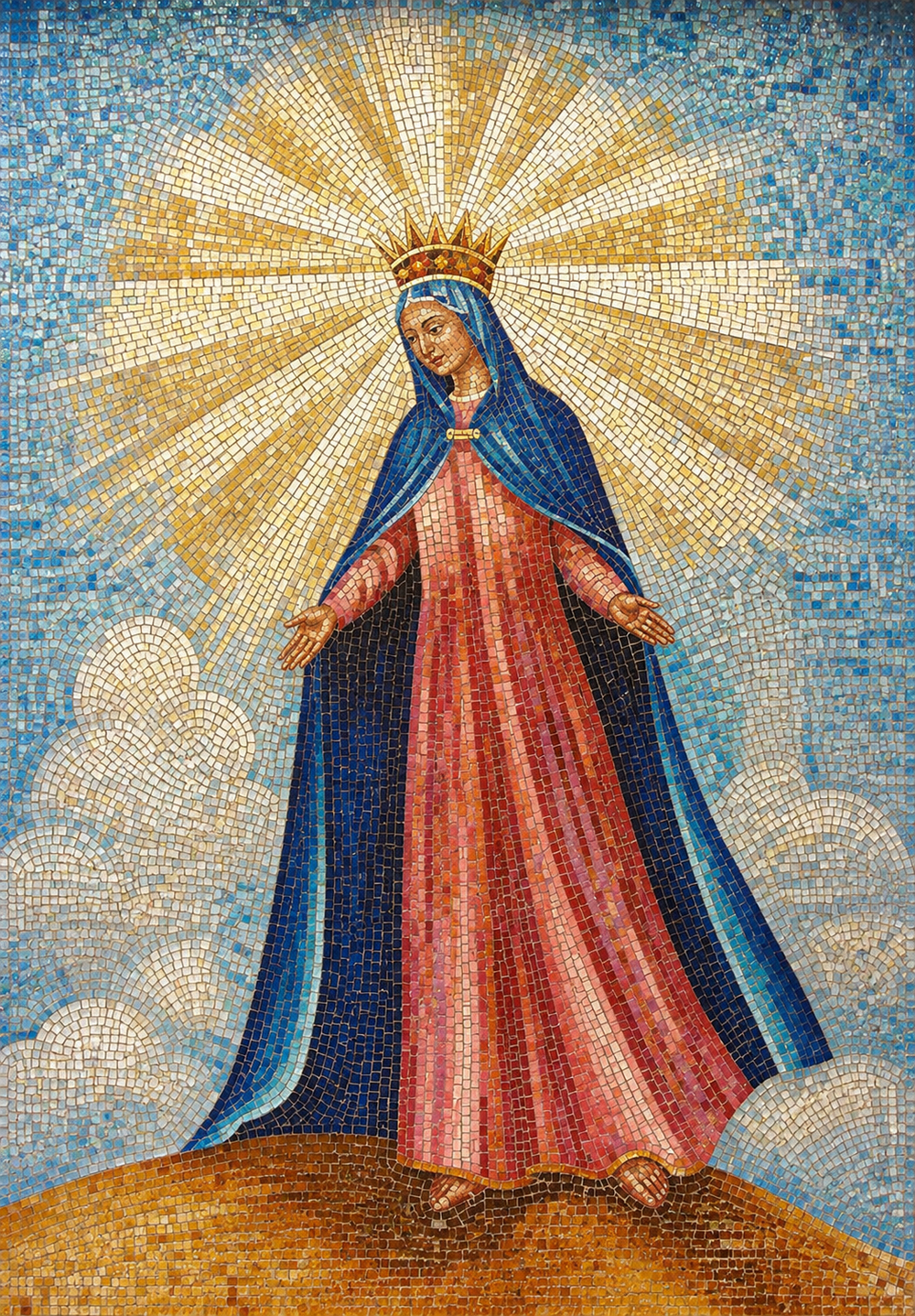
According to the consistent testimony of all those present, when the group reached the grotto — the tunnel of tropical vegetation by the small waterfall of the Tarma brook — they saw the Virgin Mary clearly and distinctly, with the open arms and the rays of light from her hands that María Esperanza had been describing for eight years. She was there. And she was visible to everyone present.
The pastoral instruction that Bishop Ricardo later issued describes what followed: she appeared seven times that afternoon and evening, each appearance lasting five to ten minutes, except for the final appearance at dusk which lasted approximately half an hour. Between the appearances, the group remained at the grotto in prayer and waiting. There was no panic, no hysteria, no departure from the site. People who had seen an impossibility knelt in the tropical vegetation and waited to see it again. And they did. Seven times.
The news spread that same week. People who had been present came immediately and spontaneously to the Diocesan Curia to present their written testimonies and oral accounts to the bishop. They were not summoned; they went. What they had seen was too important to wait for someone to ask them about it.
Part XIII
What 150 People Saw: A Complete Account of the Apparition
The accounts of the approximately 150 witnesses to the March 25, 1984 apparition are consistent in their essential details, despite having been collected separately, from individuals who had no opportunity to coordinate their accounts before submitting them to the bishop. This consistency — across such a large and diverse group, covering all essential visual and experiential details, without significant deviation — was one of the features that Bishop Ricardo found most compelling in his investigation.
The Figure They Saw
The witnesses described a figure of great beauty and luminosity, standing at or near the grotto by the waterfall. She was clothed in white robes with a blue sash — the same colors that had appeared at Lourdes, at Fátima, in the Miraculous Medal vision. Her hair was visible under a veil. Her arms were open in a gesture of welcome and offering — not the hands-raised orans posture of Knock but the open-armed gesture of one offering an embrace, inviting approach, reaching out toward those who were watching. From her hands, rays of light streamed outward — echoing the imagery of the Miraculous Medal that Our Lady of the Miraculous Medal had shown to Saint Catherine Labouré 154 years earlier. She was surrounded by light. The vegetation tunnel of the grotto was illuminated by a quality of light that witnesses consistently described as warm, golden, alive, unlike any natural light they had seen.
The Seven Appearances
She appeared, and then she disappeared. And then she appeared again. Seven times over the course of the afternoon and evening she came and went, each appearance lasting five to ten minutes, as if each coming was complete in itself — each a full communication of presence rather than a continuous sustained appearance. The final coming, at dusk, lasted approximately half an hour. Those who were present during this longer final appearance described it as different in quality from the earlier ones: more intimate, more sustained, as if she was saying goodbye to the group for that day with particular tenderness.
The Miraculous Medal She Wore
One detail noted by witnesses and confirmed in the official documentation is remarkable: Our Lady appeared wearing a medal around her neck that witnesses identified as resembling the Miraculous Medal — the medal she had asked Saint Catherine Labouré to have struck in 1830, the front of which showed her in almost exactly the posture she assumed at Betania: arms extended, rays from her hands, the image of the Reconciler giving grace to the world. At Betania, she wore the image of herself as she had shown it 154 years earlier. The circle is deliberate: the Mother of God arriving at the Venezuelan waterfall already wearing the devotional image she had put in the world to prepare the world for exactly this kind of encounter.
Part XIV
The Witnesses — Who They Were and Why They Matter
The witnesses to the March 25, 1984 apparition at Finca Betania are not the most famous in the history of Marian apparitions — the fifteen witnesses at Knock in 1879, the three children at Fátima, the great crowd at the Miracle of the Sun are all more widely known. But the Betania witnesses may be the most professionally diverse group to have simultaneously witnessed a Church-approved Marian apparition in the modern era, and this diversity is theologically and evidentially significant.
- Children It was children who first saw her and began shouting. This is consistent with the pattern of Marian apparitions throughout history: children see first. The child’s undefended openness, the child’s capacity to perceive without the filtering systems that adult sophistication imposes — these make children reliable first witnesses to the supernatural, precisely because they have not yet constructed the internal arguments against what they are seeing.
- Physicians and Medical Professionals The presence of doctors among the 150 witnesses was noted specifically by Bishop Ricardo as significant for the investigation. A physician who witnesses a Marian apparition is precisely the category of witness whose testimony carries maximum weight in any ecclesiastical or scientific assessment: they are trained observers of physical phenomena, they are culturally disposed to scepticism about the supernatural, and their testimony is therefore not reducible to credulity or suggestion.
- Psychologists and Psychiatrists The presence of mental health professionals among the witnesses gave Bishop Ricardo, and the broader Catholic assessment, a particularly powerful counter to the obvious sceptical objection of mass hysteria or collective suggestion. Mental health professionals who observe what they believe to be a genuine supernatural phenomenon, and who sign sworn declarations to that effect knowing their professional reputation is attached to those declarations, are not experiencing hysteria. They are making a professional assessment under their own name.
- Engineers and Military Officers Engineers and military personnel are trained to observe physical reality with precision and to report what they observe without emotional elaboration. Their inclusion among the witnesses added a dimension of careful observational reporting to the testimony pool.
- Judges The presence of judges — professionals whose entire vocation consists in evaluating the credibility of testimony and determining the weight of evidence — among the 150 witnesses is one of the most striking features of the Betania witness record. A judge who signs a sworn declaration to having seen the Virgin Mary is staking their professional credibility and integrity on that declaration. The bishop received such declarations.
- College Students and Young Adults The young adult witnesses provided the demographic most typically associated with scepticism toward religious claims in the Latin American context of the 1980s — a generation educated in universities where the intellectual culture was often secular or Marxist, and whose testimony in favor of a Marian apparition represented a genuine countercultural witness.
The Total Record: Between 1,000 and 2,000 Witnesses Over the Full Period
The 150 witnesses of March 25, 1984 are the most famous and the most formally documented. But the Betania record extends far beyond that single afternoon. The apparitions continued through 1984 and 1985 with great frequency, then became less frequent in 1986 and 1987. Over the entire period, between 1,000 and 2,000 people are estimated to have personally witnessed the Virgin Mary at Betania. The bishop gathered 381 sworn declarations and personally interviewed approximately 490 people. The evidentiary record at Betania is, in quantitative terms, larger than that of any other approved Marian apparition except possibly the great crowd at the Miracle of the Sun in Fátima — and the Betania witnesses submitted formal signed legal declarations to a bishop, which the Fátima crowd did not.

Part XV
The Full Message of Our Lady of Reconciliation
March 25, 1976 — First Apparition: “My daughter, I come to you with hands full of graces, calling all my children to conversion. I am Mary, Reconciler of all peoples and nations, for I come to reconcile you all! Reconciliation is the inheritance of the divine brotherhood of my divine Son!”
March 25, 1984 — The Great Public Apparition: “My children, I am Mary, Virgin and Mother Reconciler of Peoples. I come with my Son in my arms to reconcile you. Oh, sublime hope is yours! Pray the Rosary! My children, you have seen and felt me, knowing that I truly live among you!”
In the broader series of messages confirmed in Bishop Ricardo’s Pastoral Instruction, Our Lady asked for:
1. Deepening in Faith — through reading and meditating on Sacred Scripture.
2. Conversion — from sin to a full Christian life.
3. Apostolic Commitment — as a consequence of living a renewed and profound faith: to go out and share what has been received.
4. Prayer — especially for the Church, for priests, for religious vocations, for the conversion of sinners, for peace in the world, and for the impending risks that threaten humanity.
5. Frequent reception of the Sacraments — especially the Sacrament of Reconciliation (confession) and Holy Communion.
6. Solidarity — as a call to charity, especially with those in need — the poor, the abandoned, the sick — insisting on brotherly coexistence and sharing.
The Word “Reconciliation” in the Message: What It Actually Means
Our Lady at Betania uses the word “reconciliation” with a precision that the theological tradition of the Church fully supports. Reconciliation in the Christian vocabulary has four interlocking meanings that all apply at Betania:
Reconciliation with God through the Sacrament: The first and most fundamental reconciliation is the individual soul’s return to God from the state of sin — accomplished through the Sacrament of Confession, which Bishop Ricardo specifically authorized at the Betania site. No accident: the sacrament named Reconciliation was specifically enabled at the place Our Lady named the Reconciler.
Reconciliation between persons and families: Many of the healings and graces reported at Betania are not physical but relational — estranged family members reconciled, marriages restored, generational conflicts resolved. The Reconciler of Peoples came at the level of persons in families, not only at the level of international politics.
Reconciliation between nations and ideologies: The Cold War context of 1984 gave the title of “Reconciler of All Peoples and Nations” an immediate geopolitical resonance. She was claiming authority over the division that defined the decade — the division between East and West, between democracy and communism, between the world that prayed and the world that forbade prayer. She was not neutral. She was claiming to be the resolution.
Reconciliation between the Church and the modern world: The Second Vatican Council had spoken explicitly about the need for the Church to engage the modern world from within rather than in hostility to it. Our Lady at Betania endorsed this project: she asked for “Church and People to be united in one heart, working together united by one objective: to bring mankind together.” This is the Betanian vision of the Church: not a fortress but a family, not defended against the world but extending its arms to all of it — exactly the gesture she herself was making when she appeared at the grotto with open arms and rays from her hands.
Part XVI
The Church Investigation: Bishop Pío Bello Ricardo and the Most Thorough Examination of a Modern Apparition
The investigation that Bishop Pío Bello Ricardo conducted of the Finca Betania apparitions is notable in the history of Marian apparition investigations for its combination of personal directness, canonical rigour, and intellectual seriousness. Bishop Ricardo was a Jesuit — a member of a religious order defined by its commitment to intellectual excellence and critical thinking — who had received solid theological training in Spain. He was not a man disposed to easy credulity, and the investigation he conducted reflects that character.
Personal Interview of 490 Witnesses
Most canonical investigations of Marian apparitions work primarily from written testimony submitted by witnesses, with personal interviews conducted selectively. Bishop Ricardo took a different approach: he personally interviewed nearly 490 witnesses — not just reading their affidavits, but sitting with them, speaking with them, asking follow-up questions, probing inconsistencies, testing the quality of their accounts. This is an extraordinary investment of episcopal time and attention in an investigation of this kind, and it reflects both the seriousness with which the bishop took the events and the sheer scale of what had occurred at Betania. There were too many witnesses, and their accounts were too specific, to be handled at arm’s length.
381 Sworn Declarations
From the witnesses he interviewed and those who came forward spontaneously, Bishop Ricardo gathered 381 sworn declarations — legal affidavits in which the declarant attested, under oath and with their name attached, to what they had witnessed. The legal form of a sworn declaration is significant: it is not a devotional expression of religious sentiment but a juridical act with potential legal consequences for anyone who makes one falsely. The 381 people who signed sworn declarations about what they saw at Betania were staking their legal credibility on those declarations, in addition to their professional and social reputations. The bishop found those declarations credible across the board.
Consultation with the Congregation for the Doctrine of the Faith
In September 1984 — just six months after the great public apparition — Bishop Ricardo consulted the Congregation for the Doctrine of the Faith in Rome to ensure that his investigation was proceeding in compliance with the 1978 canonical norms for evaluating claimed private revelations. The CDF did not instruct him to stop or slow down; it provided guidance on the applicable norms. This consultation, and the CDF’s engagement with the process, means that the Betania approval was conducted not in isolation from Roman oversight but in explicit communication with the Vatican dicastery responsible for exactly this kind of evaluation.
The Psychological and Spiritual Assessment of María Esperanza
In addition to interviewing the public witnesses, Bishop Ricardo conducted direct interviews with María Esperanza herself and commissioned assessments of her psychological and spiritual state. A visionary who is psychologically unstable or who is pursuing personal gain through claims of apparitions is identifiable in the investigation process; the patterns of instability or self-interest leave traces in testimony and behavior that careful investigators recognize. María Esperanza presented none of these patterns. She was psychologically stable, spiritually grounded, indifferent to personal celebrity (in the sense that she consistently directed attention toward Our Lady rather than toward herself), and consistent in her account across many years and many questioners. The assessment was positive at every level.
Part XVII
Official Approval: November 21, 1987 — The Declaration That Changed Everything
On November 21, 1987 — the Feast of the Presentation of the Blessed Virgin Mary — Bishop Pío Bello Ricardo issued his Pastoral Instruction on the apparitions at Finca Betania. It is one of the most decisive and unequivocal episcopal declarations issued about any Marian apparition in the modern era.
The bishop declared the apparitions at Finca Betania to be “authentic, of supernatural character and divine origin.” He recognized the Virgin Mary appearing there under the title she had given herself: “Mary, Virgin and Mother, Reconciler of All Peoples and Nations.” He declared Finca Betania a sacred site for Catholic worship and authorized the following to take place there: pilgrimages, prayer gatherings, liturgical celebrations including Mass, the Sacrament of Reconciliation, and Holy Communion.
Three Years: The Speed of the Approval
The Betania approval came three years after the decisive public apparition of March 25, 1984. To appreciate how remarkable this is, consider the comparison: the Lourdes apparitions of 1858 were officially approved in 1862 — four years. The Fátima apparitions of 1917 were not formally approved until 1930 — thirteen years. The Knock apparitions of 1879 received their first commission finding in 1879, but full national shrine designation came decades later. Kibeho was not approved until 2001, twelve years after the last apparition. Betania was approved in three years. Bishop Ricardo examined one of the largest and most diverse witness pools in the history of Marian apparition investigations, conducted the most personally direct investigation process of the modern era, and reached a conclusion of supernatural authenticity within three years of the event.
What the speed of the approval reflects is not haste but evidential weight. When you personally interview nearly 500 witnesses, gather 381 sworn legal declarations, consult Rome, and assess the primary seer across multiple dimensions, and every single piece of evidence points in the same direction, the time required to reach a conclusion is shorter. The Betania investigation was fast because the evidence was clear. The bishop had seen what he needed to see.
What the Approval Authorized
The specific authorization of the Sacrament of Reconciliation at the Betania site is theologically precise and deeply appropriate. Our Lady had called herself the Reconciler; the bishop authorized the Sacrament of Reconciliation at the site of her appearances. The connection is not accidental — it is the Church’s explicit acknowledgment that the reconciliation Our Lady was speaking about is fully and primarily expressed in the sacramental life of the Church, and that the site where she appeared is the right place to celebrate the sacrament that makes her title concrete in the lives of those who come seeking it. Confessions at Betania are therefore not simply a pastoral provision; they are a liturgical expression of the entire theological meaning of the apparition. You come to the Reconciler. You meet her Son in the sacrament of his reconciling love. You leave reconciled.
Part XVIII
Complete Chronological Timeline: 1928 to Today
- November 22, 1928 — María Esperanza Is BornMaría Esperanza Medrano is born in Barrancas, Venezuela, the Feast of Saint Cecilia. Her mother had offered her to the Virgin Mary during pregnancy and promised to name a daughter María Esperanza.
- c. 1933 — First Vision: Saint Thérèse at Age FiveMaría Esperanza has her first documented vision — of Saint Thérèse of Lisieux. This shapes the spiritual direction of her entire life.
- c. 1940 — First Apparition of the Virgin Mary at Age TwelveMaría Esperanza has an apparition of the Virgin Mary. Her gifts of healing, reading souls, and prophetic knowledge continue to develop throughout her adolescence.
- 1950s — Meeting with Padre Pio at San Giovanni RotondoDuring a visit to Italy, María Esperanza meets Padre Pio, who is reported to have recognized and confirmed her spiritual gifts and her mission. Two stigmatics meet.
- October 13, 1956 — Our Lady Announces the Wedding DateOn the anniversary of the Fátima Miracle of the Sun, Our Lady appears to María Esperanza and tells her she will be married on December 8, 1956.
- December 8, 1956 — Wedding at St. Peter’s BasilicaMaría Esperanza marries Geo Bianchini Gianni in the choir chapel of the Immaculate Conception at St. Peter’s Basilica, Rome. Pope Pius XII personally authorizes the ceremony after learning of her extraordinary spiritual gifts through Monsignor Julio Rossi. The couple will have seven children and twenty grandchildren.
- 1957–1974 — The Search for the Promised LandMaría Esperanza carries Our Lady’s description of the destined land through years of searching in Venezuela. She visits many sites without recognition. Our Lady continues to give her prophetic knowledge about the place she will find.
- March 29, 1974 — Finca Betania Is FoundThe Bianchini family visits the farm for sale near Cuá, Miranda State. María Esperanza immediately recognizes it from Our Lady’s descriptions: the old house, the sugar mill, the brook and grotto with crystal clear water. A blue butterfly appears as the confirming sign. The land is purchased by the Bianchini, Andreu, and Castellano families.
- March 21–25, 1976 — The First ApparitionOur Lady tells María Esperanza on March 21 that she will appear in four days. On March 25, 1976 — Feast of the Annunciation — Our Lady appears at the grotto of Finca Betania for the first time. Approximately 80 members of a prayer group are present but cannot see the apparition; they witness only the associated phenomena. Our Lady identifies herself: “I am Mary, Reconciler of all peoples and nations.”
- 1976–1983 — Growing Pilgrimage and Private ApparitionsApparitions continue at the grotto, primarily to María Esperanza and to a small circle around her. A prayer community forms at Betania. The bishop of the diocese, Monsignor Juan José Bernal, allows liturgical acts at the site. Word of extraordinary graces at Betania spreads through Venezuela.
- March 25, 1984 — The Great Public ApparitionThe decisive event. Approximately 150 people gather at Finca Betania for a Sunday Mass. After Mass, at approximately 3:00 PM, children shout that Our Lady is at the grotto. Everyone runs and sees her — clearly and distinctly, seven times over the afternoon and into the evening. Our Lady says: “My children, I am Mary, Virgin and Mother Reconciler of Peoples. I come with my Son in my arms to reconcile you.”
- Week of March 25, 1984 — Witnesses Come Spontaneously to the BishopWithout being summoned, the first witnesses come to the Diocesan Curia to present written and oral accounts to Bishop Pío Bello Ricardo. The bishop begins his personal investigation immediately.
- September 1984 — Bishop Consults RomeBishop Ricardo consults the Congregation for the Doctrine of the Faith to ensure compliance with the 1978 canonical norms for evaluating private revelations. The investigation proceeds in explicit communication with Rome.
- 1984–1985 — Continued ApparitionsApparitions at Betania continue with great frequency throughout 1984 and 1985, occurring especially on Saturdays, Sundays, and Marian feast days. Between 1,000 and 2,000 people total witness the Virgin Mary over this period.
- 1986–1987 — Apparitions Become Less FrequentThe frequency of apparitions decreases in 1986 and 1987, following the pattern of many Marian apparition series that become less frequent as the formal recognition process nears completion.
- November 21, 1987 — Official ApprovalBishop Pío Bello Ricardo issues his Pastoral Instruction declaring the Betania apparitions “authentic, of supernatural character and divine origin.” He recognizes Our Lady under the title “Mary, Virgin and Mother, Reconciler of All Peoples and Nations.” He declares Finca Betania a sacred site for pilgrimage, prayer, and worship. He personally gathered 381 sworn declarations and interviewed approximately 490 witnesses in the three-year investigation.
- 1988–2004 — María Esperanza’s Ministry ContinuesMaría Esperanza continues to receive occasional apparitions and mystical experiences. She travels internationally and receives hundreds of thousands of people seeking counsel, prayer, and healing. The Betania shrine receives pilgrims from Venezuela and worldwide. She develops a progressive Parkinson’s-like illness in her final years.
- August 7, 2004 — María Esperanza DiesMaría Esperanza Medrano de Bianchini dies at Long Beach Island, New Jersey, while on an evangelization trip to the United States. She is 75 years old. She is surrounded by her family at the time of her death. She is buried with the prayers of her community and the devotion of those who knew her worldwide.
- January 31, 2010 — Beatification Cause OpenedBishop Paul Bootkoski of the Diocese of Metuchen, New Jersey (the diocese where she died) formally opens the cause for beatification and canonization of María Esperanza Medrano de Bianchini. She receives the title “Servant of God.”
- June 21, 2021 — Declared Venerable by Pope FrancisPope Francis declares María Esperanza Medrano de Bianchini Venerable — the step immediately preceding Beatification — after the Dicastery for the Causes of Saints confirms she lived heroic Christian virtue. The world’s most important seer of an approved Marian apparition moves toward the altar.
- Today — The Shrine ContinuesThe Diocesan Marian Sanctuary “Mary Reconciler of Peoples” at Finca Betania receives pilgrims from Venezuela and internationally throughout the year. The cause for the beatification of María Esperanza advances. The message of reconciliation that Our Lady brought to this waterfall in 1976 and 1984 is as urgent as it has ever been.
Part XIX
The Stigmata and the Miraculous Roses
María Esperanza Medrano de Bianchini bore the stigmata — the wounds of Christ’s Passion in her own body. The stigmata manifested particularly on Fridays, the day of the week associated with the Crucifixion, and were witnessed and documented by those close to her over decades. Stigmata in the Catholic mystical tradition are understood as a participation in the suffering of Christ: the person bearing them is, in a specific way, carrying in their body the wounds that sin produces in the body of God. The stigmata are not self-inflicted; they appear supernaturally, often without warning, and are accompanied by intense suffering that the stigmatic bears in union with Christ’s Passion.
The connection between the stigmata and the apparition site’s charism of reconciliation is theologically direct: the wounds in María Esperanza’s body were the wounds of the world’s sin, borne in love, offered as a prayer for the reconciliation that Our Lady was asking for at the grotto. María Esperanza’s stigmata were the personal, bodily expression of the Betania message: that reconciliation costs something, that the price of reconciliation is borne in love, that someone must carry the wounds that division produces if healing is ever to come.
The Miraculous Rose Bud
Among the most remarkable and most extensively documented of María Esperanza’s mystical phenomena was the miraculous rose bud. On occasions witnessed by credible observers including priests, physicians, and bishops, a rose bud would appear to emerge from near her heart — from the area of her chest, blooming as observers watched, a real, physically present rose bud producing itself from within her body. She is reported to have “given birth” to fifteen such roses during her lifetime. The roses were physically examined by those who witnessed them; they were real roses, not illusions, and they were present in her hands or at her chest where there had been nothing a moment before.
The mystical rose is, in the Catholic tradition, one of the titles of the Virgin Mary: Rosa Mystica, the Mystical Rose. The Litany of Loreto invokes her as such. Roses are associated with the rosaries she asked for at every major apparition — the Rosary is etymologically the rose garden, the bouquet of prayer offered to the Rose herself. María Esperanza producing miraculous roses from within her body was, in the symbolic theology of the Catholic tradition, the most personal and most physically intimate expression possible of her relationship with the Lady of Betania: she bore in her body the fruit of the encounter.
Part XX
María Esperanza’s Other Mystical Gifts: The Complete Portrait
The stigmata and the miraculous roses are the most visually striking of María Esperanza’s mystical gifts, but they are part of a broader constellation of supernatural phenomena that those who knew her consistently documented. The full catalogue of her documented gifts includes:
- Reading Souls The most consistent and most widely attested of María Esperanza’s gifts was the ability to know the interior spiritual state of those she met — including sins not confessed, griefs not named, and situations whose hidden dimensions she had no natural way of knowing. This gift was exercised in the context of her everyday interactions, not dramatically or theatrically but quietly, in the direction of conversation and the quality of attention she gave to each person. The effect was consistent: people left encounters with her feeling known in a way they rarely felt with anyone else.
- Prophetic Knowledge María Esperanza had the gift of prophetic foreknowledge — awareness of future events, of outcomes that were not naturally predictable, of directions that situations would take before the natural course of events made them apparent. Her most famous prophetic utterance was a statement she made years before September 11, 2001, describing an attack on the United States involving tall buildings in New York that she associated with a profound national spiritual crisis. This statement was documented before the event. Many other smaller-scale prophetic statements — about specific people’s lives and situations — were attested by those around her.
- Healing Numerous cases of physical and spiritual healing are attributed to María Esperanza’s prayers and her physical contact with the sick. She was not a healer in the theatrical sense; she prayed, she touched, she directed people to God and to the sacraments, and healings occurred. The healings are documented in personal testimonies collected by the Betania Foundation and others, though they have not been subject to the formal Medical Bureau-style process applied to claimed Lourdes miracles.
- Bilocation Multiple credible accounts describe María Esperanza as being present in two places simultaneously — as a physical presence in a location while also verifiably being present elsewhere at the same moment. Bilocation is among the most dramatic of the Catholic mystical gifts and has been attested in the lives of several of the greatest Catholic mystics, most notably Padre Pio, whose bilocation was documented by witnesses whose accounts the Church received favorably.
- The Fragrance of Roses Those who encountered María Esperanza frequently described an inexplicable fragrance of roses — sweet, fresh, clearly floral — appearing in her presence without any natural source. This phenomenon — the “odor of sanctity” in its Marian rose variant — was noted by clerics, physicians, and ordinary visitors who encountered her in Venezuela, Rome, and elsewhere. It was one of the phenomena that Monsignor Julio Rossi noted when he brought her case to Pope Pius XII before her wedding at St. Peter’s.
Part XXI
The Healings and Miracles at Finca Betania
From the very earliest pilgrimages to Finca Betania following the 1976 apparition, reports of healings and spiritual graces began to accumulate. The sick were brought to the site, as they have been brought to every major Marian shrine, and many reported receiving what they could only describe as miraculous improvements in their conditions. The Betania healing tradition encompasses physical, relational, psychological, and spiritual dimensions — consistent with the title of the Lady who comes to reconcile all things, not only bodies.
The Water of the Grotto
The brook that flows through the vegetation tunnel at the Finca Betania grotto — the same brook that forms the small waterfall in front of which Our Lady appeared — has been associated with reported healings since the earliest period of the pilgrimage. Pilgrims drink from the water and bathe in it. The connection to the Lourdes tradition is apparent and has been noted by those familiar with both sites: in both cases, a stream at a Marian apparition site becomes associated with healing graces, though the Church’s formal assessment of the healings follows a different process in each case.
Conversions: The Primary Miracle of Betania
The most consistently reported miracle at Finca Betania is not physical healing but spiritual conversion. People who had been distant from the Church for years — decades, in some cases — came to Betania in curiosity or desperation and returned to the sacraments. Families that had been estranged found reconciliation. Individuals carrying the weight of unconfessed sin for years found themselves in confession for the first time in decades at the chapel the bishop specifically authorized at the apparition site. The Sacrament of Reconciliation, which Bishop Ricardo explicitly authorized at Betania, has been the primary instrument of the conversions the site produces — which is theologically perfect: the Reconciler asked for conversion; the sacrament of Reconciliation is its sacramental form; the site produces the sacrament; the sacrament produces the conversion. The theology is seamless.
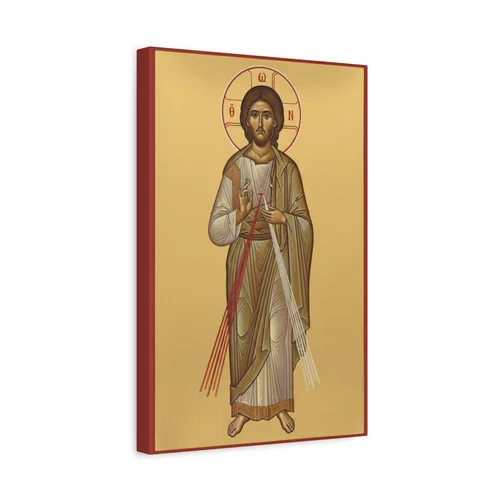
She came with her Son in her arms and asked for prayer, the Rosary, and frequent Eucharist. The reconciliation she brings is consummated at the altar of her Son. Carry the Reconciler with you, and surround your prayer space with the presence of the one she comes to point you toward.


Part XXII
María Esperanza’s Death and the Path Toward Sainthood
María Esperanza Medrano de Bianchini died on August 7, 2004, at Long Beach Island, New Jersey. She was 75 years old. She had been suffering from a progressive neurological illness resembling Parkinson’s disease, and was in New Jersey on an evangelization trip when her condition worsened and she could no longer travel. She died surrounded by members of her family — seven children, twenty grandchildren, the family that was itself the primary fruit of the vocation she had received from God: not the convent she once thought was her calling, but the family that a wife and mother and mystic could make into a school of reconciliation.
Her death was mourned in Venezuela, across Latin America, and in the communities worldwide that had been touched by Betania and by her ministry. She was buried with the prayers of the universal Church and the particular love of those who had known her, sought her counsel, been healed in her presence, or encountered her simply as the woman who kept pointing to a waterfall in Miranda State and the Lady who stood there.
The Cause for Beatification and Canonization
The formal cause for María Esperanza’s beatification and canonization was opened on January 31, 2010, by Bishop Paul Bootkoski of the Diocese of Metuchen, New Jersey — the diocese where she had died — giving her the title Servant of God. The diocesan phase of the investigation gathered extensive documentation of her life, virtues, spiritual gifts, and the graces attributed to her intercession. The cause was submitted to Rome and taken up by the Dicastery for the Causes of Saints.
On June 21, 2021, Pope Francis declared María Esperanza Medrano de Bianchini Venerable — the step immediately preceding Beatification in the Church’s formal process of recognizing sainthood. The declaration of Venerability means that the Dicastery for the Causes of Saints has completed its review of her life and virtue and has confirmed that she lived heroic Christian virtue — that the qualities she demonstrated throughout her life were genuine, sustained, and constitutive of the kind of sanctity the Church holds up as a model for all the faithful.
For Beatification to proceed, a miracle attributed to her intercession after her death must be verified by the Dicastery’s medical and theological processes. Those who knew her, and those who have been touched by the Betania tradition, are actively praying for and reporting potential miracles. The woman who bore the wounds of Christ in her body, who produced miraculous roses, who pointed 150 simultaneous witnesses toward the Mother of God at a Venezuelan waterfall, is on her way to the altar.
Part XXIII
The Finca Betania Shrine Today: “Diocesan Marian Sanctuary Mary Reconciler of Peoples”
The official name of the site today is the Diocesan Marian Sanctuary Mary Reconciler of Peoples — the name given to it by the Church in its formal recognition of what happened there. It is located in Miranda State, Venezuela, and is open to pilgrims throughout the year.
Physical Description of the Shrine
The shrine complex as it exists today includes several elements that have been added since the 1987 approval, while preserving the essential natural character of the original site. Entering from the road between Cúa and San Casimiro, pilgrims cross a pedestrian bridge built over the Tarma River. The bridge leads to a plaza and to the grotto area by the waterfall — the site where the apparitions occurred. At the plaza, an open chapel has been built to accommodate the liturgical celebrations authorized by the bishop: Mass, confession, and the exposition and adoration of the Blessed Sacrament. The original tropical vegetation tunnel and the waterfall are preserved as the heart of the apparition site.
The physical beauty of the site — tropical vegetation, flowing water, the sound of the brook and cascade in the enclosed green space of the grotto — creates a natural contemplative atmosphere that pilgrims consistently describe as conducive to prayer and to the kind of interior quiet in which reconciliation becomes possible. Unlike the vast institutional infrastructure of Lourdes or Fátima, Betania retains the intimacy of a farm — Bethany, the small village where Jesus was most at home, where his closest friends lived, where he wept and called the dead back to life.
How to Visit
- Address: Finca Betania, Km. 11, road between Cuá and San Casimiro, Miranda State, Venezuela
- Distance from Caracas: Approximately 65 km • About 1–1.5 hours by road
- Access: Highway from Caracas to Charallave, then detour to Cuá, then 12 km toward San Casimiro • Entrance on the left
- Facilities: Parking for vehicles and buses • Pedestrian bridge over the Tarma River • Plaza • Open chapel • The grotto and apparition site
- Sacraments Available: Mass • Confession • Eucharistic adoration • (authorized by bishop in 1987 decree)
- Annual Pilgrimage Feast: March 25 • The Feast of the Annunciation • Anniversary of both the first apparition (1976) and the great public apparition (1984)
Part XXIV
Theological Significance: Why the Reconciler Came, and Why It Matters
The title Reconciler of All Peoples and Nations is theologically unprecedented as an explicit Marian title in an approved apparition, and it rewards careful theological unpacking.
Mary as Reconciler in the Tradition
The concept of Mary as a reconciling figure has deep roots in the earliest Christian theology. The Church Fathers, beginning with Justin Martyr and Irenaeus in the second century, developed the theology of Mary as the New Eve: where Eve’s disobedience had introduced division into the human family — the division between God and humanity, between Cain and Abel, between peoples and nations — Mary’s obedience participated in the reversal of that division. She said yes where Eve had said no; she trusted where Eve had doubted; she brought the Reconciler into the world by offering her body as the place where God and humanity could be one. Mary is the Reconciler not because she performs an independent reconciling act but because she bore the Reconciler, participated in his redemptive work by her obedience and her Passion alongside his, and continues in her intercessory role to apply his reconciling grace to the specific divisions that exist in specific historical moments. At Betania in 1984, the specific historical divisions were the Cold War’s global fractures, Latin America’s political wounds, and the universal human experience of estrangement from God and from each other that sin always produces.
The Sacrament in the Title
Our Lady called herself the Reconciler at a site where the bishop specifically authorized the Sacrament of Reconciliation. The conjunction is not accidental. The Sacrament of Reconciliation is the primary instrument through which the Church applies the reconciling grace of Christ to individual souls. When you confess your sins and receive absolution, you are not making a private transaction with God; you are participating in the great cosmic act of reconciliation between heaven and earth that Christ accomplished on the Cross. And you are doing it through the instrumentality of the Church that his Mother brought him into the world to establish. Our Lady of Reconciliation at Betania is asking her children to meet her Son in the sacrament he left them for exactly this purpose — and she established her apparition site as the place where that sacrament could be celebrated.
Eastern Christian Resonance
The theology of Our Lady of Reconciliation at Betania resonates deeply with the Eastern Christian tradition in several specific ways. The Eastern title Theotokos — the God-Bearer — is itself a reconciliatory title: she bore the one who reconciles heaven and earth, she is the meeting point of the human and the divine, she is the bridge over the chasm that sin opened between God and his creation. Every Eastern Christian liturgy that invokes the Theotokos as the supreme intercessor is invoking the same reconciling function that Our Lady of Betania made explicit. The Jesus Prayer — “Lord Jesus Christ, Son of God, have mercy on me, a sinner” — is itself a prayer of reconciliation, asking the Lord of All Mercy to reconcile the praying sinner to God. The tradition of Marian intercession in the Eastern Church, which fills every Divine Liturgy and every Paraklesis, is the tradition that Betania makes visually and historically concrete for the Western hemisphere.
Part XXV
Betania and the Chain of 20th Century Marian Apparitions
Our Lady of Reconciliation at Betania stands in a specific chain of twentieth-century Marian apparitions that, together, constitute the most sustained series of supernatural warnings and invitations in recorded Christian history. Understanding Betania requires placing it in this chain.
Our Lady of Fátima in 1917 warned of the dangers of communism, asked for the consecration of Russia, and made the peace of the world dependent on the conversion of individual hearts. She was speaking at the moment when the Bolshevik Revolution was about to unleash the most destructive godless ideology in human history across a third of the earth’s surface.
Our Lady of Kibeho in Rwanda in 1981 delivered prophetic visions of genocide and asked for the Seven Sorrows Rosary — the rosary that meditates on the Mother’s participation in the suffering of her Son. She was speaking in a country that would, thirteen years later, experience one of the most rapid and total acts of mass violence in history.
Our Lady of Reconciliation at Betania in 1984 called herself the Reconciler of All Peoples and Nations and asked for conversion, the Rosary, the sacraments, and solidarity with the poor — at the height of the Cold War, in a continent defined by ideological conflict, in a world that had never been more technically capable of its own destruction and never more in need of reconciliation.
The chain is clear. She has been coming with increasing urgency throughout the twentieth century. At Fátima, she warns. At Kibeho, she shows visions of the worst. At Betania, she names herself the Reconciler and says: the reconciliation is possible. The inheritance of brotherhood is yours. Come to the sacrament. Pray the Rosary. Be reconciled. There is still time. There is sublime hope.
Oh, sublime hope is yours. These were her words at Betania in 1984. They remain her words now.
Part XXVI
Devotion to Our Lady of Reconciliation: Who Prays to Her and Why
Our Lady of Reconciliation at Betania is prayed to especially by those who are carrying the weight of division: families divided by estrangement or conflict, individuals carrying the burden of unresolved ruptures in relationships that matter to them, those who work in any ministry of reconciliation or peacemaking, those who are seeking to return to the sacraments after years away, those who are searching for peace in a world that offers very little of it, and those who sense — without always being able to articulate it — that the fractures in their lives and in the world are connected and that there is a reconciliation available to them that they have not yet fully claimed.
The Prayer Card: The First and Most Immediate Act
The Our Lady of Reconciliation prayer card from our store is the most immediate way to begin a devotion to the Reconciler of All Peoples and Nations. She appeared with open arms and rays from her hands, offering grace to a world in need of reconciliation. Carrying her prayer card — in your wallet, placed on your home altar, held during your morning prayer — is a daily act of recourse to the one who came to reconcile all things. It places her image before you at the moment when you most need to be reminded that the reconciliation you seek is possible, that it is already won, that it is an inheritance waiting to be claimed.
The prayer card is also the most effective first gift you can give to someone who needs reconciliation in their life. Give it to the family member who has been absent from the faith for years. Give it to the friend carrying an estrangement they don’t know how to resolve. Give it to yourself, for the part of your life that you have not yet brought to the Reconciler and asked her to touch with the grace her hands are full of.
The Rosary She Asked For
Our Lady’s explicit request at Betania was: Pray the Rosary. She said it at the great public apparition. She said it in her private communications with María Esperanza. She said it in the broader series of messages confirmed by the bishop. The Rosary is the prayer she has asked for at every major apparition of the modern era — Fátima, Kibeho, Lourdes — and she asked for it here too. The Rosary as she asks for it at Betania is not a private devotion; it is a communal prayer of reconciliation, to be prayed in families and small groups, gathering people around the meditation on the life of her Son in the movement from Annunciation to Assumption. The Rosary is the prayer that makes the invisible visible — that makes present, in the movement of beads through fingers, the same mysteries of Incarnation, Passion, and Resurrection that she herself embodied and that are the source of every reconciliation.
The Sacrament of Reconciliation: The Most Direct Response
The most concrete and direct response to Our Lady of Reconciliation’s message is also the most obvious one: go to confession. Not because confession is a mere formality, but because it is the sacrament through which the reconciliation she announces is accomplished in the specific, named, personal history of the individual soul. If you have been away from confession, going is the most direct act of response to what she asked. If you go regularly, going with greater attentiveness and contrition is the response. She called herself the Reconciler and she pointed to the Sacrament of Reconciliation. The connection is not accidental; it is the whole point.
Part XXVII
Prayers to Our Lady of Reconciliation at Betania
Mary, Virgin and Mother, Reconciler of All Peoples and Nations — I come to you with the divisions of my life, the estrangements I carry, the fractures that time has not healed. You came to Betania with your Son in your arms and said you came to reconcile everyone. I bring you everyone: the people from whom I am estranged, the wounds that have not closed, the pride that has kept reconciliation beyond reach.
You told María Esperanza that reconciliation is the inheritance of the divine brotherhood of your Son. Help me claim that inheritance. Help me receive what has already been won. And help me be, in the small circle of my own life, an instrument of the reconciliation you offered to all peoples and all nations — beginning with the person closest to me who most needs it.
O Mary, Reconciler of All Peoples and Nations, reconcile me. Amen.
Reconciler of All Peoples and Nations, I bring you my family. You came to Venezuela and said that all peoples and nations could hold hands in reconciliation — and I know that this reconciliation has to begin in families, in the closest circle, in the specific people I cannot stop loving however great the distance between us has become.
I bring you [name the family member or relationship]. I bring you the history between us and what it has cost both of us. I bring you the pride on both sides and the wounds on both sides and the love that is still there underneath both, even if neither of us can reach it right now.
You said: the reconciliation is the inheritance of the divine brotherhood of my Son. This relationship was made in that brotherhood — in the love that God placed in a family when he placed a family there at all. Reclaim it. Heal it. Do what I cannot do by myself, however long I try. Amen.
Mary Reconciler, I bring you the one who has been away from the Church — from confession, from Communion, from the community of faith — for [years, decades, their whole adult life]. I cannot make them come back. I cannot argue them back. I cannot love them back, though I have tried.
But you can do what I cannot. You came to a Venezuelan farm in 1984 with your hands full of graces and said you had come to reconcile everyone. I am holding you to that promise. I am placing [name] in your hands — the hands full of graces — and asking you to find the way back for them that I cannot find. You are the Reconciler. Find them. Amen.
Mary, Virgin and Mother, Reconciler of All Peoples and Nations — in 1984 you came to Venezuela at the height of the Cold War and said that this farm would be a place where all peoples and nations could hold hands in reconciliation. The Cold War ended. But the division did not. The wars multiplied. The fractures deepened. The estrangement between nations and between the human family has not abated.
We still need the Reconciler. Now more than we did in 1984, or as much. We bring you the wars that are happening right now, the peoples being killed, the families being destroyed, the hatred that has been permitted to grow in place of the brotherhood your Son established. The reconciliation is the inheritance of that brotherhood. We have not claimed it. We are asking you to help us claim it — nation by nation, family by family, person by person, beginning with the conversion of our own hearts. Amen.
Mary, Virgin and Mother, Reconciler of All Peoples and Nations — reconcile me today. Show me the division in my own heart that needs healing before I can be an instrument of healing for anyone else. And bring me, today, to the Rosary you asked for, the sacrament you pointed to, the solidarity with the poor you demanded, and the joy of the reconciliation that is already ours in your Son. Amen.
Frequently Asked Questions
Our Lady of Reconciliation at Finca Betania — Questions & Answers
“Oh, Sublime Hope Is Yours!”
In March 1984, in a tunnel of tropical vegetation beside a Venezuelan waterfall, the Mother of God appeared to one hundred and fifty people and called herself the Reconciler of All Peoples and Nations. She came with her Son in her arms. She said the reconciliation was the inheritance of his brotherhood — already won, already ours, waiting to be claimed. She appeared seven times. She said: pray the Rosary. She said: come to the sacrament. She said: be in solidarity with the poor. She said: tell all my people. A bishop investigated for three years and said: this is real. This is from God.
And she said, in words that the world in 2025 needs as urgently as the world in 1984 needed them: Oh, sublime hope is yours.
Carry her prayer card. Place it where you will see it. Let the Reconciler of All Peoples and Nations begin with the most specific, most personal, most close-to-home reconciliation that your life contains right now. She came to Betania for the whole world. She comes to you for you. The grace is ready. The arms are open. The inheritance is waiting.
Get the Our Lady of Reconciliation Prayer Card →