Our Lady of Zeitoun: The Complete Guide to the Most Witnessed Marian Apparition in History
Coptic Orthodox • Roman Catholic • Eastern Christian • April 2, 1968 – May 29, 1971 • Cairo, Egypt
Our Lady of Zeitoun: The Complete Guide to the Most Witnessed Marian Apparition in History
A Muslim mechanic saw her first. A million people followed. The Egyptian government confirmed it. The Coptic Church confirmed it. The Vatican confirmed it. For three years above a church in Cairo, the Mother of God appeared in light — and the world watched. This is everything.
Our Lady of Zeitoun — At a Glance
- Event Name
- Apparitions of Our Lady of Zeitoun (also: Zeitouneh, Zeitouna, Zeytoun)
- Location
- Church of St. Mary (Virgin Mary), Tomanbay Street, Zeitoun, Cairo, Egypt
- First Apparition
- Evening of April 2, 1968
- Final Major Apparition
- May 29, 1971
- Duration
- Approximately 3 years, 2 months
- Estimated Total Witnesses
- Over 1,000,000 people across the full period
- First Witness
- Farouk Mohammed Atwa • Muslim bus mechanic
- Confirmed By
- Coptic Orthodox Church • Egyptian Government • Vatican Investigators
- Church Confirmation
- Pope Kyrillos VI, Coptic Orthodox • May 4, 1968
- Witnesses
- Muslim, Coptic, Catholic, Protestant, Jewish, secular — all backgrounds
- Apparition Forms
- Full luminous figure • Luminous bust • Light cloud • Glowing doves
- Apparition Duration
- Minutes to 9 continuous hours per appearance
- Documentation
- Photographed • Filmed by Egyptian state TV • Published in Al-Ahram
- Significance of Name
- Zeitoun = Arabic for “olive tree” • Ancient Christian sacred site
- Holy Family Connection
- Traditional site where the Holy Family rested during the Flight to Egypt
- The Church Today
- Active Coptic Orthodox parish & major Marian pilgrimage site
What Is Our Lady of Zeitoun? The Apparition That a Million People Saw
In the spring of 1968, a Muslim bus mechanic in Cairo looked up at the dome of a Coptic Christian church and saw a woman made of light. He thought she was in danger of falling. He called out. His co-workers looked. Others walking past stopped. Within minutes there was a crowd. Within weeks there were thousands. Within months — over the course of three years of repeated apparitions, captured in photographs and on Egyptian state television, confirmed by the government of Egypt and by the highest authorities of both the Coptic Orthodox and Catholic churches — there would be over one million witnesses.
Our Lady of Zeitoun is not a private vision. It is not the account of one mystic, one visionary, one child who saw something in a field that only she could see. It is a mass public phenomenon: a luminous figure of a woman, sometimes full-bodied, sometimes as a glowing bust, sometimes as a brilliant cloud — appearing above the dome of St. Mary's Coptic Church in the Zeitoun neighborhood of Cairo between April 2, 1968 and May 29, 1971. The apparitions were attended by glowing white doves moving at impossible speeds, by dense clouds of fragrant incense, by light displays unlike anything in the natural world. They lasted from minutes to nine continuous hours. They recurred on dozens of nights across three years. And they were witnessed by Muslims, Christians, Jews, the devout and the skeptical alike, in the open air of a major city, in front of cameras and reporters and government investigators.
No other Marian apparition in the history of Christianity has been witnessed by this many people. No other apparition has been confirmed by two separate government investigations, by the head of a major Eastern church, by Vatican-dispatched Catholic clergy, and documented on film. The Zeitoun apparitions are, by any evidentiary standard, the best-attested supernatural event of the modern era.
And yet they remain surprisingly little known in Western Christianity. The purpose of this article is to change that: to provide the most complete, most carefully documented, and most historically thorough account of the Zeitoun apparitions available anywhere — who saw them, what they saw, when and how they were confirmed, what happened at the church during those three years, what the miracles and healings were, and what the apparitions mean for the Christian world today.
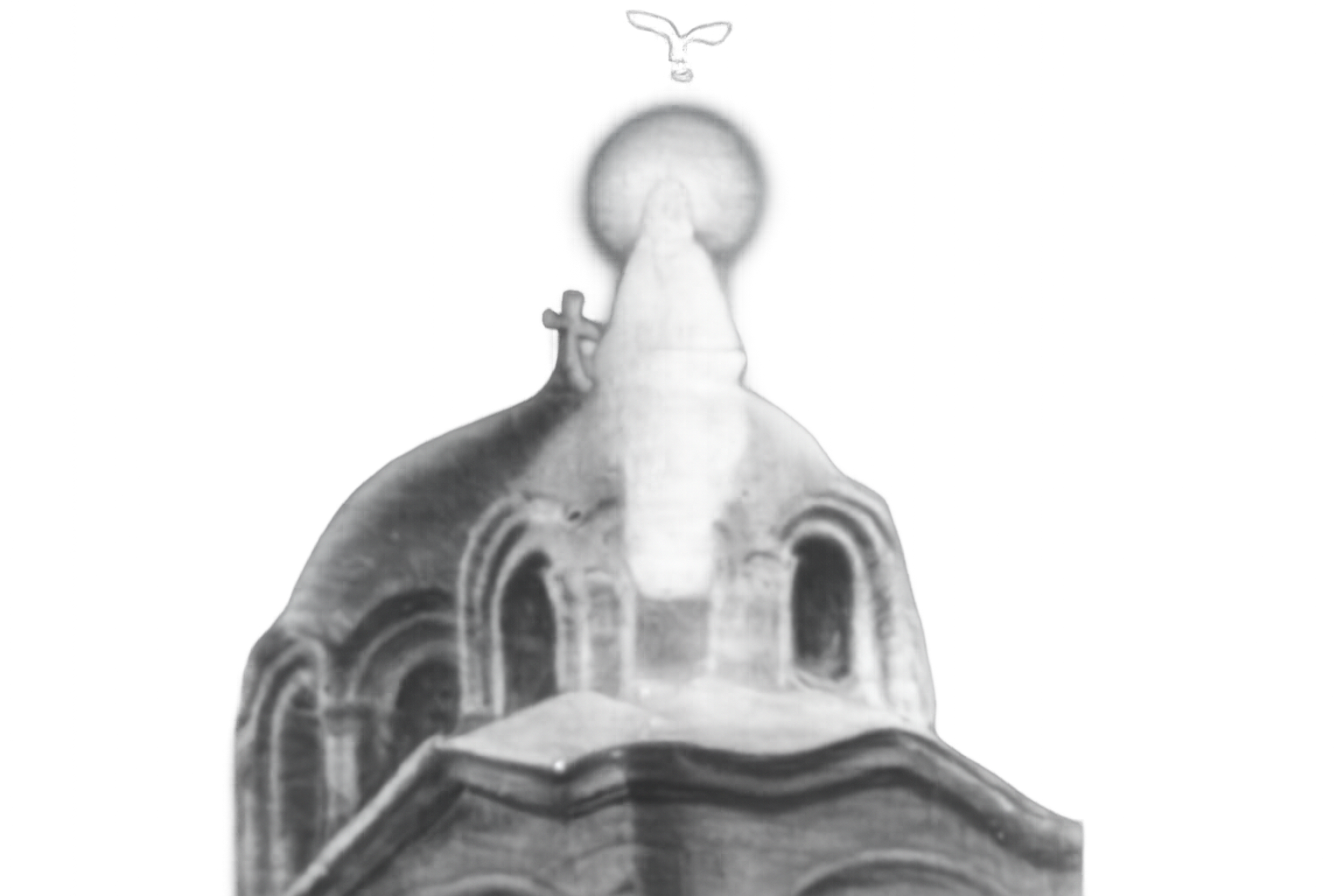
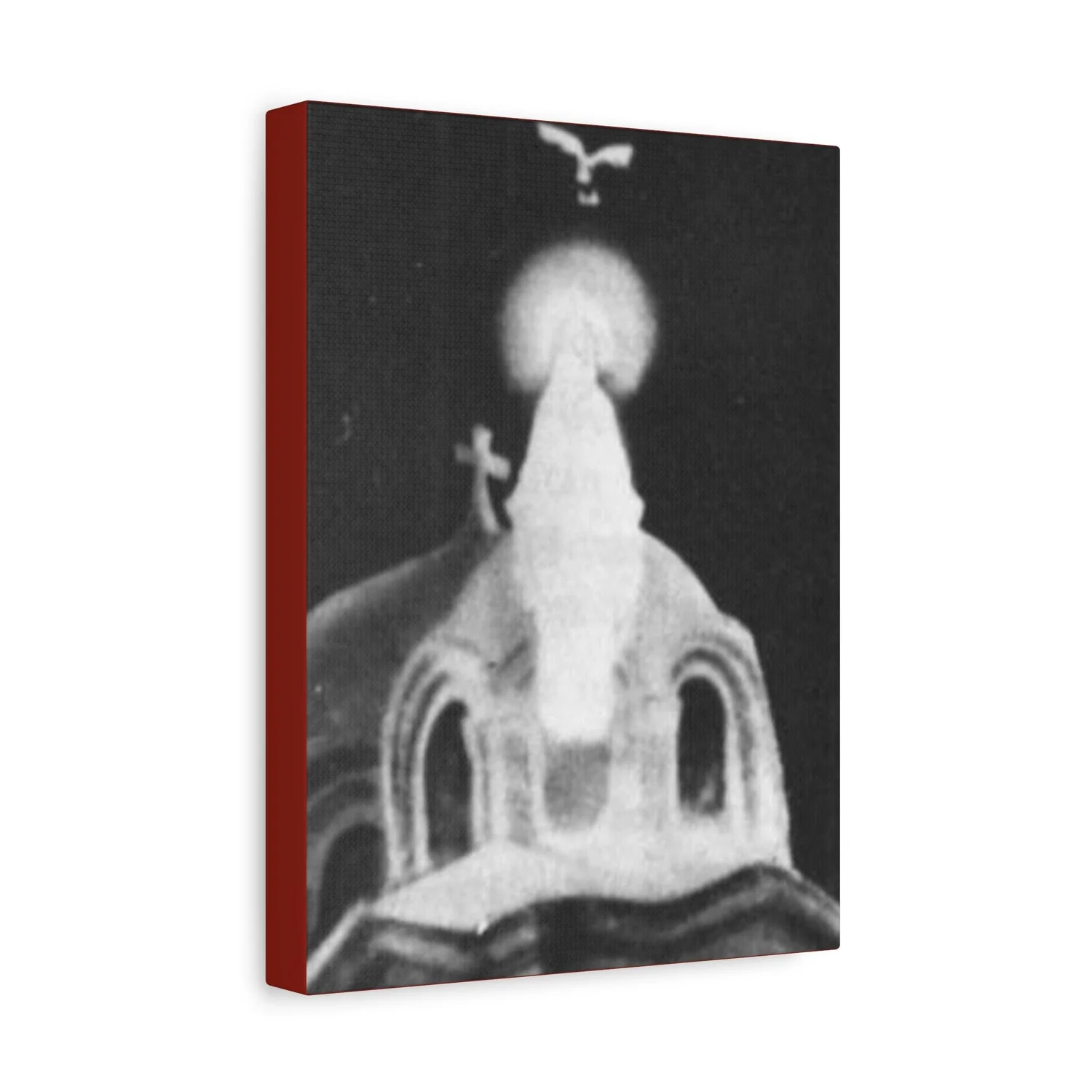
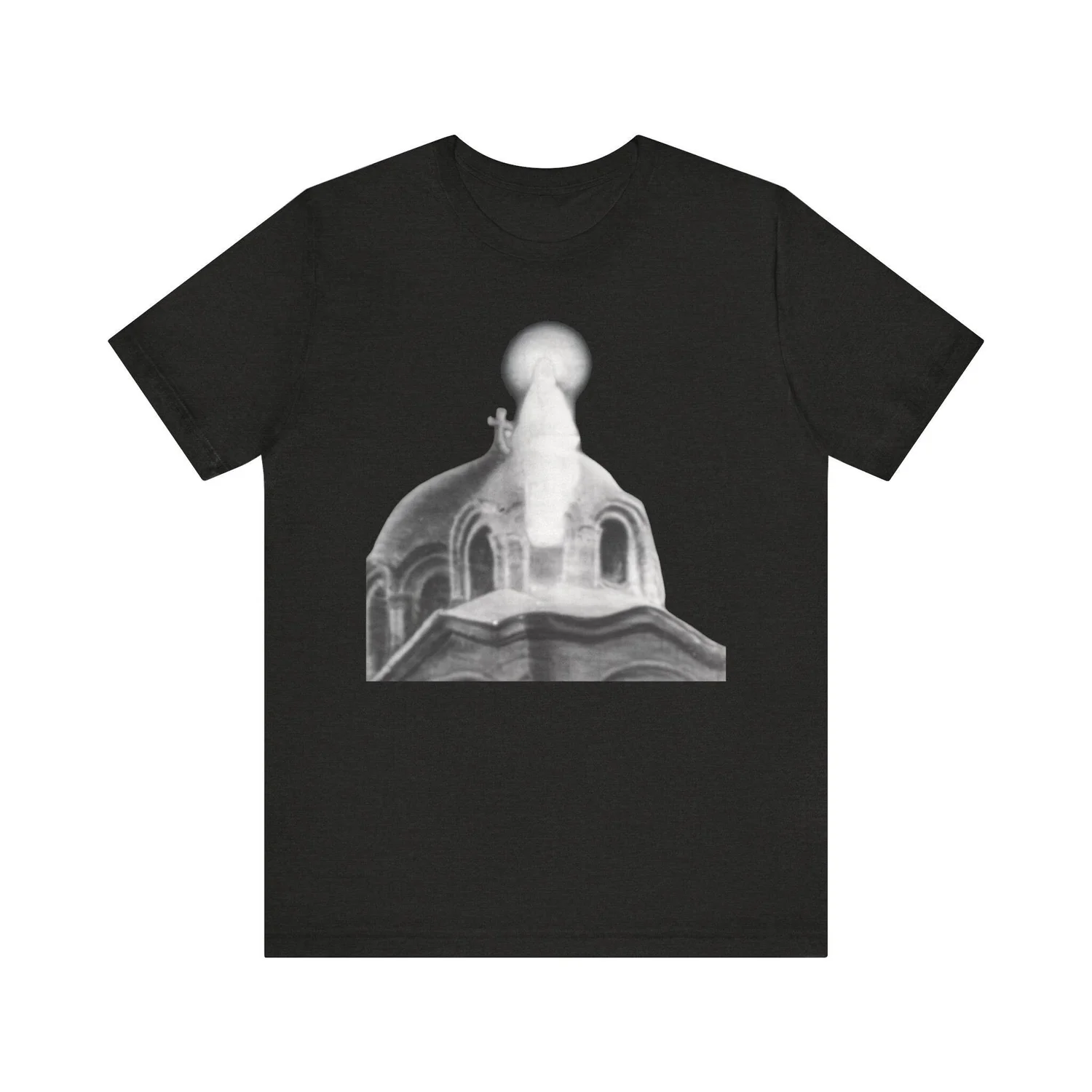
The prayer card on this page bears an actual photograph of the apparition — not an artist's rendering, not an icon painted from someone's description, but a real image captured during the luminous appearances of the Mother of God above St. Mary's Church in Cairo. This is what a million people saw. This is what the Egyptian government confirmed. This is what you carry when you carry this card.
Part II
Egypt in 1968: The World She Came Into
To understand what happened in Zeitoun in 1968, you need to understand what Egypt had just been through. On June 5, 1967, Israel launched the opening strikes of what would become the Six-Day War. In six days, Egypt lost the Sinai Peninsula, lost its air force, lost thousands of soldiers, and lost the international standing that President Gamal Abdel Nasser had spent fifteen years building. The defeat was catastrophic in every sense: military, political, psychological, and cultural. Nasser offered to resign; the Egyptian people took to the streets begging him to stay. The nation was traumatized in a way that collective grief rarely achieves — the shock of a humiliation so swift and so total that it felt, to many Egyptians, like an abandonment by the divine order itself.
By April 1968, Egypt was a country trying to recover its identity. The armed forces were being rebuilt. The political system was under intense internal pressure. The population of Cairo — then around six million people — was moving through the routines of daily life carrying this unresolved grief. It was into this specific historical moment that the apparitions began.
Egypt’s Ancient Christian Community
Egypt is not, in the Western imagination, primarily associated with Christianity. But the Coptic Orthodox Church — one of the oldest Christian communities on earth — traces its founding to the Evangelist Mark, who is believed to have brought the faith to Alexandria in the first century AD. For nearly two thousand years, Egypt's Christian population has maintained an unbroken community of faith in what is otherwise a predominantly Muslim country. In the 1960s, Coptic Christians made up approximately ten percent of Egypt's population — roughly three to four million people in a nation of thirty million. They were a significant and visible minority, concentrated particularly in Cairo and in Upper Egypt.
The relationship between Egypt's Muslim majority and its Christian minority was, in 1968, more complex than either the optimistic or the pessimistic accounts suggest. There was coexistence and there was tension. There were neighborhoods, like Zeitoun, where Coptic churches were established presences in mixed communities. There were shared civic spaces and shared griefs, including the grief of the Six-Day War, which was Egypt's war, not a Muslim war or a Christian war, but the national wound of an entire people regardless of faith.
Zeitoun: The Olive Tree Neighborhood
Zeitoun — Arabic for “olive tree” — is a district in the northeast of Cairo, bounded by Heliopolis to the north and Ain Shams to the east. In 1968 it was a working-class and lower-middle-class neighborhood of apartment blocks, small workshops, local markets, and neighborhood churches. It had a substantial Coptic Christian population and a much larger Muslim population living in the ordinary proximity of urban Cairo — not in deliberate interfaith community, but in the natural adjacency of neighbors who share streets and shops and public transportation.
The Church of St. Mary in Zeitoun stood on Tomanbay Street. Built in 1924, it was a relatively modest church by the standards of major Coptic institutions — a neighborhood parish serving a local community. Its dome, which would become the stage for three years of apparitions, was visible from the street and from the bus depot directly across from it. The church had a particular devotional significance long before 1968: the Zeitoun area was considered one of the traditional resting places of the Holy Family during their flight to Egypt, making the ground beneath the church consecrated in a way that the neighborhood's residents both did and did not consciously carry with them.
Part III
The First Sighting: Tuesday Evening, April 2, 1968
Farouk Mohammed Atwa was a Muslim. He was not on his way to prayer. He was not engaged in any act of Christian devotion. He was working. And he looked up, and he saw what he saw, and he called out to those around him. That the first witness to the most widely documented apparition of the Virgin Mary in history was a Muslim man is not incidental. It is the thesis of the entire event stated in its first moment.
The evening of April 2, 1968 was a Tuesday — Tuesday has Marian significance in the Coptic Orthodox liturgical calendar as one of the days associated with the Mother of God. At approximately 8:30 in the evening, Farouk Mohammed Atwa was working at the bus depot on Tomanbay Street, directly across from St. Mary's Coptic Church. He looked up at the church dome and saw a luminous white figure.
His immediate interpretation was rational and concerned: he thought a woman in white clothing had somehow climbed to the church dome and was in danger of falling. He shouted out to his co-workers. Some accounts report that he initially shouted to the figure herself, urging her to be careful. His co-workers looked. They saw what he saw. Others on the street stopped. A crowd began to form.
What the growing crowd observed was not a human figure in danger. It was a luminous form — too bright to be a person, too defined to be a cloud or a reflection, standing or kneeling atop the dome and surrounded by a radiance that witnesses described as purer and more concentrated than any light source they could name. The figure was the shape of a woman. She was clothed in what appeared to be a luminous white garment. She moved slowly, sometimes turning, sometimes kneeling before the cross at the apex of the dome.
Someone called the fire department, still operating on the assumption that a person in distress was somehow on the dome. The firemen arrived, looked up, and could not explain what they were seeing. They sent for more people. The crowd grew. By the time the figure had faded — the first appearance lasted approximately fifteen to twenty minutes — hundreds of people had witnessed it.
The Significance of a Tuesday
In the Coptic Orthodox calendar, Tuesday and Thursday are the weekdays specifically associated with the Virgin Mary — days on which many Copts observe additional prayers and fasting in her honor. The first apparition occurring on a Tuesday was not immediately noticed in the confusion of that first night, but it would become a pattern. Many of the most significant subsequent apparitions occurred on Tuesdays or Thursdays, and the pattern was sufficiently consistent that observers began to anticipate apparitions on those days and on Marian feast days specifically.
Farouk Mohammed Atwa’s Healing
One detail of the first night's account has become inseparable from the story of Zeitoun: Farouk Mohammed Atwa reportedly had a serious medical condition — gangrene of the fingers, which doctors had said would require amputation — at the time he first saw the apparition. In the days following the first sighting, accounts say his condition healed without amputation. This was noted by those who knew him and became one of the first recorded miraculous healings associated with the Zeitoun apparitions. It is impossible to verify in the way that a clinical trial is verified, but it was reported consistently by multiple independent accounts and became part of the foundational narrative.
Part IV
The Early Apparitions: April – May 1968
The apparition on April 2 was the beginning, not an isolated event. She returned. Night after night in the first weeks, the luminous figure appeared above the dome of St. Mary's Church, sometimes briefly, sometimes for extended periods. Word spread through Zeitoun with the speed that word about something extraordinary always travels in a dense urban neighborhood: neighbor to neighbor, family to family, church to mosque to shop.
By the second week of April 1968, crowds of thousands were gathering on Tomanbay Street and the surrounding streets on nights when reports suggested she might appear. Cairo's newspapers sent reporters and photographers. The Egyptian state broadcaster sent a camera crew. The Coptic Orthodox Church sent representatives to investigate. Police were deployed to manage the crowds.
The apparitions in April and early May 1968 established the visual vocabulary that would characterize all subsequent appearances. The luminous figure of a woman in white. The varying forms — full body, luminous bust, bright cloud. The glowing white doves. The fragrant incense-clouds. The light phenomena in the surrounding sky. And the silence: she spoke no words. She communicated entirely through her presence, her movements, and the undeniable luminous reality of her being there.
The Growing Crowds and Their Composition
What observers noted even in those first weeks was the composition of the crowds. This was not a gathering of Coptic Christians who had come to see a vision that confirmed their faith. The crowds were mixed — Muslim neighbors, Coptic parishioners, Protestants, Catholics, visitors from other neighborhoods, journalists, police officers, government officials, university students, working families, the elderly and the young, the faithful and the utterly skeptical. Cairo is a city of enormous religious diversity, and the crowd that gathered in front of St. Mary's Church in April 1968 reflected that diversity entirely.
Reports from those first weeks consistently describe the crowd's reaction as something beyond the ordinary range of human responses to a claimed miracle. Hardened skeptics who came to debunk the phenomenon stayed for hours and left in silence. Muslims who came out of curiosity fell to their knees in prayer. Christians who had been casual in their faith found themselves weeping without understanding why. The experience of the apparition did not sort witnesses by their prior faith; it produced the same response across the full range of human backgrounds — a sense of presence, of being seen, of something holy in the air above that building.
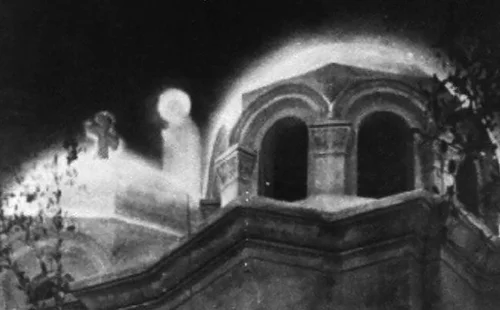
Photograph of the Apparition • St. Mary’s Church, Zeitoun, Cairo, 1968 • This is what over a million people saw
Part V
What the Witnesses Saw: A Complete Description of the Apparitions
Across the three years of apparitions, thousands of witness accounts were collected by journalists, church investigators, government officials, and ordinary people who wrote down what they saw. The remarkable thing about this record is its consistency. People who did not know each other, who spoke to investigators independently, who came from entirely different religious and social backgrounds, described the same things. What follows is the complete composite picture drawn from the weight of that testimony.
- The Luminous Figure of a Woman The primary form of the apparition was a full-length luminous figure of a woman, appearing above or on the large central dome of St. Mary's Church. She was clothed in what witnesses uniformly described as a white luminous garment that produced its own light rather than reflecting ambient light. Her head was covered — described by some as a veil and by others simply as part of the enveloping white luminosity. Her features were distinguishable to many witnesses as those of a young woman, though the brightness that surrounded her made precise facial detail difficult to describe. She appeared solid and three-dimensional, not translucent or ghostly, and clearly female in bearing and movement.
- The Forms She Took The apparition did not appear identically on every occasion. On some nights she appeared as a full figure, standing or walking slowly along the roof near the dome. On others she appeared as a luminous bust — her upper body and head clearly visible, the lower portion merging into the bright cloud from which she seemed to emerge. On still other occasions she appeared as a luminous cloud of great beauty, sometimes with an outline that suggested a human form without precise definition. Witnesses who saw multiple apparitions described the variability, and the consistency of the overall quality — the quality of the light, the fragrance, the doves — remained constant even when the specific form shifted.
- Her Movements and Gestures Within appearances, she moved. She was not a static projection or a fixed luminous shape. She was seen kneeling before the cross at the top of the dome with her head bowed in prayer. She was seen rising from this kneeling position to a standing one. She raised her hands in what witnesses consistently described as a gesture of blessing over the crowd below. She moved along the roofline from one dome to another. She bowed her head or nodded it in what observers felt was direct acknowledgment of the crowd below her. She was seen carrying what appeared to be an olive branch. And on multiple occasions, she turned — fully, slowly — as if addressing different portions of the large crowds that had gathered in every direction around the church.
- The Glowing White Doves Every major apparition was accompanied by the appearance of luminous white birds described as doves. These were not ordinary birds: witnesses described them as self-luminous, emitting their own white light, and moving in ways that no bird moves — appearing and disappearing suddenly, flying without the wing mechanics that produce flight in physical birds, moving at speeds and changing directions in ways that were impossible for biological creatures. They flew in formation around the figure, circled the dome, and on some occasions descended toward the crowd before vanishing. Photographs of the apparitions sometimes show these luminous forms. No natural explanation for them was found.
- The Fragrant Incense Clouds Dense, fragrant clouds accompanied many of the apparitions. Witnesses described them as smelling of incense — specifically of the frankincense used in Coptic and Catholic liturgy — but more intense, more concentrated, and more beautiful than anything produced by a censer in a church. The clouds moved independently of the wind, sometimes rising toward the figure and sometimes spreading outward over the crowd. Many witnesses described the fragrance as the most powerful and affecting part of the experience — something that reached them physically and seemed to carry a quality of peace or presence that was harder to describe than the visual phenomena.
- Light Phenomena in the Sky The apparitions were frequently accompanied by light displays in the sky around and above the church. Witnesses described bright star-like lights that moved and changed color, showers of what were described as “diamonds” or points of brilliant white light, and flashing multicolored illuminations across the sky above the church. These phenomena were distinct from the central figure and appeared to serve as a kind of announcement or accompaniment of the main event. They were seen before the figure appeared, during the apparition, and sometimes lingered briefly after she had faded.
- The Duration Individual appearances ranged from a few minutes to nine continuous hours. The nine-hour appearance, which occurred in late 1968, was witnessed by enormous crowds through an entire night. Most appearances were between one and three hours. Shorter appearances of ten to twenty minutes were common in the later periods (1970–1971) as the frequency of apparitions began to decline. The variation in duration was not predictable — witnesses who came expecting a brief appearance sometimes experienced hours, and those who had settled in for a long vigil sometimes saw only a brief flash of the figure before she was gone.
- The Complete Silence Throughout the entire three-year period, across dozens of apparitions witnessed by millions of people, Our Lady of Zeitoun spoke no words. She communicated nothing verbal. There were no messages, no instructions, no prophecies, no requests, no warnings. She appeared, she blessed, she moved, she knelt in prayer, she acknowledged the crowd — and she said nothing. This silence is not an absence of communication. In the theological tradition, it is understood as the fullest possible communication: the presence itself is the message. She came not to give information but to be present with a people who needed presence. To demonstrate that God had not forgotten Egypt, had not abandoned the world, had not turned away from His children in their sorrow.
Part VI
Complete Chronological Timeline: 1968–1971
The following is a comprehensive timeline of the Zeitoun apparitions, drawing on the Egyptian church records, government investigation documents, contemporary press accounts, and the accounts preserved in subsequent scholarly and devotional literature. It represents the most complete chronological account available in a single resource.
- Tuesday, April 2, 1968 — The First ApparitionApproximately 8:30 PM. Farouk Mohammed Atwa, Muslim bus mechanic, sees the luminous figure on the dome. The crowd gathers. The figure is visible for approximately 15–20 minutes. First reports filed. Police arrive and can offer no natural explanation. The Coptic Orthodox Church is notified.
- April 3–9, 1968 — The First Week of ApparitionsThe figure returns on multiple nights. Word spreads rapidly through Zeitoun and into Cairo's broader population. Crowds grow from hundreds to thousands. The press begins arriving. Church officials make initial observations. The apparitions are consistent in form and quality with the first night.
- April 10–30, 1968 — National Coverage BeginsEgyptian national newspapers, including Al-Ahram (Egypt's oldest and most respected publication), begin covering the events. Al-Ahram publishes the first photographs of the apparition. Egyptian state television dispatches a crew and obtains footage. The crowds by late April reach tens of thousands on major apparition nights. President Nasser's government takes notice.
- Early May 1968 — The Egyptian Government InvestigationThe Egyptian government, under direct order from the highest levels of Nasser's administration, conducts a formal investigation. Police and security teams search the church and surrounding buildings systematically for any projector, lighting equipment, mirror system, or mechanical device that could produce the phenomenon. Nothing is found. Scientific investigators are brought in. No natural explanation is identified. The government formally confirms that no hoax apparatus exists.
- May 4, 1968 — The Coptic Orthodox Official ConfirmationPope Kyrillos VI, the 116th Pope of Alexandria and Patriarch of the See of St. Mark, issues a formal statement confirming the authenticity of the apparitions. The statement affirms that the Coptic Orthodox Church officially recognizes the apparitions as genuine manifestations of the Virgin Mary, the Theotokos. This is the first major church confirmation — occurring just 32 days after the first sighting. The speed of this confirmation reflects both the public, documented nature of the phenomenon and the weight of evidence available to church investigators who had witnessed the apparitions directly.
- May–December 1968 — Peak Period of ApparitionsThe most frequent and sustained apparitions of the entire three-year period occur in the second half of 1968. Multiple apparitions per week are recorded. One appearance, in late 1968, lasts nine continuous hours and is witnessed by enormous crowds through an entire night. International media coverage expands. Pilgrims begin arriving from outside Egypt. The Vatican dispatches investigators.
- 1968 — Vatican InvestigationCardinal Stephanos I Sidarouss, the Catholic Patriarch of Alexandria and a direct representative of the Holy See in Egypt, personally witnesses an apparition and submits a report to Pope Paul VI in Rome. The Vatican investigation confirms the phenomenon. Other Catholic clergy from Egypt also witness the apparitions and file reports. The Catholic Church does not issue a formal statement of authentication for Zeitoun in the same public manner as the Coptic Orthodox Church, but the Vatican investigation's positive findings are documented and the apparition is treated with full respect in subsequent Catholic devotional literature.
- Throughout 1968 — Reported Miracles and HealingsAs the apparitions continue, a growing record of reported miraculous healings emerges among those who attend. The healings are not formally documented by a medical bureau (as at Lourdes), but they are reported consistently, named, and attested by multiple witnesses. Blind individuals recovering sight, cancers entering remission, paralytics regaining movement — these accounts accumulate through late 1968 and into 1969.
- 1969 — Continued Regular ApparitionsApparitions continue through 1969, somewhat less frequent than in the peak period of mid-to-late 1968 but still regular. The crowds remain large. The international pilgrimage to Zeitoun becomes an established phenomenon. President Nasser himself is reported to have witnessed an apparition — an account preserved in Egyptian sources that, if accurate, is remarkable given his secular nationalist background.
- 1970 — Declining FrequencyThe frequency of apparitions begins to decrease noticeably in 1970. Instead of multiple appearances per week, weeks pass between apparitions. The individual appearances that do occur retain their full quality — the light, the doves, the incense — but their increasing rarity lends each one a quality of urgency and preciousness that the earlier abundance had not quite produced. Pilgrims from across the world continue to come, now often waiting for days in hopes of witnessing an apparition.
- 1971 — The Final MonthsApparitions in 1971 are rare. A handful of appearances are documented in the early months of the year. The crowds that gather on potential apparition nights remain large, drawn by hope and by memory of what this building has been.
- May 29, 1971 — The Final Major ApparitionThe last major documented apparition occurs. The figure appears above the dome in her characteristic form: luminous, robed in white, surrounded by glowing doves. She is present for a sustained period. The crowds gather as they have for three years. And then she is gone — not with any dramatic ending, not with a final message or a formal farewell, but simply as the apparitions had always proceeded: present and then absent, leaving behind only the church, the dome, the fragrance that lingered in the air, and a million memories of what had been witnessed here.
- Post-1971 — The Ongoing PilgrimageThe Church of St. Mary in Zeitoun becomes a major Marian pilgrimage site. Coptic Orthodox, Catholic, and other Christian visitors come from across Egypt and the world. The annual commemoration of the first apparition (April 2) draws thousands. The church remains an active parish and pilgrimage destination to the present day.
Part VII
The Egyptian Government Investigation: When the State Confirmed a Miracle
The Egyptian government's response to the Zeitoun apparitions was not dismissal and it was not immediate credulity. It was investigation: systematic, thorough, and conducted by people who had every reason to find a mundane explanation and little obvious incentive to confirm a supernatural one. That the investigation concluded as it did — finding no hoax, no apparatus, no natural explanation, and in effect confirming that something extraordinary was occurring above St. Mary's Church — is one of the most compelling aspects of the Zeitoun record.
The Search for a Hoax
The government's investigators understood that the most obvious explanation for a luminous figure appearing above a church dome was deception: a projector, a series of mirrors, a human performer in a specially rigged costume, some combination of theatrical illusions. They searched for all of these with thoroughness. The church building was examined. The neighboring buildings were examined. The streets and rooftops were checked. The electrical systems of the area were reviewed. Inspection teams with the specific mandate of finding projection equipment found nothing. Police officers who maintained a presence in the area for extended periods, specifically watching for any equipment setup or operation, reported nothing.
The investigation extended to systematic power outage testing: on nights when the apparition was expected, the electrical power to the surrounding blocks was cut. The apparitions continued, unaffected by the absence of the power grid that any projection system would require. This was decisive. You cannot project a luminous image onto the exterior dome of a church at the scale witnessed in Zeitoun using battery power available in 1968, and the investigators knew it.
The Absence of Any Device
The technical impossibility of the phenomenon as a deception went beyond merely finding no equipment. The scale and character of what was being witnessed was, by the analysis of investigators with relevant expertise, not producible by any technology available in 1968 even in theory. The figure appeared in the open air above the dome — not on a screen, not against a surface, but as a freestanding luminous form visible from multiple angles simultaneously, including angles from which projected images cannot be seen. The doves were self-luminous, moving objects, not projections. The fragrance was physical, unconnected to any light source. The combined phenomenon was not a projection; it was something else entirely.
The Government Statement
The Egyptian government, through the Ministry of Information, issued a formal statement confirming that investigators had found no evidence of fraud, deception, or natural explanation for the phenomenon. This statement — issued by the secular, Arab nationalist government of Gamal Abdel Nasser, a government that had no institutional interest in confirming Christian religious claims — is among the most remarkable documents in the modern history of religious phenomena. The government of Egypt, in 1968, officially told its citizens that something it could not explain was occurring at a church in Cairo.
President Nasser and the Apparition
Egyptian accounts preserved in both Christian and Muslim sources report that Gamal Abdel Nasser himself, president of Egypt and one of the most prominent figures of 20th century Arab politics, witnessed at least one of the Zeitoun apparitions. Nasser was a Muslim and a secular nationalist whose political vision was built on pan-Arab unity rather than on religious distinctions. That he is reported to have been present on at least one occasion among the crowds gathered outside St. Mary's Church — and that he was struck by what he saw — cannot be independently verified to the standard of documentary proof. But the account is preserved in multiple sources and has not been credibly refuted. Whether or not Nasser personally witnessed the apparition, his government's formal confirmation of the phenomenon stands in the official record of Egypt as an attestation from the highest secular authority in the country.
Part VIII
The Coptic Orthodox Confirmation: Pope Kyrillos VI and the Statement of May 4, 1968
Pope Kyrillos VI (1902–1971) was the 116th Pope of Alexandria and Patriarch of the See of St. Mark — the head of the Coptic Orthodox Church, one of the ancient Eastern Christian churches tracing its founding to the Evangelist Mark in the first century AD. He was, by all accounts, a man of extraordinary personal holiness: ascetic in his personal life, deeply committed to monastic prayer, widely regarded by the Coptic faithful as a saint before his death and formally canonized by the Coptic Orthodox Church in 2013. He was not a credulous man. He was a careful bishop.
The speed of his confirmation of the Zeitoun apparitions is one of the most striking aspects of the entire record. The first apparition occurred on April 2, 1968. Pope Kyrillos VI issued his formal statement of confirmation on May 4, 1968 — 32 days later. By the standards of how ecclesiastical authorities typically respond to claimed apparitions — Lourdes took decades for official authentication, Fatima was not formally approved until 1930, thirteen years after the apparitions — this is instantaneous. What explains it?
Why Kyrillos Confirmed So Quickly
The answer lies in the nature of the Zeitoun apparitions themselves. Pope Kyrillos did not need to evaluate the testimony of a few visionaries over many years. He was dealing with a phenomenon that had already been witnessed by tens of thousands of people, documented by the press, investigated and partially confirmed by the government, and personally observed by church representatives. The question before him was not “did this really happen?” — that was beyond serious dispute by the time he acted. The question was whether the Coptic Orthodox Church would formally recognize what the entire population of Cairo could see with their own eyes.
He sent his own representatives to Zeitoun before issuing the statement. They witnessed the apparitions. He may himself have visited the church, though accounts differ on whether he personally witnessed an apparition directly. The weight of testimony from his own trusted clergy, combined with the public, documented, government-investigated character of the phenomenon, gave him grounds to act with the speed and certainty that the circumstances called for.
The Content of the Statement
The statement issued by Pope Kyrillos VI on May 4, 1968 formally affirmed that the Coptic Orthodox Church recognized the apparitions as genuine manifestations of the Blessed Virgin Mary, the Theotokos and Mother of God. The statement called on the faithful to venerate the holy site, to pray to the Virgin for Egypt and its people, and to receive the apparitions as a divine sign and blessing. The use of the term Theotokos — “God-bearer” or “Mother of God” — situates the statement in the fullness of Eastern Christian Marian theology: what appeared above St. Mary's Church in Zeitoun was not merely the historical figure of Mary of Nazareth, but the glorified Mother of God whose intercession is efficacious in the present and whose presence in the world is understood as a continuation of the maternal care she exercised at the Incarnation.
Pope Kyrillos VI: A Saint Who Lived to See This
Pope Kyrillos VI died on March 9, 1971 — less than three months before the final major apparition on May 29, 1971. He lived the entirety of the Zeitoun apparition period as the head of the Coptic Church, from the first confirmation to nearly the last appearance. That a man of his personal holiness — now formally canonized as a saint of the Coptic Orthodox Church — was the shepherd of the Coptic faithful during the years when the Mother of God appeared above one of their churches in Cairo is something the theological tradition notes with care. His patronal feast day is March 9, and the commemoration of the Zeitoun apparitions falls in the same liturgical year. For Coptic Orthodox Christians, the two are inseparable: the saint who confirmed the apparition and the apparition that defined his final years as pope.
His Own Canonization in 2013
The Coptic Orthodox Church formally canonized Pope Kyrillos VI on May 20, 2013, under Pope Tawadros II. The canonization recognized his personal holiness, his service to the Church, and the miraculous events associated with his ministry — including his role in the Zeitoun apparitions. He is now venerated as a saint in the Coptic Orthodox Church with a feast day of March 9. The man who told the world that the Mother of God had appeared in Cairo is himself a saint of the Church.
Part IX
The Vatican Investigation: Cardinal Sidarouss and the Catholic Witness
The Catholic Church's response to the Zeitoun apparitions unfolded through the person of Cardinal Stephanos I Sidarouss (1904–1987), the Catholic Patriarch of Alexandria and Primate of Egypt — the most senior Catholic prelate in Egypt and a direct representative of the Holy See in the country. Cardinal Sidarouss did not merely send a delegate. He himself went to Zeitoun, witnessed an apparition, and filed a personal report to Pope Paul VI in Rome.
Cardinal Sidarouss’s Personal Witness
Stephanos I Sidarouss was not a man given to credulity or to the kind of popular religious enthusiasm that sometimes surrounds claimed miracles. He was a careful, highly educated church leader with a life of rigorous service to the Catholic Church in Egypt. When he went to Zeitoun, he went as an investigator. And what he reported afterward, in his communication to Pope Paul VI, was that he had witnessed the apparition himself — that the luminous figure described by millions of witnesses was something he had personally seen above the dome of St. Mary's Church, and that he could not explain it by any natural means.
His report to the Holy Father contributed to the Vatican's informed awareness of the Zeitoun events. Pope Paul VI, though he did not issue a formal public pronouncement on Zeitoun in the manner of the Coptic confirmation, received detailed reports from Catholic clergy who had personally witnessed the apparitions. The Vatican's response was one of quiet recognition rather than formal authentication — but the distinction is one of ecclesiastical procedure rather than substance. Catholic devotion to Our Lady of Zeitoun was not discouraged; it was, in the relevant Catholic communities of Egypt and beyond, understood to be fully appropriate.
The Catholic Patriarchate of Alexandria and Egypt
The Catholic Patriarchate of Alexandria — one of the Eastern Catholic churches in full communion with Rome — serves the Coptic Catholic community of Egypt. This community, several hundred thousand strong, shares with the Coptic Orthodox Church both the Coptic liturgical tradition and the deep devotion to the Virgin Mary that characterizes Egyptian Christianity of both communions. The Zeitoun apparitions were therefore not only a Coptic Orthodox event but an event directly within the lived religious experience of Egyptian Catholics as well. The distinction that matters — that Zeitoun was witnessed across all faith lines, including across the Catholic-Orthodox line within Eastern Christianity — is confirmed by the involvement of Cardinal Sidarouss as a direct Catholic witness.
Part X
The Photographs and Film Evidence: The Most Documented Apparition in History
The Zeitoun apparitions are, by a significant margin, the most photographically documented claimed Marian apparition in the history of Christianity. Unlike Fatima (1917, before modern photography was widespread), unlike Guadalupe (1531, before photography existed), unlike Lourdes (1858, before photography was publicly accessible), the Zeitoun apparitions occurred in 1968 in a major city with a functioning press corps, a state television broadcaster, and thousands of witnesses who owned cameras.
Al-Ahram and the Egyptian Press
Al-Ahram — founded in 1875, the oldest and most widely read Arabic-language newspaper in the world — covered the Zeitoun apparitions extensively. Al-Ahram's photographers were dispatched to Zeitoun and obtained images of the apparitions. Those photographs were published in the newspaper and are part of the historical record. Al-Ahram's coverage carried enormous weight precisely because of its status as Egypt's newspaper of record — not a religious publication, not an instrument of any particular faith community, but the newspaper of Egypt's secular, educated establishment. When Al-Ahram published photographs of a luminous figure above a Coptic church, it was saying something different than a Coptic devotional magazine saying the same thing.
Other Egyptian newspapers, both Arabic and English-language publications serving Cairo's international community, also covered the events. The Watani newspaper, historically the voice of Egypt's Coptic community, provided detailed ongoing coverage. International wire services picked up the story and it was reported in the United States, Europe, and elsewhere, though coverage in the Western press was inconsistent and often brief.
Egyptian State Television
Egyptian state television dispatched a crew to Zeitoun during the period of the apparitions and obtained footage. This footage was broadcast on Egyptian television and subsequently seen internationally. The existence of moving-image footage of the apparitions, produced by a state broadcaster with no religious motivation, is significant. State television in Nasser's Egypt was not an instrument of Christian devotion; it broadcast what it found newsworthy. What it found newsworthy at Zeitoun is preserved in the historical record.
What the Photographs Show
The photographs taken at Zeitoun consistently show a bright luminous form above the dome of the church. The form varies in detail depending on the specific night and apparition photographed, consistent with witness accounts of the varying forms She took. Some photographs show a clearly female silhouette in brilliant white. Others show a luminous cloud or column. The luminous birds described by witnesses appear in some photographs as bright moving forms. The photographs have been examined by photographic experts over the decades since 1968, and no evidence of darkroom manipulation, double exposure, or any other form of alteration has been found in the originals. The negatives, preserved in the archives of both the press organizations and the Egyptian government, are consistent with genuine unaltered photographs of a luminous phenomenon occurring above the church dome.
Critically, the photographs were taken by multiple independent photographers on different nights using different equipment. The consistency of what is documented across these independent records is itself a form of evidence: the same phenomenon, documented by people who were not coordinating their deception (if it were a deception) and who had no shared interest in producing a specific false result.
The Impossibility of Photographic Fraud at This Scale
The question of photographic fraud must be addressed directly. In 1968, photographic manipulation was technically possible but required significant expertise, access to the original negatives, and left detectable traces. It was not something that could be performed by someone pointing a camera at a church dome. The photographs were taken in the open air, at night, by many different photographers on many different occasions. To produce a photographic record of the kind that exists at Zeitoun through fraud would have required a coordinated operation of extraordinary complexity involving multiple photographers, the cooperation of the Egyptian press, the complicity of the state broadcaster, and an impossibly comprehensive deception extending across three years. No evidence for any such coordination has ever emerged.
Part XI
The Witnesses: One Million People Across Every Boundary of Faith
The one-million-witness figure is not a devotional exaggeration. It is derived from estimates of crowd sizes across three years of apparitions, documented in contemporaneous press accounts, police crowd management records, and church documentation. Individual apparitions in the peak period of 1968 drew tens of thousands of witnesses on a single night. Cumulatively, over 38 months of repeated appearances to enormous crowds, the total reaches figures that independent observers consistently place above one million.
What makes the scale of the Zeitoun witness record theologically and historically unique is not only its size but its breadth. No other Marian apparition in history has been witnessed across such a complete range of religious backgrounds simultaneously. Consider what the record shows:
Muslims formed a significant portion of the Zeitoun witness crowds — which is geographically inevitable since Egypt's population was approximately 90% Muslim in 1968 and Zeitoun was a mixed but predominantly Muslim neighborhood. But the Muslim witnesses were not merely incidental bystanders; many of them experienced the Zeitoun apparitions as directly meaningful within their own faith tradition.
Islam venerates Maryam (Mary) as the purest of all women, the chosen vessel of the miraculous birth of ‘Isa (Jesus), and a figure of extraordinary holiness. The Quran devotes a full surah (Surah 19, Maryam) to her story and describes her as having been chosen above all women of the world. For Muslim witnesses at Zeitoun who saw a luminous female figure surrounded by glowing birds above a church dedicated to Maryam in a neighborhood known to be connected to her earthly presence in Egypt — the response was not confusion or rejection. Many fell to their knees. Many prayed in the tradition they knew. Some subsequently reported the deepening of their own Muslim faith as a result of what they witnessed. The same mother who is honored in Islam came to Egypt in a way that honored both her children.
The Coptic Orthodox Christians who witnessed the apparitions — both the parishioners of St. Mary's Church itself and the broader Coptic community of Cairo and Egypt who came to Zeitoun in enormous numbers — experienced the events within the deepest context of their tradition. The Coptic Church is arguably the most intensely Marian of all Christian traditions: the Theotokos occupies a central place in Coptic liturgy, devotion, architecture, and daily piety that is unmatched in the Western churches. Every Coptic church has its icon of the Theotokos. The litanies of the Coptic liturgy invoke her constantly. She is understood as the heavenly advocate and protector of Egypt in a way that has deep roots in both Christian theology and Egyptian national identity.
For Coptic witnesses, Zeitoun was the fulfillment of something they had always been taught was true but had never expected to see with their own eyes: the actual, physical, luminous presence of the Mother of God above one of her churches. The experience was not alien to their theology; it was the direct manifestation of what their theology had always claimed. The tears reported by Coptic witnesses in account after account were not tears of surprise at something unexpected. They were tears of recognition — of seeing, physically, what they had been praying to and toward their entire lives.
As the Zeitoun apparitions became internationally known — through press coverage, through the Catholic investigation, through the accounts of Egyptians living abroad — international visitors began arriving. Catholic pilgrims from Lebanon, Italy, France, and the United States were reported among the crowds in 1968 and 1969. Protestant missionaries and clergy stationed in Egypt witnessed the apparitions. Western journalists on assignment in Cairo attended and filed reports. The diversity of the international witness record extends the already remarkable breadth of the local one: this was not merely an intra-Egyptian or intra-Christian phenomenon. It was witnessed by representatives of the full range of contemporary Christianity and beyond.
Protestant witnesses present a particular interest. The Protestant traditions are the most cautious about Marian apparitions, with deep theological reservations about the role of Mary in mediating grace that are fully worked out in major Protestant systematic theologies. Yet Protestant missionaries and clergy who witnessed the Zeitoun apparitions filed accounts describing what they could not explain — accounts that were characterized, whatever their authors' prior theological frameworks, by the same quality of astonished encounter that marked every other category of witness. The phenomenon did not adjust itself to the theological expectations of its viewers. It was the same luminous figure above the same dome for everyone who came.
Part XII
Zeitoun and the Holy Family: Why Egypt Is Sacred Ground
The name Zeitoun means “olive tree” in Arabic. The significance of this is not primarily botanical. The olive tree is one of the most ancient symbols of peace, divine blessing, and sacred presence in the Abrahamic traditions — the olive branch carried by the dove at the end of the Flood, the olive oil used in the consecration of priests and kings, the Mount of Olives where Christ prayed before His passion. That the neighborhood where Mary appeared in 1968 carries the name of the olive tree is the kind of detail that the theological tradition regards as providential rather than coincidental.
The Flight to Egypt: Matthew 2:13–23
The biblical basis for the Holy Family's presence in Egypt is the second chapter of Matthew's Gospel. When the Magi departed without returning to Herod, an angel appeared to Joseph in a dream: “Rise, take the child and his mother, and flee to Egypt, and remain there until I tell you, for Herod is about to search for the child, to destroy him” (Matthew 2:13). Joseph obeyed, and the Holy Family journeyed into Egypt, where they remained until the death of Herod. Matthew sees in this the fulfillment of Hosea's prophecy: “Out of Egypt I called my son” (Matthew 2:15; Hosea 11:1).
The Egyptian Coptic Church has preserved, across nearly two thousand years of continuous tradition, the memory of the Holy Family's route through Egypt. This tradition — maintained in church documents, in the pilgrim itineraries of ancient and medieval travelers, and in the accumulated local memory of Coptic communities across Egypt — traces a path from the border crossing in the northeast through the Delta region toward Cairo and then south into Upper Egypt. The journey lasted, by various traditional accounts, approximately three to three and a half years.
The Zeitoun Area and the Holy Family
In the Coptic tradition, the area of what is now Matariya (Heliopolis) and its adjacent neighborhoods — of which Zeitoun is one — is among the most sacred sites on the Holy Family's Egyptian route. The tradition preserves the account of the Holy Family resting in this area, of the miraculous spring that appeared for them in Matariya, and of the sycamore tree under which Mary rested with the Christ child. The sycamore tree of Matariya — a living specimen several centuries old, successor to ancient trees on the same site — is venerated to this day as the tree that sheltered the Theotokos and the incarnate God.
Zeitoun is within walking distance of this site. The church dedicated to the Virgin Mary in Zeitoun stands, in the geographical memory of the Coptic tradition, on ground that Mary herself walked upon — ground where she was present once before with her infant Son, fleeing the violence of Herod. That she returned to this ground in 1968, above a church bearing her name, in a city that had just experienced its own collective trauma, is read by the theological tradition as a conscious return: the Mother coming back to the place she had been before, to be with the children who needed her.
The Coptic Pope Who Had This Confirmed
Pope Kyrillos VI, who confirmed the Zeitoun apparitions in 1968, was deeply invested in the Holy Family in Egypt tradition throughout his papacy. He oversaw the construction of the Cathedral of St. Mark in Cairo and led the revival of the Holy Family heritage sites as pilgrimage destinations. The apparition at Zeitoun occurring during his papacy — above a church on ground sacred to the Holy Family, in the city at the heart of the Holy Family's Egyptian journey — was, to him and to the Coptic faithful, not a random event. It was a visitation to a place that had always belonged to her.
Part XIII
St. Mary’s Church Zeitoun: The History of the Building & The Pilgrimage Today
The Church of the Virgin Mary in Zeitoun — the building above whose dome the apparitions appeared — is not an ancient structure. It was built in 1924, which means that at the time of the apparitions it was forty-four years old: new enough to be structurally sound and aesthetically intact, but not so recent that its religious significance was still being established. The story of how it came to be built is itself a devotional narrative.
The Foundation: Khalil Ibrahim Bek’s Promise
The Church of the Virgin Mary in Zeitoun was built on land donated by the Khalil Ibrahim family following what was understood as a miraculous healing. Khalil Ibrahim Bek, a prominent Egyptian who owned land in the Zeitoun area, reportedly made a vow to the Virgin Mary: if she interceded for his healing, he would donate the land for a church in her honor. The healing occurred; the land was donated; the church was built and consecrated on May 6, 1924. The entire foundation of the building is therefore an act of Marian intercession and response — the building existed because the Mother of God had already been invoked in that place and had already answered. What happened above its dome in 1968 was not the first time her intercession had been sought and experienced at that address.
The church was designed in a style that blends Coptic architectural tradition with early 20th-century influences: a stone building with the central dome above which the apparitions would appear, flanked by smaller domes and towers. The cross at the apex of the central dome — before which witnesses saw the luminous figure kneeling in prayer — was part of the original design, consecrated when the church was built and present, unchanged, throughout the three years of apparitions.
The Church During the Apparitions: 1968–1971
The three years of the apparitions transformed St. Mary's Church from a neighborhood Coptic parish into one of the most visited religious sites in Egypt. The church itself could not accommodate the crowds; the apparitions occurred outdoors, above the dome, visible to the entire neighborhood and to the enormous crowds that filled the streets in every direction. The church authorities and the local clergy managed the pastoral dimension of the experience — the confessions, the prayers, the needs of pilgrims, the documentation of reported healings — while the phenomenon itself unfolded in the open air above them. In a sense, the whole of Zeitoun became the sanctuary during those years, with the dome serving as the altar and the streets as the nave.
The Church Today: Active Parish and Marian Shrine
St. Mary's Church in Zeitoun is today both an active Coptic Orthodox parish serving its local community and one of the major Marian pilgrimage destinations in the world. The Coptic Orthodox Church has developed the site with facilities to serve pilgrims, including a feast commemorating the first apparition (observed around April 2 each year) that draws thousands. The dome above which the apparitions occurred is unchanged from its 1968 appearance. The cross before which the luminous figure knelt in prayer is still there.
Pilgrims from Egypt, from the Arab world, from Europe, from North America, and from every region where Coptic communities have settled come to Zeitoun throughout the year. The church is open for visitors. Divine Liturgy is celebrated regularly. The Marian feasts of the Coptic calendar are observed with particular solemnity. For pilgrims who cannot travel to Zeitoun, the connection to the apparitions is maintained through the photographs — the actual images of what was witnessed above that dome — which serve as the devotional anchor for prayer at a distance.
Address and Practical Information for Pilgrims
The Church of the Virgin Mary (St. Mary's Church), Zeitoun:
- Address: Tomanbay Street (also written Tumanbay), Zeitoun, Cairo, Egypt
- District: Zeitoun (northeastern Cairo, near Heliopolis)
- Denomination: Coptic Orthodox Church (open to all pilgrims and visitors)
- Principal Feast: The annual commemoration of the first apparition (around April 2) and the major Marian feasts of the Coptic calendar
- Visiting Hours: The church is open to visitors during daylight hours; Divine Liturgy times should be confirmed with the parish directly
- Getting There: Accessible by Cairo Metro (Sadat or Nasser stations, followed by surface transit to Zeitoun) or by taxi; the church is known to local drivers
Part XIV
Miracles and Healings During the Zeitoun Apparitions
The Zeitoun apparitions were not merely visual and atmospheric phenomena. Alongside the luminous figures, the glowing doves, and the fragrant incense, a sustained record of miraculous healings was reported across the three years of apparitions. These healings were not formally documented by a medical bureau in the manner of the Lourdes miraculous healings, but they were reported by named individuals, attested by multiple witnesses, and accumulated in the records of the church and press to a volume that the serious investigator cannot dismiss.
- Farouk Mohammed Atwa — The First Healing The first witness to the apparition, the Muslim mechanic Farouk Mohammed Atwa, reportedly had gangrene in his fingers at the time of the first sighting that doctors had said would require amputation. In the days following April 2, 1968, those around him reported that his condition healed without surgery. This account, recorded in multiple independent sources and never credibly contradicted, stands as the first miracle associated with the Zeitoun apparitions — occurring before the crowds had grown, before the press had arrived, before the world knew this was happening. A man who had nothing to prove to anyone, who belonged to no church that would benefit from a miracle's confirmation, recovered from a serious medical condition after seeing what he saw above that dome.
- Restorations of Sight Multiple accounts of blind or severely visually impaired individuals recovering sight after attending the Zeitoun apparitions were reported in 1968 and 1969. The accounts are consistent in their structure: a person with documented visual impairment, present in the crowd, experiences a sudden restoration or significant improvement of sight during or after witnessing the apparition. Several such cases were reported to church authorities and to the press. Their precise number and clinical details are not comprehensively compiled in any single published source, but they are referenced consistently in the accounts of investigators and clergy who were present during the apparition period.
- Cancer Remissions and Serious Illness Accounts of cancer patients and those with serious systemic illnesses experiencing unexpected improvement or remission following attendance at the Zeitoun apparitions form a consistent thread through the miracle record. The pattern is similar to what is documented at major Catholic shrines: a patient with a serious, often terminal diagnosis attends the site, prays, and subsequently discovers through medical examination that the condition has improved or resolved in a way the treating physicians cannot explain. The number and details of such accounts in the Zeitoun record are preserved primarily in church testimonial files and in the memoirs of clergy who received them.
- Conversions Perhaps the most documented category of miracle at Zeitoun is not physical healing but spiritual transformation. The accounts of conversions — of people who came to the Zeitoun crowds as skeptics or casual observers and left with a faith they did not have before — are numerous, consistent, and reported across all religious and secular backgrounds. Muslims who had no prior connection to Christianity describing an encounter with the luminous presence that transformed their relationship with Maryam and with God. Secular Egyptians who had abandoned religious practice returning to it after witnessing the apparitions. Coptic Christians experiencing a deepening of faith that changed the practical character of their devotional life. These transformations are not statistically documented, but they are referenced in enough individual accounts to represent a genuine and significant category of the Zeitoun miracle record.
- Healing of Children Accounts of children brought to the church by desperate parents and subsequently healed are part of the Zeitoun record, though the details are less specific than in some other categories. The tradition of bringing sick children to Marian shrines for healing prayer is ancient in both Eastern and Western Christianity, and Zeitoun attracted parents with sick children from across Cairo and Egypt during the peak period of the apparitions.
Part XV
Later Egyptian Apparitions: Shubra (1986), Assiut (2000–2001), and Warraq (2009)
The Zeitoun apparitions of 1968–1971 were not an isolated event in the history of Egyptian Marian apparitions. In the decades that followed, Egypt experienced three additional sets of publicly witnessed and documented Marian apparitions, each echoing the Zeitoun pattern in significant ways. Taken together, these four sets of apparitions make Egypt, per capita, the country with the most extensively documented modern Marian apparition tradition in the world.
The Shubra el-Kheima Apparition, 1986
In 1986, luminous apparitions above a church roof were reported in Shubra el-Kheima, a heavily industrial neighborhood in northern Cairo. The apparitions were witnessed by substantial crowds and reported in the Egyptian press, following a similar pattern to Zeitoun: a luminous female figure above a church dedicated to the Virgin Mary, visible to crowds of both Christians and Muslims, accompanied by luminous phenomena in the surrounding sky. The Shubra apparitions were less sustained than Zeitoun and attracted less international attention, but they were documented within Egypt and recognized by local church authorities as continuing the tradition established at Zeitoun.
The Assiut Apparitions, 2000–2001
The most significant post-Zeitoun Egyptian apparition series occurred in the city of Assiut (Asyut), in Upper Egypt, beginning in August 2000. Assiut has a substantial Coptic population and is associated with the Holy Family's southward journey through Egypt. The apparitions appeared above the Church of the Virgin Mary in Assiut and were witnessed by enormous crowds — estimated in some accounts at hundreds of thousands over the full period. Egyptian state television again dispatched a crew. Al-Ahram again covered the events. The Coptic Orthodox Church again investigated and publicly recognized the apparitions as genuine.
The Assiut apparitions were notable for their visual character, which closely resembled Zeitoun: the luminous figure of a woman in white, self-luminous birds, fragrant clouds, and accompanying light phenomena. They occurred repeatedly over several months in 2000 and continued with decreasing frequency into 2001. The timing — at the turn of the millennium, in the context of increased communal tensions in Upper Egypt — was interpreted by many as consistent with the Zeitoun pattern of apparitions occurring in times of communal stress and national difficulty.
The Warraq Island Apparition, 2009
In December 2009, a luminous apparition above the Church of the Virgin and St. Athanasius in Warraq, an island district of Cairo, was witnessed by thousands. The phenomenon was photographed and filmed on mobile phones by the modern crowd — giving it a visual documentation record different in medium but similar in character to the Zeitoun photographs. The Egyptian media covered the events. The Coptic Church investigated. The apparition was reported across multiple nights in December 2009 and drew crowds from across Cairo. The Warraq apparitions were shorter in duration than Zeitoun but consistent in form: luminous female figure, luminous birds, light phenomena.
The Pattern: Egypt as Land of the Theotokos
Four sets of publicly witnessed, documented, and in varying degrees officially recognized Marian apparitions in Egypt between 1968 and 2009 constitutes a pattern. The theological interpretation that has developed within the Coptic Orthodox tradition — and that has been articulated by Catholic clergy engaged with the Egyptian church — identifies Egypt as a land of particular Marian presence, consecrated by the Holy Family's sojourn there and repeatedly visited by the Mother of God in the modern era. The biblical text “Out of Egypt I called my son” is read in this tradition as pointing not only to the historical event of the Exodus and the Incarnation, but to the ongoing special relationship between Egypt and the holy family of Nazareth. She came here once. She has kept coming back.
Part XVI
The Theological Significance of Zeitoun: Why She Came, What She Said by Not Speaking
Every serious Marian apparition in the history of Christianity has involved messages: words spoken to visionaries, instructions given, prophecies delivered, devotions requested. Fatima produced secrets and requests for the consecration of Russia. Lourdes produced the request for a chapel and the self-identification “I am the Immaculate Conception.” La Salette produced a warning. Medjugorje has produced decades of ongoing messages on an extraordinary range of topics. Zeitoun produced nothing. Not one word. Not one instruction. Not one prophecy or request or warning.
The theological tradition has grappled with this silence and reached a consistent conclusion: the silence is itself the message. It is the most complete message she could have delivered to a nation and a world in that moment.
What Silence Says That Words Cannot
Consider what was happening in Egypt in April 1968: a country that had lost a war eleven months before, whose president had offered to resign in shame, whose military had been destroyed in six days, whose collective confidence in God's providential care had been shaken to its foundation. What does such a moment need? It does not need information. It does not need instructions for prayer practices or requests for specific devotions. It needs presence. It needs a mother.
A mother who sits with her child in the hospital room at three in the morning says nothing. The sitting is the saying. The staying is the word. What Our Lady of Zeitoun communicated by being present above that church, night after night for three years, without words, without demands, without conditions, is the thing a million people needed to know: I have not left. You are not alone. God has not abandoned Egypt.
The Theology of the Kneeling Figure
Among the most consistently reported gestures of the Zeitoun apparition was the figure kneeling before the cross at the top of the dome. She — the Theotokos, the Mother of God, the Queen of Heaven — knelt before the cross of her Son. The theological content of this image is dense and powerful. She does not stand in her glory above the dome demanding attention. She kneels before the instrument of her Son's death and her humanity's redemption. She prays. She demonstrates the posture she is asking the million people below her to take: not mastery, not certainty, not the triumphalist confidence that had just been humiliated in the Sinai desert, but prayer. Kneeling prayer before the cross. The posture of a creature before its Creator. The posture of trust.
For a nation whose military defeat had shattered its confidence, this image carried a specific message: the greatest creature who ever lived — the one who bore God in her womb — kneels before the cross. How much more should we.
The Cross-Faithfulness of the Sign
The theological tradition also reflects carefully on the ecumenical character of the sign — that it was given to Muslims, Christians, secular Egyptians, and international observers simultaneously, without selecting a specific faith community as its audience. This is consistent with Catholic and Orthodox Marian theology's understanding of the Theotokos as a universal maternal figure whose love is not distributed according to the religious categories humans have created. She is the Mother of God who became the mother of all who receive her Son. In the context of 1968 Egypt — a moment of national rather than denominational crisis — the universal character of the apparition was its appropriateness. She came to Egypt, not to Copts alone or to Catholics alone or to Christians alone.
Part XVII
The Ecumenical Dimension: What Zeitoun Means for Christian Unity and Interfaith Encounter
No other event in the modern history of Christianity has been publicly witnessed, across a sustained period, by such a complete range of religious and secular observers as the Zeitoun apparitions. The ecumenical significance of this cannot be overstated. In the year 1968, the Christian world was navigating the aftermath of the Second Vatican Council (1962–1965), which had transformed the Catholic Church's engagement with other Christian traditions and with non-Christian religions. The Orthodox world was cautiously engaging the ecumenical movement while maintaining significant theological reservations. Protestant-Catholic relations were improving but tender. Muslim-Christian relations in Egypt existed in the complicated coexistence of a minority community and its majority context.
Into this specific historical and ecumenical moment, the most publicly witnessed Marian apparition in history occurred above a Coptic Orthodox church, in a Muslim-majority neighborhood, confirmed by both the Coptic Orthodox Church and Catholic investigators, witnessed by Muslims and Christians and people of no stated faith, photographed and broadcast by a secular state media. The apparition refused to be owned by any single tradition. It arrived in the space that belongs to all.
Zeitoun and Muslim-Christian Relations in Egypt
The significance of the Zeitoun apparitions for Muslim-Christian relations in Egypt is something that Egyptian observers — both Muslim and Christian — have noted extensively. In a country where communal tensions between the Muslim majority and the Coptic minority were a persistent feature of the social landscape, the Zeitoun apparitions produced something rare: shared sacred experience. Muslim and Christian Egyptians stood in the same streets, before the same luminous figure, and experienced the same response. The barriers that separated them in daily social life dissolved before the dome of St. Mary's Church on Tomanbay Street.
This is not a sentimental observation. It is a reported fact from the accounts of those who were there. The crowds at Zeitoun were not characterized by the sectarian self-consciousness that marks so much of Egypt's religious life. They were characterized by the unanimous experience of presence. The woman above the dome did not care which side of the mosque-church boundary her witnesses stood on. And in the space of that not-caring, something became briefly, beautifully possible that the ordinary social order tends to prevent.
For All Who Love the Mother of God
What Zeitoun offers to the contemporary Christian who encounters it — whatever denomination, whatever tradition, whatever level of prior Marian devotion — is a piece of evidence of unusual quality. Not the testimony of one visionary whose character and stability must be assessed. Not a private revelation whose authenticity depends on the evaluation of mystical experience that cannot be independently verified. But a public, mass-witnessed, government-confirmed, photographed, filmed, investigated, and officially authenticated phenomenon that occurred over three years in a major world city. Anyone who loves the Mother of God and who takes seriously the historical record must reckon with Zeitoun. She was there. The evidence says so.
See also our guide to setting up an Orthodox prayer corner, and our articles on Orthodox saints for healing and Theotokos prayer cards.
Part XVIII
Devotion to Our Lady of Zeitoun: What People Pray For and How to Pray
Devotion to Our Lady of Zeitoun has developed over the fifty-plus years since the first apparition into a recognized and flourishing form of Marian piety across Coptic Orthodox, Catholic, and ecumenical Christian communities. It is practiced by Egyptians in Egypt, by the Egyptian diaspora worldwide, and by increasing numbers of Western Christians who have encountered the Zeitoun story and found in it something that speaks to their own experience of faith, doubt, suffering, and the need for divine presence.
Who Prays to Our Lady of Zeitoun
The devotional tradition suggests a particular affinity between certain experiences and the intercession of Our Lady of Zeitoun. She appeared to a nation in grief, in the aftermath of military defeat and collective humiliation. She came to people who felt abandoned by God and by the world. She appeared in silence, asking nothing, offering only her presence. This specific character of the Zeitoun apparition — presence without demand, comfort without conditions, maternal care for the suffering — makes her the natural intercessor for those who find themselves in analogous situations:
- Those Who Feel Abandoned by GodThe experience of divine absence — of praying and hearing nothing, of suffering without any apparent purpose, of wondering whether God is actually there — is addressed directly by the Zeitoun apparitions. She came to people in exactly that state. She came without words, but she came. Her presence at Zeitoun is the answer to the question that those who feel abandoned by God are asking: she did not abandon Egypt in its darkest moment. She will not abandon you in yours.
- Those Facing National or Collective CrisisThose who pray for their country, their community, or their people in times of war, social collapse, communal violence, or collective grief find in Our Lady of Zeitoun a specific precedent for this kind of intercessory prayer. She appeared in a national crisis. She appeared above a church in the capital of a traumatized country. Her intercession for nations — not only for individuals — is attested by the historical record of what happened at Zeitoun.
- Those Seeking HealingThe healing miracles reported at Zeitoun place her within the broader Marian tradition of healing intercession. She is invoked alongside saints like Saint Nektarios and Saint Charbel for physical healing, particularly by those in the Eastern Christian tradition. Her apparitions at Assiut in 2000 — which followed the same pattern as Zeitoun and were also associated with reported healings — reinforce this dimension of her Egyptian intercession.
- Those Seeking Unity Across DivisionsGiven the ecumenical character of the Zeitoun apparitions, she is invoked by those who pray for healing of divisions — between Christian traditions, between Christians and Muslims, between families, communities, and nations. The image of Muslim and Christian standing together before her light is one of the most powerful images in modern religious history, and it can be invoked specifically in prayer for the healing of division.
- The Coptic DiasporaFor Egyptian Christians living outside Egypt — in the United States, Canada, Australia, the United Kingdom, and wherever the Coptic community has settled — Our Lady of Zeitoun carries a specific patriotic and devotional weight. She appeared to Egypt, to their people, to their church. She is part of the Coptic heritage in the deepest sense. Coptic churches worldwide observe the annual commemoration of the Zeitoun apparitions with particular solemnity.
The Photograph as Devotional Anchor
One of the distinctive features of Zeitoun devotion — unique among the major Marian apparitions — is the availability of actual photographs of the apparition as devotional objects. At Lourdes, at Fatima, at Guadalupe, at Medjugorje, the devotional images are artistic representations: icons, paintings, statues, reliefs. At Zeitoun, the devotional image is a real photograph of a real event. The prayer card that bears the Zeitoun apparition photograph is therefore something qualitatively different from an icon: it is an image of what actually happened, captured on film by photographers who were there. To hold it is to hold evidence. To pray with it is to pray with a photograph of the Mother of God.
This is the significance of the prayer card and the other devotional objects bearing the Zeitoun apparition photograph. They are not illustrations of a story; they are documentation of an event. The woman in the photograph appeared above a dome in Cairo, in front of one million witnesses, and neither the Egyptian government nor the Coptic Church nor the Vatican investigators nor the world's press found any explanation for her. She was there. The photograph says so. When you pray before it, you are praying before the image of the God-bearer who appeared in that place and time and who the evidence says is real and present and willing to be asked for help.
Part XIX
Prayers to Our Lady of Zeitoun
Most Holy Mother of God of Zeitoun, Light of the World, pray for us.
You who appeared to millions, do not turn away from my prayer.
You who came in our nation’s darkest hour, come to me in my sorrow.
Amen.
Most Holy Mother of Zeitoun, you who appeared in brilliant light to comfort your suffering children, I stand before you now with burdens I cannot carry alone.
You appeared not to one chosen soul, but to millions — to Muslims and Christians, to rich and poor, to the broken and the afraid. You spoke no words, yet your silence spoke louder than any voice. You asked for nothing but trust. You offered only your maternal presence and the infinite mercy of your Son.
Stand beside me now. When fear grips my heart, remind me that you have not abandoned the world. When I doubt that God hears me, let me remember the million voices that cried out before you and were answered. When sorrow weighs upon me, bring your maternal comfort. When I feel alone, help me to know that I am part of that vast multitude that has beheld your love.
You who transcended all boundaries of faith and nation, teach me to see all people as your children. You who returned night after night for three years, teach me perseverance in prayer. You who blessed with silence, teach me to listen.
Mother of Zeitoun, pray for me. Pray for all who suffer. Pray for our nation. Pray that we may know ourselves loved and never abandoned. Amen.
Holy Theotokos of Zeitoun, Queen of Heaven and Earth, Mother who healed Farouk Atwa before the world even knew you had arrived — I bring you this illness, this diagnosis, this fear about this body that belongs ultimately to your Son.
You appeared above the church in Cairo as a physician of souls, as a mother who knows what it means to watch her child suffer, as the one who stood at the foot of the cross and did not run away. You understand suffering from the inside. You know what it costs. Intercede with the One who healed the sick and raised the dead — your Son, who has not changed — and ask Him to reach into this illness and do what medicine cannot.
And if the path to healing runs through suffering first — give me what the million witnesses at Zeitoun received: your presence in the darkness. The light above the dome. The assurance that God is near. Amen.
Most Holy Mother of Zeitoun, you came to Egypt in its darkest hour, when a great nation had been humiliated and its people were afraid. You came without words of blame, without a message of judgment, without any indication that they had deserved what had happened to them. You came with light.
Come now to [name of nation / people / community in need]. Come above our public squares as you came above the dome in Zeitoun. Come to our Muslims and our Christians, to our believers and our doubters, to our proud and our broken. Pray to your Son for mercy upon a people who need what only He can give: the peace that passes understanding, the healing of wounds that politics cannot close, the restoration of what has been lost.
You knelt before the cross at Zeitoun. Show us how to kneel. Amen.
Our Lady of Zeitoun, Light of Cairo, Mother of all who suffer — you who appeared in silence to a world that needed presence more than words: be present with me today. Pray for me before your Son. And remind me, in whatever this day holds, that God has not abandoned His world. Amen.
Frequently Asked Questions
Our Lady of Zeitoun — Questions & Answers
She Came in Silence. She Left an Image. She Is Still There.
Over a million people stood in the streets of Cairo between 1968 and 1971 and looked up at a light that the Egyptian government could not explain, that the Coptic Church confirmed as the Mother of God, that the Vatican investigated and recognized, that photographers documented on film. She said nothing. She blessed. She knelt before the cross of her Son. She turned to acknowledge the crowd below her — Muslim and Christian and secular and afraid and grieving and searching — and she was simply, radiantly, undeniably there.
She is still available to be asked. The photograph exists. The evidence stands. The prayers are ready. The church in Zeitoun still has its dome and its cross. And the woman who appeared above it for three years is the same woman who bore God into the world and has never stopped caring for the children He came to save.
All Theotokos Prayer Cards →