Saints for Autoimmune Disease: Five Holy Intercessors Who Know Your Suffering
Eastern Catholic & Orthodox • Healing Intercession • Chronic Illness • Prayer Cards
Saints for Autoimmune Disease: Five Holy Intercessors Who Know Your Suffering
These saints bore chronic illness, progressive physical diminishment, and the slow failure of the body. They are not distant. They have been exactly where you are.
“He himself bore our infirmities and carried our diseases.”— Matthew 8:17, fulfilling Isaiah 53:4 • The foundation of Christian intercessory healing
What You Will Find on This Page
- Saint Rafqa of Lebanon
- Maronite patron of chronic pain & connective tissue disease — 29 years of voluntary suffering, and why those with lupus pray to her
- Saint Charbel Makhlouf
- The Miracle Worker of Lebanon — over 33,000 documented healings, many involving conditions medicine had pronounced untreatable
- Saint Panteleimon
- The unmercenary physician-healer of the Orthodox world — patron of doctors, nurses, and the seriously ill for seventeen centuries
- Saint Nektarios of Aegina
- Patron of cancer and incurable illness — the unjustly exiled bishop whose healings began the moment he died
- Saint Luke the Surgeon
- A real surgeon canonized as a saint — the only physician in the Orthodox calendar who practiced both medicine and faith simultaneously
- How to Use These Cards
- A practical guide to using prayer cards as a devotional focus — not as talismans, but as tools for directing and sustaining prayer
Autoimmune Disease and the Eastern Christian Theology of Suffering
Autoimmune disease asks something brutal of those who carry it: to live fully inside a body that is fighting itself. Flares arrive without warning. Treatments that work for a season stop working. Physicians do their best and admit their limits. The suffering is real, often invisible to others, and frequently long — not a crisis that resolves but a condition that must be inhabited.
The Eastern Christian tradition has always understood this kind of suffering — not as punishment, and not as something to be spiritualized away, but as participation in the suffering of Christ, who took on flesh and bore its full vulnerability. The saints gathered on this page did not theorize about illness from a safe distance. Several bore serious chronic physical disease themselves. Others devoted their lives to healing it in others. One was both a trained surgeon and a canonized bishop who saw no contradiction between medicine and faith.
They are invoked by those with lupus, rheumatoid arthritis, multiple sclerosis, Crohn’s disease, psoriasis, ankylosing spondylitis, and the full spectrum of conditions in which the immune system turns on the body it was meant to protect. Not because the Church promises a cure — it does not. But because these saints have been there, and because the tradition holds that those who have suffered and been glorified do not forget those still suffering below. You may also want to read our broader guide to Catholic saints for chronic illness and invisible suffering, which covers additional intercessors beyond those featured here.
How to Use Prayer Cards
Using Prayer Cards as a Devotional Tool: A Practical Guide
A prayer card is not a charm. It does not work on its own, does not need to be touched in a specific way, and carries no automatic power. What it is — and what the Eastern tradition has understood it to be for centuries — is a physical focal point for an interior act: the act of directing your prayer toward a specific saint and asking that saint to intercede before God on your behalf.
This matters especially for those dealing with chronic illness. When you are exhausted, when pain makes sustained attention difficult, when the spiritual fog of long suffering settles in and formal prayer feels impossible — a physical object you can hold gives the body something to anchor the mind. You pick up the card. You look at the face. You say the name. That is already a prayer. The rest can follow from there, or not. Either way, you have turned toward the saint, and the tradition holds that turning is enough to begin. For more on building a structured prayer life around physical objects, our guide to Orthodox prayer rules for beginners offers helpful context.
In the Eastern tradition, asking a saint to pray for you is identical in structure to asking a living friend to pray for you. You are not worshipping the saint. You are asking someone who is close to God — someone who has already made it, who stands before Him — to add their voice to yours. The saints are not dead. They are more alive than we are. The prayer card is the tool by which you reach across that threshold and make the ask.
The saint does not heal you. God heals you. The saint intercedes — brings your prayer before God with the particular authority of one who has suffered, been faithful, and been glorified. That is what makes a healing saint different from a general saint: they have firsthand knowledge of the body’s suffering, and that knowledge is now offered in prayer on your behalf.
A Simple Way to Pray with a Prayer Card
There is no required form. The Eastern tradition is remarkably practical about this. What follows is a pattern — not a rule — that many people with chronic illness have found useful.
1. Hold the Card and Look at the Icon
Don’t rush past this. The icon is not decoration — it is a window. Look at the face. The Eastern tradition teaches that an icon makes the saint present. Take a moment before you begin speaking. Let the image do its work of focusing your attention on the person you are addressing.
2. Address the Saint by Name
Speak directly. “Saint Rafqa” — or “Holy Great Martyr Panteleimon” — or simply the name. You are not addressing the air. You are addressing a person. The specificity matters. It is the difference between a prayer and a wish.
3. Be Specific About What You Are Asking
Name the condition. Name the medication that isn’t working. Name the appointment you are afraid of, the test result you are waiting for, the morning when getting out of bed felt impossible. The saints are not offended by specific, unglamorous detail. That is exactly the kind of suffering they bore themselves.
4. Use the Prayer on the Back — or Your Own Words
The prayer printed on the back of each card gives you a starting point, especially on days when you have no words of your own. Read it slowly. But if it comes naturally, drop into your own language at any point. The saints understand vernacular prayer. They heard it for their entire earthly lives.
5. End with Submission, Not Demand
“If it is God’s will” is not a formality — it is the thing that separates Christian prayer from magical thinking. You are asking, not commanding. You believe God heals and you want to be healed, and you hold both of those things open to His answer. That posture is itself an act of faith.
6. Place the Card Where You Will See It
On the nightstand. Taped inside a pill organizer. Tucked in a wallet. Near the infusion chair or the dialysis station. The card serves its purpose not only during formal prayer but every time your eye falls on it — a small, silent reminder that you are not praying alone, and that someone is asking on your behalf.
Some people pray to one saint consistently and build a relationship with that particular intercessor over time. Others bring their need to several saints at once — the way you might ask multiple friends to pray for you during a hard season. Both approaches are valid in the Eastern tradition. The Autoimmune Saints Bundle is designed for the second approach: five intercessors, each with a specific connection to chronic physical suffering, all brought to bear on the same need.
Saint One
Saint Rafqa of Lebanon
Rafqa Khuri Choboq ar-Rayes was born in 1832 in the village of Himlaya in the mountains of Lebanon, and entered religious life as a Maronite nun. Her early decades were unremarkable by the standards of sainthood — faithful service, genuine holiness, quiet devotion. Then, in 1885, at the age of 53, she prayed explicitly to be allowed to share in the sufferings of Christ. Within days, she began to lose her sight. Within months, she lost the use of her limbs. She would spend the final 29 years of her life in near-total physical incapacity — unable to see, progressively unable to move — and she remained, by all accounts, joyful throughout.
She never complained. When asked if her suffering was painful, she said that it was, and that she was grateful. When her superiors asked God to restore her health, she asked that they not intercede that way. She had requested this suffering; she wished to keep it. She died in 1914 and was canonized by Pope John Paul II in 2001.
Medical researchers and canonization theologians have observed that her symptoms — progressive joint involvement, systemic inflammation, and optic deterioration beginning in her early fifties — are consistent with severe connective tissue autoimmune disease, possibly lupus or aggressive rheumatoid arthritis. This has made her the saint most specifically identified with the autoimmune experience: she did not merely suffer from illness generically, but from a constellation of symptoms that many autoimmune patients recognize as their own.
Her intercession has been associated with multiple healing miracles confirmed during her canonization process, several involving chronic physical conditions. Her shrine is at the monastery of Deir Mar Youssef in Jrabta, Lebanon, and remains a site of pilgrimage for those seeking healing from chronic and invisible suffering.
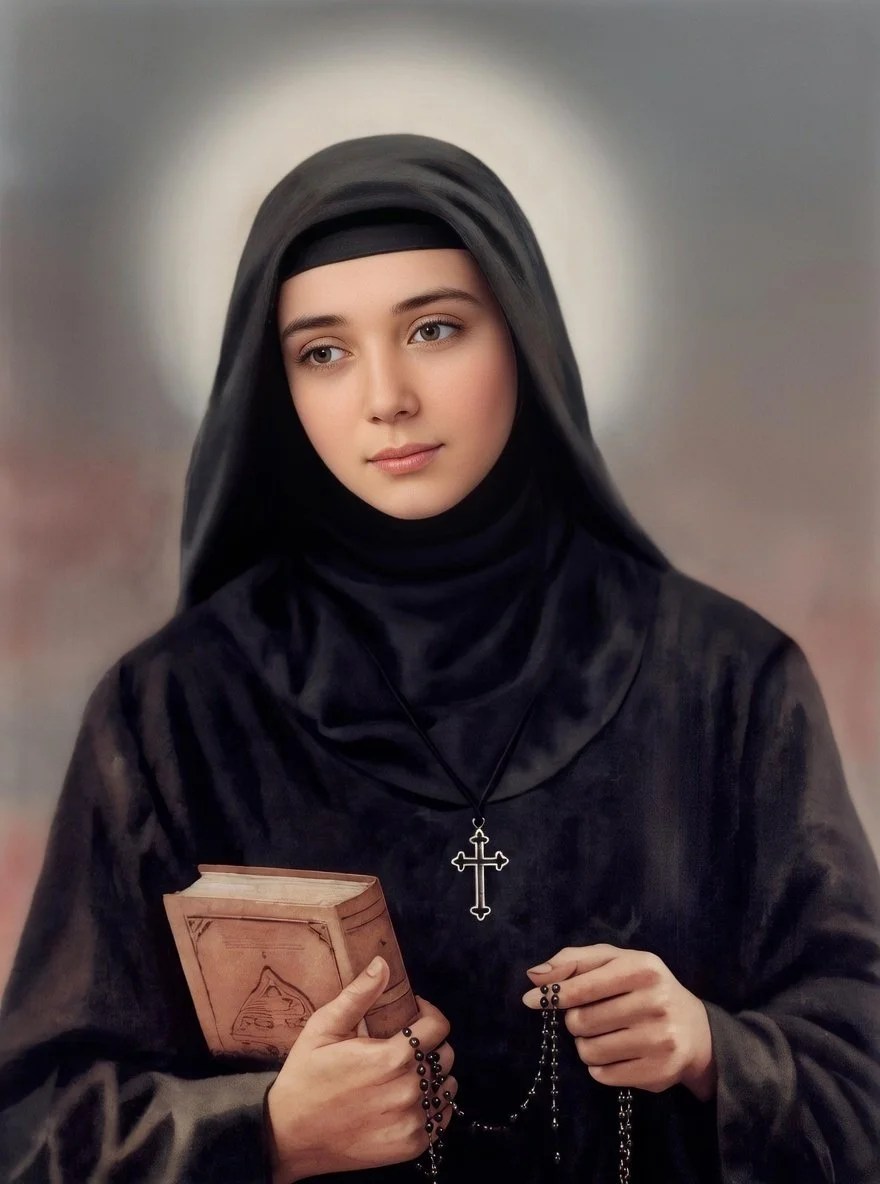
Saint Rafqa’s complete life, her miraculous healings, her shrine in Lebanon, and the full text of her traditional prayers are in our complete biography of Saint Rafqa of Lebanon →
Saint Two
Saint Charbel Makhlouf
Youssef Antoun Makhlouf was born in 1828 in the Maronite village of Beka-Kafra in northern Lebanon, and took the religious name Charbel when he entered the Maronite Order. He became a monk, then a hermit — withdrawing to the hermitage of Saints Peter and Paul near the monastery of Annaya, where he lived in severe asceticism until his death in 1898. He was not known as a healer during his lifetime. He was simply a man of extraordinary prayer who lived in nearly total silence.
What happened after his death is one of the most extensively documented phenomena in modern Catholic history. His body, examined months after burial, was found exuding blood and a fragrant oil, and remained incorrupt. The healings began within weeks of his death and have never stopped. The Vatican has documented over 33,000 reported miracles attributed to his intercession since his canonization by Pope Paul VI in 1977.
He is particularly invoked when the body has stopped responding to treatment, when physicians have reached the limit of what medicine can offer, and when the illness follows an unpredictable, treatment-resistant course. For autoimmune patients who have cycled through multiple medications and specialists without stable relief, he has become a natural intercessor. His incorrupt relics are kept at the Monastery of Annaya in Lebanon, which receives hundreds of thousands of pilgrims each year.
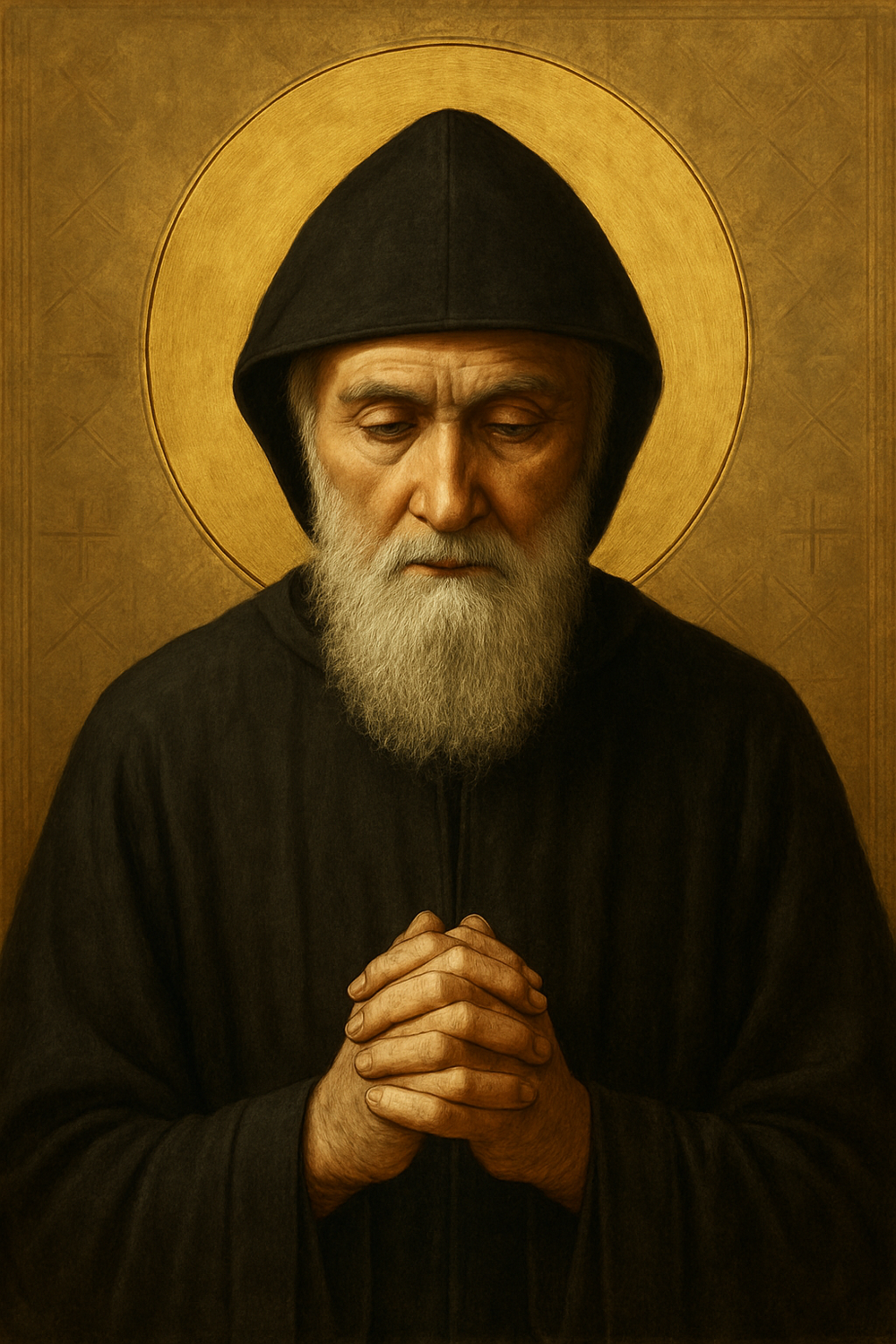
Saint Charbel’s complete life, the full documentation of his incorruption, and the healing miracles recorded at Annaya are in our complete biography of Saint Charbel Makhlouf →
Saint Three
Saint Panteleimon the Great Martyr
Panteleimon was born in Nicomedia in the late third century, the son of a pagan senator and a Christian mother who died while he was still young. He trained as a physician under Euphrosynos, one of the imperial court doctors of Emperor Maximian — and was known as a skilled and naturally compassionate healer even before his conversion. His encounter with the priest Hermolaus changed everything. He converted, was baptized, and transformed his entire practice: he began healing without charge, calling upon Christ as the source of all healing, and became known as an anargyroi — literally, one who takes no silver, an unmercenary healer.
The healings attributed to him during his lifetime were extraordinary: a blind man whose sight was restored, a paralyzed child who walked. He did not distinguish between his medicine and his prayer; for him, they were the same act. When the Diocletianic persecution reached Nicomedia, he refused to sacrifice to the pagan gods and was martyred circa 305 AD. You can read his full story in our complete biography of Saint Panteleimon.
Saint Panteleimon belongs to a specific category of saints in the Eastern tradition called the Holy Unmercenary Healers (Greek: Anargyroi) — saints who healed without accepting payment. Others include Saints Cosmas and Damian, and Saint Hermione. They are collectively invoked for physical healing, and their feast days are major occasions for the blessing of the sick across the Orthodox world. Panteleimon is the most widely venerated of the group.
Icons of Saint Panteleimon are kept in hospitals and medical clinics across Greece, Russia, Serbia, and throughout the Orthodox world. He holds a medical instrument — typically a spoon or a box of medicine — as a sign that healing belongs to God but is exercised through human hands and knowledge. For autoimmune patients who feel caught between faith and medicine, he is the saint who refuses to let you choose between them.
His head is preserved at the Russian Monastery of Saint Panteleimon on Mount Athos, where it has been venerated by pilgrims for centuries. His relics are distributed among dozens of monasteries and churches across the Orthodox world. The faithful invoke him for physical healing generally, and specifically for those whose illness resists treatment — which makes him particularly relevant for the autoimmune patient whose disease follows an unpredictable, specialist-resistant course. Those drawn to the emotional and mental dimensions of chronic illness will find that this tradition of healing prayer extends well beyond physical suffering.
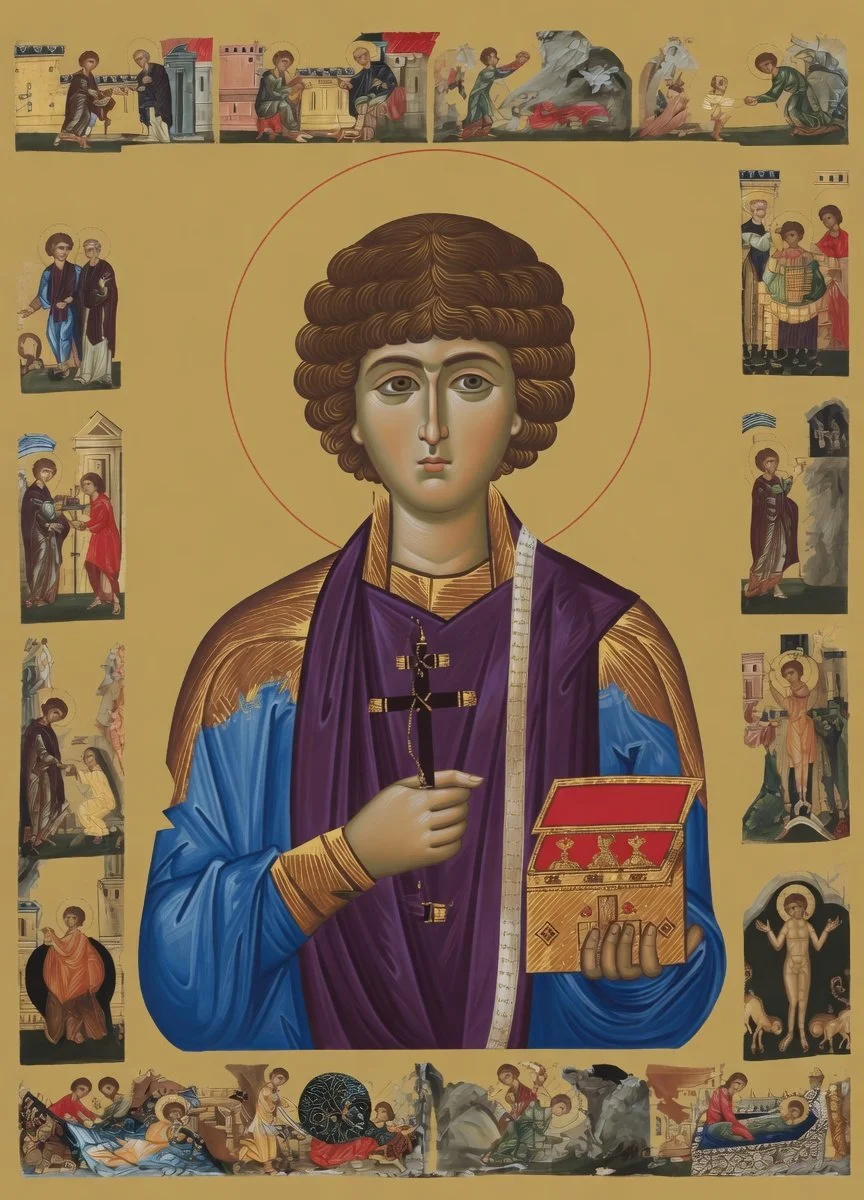
Saint Panteleimon’s complete life, his training as a physician, his martyrdom, and the seventeen centuries of healing devotion he has received are covered in our complete biography of Saint Panteleimon →
Saint Four
Saint Nektarios of Aegina
Anastasios Kefalas was born in 1846 in Silyvria, Thrace. He rose through the Orthodox Church to become Metropolitan of Pentapolis — and was then destroyed by it. Jealous clergymen sent forged accusations to the Patriarch of Alexandria. He was dismissed from his position without the right to respond to the charges, stripped of his income, and effectively exiled from the church hierarchy he had served faithfully. He bore this injustice without bitterness and without public complaint for the rest of his life.
He taught theology at the Rizarios Ecclesiastical School in Athens, lived in poverty, and eventually founded a convent on the island of Aegina. He was widely regarded as a holy man by those around him — but also widely ignored by the institutional church that had dismissed him. He died in 1920 in an Athens hospital, nearly penniless, in a room with a broken bed and a single change of clothing.
He was canonized by the Ecumenical Patriarchate of Constantinople in 1961, and his tomb on Aegina has become one of the most-visited Christian pilgrimage sites in the world. The miracles documented at his tomb include multiple cases of cancer remission and recovery from conditions physicians had pronounced terminal or incurable.
His particular resonance with autoimmune patients comes partly from the nature of his own suffering: he bore unjust accusation, dismissal, and institutional abandonment with extraordinary peace over decades. Those with autoimmune disease — frequently dismissed by physicians, disbelieved by employers and family members, left without diagnosis for years — find in Nektarios a saint who knows exactly what it is to be told there is nothing to be done, and who was eventually vindicated by God. For those also carrying the emotional weight of long illness, our guide to saints for mental health may be a useful companion to this one.
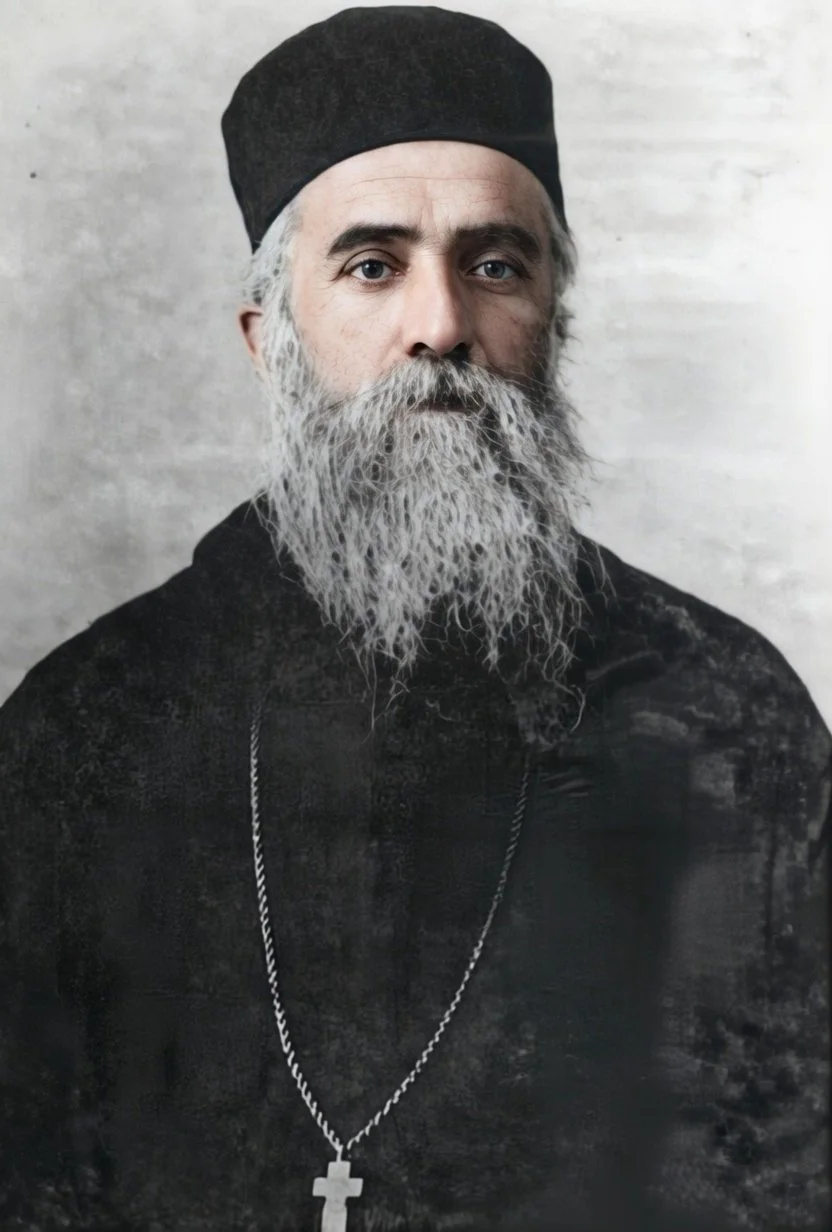
Saint Nektarios’s complete life, his unjust exile, the documented miracles at his tomb, and the full text of his traditional healing prayers are in our complete biography of Saint Nektarios of Aegina →
Saint Five
Saint Luke of Crimea, the Surgeon
Valentin Felixovich Voino-Yasenetsky was born in 1877 and became one of the most skilled surgeons in Russia. He pioneered new techniques in regional anesthesia, wrote a landmark textbook on purulent surgery that remained in clinical use for decades, and taught medicine at the University of Tashkent. He also became a priest of the Russian Orthodox Church — and then a bishop. The Soviet regime arrested him for this three times and sent him into Siberian exile. In exile, he continued to operate on patients with whatever equipment was available, and achieved results other surgeons documented as remarkable.
He returned from his third exile in 1944, was consecrated Archbishop of Simferopol and Crimea, and continued practicing surgery until his eyesight failed in 1956. He refused to treat his episcopal vocation and his surgical vocation as separate. He operated in his bishop’s robes when the occasion required it. He saw no contradiction between medicine and prayer — they were, for him, two expressions of the same thing: the care of the human body, which is the temple of the Holy Spirit.
Every other saint on this page is invoked for healing alongside medical treatment. Saint Luke the Surgeon was the medical treatment. He was one of the most technically accomplished surgeons of his era, and he was also a canonized bishop who prayed over his patients and saw both activities as inseparable.
For autoimmune patients navigating a complex medical landscape — multiple specialists, competing diagnoses, difficult treatment decisions, medications with serious side effects — he offers something the other saints do not: intercession from someone who understood exactly what physicians do and do not know, and who held both the limits of medicine and the power of God simultaneously in his hands. He is the patron for the patient who does not want to choose between their rheumatologist and their faith.
He was canonized by the Russian Orthodox Church in 1996. His relics are kept at the Cathedral of the Holy Trinity in Simferopol, and healings of medical conditions have been attributed to his intercession continuously since. He is particularly invoked for those undergoing surgery, those facing complex diagnoses, and those who want to hold faith and medicine together without feeling forced to choose. He stands in the same tradition as Saint Panteleimon — healers who saw no divide between their medical vocation and their prayer.
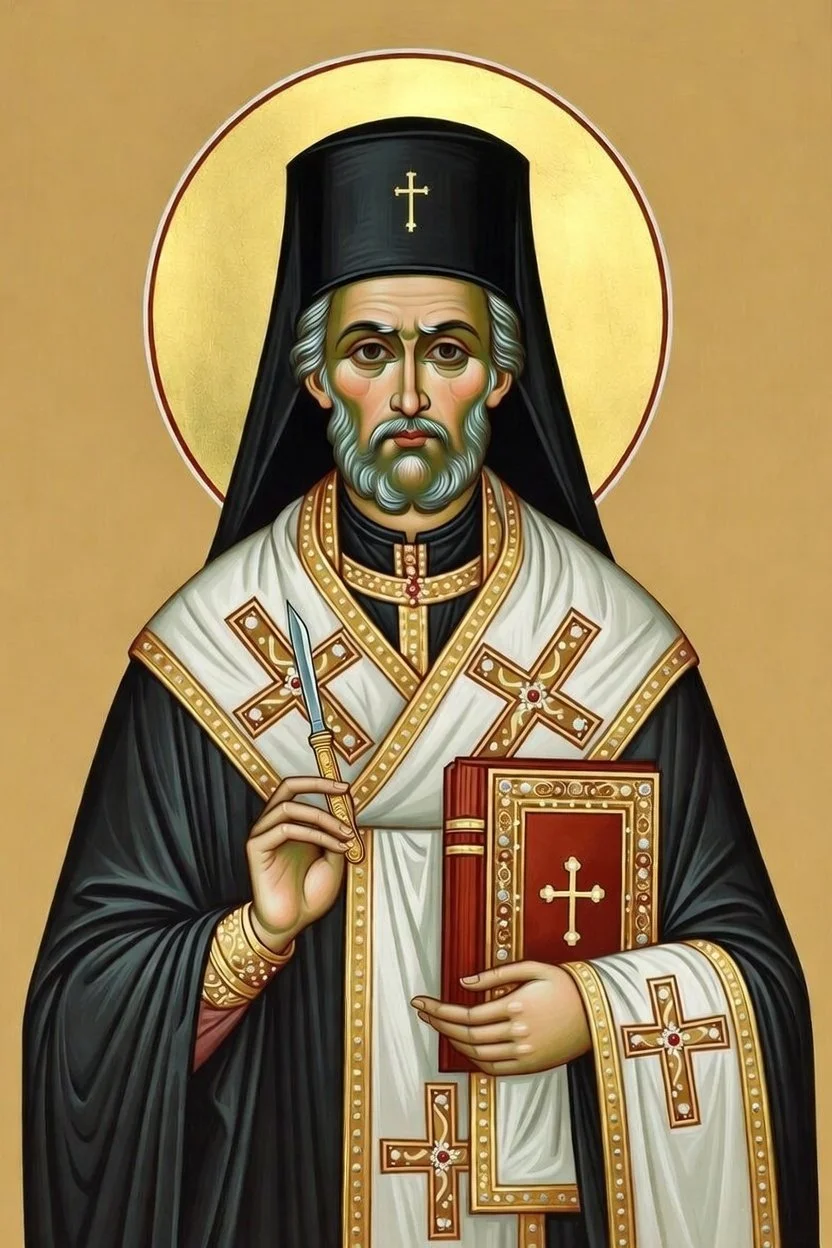
Saint Luke’s extraordinary double vocation as surgeon and bishop, his Soviet-era exiles, and the healings documented after his canonization are covered in our complete biography of Saint Luke of Crimea →
The Bundle
The Autoimmune Saints Bundle — All Five Cards for $15
All five saints as handmade prayer cards, shipped together. One bundle for the person who prays to all of them, or for a caregiver who wants to give something that holds genuine meaning. Each card carries a prayer on the back. They are made individually, by hand, in Austin, Texas.
Get the Autoimmune Saints Bundle
All five prayer cards, handmade and shipped together. $15. For the person who is ill, for the caregiver, for anyone who wants to hold something physical when words run out.
Add to Cart — $15 →Frequently Asked Questions
Saints for Autoimmune Disease — Common Questions
These Saints Are Praying for You Right Now.
They are not distant figures from another century. They are the living dead — glorified human beings who suffered in bodies like yours, and who are not indifferent to the suffering still happening below. The Eastern tradition holds this with great seriousness: the saints are active, present, interceding. Your asking matters. The card in your hand is not a symbol. It is a contact point.
Patron Saints for Autoimmune Disease — Complete Guide • Patron Saint of Lupus • Saints for Mental Health
Get the Bundle — Five Cards for $15 →