Saint Nestor of Thessalonica: The Complete Biography of the Young Martyr Who Became Patron of Wrestlers and Combat Athletes
Saint Biography • Martyrs of Thessalonica • Warrior Saints • Patron of Combat Athletes
Saint Nestor of Thessalonica: The Complete Biography of the Young Martyr Who Became Patron of Wrestlers and Combat Athletes
A student stepped out of the crowd, walked into a Roman prison, and asked his teacher for a blessing to fight a giant. What happened next in the arena of Thessalonica made Nestor one of the Eastern Church's quietest warrior saints, and the closest thing Christian tradition has to a patron for the cage and the mat.
Saint Nestor of Thessalonica — At a Glance
- Also Known As
- Nestor of Thessaloniki • Greek: Ẁέστωρ της Θεσσαλονίκησ
- Lived
- Early 4th century AD • Thessalonica, Roman Macedonia
- Died
- c. 305–306 AD • Beheaded by order of Emperor Maximian
- Feast Day
- October 27 (Eastern Orthodox & Byzantine Catholic) • October 8 (some Western calendars)
- Venerated In
- Eastern Orthodoxy • Oriental Orthodoxy • Eastern & Roman Catholic Church
- Teacher
- Saint Demetrios the Myrrh-streamer, Great Martyr of Thessalonica
- Known For
- Defeating the gladiator Lyaeus in single combat through Demetrios's prayers
- Patronage
- Traditionally invoked by wrestlers, athletes & combat sport competitors (devotional custom)
The Student Who Stepped Into the Arena
Almost everything the Church knows about Saint Nestor of Thessalonica comes down to a single afternoon. He is not remembered for a body of teaching, a monastery he founded, or decades of quiet holiness. He is remembered for one decision: a young man, trained in the Christian faith by a condemned prisoner, walked into a Roman arena to fight a professional killer twice his size, and walked out again having done something the entire city considered impossible.
That is the whole of Nestor's recorded life, and it has been enough to keep his name alive in the Eastern Church for over sixteen centuries. He is venerated as a Holy Martyr, celebrated the day after his teacher Saint Demetrios of Thessalonica on the Byzantine calendar, and quietly claimed in recent years by a modern audience his ancient hagiographers could never have imagined: wrestlers, boxers, and mixed martial artists who recognize in his story something close to their own experience of stepping into a ring or a cage against an opponent who outmatches them physically.
This article gathers everything that can be reliably said about Saint Nestor of Thessalonica: the historical world he lived and died in, his relationship to Saint Demetrios, the full account of his duel with the gladiator Lyaeus, his martyrdom, the honest state of the historical evidence, how he has been depicted in Byzantine art for a thousand years, and how and why he has come to be treated as an unofficial patron of combat athletes.
Part II
Thessalonica Under Persecution: The World Nestor Was Born Into
Nestor lived in Thessalonica, the second city of the Eastern Roman Empire and a major military and administrative center on the Via Egnatia, the great road connecting Rome to the East. In the early fourth century, Thessalonica sat inside the territory governed by Galerius, one of the four rulers of the Roman Empire under the Tetrarchy established by Diocletian. The tradition surrounding Nestor and Demetrios names the persecuting emperor as Maximian, a name used loosely in the hagiographic sources for the ruler responsible for the era's anti-Christian edicts; scholars generally connect the events to Galerius, who made Thessalonica one of his imperial residences and who, alongside Diocletian, launched the most severe and systematic persecution of Christians in the empire's history beginning in 303 AD.
That persecution touched every level of Christian life. Churches were destroyed, scriptures were confiscated and burned, Christian clergy were arrested, and ordinary believers were required to offer sacrifice to the Roman gods on pain of imprisonment or death. Thessalonica, as an imperial city with a resident emperor, felt this pressure more directly than most. It is against this backdrop, sometime in the first decade of the fourth century, that both Demetrios and his young student Nestor were caught up in the persecution and put to death within days of each other.
Roman Thessalonica was also, like every major city of the empire, a city of public spectacle. Gladiatorial combat and staged executions were civic entertainment, staged in arenas and public squares to mark imperial visits, festivals, and military victories. It was precisely this culture of blood sport, deliberately used by the authorities as a tool of both entertainment and intimidation, that provided the stage on which Nestor's story would play out.
Part III
Saint Demetrios: The Teacher Who Shaped Him
Nestor cannot be understood apart from Saint Demetrios, the man tradition names as his teacher. Demetrios was, by most accounts, a young man of high social standing in Thessalonica, possibly connected to the city's civic or military administration, who had secretly embraced Christianity and used his position to instruct others in the faith, Nestor among them. When his Christianity was denounced to the emperor, Demetrios was imprisoned in a bath-house complex near the imperial palace and the arena, and it was there, in that cell, that Nestor came to visit him.
According to the traditional account, Nestor found Demetrios in prison and fell at his feet, asking for his prayers so that God might help him defeat Lyaeus and put an end to the gladiator's slaughter of Christians. Demetrios, having already received word through prayer of his own coming martyrdom, sealed Nestor with the Sign of the Cross and told him plainly what would happen: he would prevail over Lyaeus, and then he would suffer for Christ. Nestor accepted both halves of that word without hesitation.
Demetrios himself was killed shortly afterward, run through with spears in the same cell where he had blessed his student, and is venerated today as one of the most important warrior saints of the Eastern Church, with his own great basilica, the Hagios Demetrios, still standing in Thessaloniki. His feast falls on October 26, the day immediately before Nestor's, and the two men are honored together in the liturgical texts of the Byzantine Church, which credit Nestor's victory directly to Demetrios's intercession rather than to Nestor's own skill.
Part IV
Lyaeus: The Gladiator Who Killed for Sport
The traditional Passion of Demetrios and Nestor names the emperor's champion gladiator as Lyaeus, sometimes spelled Lyaios or Lyaeos, described in the sources as a Vandal of enormous stature, compared explicitly by later writers to the biblical Goliath. Maximian, according to the account, had a special elevated platform built in the middle of the city, resembling a raised threshing floor, specifically for Lyaeus's matches. Beneath the platform, spears were fixed pointing straight upward. When Lyaeus defeated a challenger in wrestling, he would throw the loser down from the platform onto the spears below, and the crowd would watch the man die impaled while the emperor and his court looked on.
Lyaeus fought and killed daily, and the sources are explicit that among his victims were Christians, forced into the arena against him when no volunteer could be found. He used his position to mock the Christian faith openly, taunting the crowd that no Christian God could save the men he was about to kill. It was this specific insult, more than the killings themselves, that the tradition says moved Nestor to act: watching Emperor Maximian delight in Lyaeus's cruelty and blasphemy, a young man who had learned the faith from Demetrios decided he could not simply watch any longer.
Part V
The Duel: “The God of Demetrios, Help Me”
Having received Demetrios's blessing, Nestor presented himself as a challenger to Lyaeus. Some versions of the account preserve a moment of hesitation on the emperor's side: Maximian, seeing how young Nestor was, is said to have offered him a way out, telling him he would still be rewarded simply for his daring courage and urging him to keep his life rather than hurl himself against a gladiator who had already beaten far stronger men. Nestor refused the offer and mounted the platform.
What followed is described consistently across the sources. Nestor entered the ring without armor or the professional training Lyaeus possessed, and as the gladiator rushed at him, Nestor cried out, invoking not his own strength but the God of Demetrios. He sidestepped Lyaeus's attack, closed the distance, and struck the larger man with a mortal wound, described in some tellings as a small dagger or knife rather than a soldier's sword, a detail later commentators have taken as emphasizing that the outcome owed nothing to superior weaponry. Nestor then threw Lyaeus down from the platform onto the spears fixed beneath it, the same fate Lyaeus had inflicted on every Christian he had killed there.
The crowd, which had gathered to watch a young man be killed for sport, instead watched the emperor's undefeated champion die. Nestor did not claim the victory for himself. According to the tradition, he immediately and publicly declared that the win belonged to Christ, and to the prayers of Demetrios, a public confession of faith made in front of the very emperor who had built the arena to terrorize Christians into silence.
Part VI
Martyrdom: Beheaded Beside His Teacher
Maximian's reaction to losing his champion, and to hearing Christ publicly credited for it, was fury rather than mercy. The sources report that the emperor, enraged, ordered both Demetrios and Nestor put to death without any further trial or proceeding. Demetrios, already imprisoned, was killed where he sat, run through with spears by soldiers sent into his cell. Nestor was pursued outside the arena, seized, and beheaded.
The two men died within the same short span of time, teacher and student, in a single sentence issued by the same enraged ruler. Traditional sources vary somewhat on the exact year, with some placing the events as early as 290 AD and others as late as 306 AD, though the majority of hagiographic tradition and modern reference works place the martyrdoms of Demetrios and Nestor around 305 or 306 AD, during the final and most intense phase of the Diocletianic persecution before Galerius's own Edict of Toleration in 311 finally brought the killing to an end across the Eastern Empire.
Nestor's body received no elaborate shrine of its own comparable to the great basilica later built over Demetrios's tomb in Thessaloniki. His memory instead survived primarily through his permanent association with his teacher, honored in the liturgical calendar on the day immediately following Demetrios's own feast, a placement that has kept the two names bound together in the Church's memory for over a thousand years.
Part VII
Two Feast Days: October 27 and October 8 — Untangling the Calendars
Saint Nestor of Thessalonica is commemorated on two different calendar dates depending on the tradition consulted, and an honest biography should say so plainly rather than pick one and ignore the other. The Eastern Orthodox Church and the Byzantine Catholic churches keep his feast on October 27, immediately following Demetrios's feast on October 26, reflecting the ancient liturgical pairing of teacher and student in the Byzantine synaxarion.
Some Western liturgical calendars and modern Catholic saint-of-the-day resources instead list Saint Nestor of Thessalonica on October 8. This is not a separate saint; it is the same historical figure commemorated on a different date within a different calendar tradition, a common pattern for saints of the ancient Church whose cult developed independently in Eastern and Western liturgical books over the centuries. Readers researching Nestor online will encounter both dates depending on which tradition's calendar they consult, and both refer to the martyr of the Lyaeus story described in this article.
He should also not be confused with a different saint who shares his name: Nestor of Magydos, a bishop in Pamphylia in what is now Turkey, martyred roughly half a century earlier under Emperor Decius around 250 AD, and commemorated on a different date entirely (February 25 in the Roman Catholic Church, February 28 in the Orthodox Church). The two men have nothing in common beyond their name and their martyrdom.
Part VIII
What History Can and Cannot Confirm
This site's editorial standard is to separate documented history from devotional tradition rather than blend the two, and Nestor's story is a case where that distinction genuinely matters. Three separate layers of claim are involved, and they do not all rest on the same footing.
Tier One: Solid Historical Ground
That the Diocletianic persecution occurred, that Thessalonica was a major imperial city under Galerius in the early fourth century, that Christians were executed there during this period, and that a cult of martyrs named Demetrios and Nestor was firmly established in Thessalonica by the following centuries, is not seriously disputed by historians.
Tier Two: Devotional Tradition, Honestly Labeled
The specific narrative details, the gladiator named Lyaeus, the platform built over a bed of spears, the precise words Nestor is said to have cried out in the arena, come from hagiographic Passions composed to honor the martyrs, the earliest substantial versions of which were written generations after the events they describe. This is the normal situation for ancient martyr accounts, and the Eastern Church has always treated these Passions as sacred tradition to be proclaimed liturgically rather than as courtroom transcripts. Readers should understand the duel with Lyaeus as belonging to this category: deeply and continuously venerated tradition, not documented eyewitness reporting.
What Modern Scholarship Says
Modern historical-critical scholarship on Demetrios, including the influential work of the Bollandist scholar Hippolyte Delehaye, has argued that several elements of the Demetrios and Nestor cult, including aspects of the gladiator episode, developed as later literary additions layered onto an earlier and simpler account of Demetrios's martyrdom, possibly connected to the transfer of his veneration from the city of Sirmium when Thessalonica became the region's leading military center in the mid-fifth century. Several modern Catholic reference sources note plainly that the gladiatorial episode is a late addition to Nestor's biography that lacks independent historical substantiation. None of this scholarship denies that Nestor was a real martyr venerated from antiquity; it questions how much of the specific arena narrative reflects fourth-century events versus later devotional storytelling built around his memory.
This site presents the Lyaeus narrative in full, as the Church has received and celebrated it for over a millennium, while being transparent that it belongs to the category of sacred tradition rather than verified secular history. Readers can hold both facts at once: the story has shaped sixteen centuries of Christian devotion, and its precise historical details cannot be independently confirmed outside the hagiographic sources themselves.
Part IX
Iconography: The Warrior at the Hooves of the Horse
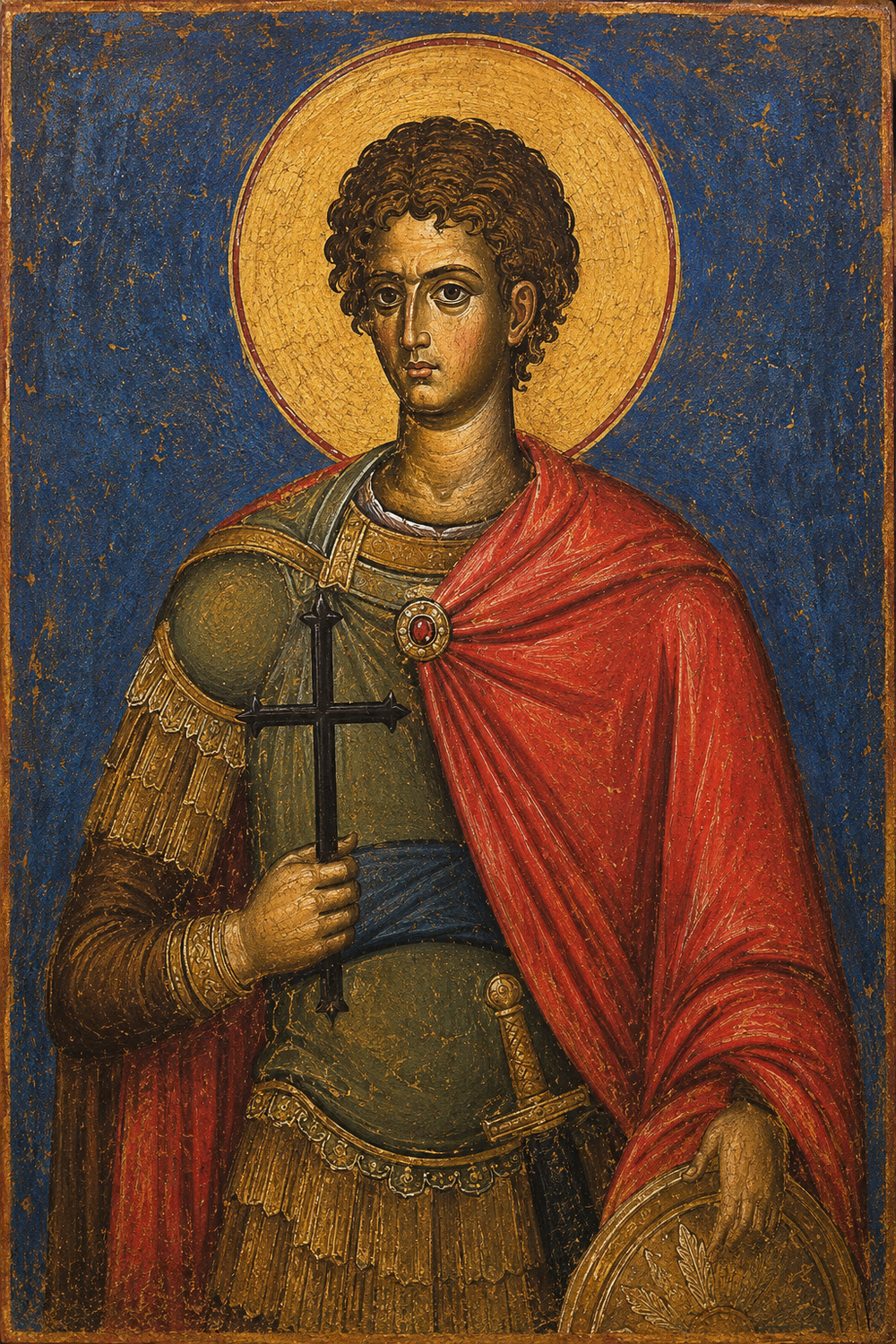
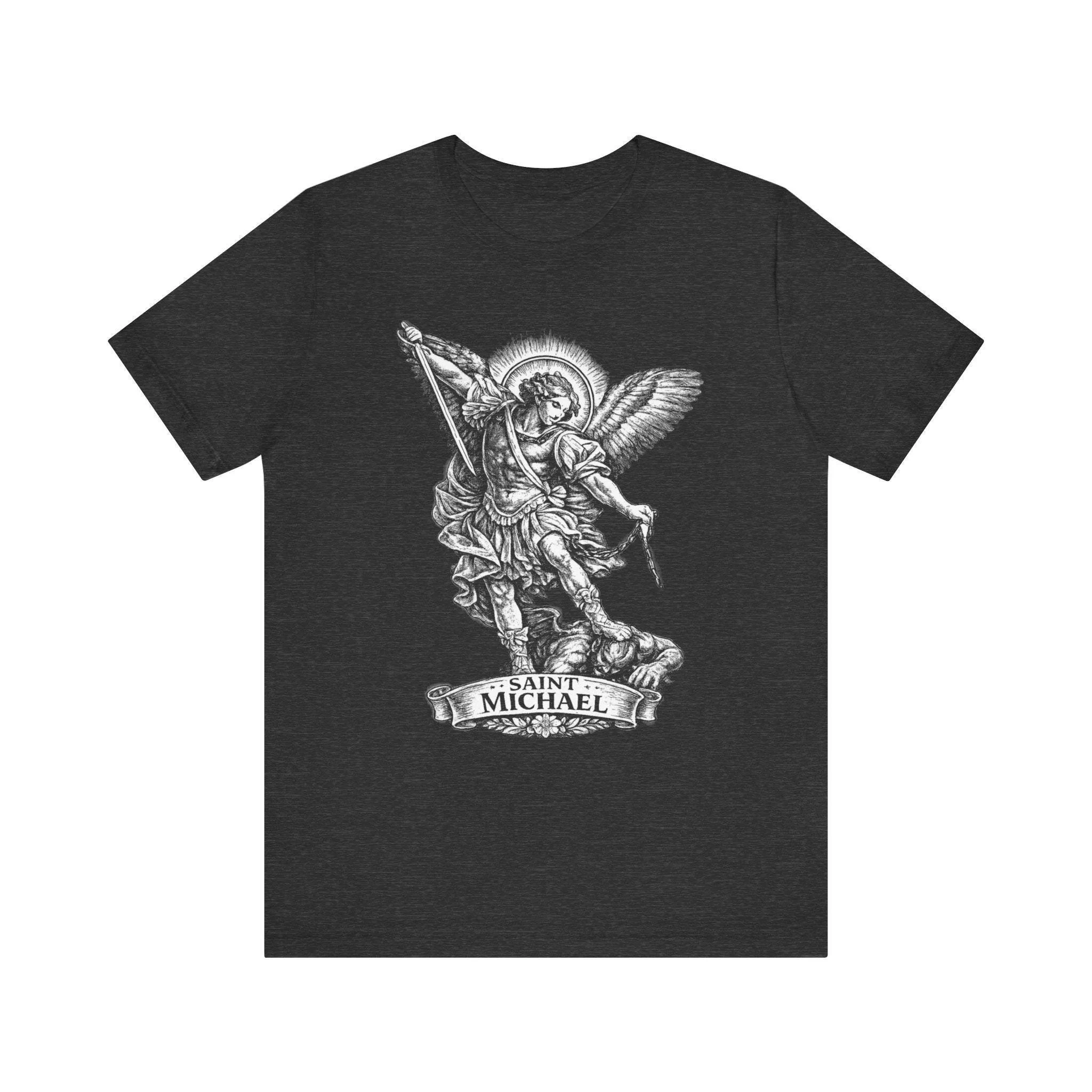
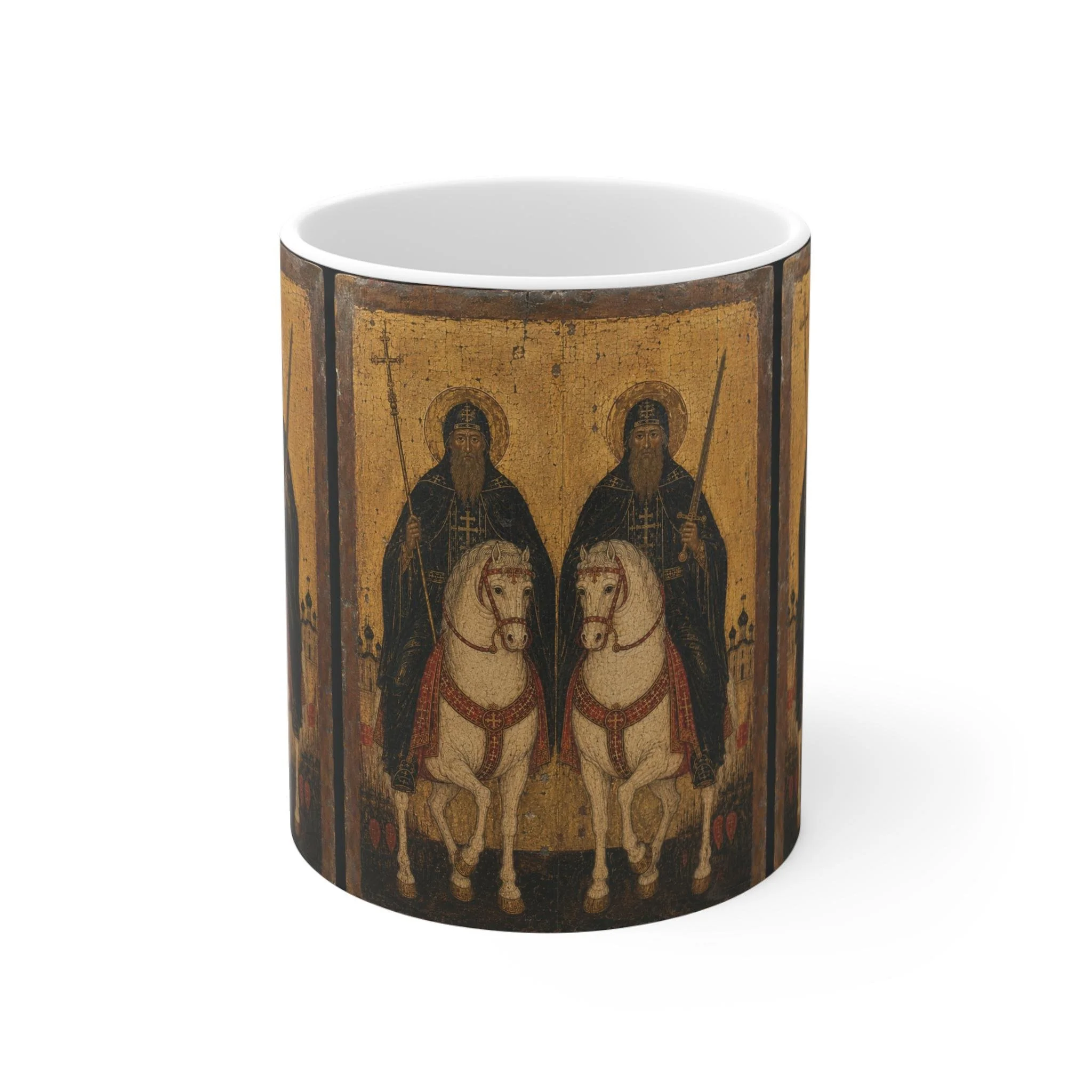
Byzantine and Slavic iconography consistently depicts Nestor as a youthful warrior saint, dressed in the armor and dress of a soldier rather than ordinary civilian clothing, sometimes carrying a small sword or dagger recalling the weapon tradition assigns him in his fight with Lyaeus. He is counted among the Church's broader company of warrior saints, alongside figures such as Saint George, Saint Demetrios, and Saint Michael the Archangel.
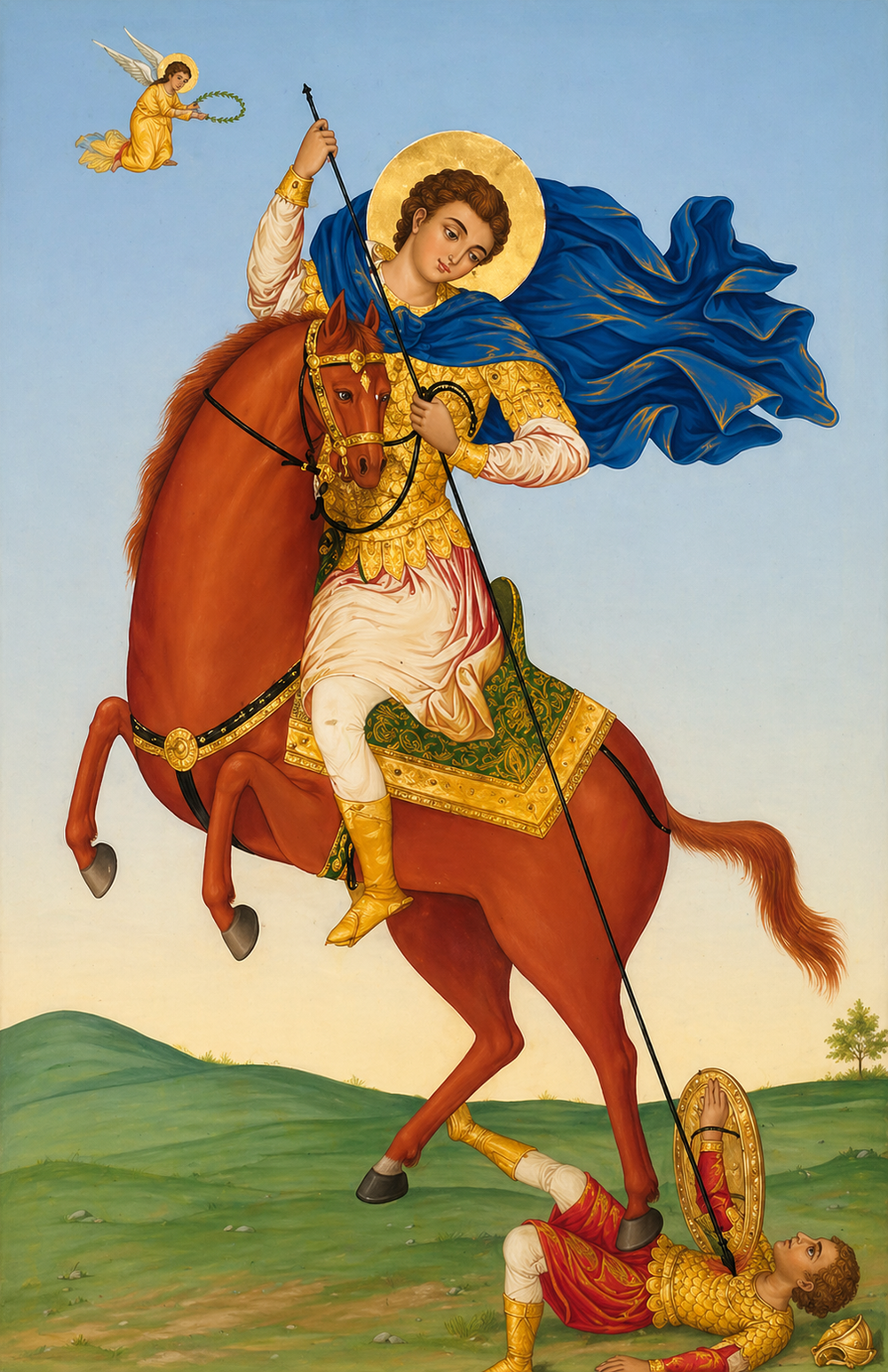
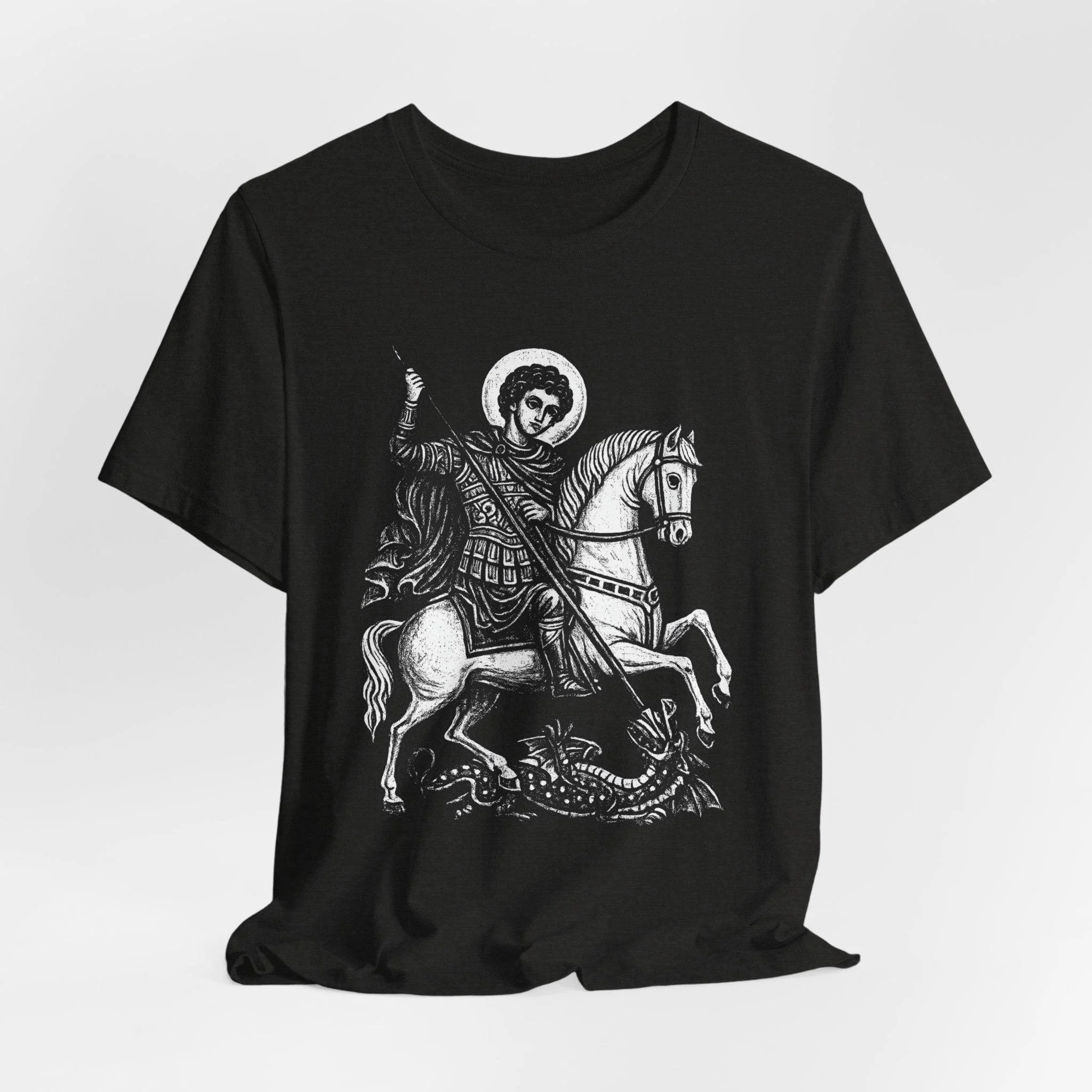
The most common way Nestor appears in Byzantine art is not in an independent icon of his own but as a secondary figure inside icons of Saint Demetrios. Beginning around the twelfth century, artists developed a standard composition showing Demetrios mounted on a red horse, dressed as a cavalryman, spearing the fallen figure of Lyaeus beneath the horse's hooves, a visual echo of the more famous image of Saint George slaying the dragon. In the traditional understanding preserved by this composition, Demetrios did not personally kill Lyaeus with a physical weapon; Nestor did, in the arena, and the icon shows Demetrios's spear defeating Lyaeus as a way of depicting what the Church actually believes happened: that Demetrios's prayers, not Nestor's own strength, secured the victory.
An important independent depiction of Nestor survives outside this standard composition. A fourteenth-century fresco at the Visoki Dečani monastery in Kosovo, Serbia, shows Nestor directly defeating Lyaeus in the arena, giving Nestor his own distinct scene rather than folding him into an image of his teacher. Frescoes of this kind confirm that medieval Serbian and Byzantine iconographers understood Nestor's duel as significant enough to merit its own pictorial treatment, not merely a footnote to Demetrios's cult.

Part X
Patron of Wrestlers and Combat Athletes: Where the Devotion Comes From
Reference works cataloguing patron saints list Saint Nestor of Thessalonica's patronage as wrestlers and athletes, and in recent years a wider circle of combat sport competitors, including boxers, grapplers, and mixed martial artists, have quietly adopted him as a personal patron. It is worth being direct about what that patronage is and is not. Unlike patronages formally assigned by a pope or bestowed through an official ecclesiastical decree, Nestor's association with wrestlers and combat athletes has developed the way many ancient patronages do: organically, through the obvious fit between a saint's story and a particular walk of life, sustained by popular devotion rather than legislated from above.
The fit, in Nestor's case, is not hard to see. He is remembered for exactly one thing: stepping into a form of single, physical combat against an opponent who was bigger, stronger, and more experienced than he was, and prevailing not through superior technique but through prayer and the deliberate refusal to rely on his own strength alone. That is a story that lands with particular force for anyone who has stood across a mat, a ring, or a cage from an opponent they were not favored to beat. Combat athletes across disciplines have long gravitated toward this kind of narrative, and Nestor's story offers something specific: a model of competing fiercely and still giving the outcome, win or lose, to God rather than to ego.
This devotional adoption also sits comfortably alongside a long Christian tradition of connecting athletic and physical struggle to spiritual struggle, going back to Saint Paul's own athletic imagery in the New Testament and continuing through centuries of Christian art depicting the spiritual life as a contest requiring discipline, courage, and endurance. Nestor's story simply gives that ancient metaphor a literal, historical anchor: an actual young man who actually fought, in an actual arena, and staked his life on where the victory came from.
Readers should hold this section, like the historicity discussion above it, with appropriate honesty: there is no synod, council, or papal bull formally naming Saint Nestor patron of MMA fighters. What exists is centuries of devotional custom recognizing him as a patron of wrestlers and athletes, now extended by a modern generation of combat sport competitors who have found in a fourth-century martyr a genuine spiritual companion for a very physical calling.
Timeline
Complete Timeline of Saint Nestor of Thessalonica
- c. 303 ADDiocletian and Galerius launch the most severe empire-wide persecution of Christians in Roman history, directly affecting Thessalonica, where Galerius maintains an imperial residence.
- Early 4th centuryNestor, a young resident of Thessalonica, is instructed in the Christian faith by Demetrios, a respected local Christian later venerated as a Great Martyr.
- c. 305–306 ADDemetrios is denounced as a Christian and imprisoned near the imperial palace and arena. Around the same time, the gladiator Lyaeus begins killing Christian challengers in a public arena built by Emperor Maximian.
- c. 305–306 ADNestor visits the imprisoned Demetrios, asks for his blessing to fight Lyaeus, and is told by Demetrios that he will win, and then suffer martyrdom.
- c. 305–306 ADNestor enters the arena, defeats and kills Lyaeus, and publicly credits the victory to Christ and to Demetrios's prayers.
- c. 305–306 ADEnraged, Maximian orders both men executed without trial. Demetrios is killed with spears in his cell; Nestor is pursued and beheaded outside the stadium.
- By the 5th–6th centuryThe cult of Demetrios becomes firmly established in Thessalonica, with the great basilica of Hagios Demetrios built over his tomb; Nestor's memory is preserved alongside his teacher's in the liturgical calendar.
- 9th century onwardWritten Passions and Miracle accounts of Demetrios and Nestor circulate widely across the Byzantine world, cementing the Lyaeus narrative in Church tradition.
- 12th–14th centuryStandardized Byzantine iconography develops showing Demetrios on horseback triumphing over Lyaeus, with independent frescoes of Nestor's own duel, such as the one at Visoki Dečani, appearing in Serbian church art.
- TodaySaint Nestor is venerated on October 27 in the Eastern Church and October 8 in some Western calendars, and is increasingly invoked by modern wrestlers, boxers, and MMA fighters as a devotional patron of combat sport.
Devotional Prayer
A Prayer to Saint Nestor of Thessalonica
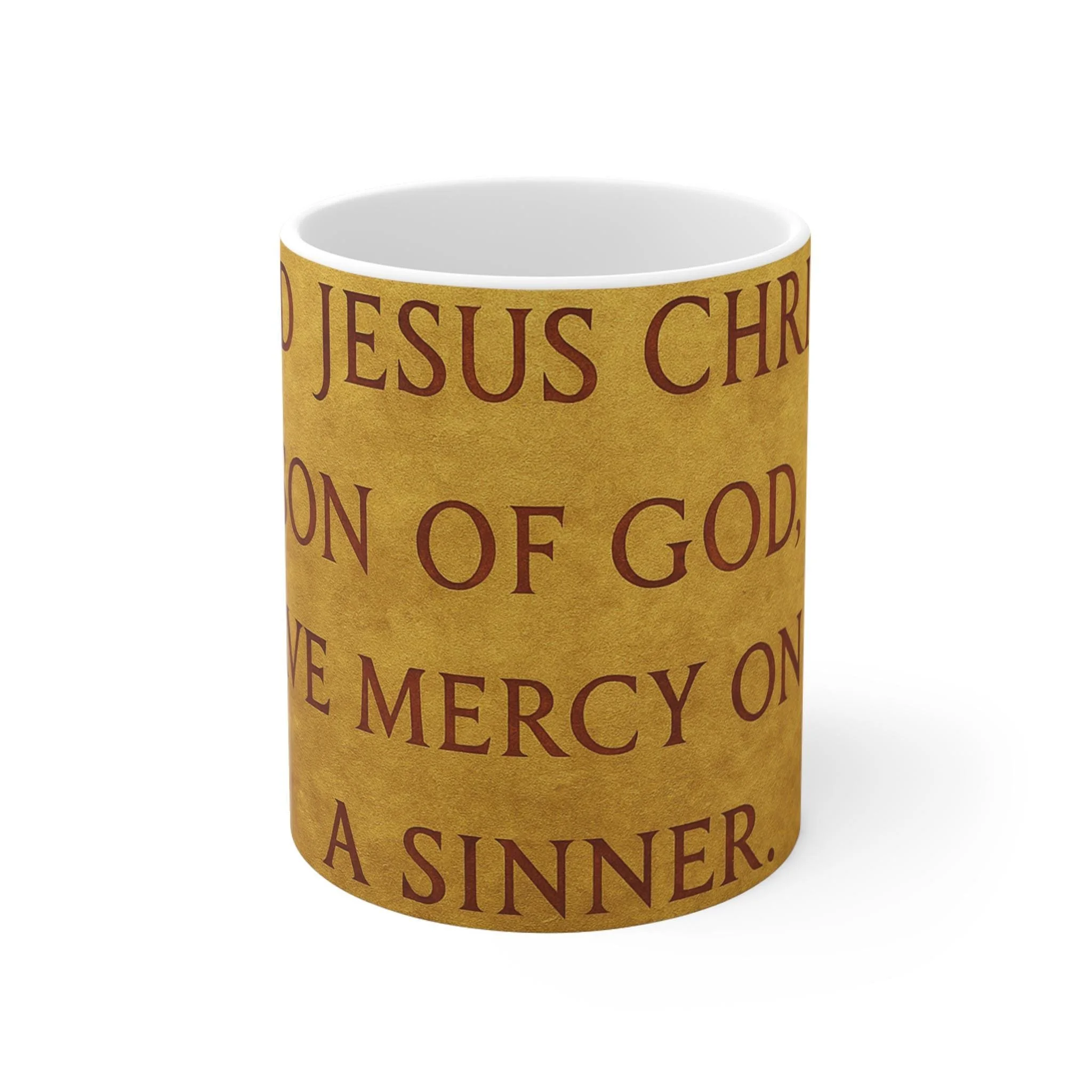
O Holy Martyr Nestor, you who stood before a giant of a man and did not flinch, teach me to face what stands before me without relying on my own strength alone. You sought the blessing of your teacher before you sought the fight; let me seek God before I seek victory.
Grant me courage in the moment of contest, discipline in the long work of preparation, and safety from serious harm in training and in competition. When I win, let me remember, as you did, to give the honor to God rather than to myself. When I lose, let me remember that you counted the true victory as something greater than the match itself.
You gave everything, even your life, for the God who strengthened you that day. Intercede for me now, that whatever contest I face, on the mat, in the ring, in the cage, or in the quieter struggles of ordinary life, I may face it with the same faith you carried into the arena of Thessalonica.
A private devotional composition inspired by the traditional account of Saint Nestor's life. Not a liturgical text of the Church.

FAQ
Frequently Asked Questions About Saint Nestor of Thessalonica
He Fought Once. He Won Once. He Died for Saying Who Really Won.
Saint Nestor of Thessalonica left behind no writings, no monastery, no decades of recorded ministry. He left behind one afternoon in an arena, one prayer whispered to a man in chains, and one refusal to take credit for a victory that terrified an emperor. Sixteen centuries later, wrestlers and fighters who have never read a Byzantine Passion still find themselves drawn to a saint who knew, better than most, what it means to stand across from someone bigger than you and need something more than muscle to win.
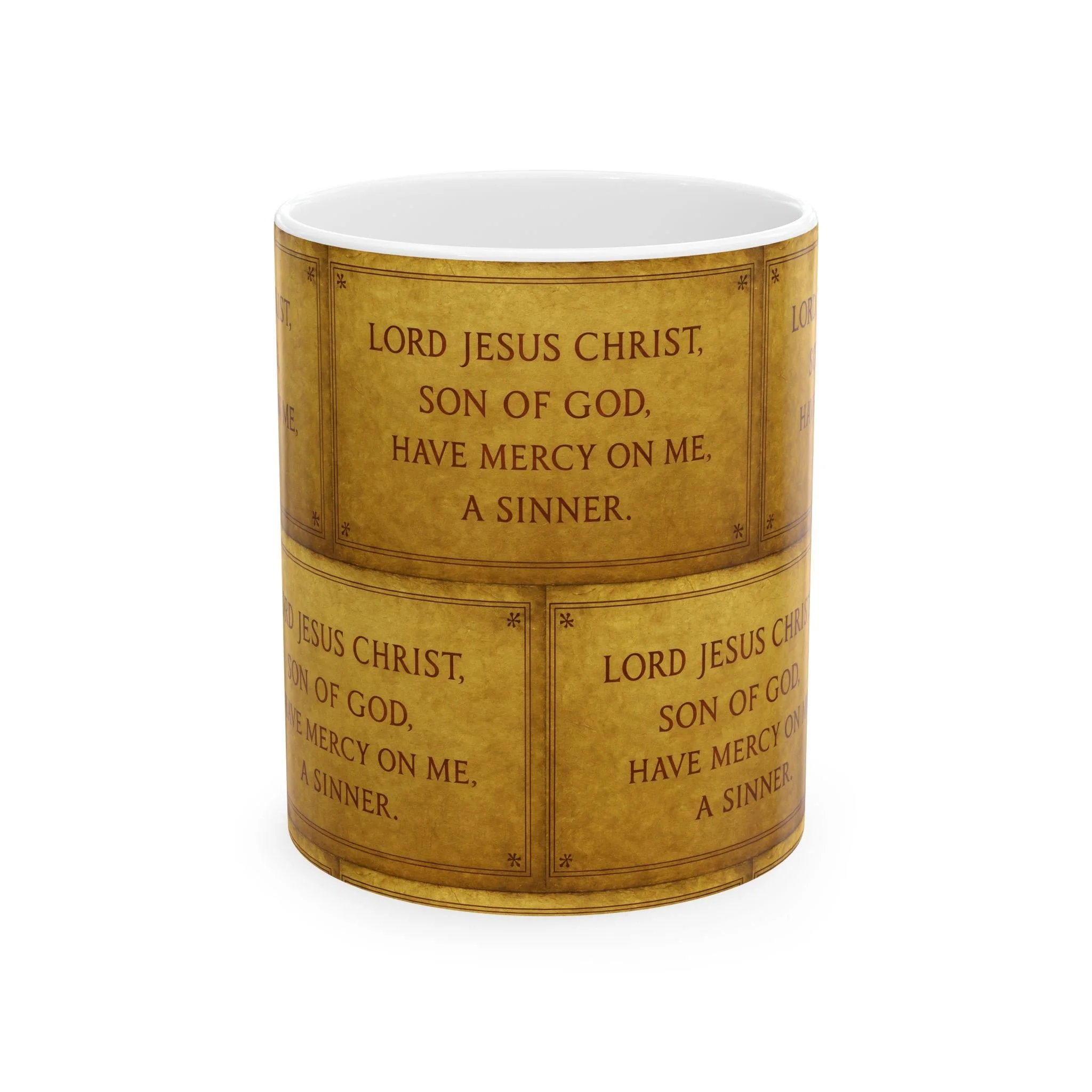
Carry Saint Nestor's prayer card into training, into competition, or simply as a daily reminder that courage and humility were never opposites for him. Ask his intercession the way he once asked Demetrios's: not for an easy fight, but for the strength to face a hard one honestly.
Get the Saint Nestor Prayer Card →