Orthodox Fasting Rules: What You Can Eat, When, and Why the Church Fasts
Wednesday and Friday • Four Fasting Seasons • What to Eat • Why the Church Fasts
Orthodox Fasting Rules: What You Can Eat, When, and Why the Church Fasts
The Nativity Fast begins November 15 for most Orthodox and Byzantine Catholic Christians. Here is the calendar, the food rules, the exceptions, and the reason behind all of it.
The Rules at a Glance
- Every Week
- Wednesday and Friday, outside the fast-free periods
- Fasting Seasons
- Great Lent • Apostles’ Fast • Dormition Fast (August 1 to 14) • Nativity Fast (November 15 to December 24)
- One-Day Fasts
- January 5, August 29 and September 14
- Fast-Free Times
- December 25 to January 4 • The week after the Publican and Pharisee • Bright Week • Trinity Week
- Strict Fast Excludes
- Meat, eggs, dairy, fish, wine and oil
- Always Allowed
- Fruit, vegetables, grains, beans and shellfish
- Who Decides
- Your priest or spiritual father. Practice differs between jurisdictions
- Health
- The sick, the elderly, children, and pregnant or nursing mothers are not held to the full rule
Why the Church Fasts
Orthodox fasting is not a diet, and it is not a punishment. Christians fast to turn the whole person, body included, toward God, and to loosen the grip of appetite so that prayer and mercy have room. Jesus assumes his followers will fast. He says, “And when you fast, do not look dismal, like the hypocrites” (Matthew 6:16, RSV), and he does not say “if.”
The Church has fasted on Wednesday and Friday from the earliest centuries, the days remembered for the betrayal and the crucifixion. The Didache, an early Christian manual, tells believers to fast on Wednesday and Friday and not on the days kept by others. You can read it in our full text of the Didache with commentary.
The rules below are the common Orthodox practice. They are not identical everywhere. Each jurisdiction, and sometimes each bishop, sets its own details, so your parish priest has the last word. Where this article gives a rule, it says whose rule it is.
Part II
Table 1: The Fasting Calendar
| Fast | When | General rule |
|---|---|---|
| Wednesday and Friday | Weekly, except fast-free periods | Strict fast: no meat, eggs, dairy, fish, wine or oil |
| Great Lent | Clean Monday through Holy Saturday (in 2027: March 15 to Pascha on May 2) | Weekdays without meat, dairy, eggs or fish; wine and oil on weekends |
| Apostles’ Fast | The Monday after All Saints Sunday through June 29; length varies with Pascha | Fish on Saturday and Sunday; oil and wine on Tuesday and Thursday |
| Dormition Fast | August 1 to August 14 | Stricter: wine and oil only on weekends and some feasts |
| Nativity Fast | November 15 to December 24 (Julian calendar churches: November 28 to January 6) | Fish on Saturday and Sunday for most of the fast |
| One-day fasts | January 5; August 29; September 14 | Strict fast |
| Fast-free | December 25 to January 4; Bright Week; Trinity Week; week after the Publican and Pharisee | No fasting, including Wednesday and Friday |
The table gives the common pattern, based on the guidelines published by the Orthodox Church in America. Other jurisdictions differ in details, and the Church of Greece, for example, publishes its own orders for the Nativity Fast, described below.
Part III
Wednesday and Friday
Outside the fast-free periods, every Wednesday and Friday is a fasting day. On those days the traditional rule is no meat, eggs, dairy, fish, wine or oil. Some monasteries also fast on Monday. Many Orthodox keep Wednesday and Friday in a lighter way, such as giving up meat and dairy, and they decide with their priest how far to go.
If you are new to this, Wednesday and Friday are the place to begin. Eating plainly twice a week for a whole year trains the habit better than a heroic Lent that you abandon after ten days.
Part IV
What You Can Eat: The Levels of the Fast
The strict fast
On a strict fasting day, no meat, eggs, dairy products, fish, wine or oil are eaten. “Oil” traditionally means olive oil, and in practice many people include all cooking oil. This is the hardest part for many Americans, and we wrote about it in why olive oil is the hardest part of Eastern Christian fasting.
What is always allowed
Fruit, vegetables, grains, beans, nuts and bread are permitted throughout the year. Shellfish, meaning shrimp, crab, clams and the like, and octopus, are traditionally allowed even on strict days, because they are not counted as “fish with backbones.” A day of rice, lentils, vegetables, bread and fruit is a normal fasting day.
The middle levels
The Church loosens the strict fast in steps. Wine and oil are allowed on some days. Fish is allowed on fewer days, usually the great feasts. Dairy, eggs and meat are not eaten in any of the four fasting seasons.
This is how the steps run in the Apostles’ Fast and the Nativity Fast, according to the OCA guidelines: Monday, Wednesday and Friday, no fish, wine or oil; Tuesday and Thursday, wine and oil but no fish; Saturday and Sunday, fish as well. In the Dormition Fast, wine and oil are allowed only on Saturdays and Sundays, with a few feasts.
Not a legal code
The OCA guidelines themselves warn against reading the rules with “dour and pedantic legalism.” Where there is doubt, ask your spiritual father. A single parent in a house of non-Orthodox family, a person eating at a school or workplace, and a person of poor health may keep a gentler rule, and the guidelines allow for this.
Part V
The Nativity Fast, Day by Day
The Nativity Fast, also called Saint Philip’s Fast because it begins the day after his feast on November 14, lasts forty days. On the revised Julian calendar, which most Orthodox in the United States use, together with Byzantine Catholics, it runs from November 15 to December 24. Churches that keep the Julian calendar, including Jerusalem, Russia, Serbia, Georgia and Mount Athos, begin on November 15 by their calendar, which is November 28 on the civil calendar, and end on January 6. Their Christmas falls on January 7.
On the OCA pattern, the Tuesday and Thursday allow wine and oil, Wednesday and Friday do not, and Saturday and Sunday allow fish. Many jurisdictions end fish earlier, around December 20, as the feast nears. The fast closes with a strict day on December 24 (the Paramony), when many Orthodox eat no solid food until the first star or after the Vesperal Liturgy. If December 24 falls on a weekend, the day is eased.
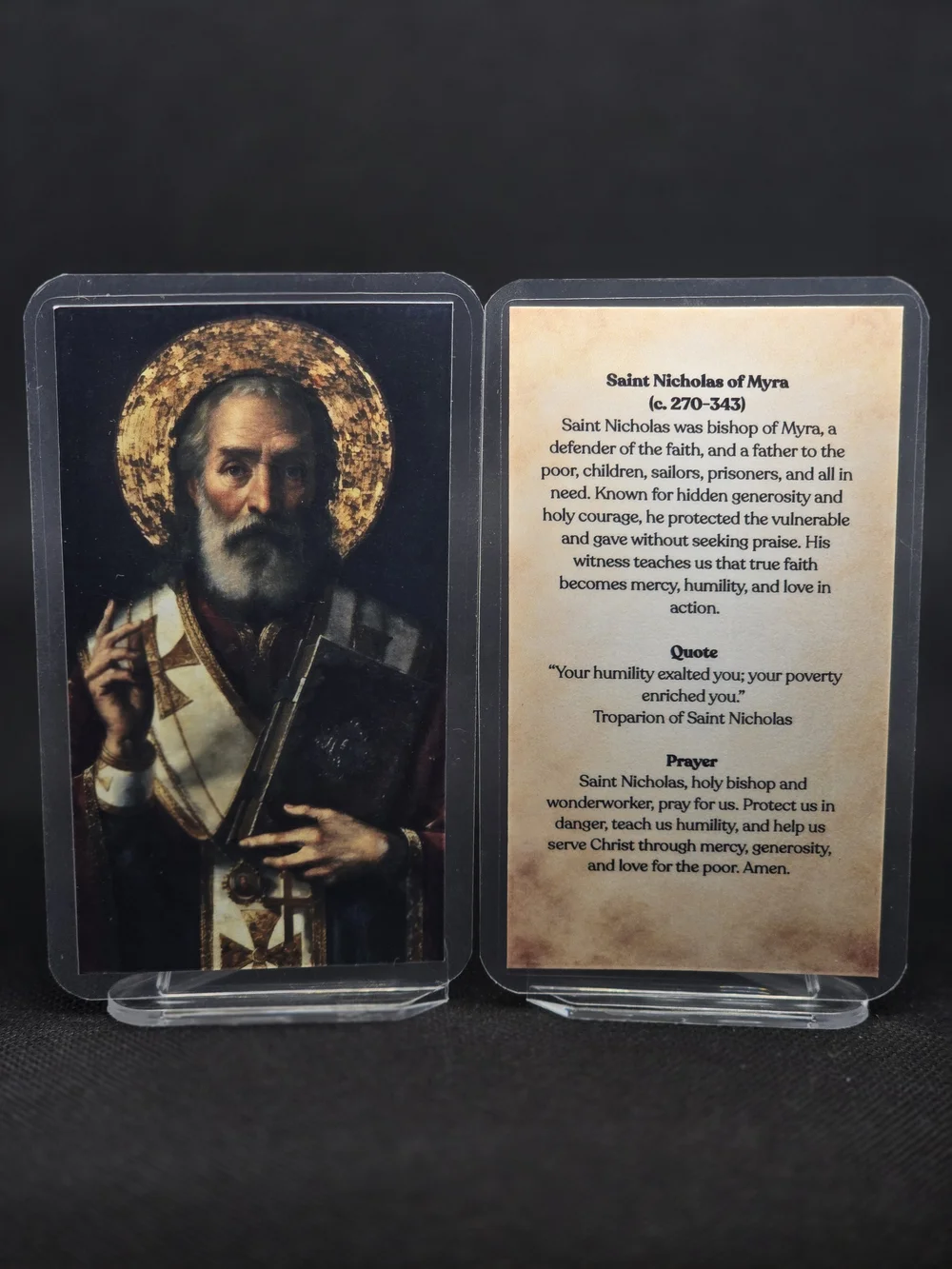
Feasts inside the fast. The feast days of some saints allow fish, wine and oil even on weekdays. These include Saint Nicholas on December 6 and Saint Spyridon on December 12, and in many places also the Apostle Andrew on November 30. They are a welcome break, and a reminder that the fast is lived among the saints.
The Greek order. The Church of Greece publishes its own rule. In its form, there is no fish from November 15 to 20, and from the Entrance of the Theotokos on November 21 fish is allowed on Saturdays and Sundays until the middle of December, with oil and wine on specific feasts. December 24 is a strict dry fast, and December 25 has no restrictions. The announced order depends on the bishop, so check with your own parish.
Other Eastern churches. The Ethiopian and Eritrean Orthodox fast from about November 24 to January 7. The Melkite Greek Catholic Church shortened its Nativity Fast to begin on December 10. The Armenian Church keeps a week-long fast before the feast. The Coptic Church adds a three-day fast before its Nativity Fast, remembering the miracle of Saint Simon the Tanner. Rules and dates for each differ.
Part VI
Great Lent
Great Lent is the longest and strictest season. It begins on Clean Monday, seven weeks before Holy Week, and runs through Holy Saturday. In 2027, Orthodox Pascha is May 2, so Clean Monday is March 15. (In 2026 Pascha was April 12.)
Before Lent. Two weeks of preparation come first. In the Meatfast week, which begins the Monday after the Sunday of the Last Judgment, meat is no longer eaten, but eggs, dairy and fish are allowed. That week ends with Cheesefare Sunday, also called Forgiveness Sunday, after which the Lenten fast begins. In 2027 the Meatfast week runs from March 8 to March 14. The week before it, after the Sunday of the Publican and Pharisee, has no fasting at all, not even Wednesday and Friday.
The weekday rule. On weekdays in Lent, the traditional meal is xerophagy, or “dry eating,” with no meat, animal products, fish, oil or wine. Shellfish is allowed. On Saturdays and Sundays two meals are allowed, with wine and oil but not meat, animal products or fish.
Feast exceptions. Fish is allowed on the Annunciation (March 25) and on Palm Sunday. Great and Holy Saturday is a day of strict fasting, with no oil or wine.
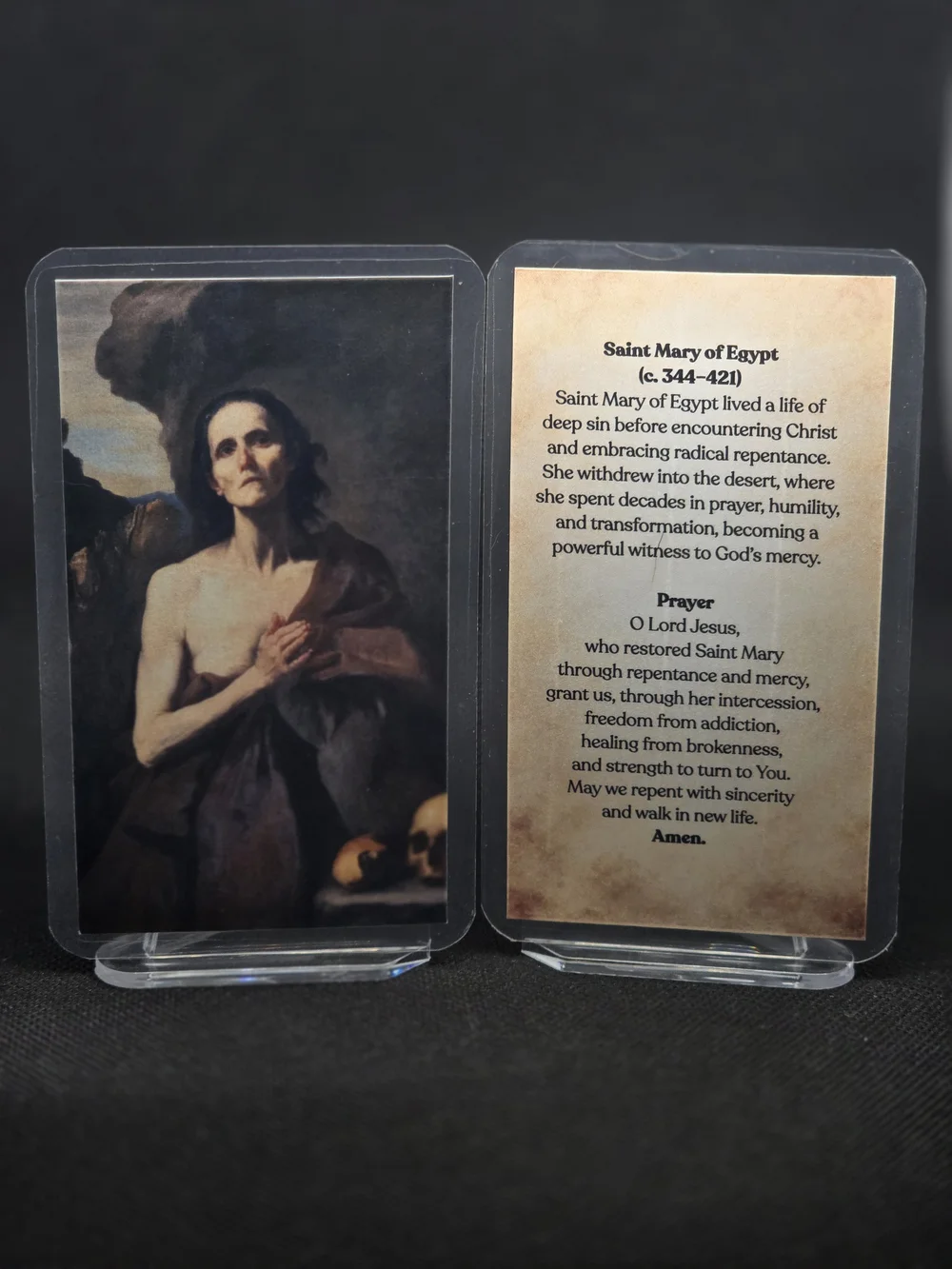
The saints of Lent. The Church puts models in front of us. Saint Mary of Egypt, whose life is read in the fifth week, spent decades in the desert in repentance. See our biography of Saint Mary of Egypt. Our card carries her for repentance and the Great Fast.
Part VII
The Apostles’ Fast, the Dormition Fast and One-Day Fasts
The Apostles’ Fast begins on the Monday after All Saints Sunday, which is the Sunday after Pentecost, and ends on June 29, the feast of Saints Peter and Paul. Because Pascha moves, the length varies. In 2026 it ran from June 8 to June 29, about three weeks. In 2027, with a late Pascha, it is only two days: June 28 and 29. The rule is the same as the Nativity Fast: fish on Saturday and Sunday, wine and oil on Tuesday and Thursday.
The Dormition Fast runs from August 1 to August 14, the eve of the Dormition of the Theotokos on August 15. It is the shortest of the seasons and one of the strictest. Wine and oil are allowed on Saturdays and Sundays and on certain feasts, such as the Transfiguration on August 6, when fish is also allowed in many places.
Three one-day fasts. January 5, the eve of Theophany; August 29, the Beheading of Saint John the Baptist; and September 14, the Elevation of the Cross. On these days the fast is strict, with no meat, eggs, dairy, fish, wine or oil.
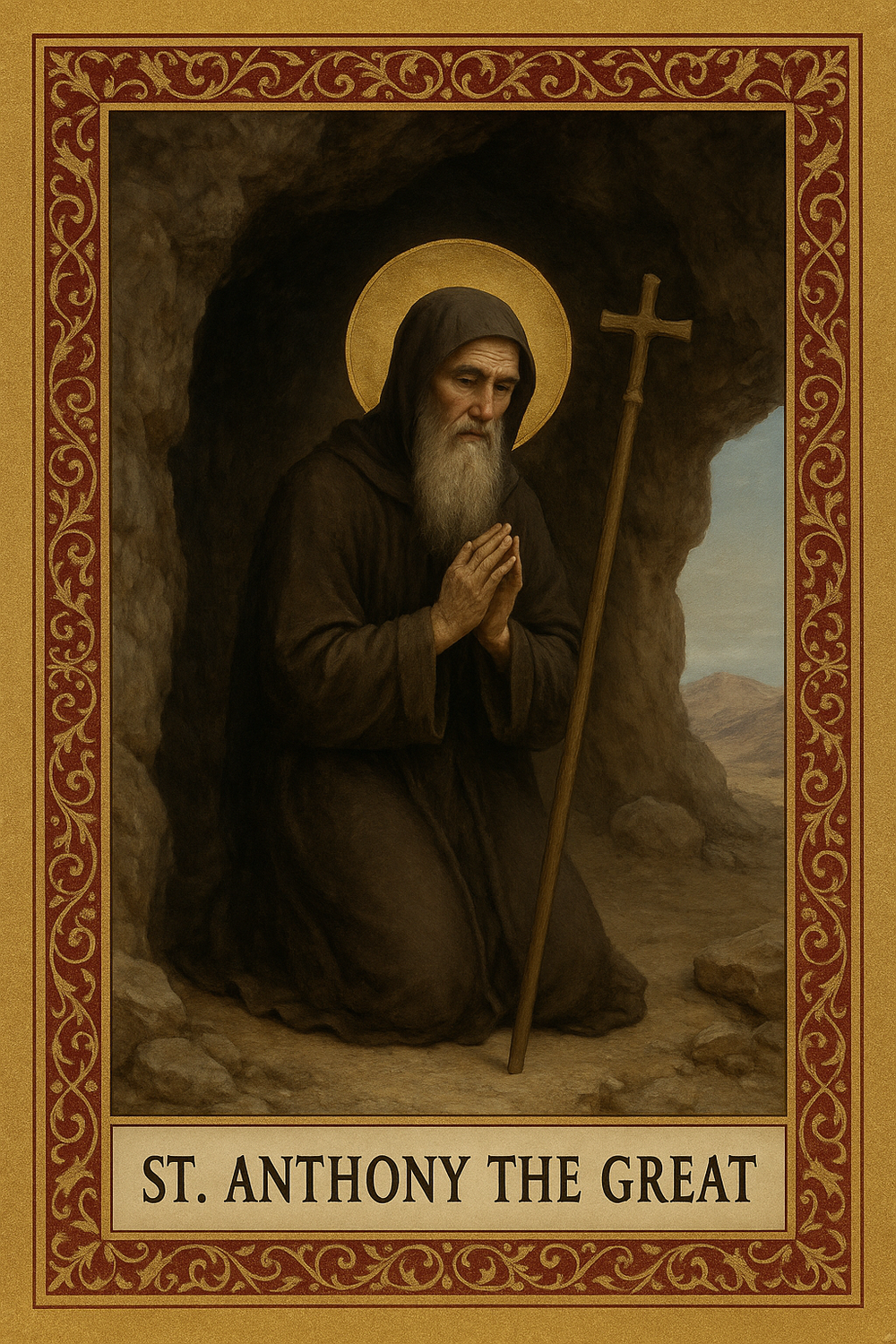
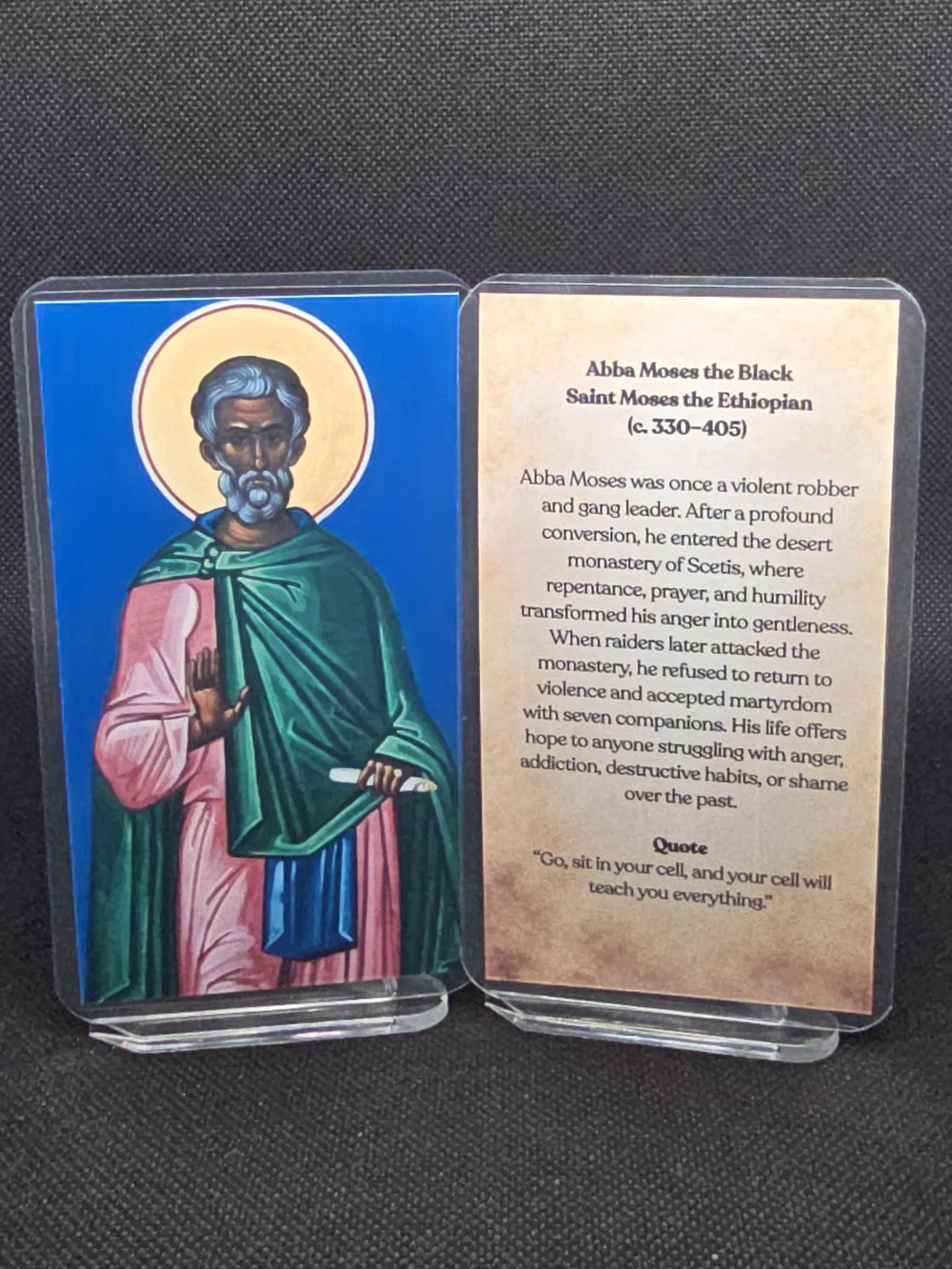
The desert fathers are why the Church knows how to fast. Saint Anthony the Great, who went into the Egyptian desert around 270, is the father of monasticism, and later fathers such as Saint Abba Moses the Black carried the discipline on. See our article on the desert fathers and mothers.
Part VIII
Fast-Free Times
The Church also tells you when not to fast. There are four fast-free periods: the days from the Nativity on December 25 through January 4; the week after the Sunday of the Publican and Pharisee, before Lent; Bright Week, from Pascha until Thomas Sunday; and Trinity Week, from the week after Pentecost until the Saturday before All Saints Sunday. During these times even Wednesday and Friday are not fasting days.
This is not a loophole. It is the Church teaching that feasting is part of the Christian life, and that fasting without feasting turns into pride. Eat well at Pascha and Christmas, and give thanks.
Part IX
Who Is Not Held to the Full Rule
The Church does not ask anyone to harm their health. The OCA guidelines say the rules should be relaxed for anyone elderly or in poor health. The common practice, which your priest will confirm, also excuses children, pregnant and nursing mothers, and people on medication that must be taken with food. A person who is ill may eat what is needed. Travelers, soldiers and workers with little control over their meals are in a similar position.
A caution. If you have diabetes, a history of disordered eating, an eating disorder, kidney or heart disease, or any condition affecting how you eat, talk with your doctor and your priest before you fast. Fasting is meant to be a spiritual discipline and should never become an unhealthy relationship with food. Adjusting the rule is not a failure. It is how the Church has always handled it.
The fast also covers more than food. Saint John Chrysostom and the fathers insist that fasting is empty without prayer and mercy. A fast that makes you proud or harsh has missed its point.
Part X
Eastern Catholic and Other Eastern Churches
The Eastern Catholic Churches share much of the Byzantine tradition, but their obligations differ from the Orthodox. For Byzantine Catholics the rules are largely left to the conscience of the faithful and the direction of each eparchy, and the common minimum includes abstaining from meat on most Fridays. The Ukrainian Greek Catholic Church has obligatory abstinence from meat on Wednesdays and Fridays. These details differ by eparchy and have changed over time, so ask your own parish. If you are not sure what an Eastern Catholic is, read our guide to Byzantine Catholics and how Eastern Catholics differ from Roman Catholics.
The Coptic, Ethiopian and Eritrean churches keep some of the longest fasts in Christianity, with many more fasting days in the year. The Chaldean Church keeps the three-day Fast of Nineveh, described in our article on the Bautha.
Part XI
Starting Without Burning Out
Talk to your priest first. Tell him what you can do, and ask him to set a rule for you. A smaller rule you keep is better than a larger rule you break.
Begin with Wednesday and Friday. Then add the Nativity Fast, and later Great Lent.
Plan meals. Beans, lentils, rice, soups, pasta with vegetables, hummus, oatmeal, nuts and fruit make fasting easy. The hard days are the ones when you are unprepared.
Give alms. What you save by eating simply belongs to the poor. Fasting, prayer and almsgiving are a set.
Pray more, not only eat less. A fast with no extra prayer is only a diet. Add the Jesus Prayer, and read the Gospels. See our guide to the Jesus Prayer and how to build an Orthodox prayer rule.
The Eucharistic fast. Before Communion Orthodox and Eastern Catholic Christians also keep a fast from food and drink. The customary form begins at midnight, but the practice varies. Ask your priest.
Saint Joseph the Hesychast taught the Jesus Prayer to his disciples on Mount Athos, and his life shows what fasting is for: stillness and prayer.
Part XII
A Prayer Before Fasting
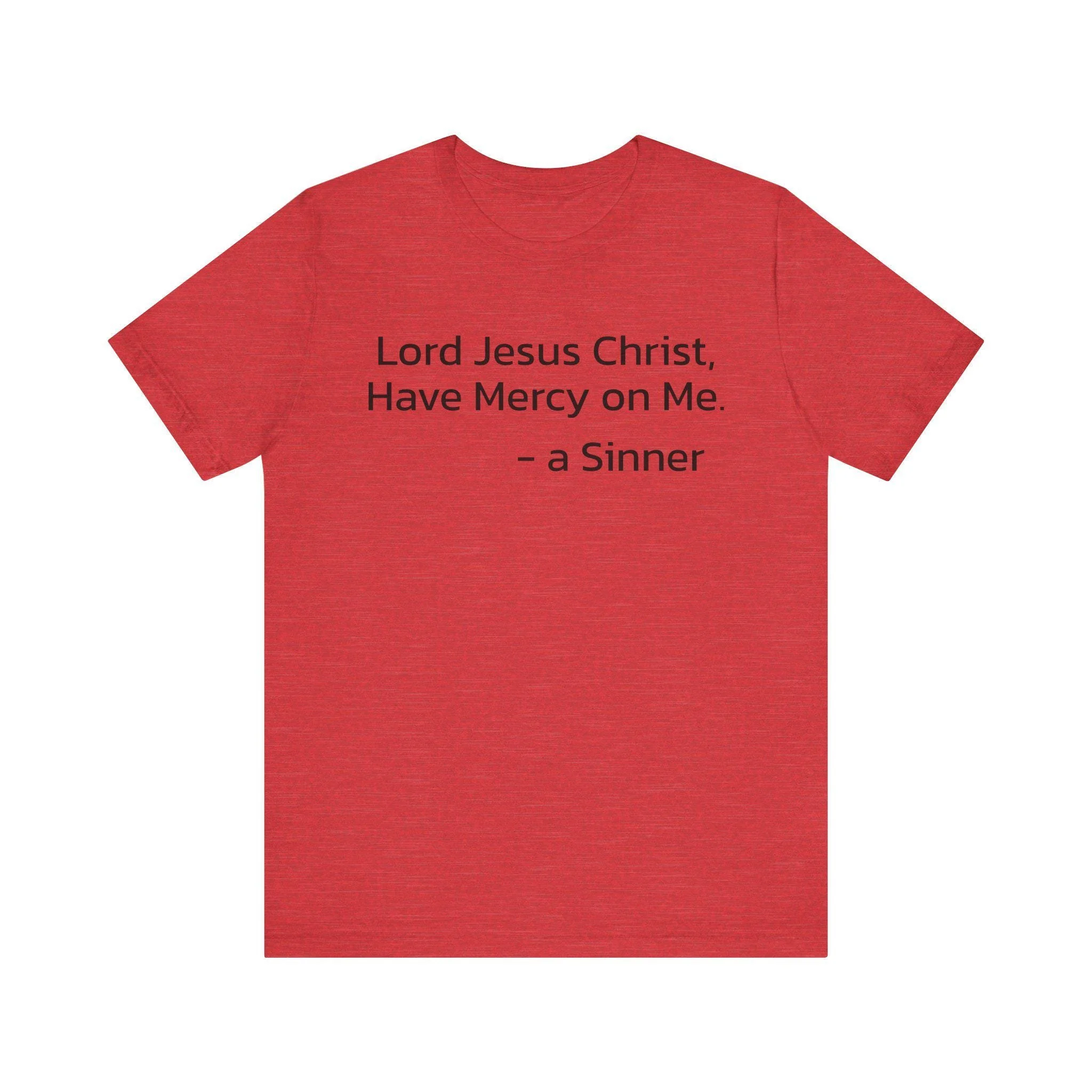
Lord Jesus Christ, you fasted in the wilderness, and you taught us to fast in secret. Help me to keep this fast in humility and not in pride. Let it be a fast of the body and also of the tongue, the eyes and the heart.
Where I fail, forgive me. Where I am weak, strengthen me. Teach me to share what I save with the poor, and to rejoice at your feast with a clean heart. By the prayers of Saint Nicholas, Saint Spyridon and all your saints, have mercy on me. Amen.
Part XIII
Cards and Gifts
Saint Nicholas and Saint Spyridon, whose feasts fall inside the Nativity Fast, and Saint Mary of Egypt for Great Lent.
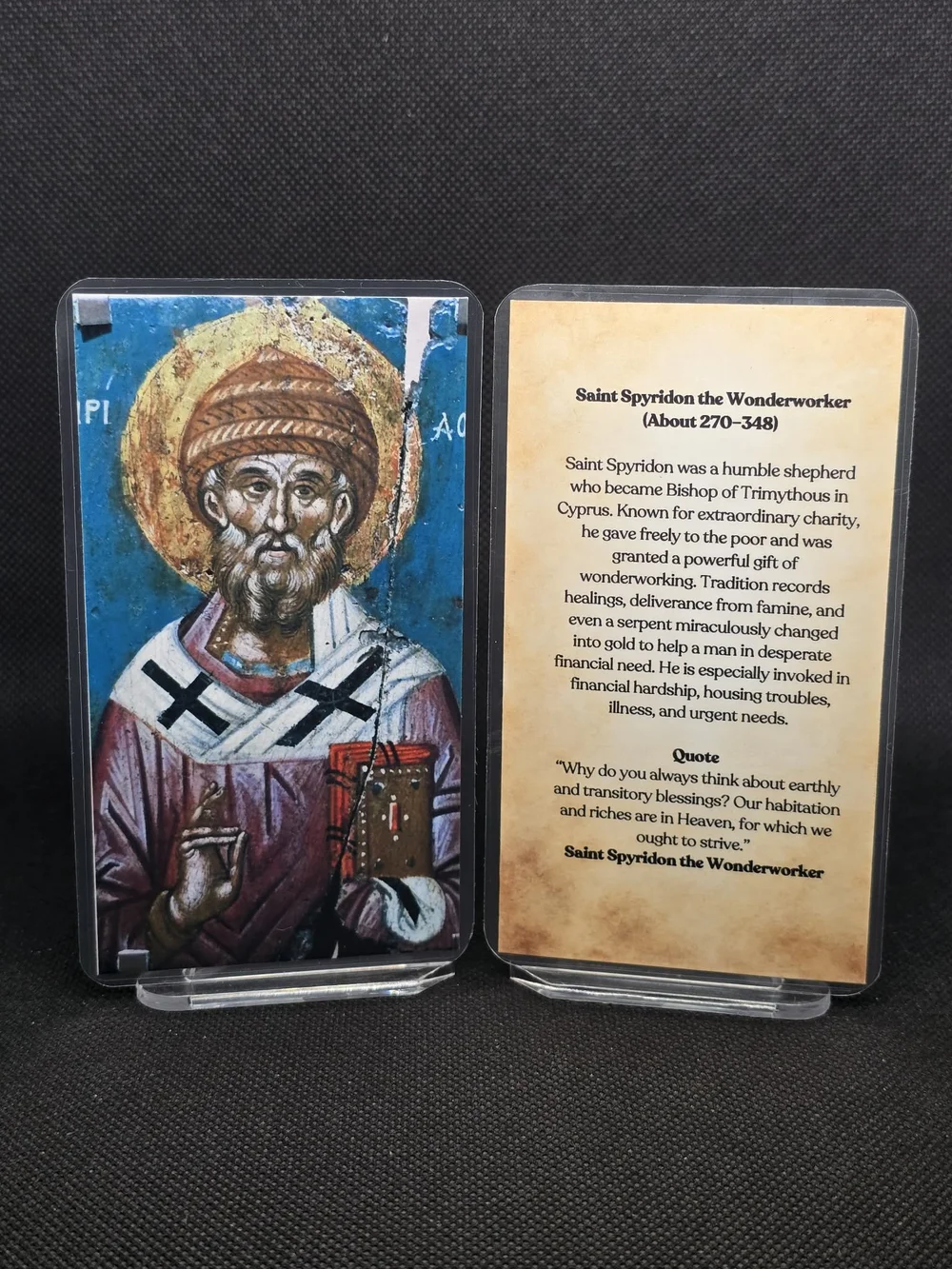
Saint Anthony the Great, Saint Joseph the Hesychast and Saint Abba Moses the Black.
The Jesus Prayer shirt.
Fast Toward the Feast
The fast is not the goal. It leads to Christmas and to Pascha, and it leads, day by day, to prayer. Begin with what you can keep, ask your priest, and pray as you eat.
Appendix
