Saints for Surgery and Sick Children: Catholic and Orthodox Patrons and Prayers
Luke the Surgeon • Panteleimon • Blaise • Peregrine • Charbel • Nicholas • Anne
Saints for Surgery and Sick Children: Catholic and Orthodox Patrons and Prayers
When someone you love is going into an operating room, or a child is in a hospital bed, you want someone to ask. Here are the saints the Church has turned to, what is known about each, and what is devotion.
Which Saint for Which Need
- Before an Operation
- Saint Luke of Crimea, the surgeon-archbishop • Saint Panteleimon • Saint Cosmas and Saint Damian
- Serious Diagnosis
- Saint Peregrine Laziosi, whose leg was healed before it could be amputated, by tradition
- Throat and Breathing
- Saint Blaise, physician and bishop of Sebaste
- Healing Sought by the Sick
- Saint Charbel of Lebanon
- Sick Children
- Saint Nicholas of Myra • Our Lady of Guadalupe • Saint Anne for the praying mother
- Official Status
- All are recognized saints, but their patronages for surgery and for children are devotion, not decree
- Sacrament
- The Catholic Anointing of the Sick is fitting before a serious operation (CCC 1515)
- Emergency
- Call 911 first. Prayer works alongside medical care, not in place of it
What the Church Offers the Sick and Their Families
There is no single patron saint of surgery or of sick children by papal decree that I could find. What the Church has is a long list of physicians, healers and friends of the sick, and the faithful have turned to them for exactly that reason. In this article a patronage is called official only when a pope or Church authority made it so. Everything else is devotion, which is old and real, but is a different thing.
The sacrament for the sick. In the Catholic Church the Anointing of the Sick “is not a sacrament for those only who are at the point of death” (CCC 1514). The Catechism says it is fitting to receive it “just prior to a serious operation” (CCC 1515). The grace it names is “strengthening, peace and courage to overcome the difficulties” of serious illness (CCC 1520). If you or someone you love is facing a serious operation, ask the parish priest or the hospital chaplain. Orthodox Christians can ask their priest for Holy Unction, together with confession and Communion.
When it is a child. Parents often ask whether they did something wrong. Scripture answers the question in the story of the man born blind, when the disciples ask whose sin caused it: “It was not that this man sinned, or his parents, but that the works of God might be made manifest in him” (John 9:3, RSV). And Jesus says, “Let the children come to me, do not hinder them; for to such belongs the kingdom of God” (Mark 10:14, RSV). A sick child is not being punished, and a child is never in the way of Christ.
Prayer and medicine. Neither the Catholic nor the Orthodox tradition sets prayer against medicine. The saints in this article include physicians, and two of them are honored precisely because they were doctors. Pray, and also follow your medical team.
If someone is in danger now, call 911. Decisions about surgery and treatment belong with your doctors and, for a child, with the parents and the medical team. This article offers prayer and devotion and is not medical advice. If you are overwhelmed as a caregiver, you can call or text 988 at any time.
Part II
Table 1: The Saints at a Glance
| Name | Invoked for | Tradition | Standing and basis |
|---|---|---|---|
| Luke of Crimea (1877 to 1961) | Surgery, surgeons, serious illness | Orthodox | Surgeon and archbishop; glorified (sources give 1996 and 2000); feast June 11 (May 29 Julian); surgery patronage is devotion |
| Panteleimon (d. c. 305) | Physicians, the sick | Orthodox and Catholic | Physician-martyr of Nicomedia; veneration attested in the 5th century; feast July 27; later lives are legend |
| Cosmas and Damian | Healing, physicians | Orthodox and Catholic | Unmercenary physicians; Catholic feast September 26; little verifiable about their lives |
| Blaise (d. 316) | Throat illness, breathing | Catholic and Orthodox | Physician and bishop of Sebaste; feast February 3 (Latin), February 11 (Orthodox); fishbone story is legend |
| Peregrine Laziosi (c. 1260 to 1345) | Cancer, life-threatening illness | Catholic | Servite friar; beatified 1609, canonized December 27, 1726; feast May 1; the leg healing is tradition |
| Charbel Makhlouf (1828 to 1898) | Healing | Maronite and Catholic | Beatified 1965, canonized October 9, 1977; feast July 24 (Latin) and third Sunday of July (Maronite); reported healings |
| Nicholas of Myra (4th century) | Children | Orthodox and Catholic | Bishop; feast December 6; patron of children by devotion |
| Our Lady of Guadalupe | Sick relatives, children | Catholic | Tradition of December 1531; feast December 12; earliest written account c. 1556 |
| Anne, mother of Mary | Mothers praying for children | Catholic and Orthodox | Known from the Protoevangelium of James, about AD 150; feast July 26 (Catholic), July 25 (Orthodox) |
Each entry is covered below with the basis stated. Where a patronage rests on devotion and not on a decree, the text says so.
Part III
Saint Luke of Crimea: The Surgeon Who Became an Archbishop
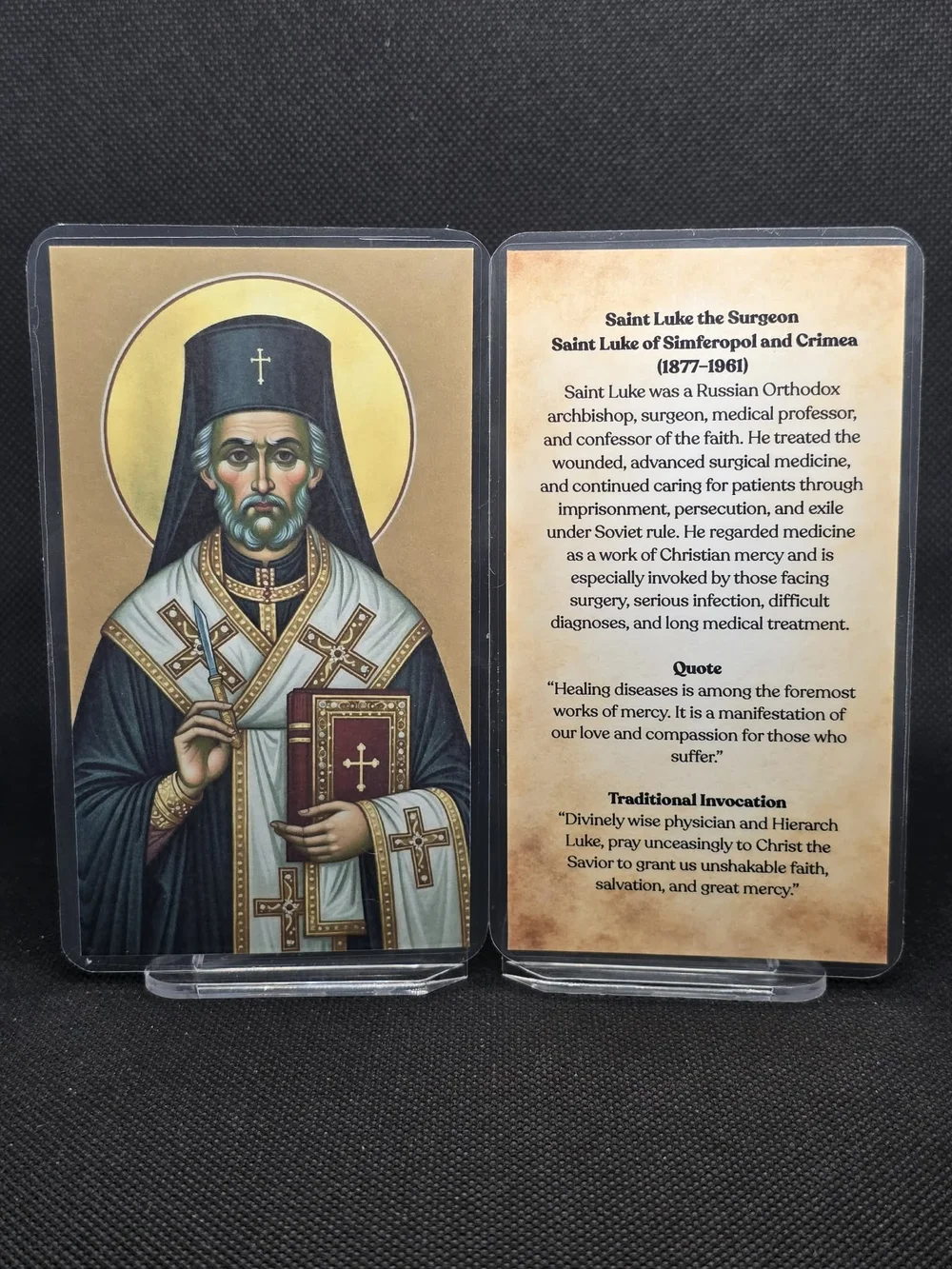
Valentin Voino-Yasenetsky was born on April 27, 1877, and studied medicine at Kiev University. According to the ACROD account of his life, he worked in district hospitals from 1905 to 1917 and in 1917 became head surgeon of the largest city hospital in Tashkent. His book Sketches of Purulent Surgery (1934) became a reference for surgeons, according to the standard biography.
Two details are what make him a saint for people facing an operation. The ACROD account says he refused to operate without an icon of the Mother of God in the operating room, and began every procedure with the sign of the cross. He was ordained a priest on February 15, 1921, and consecrated bishop in secret on May 31, 1923. He was arrested three times and spent about eleven years in exile. In 1946 he received the Stalin Prize for his scientific work and, the account says, used the prize money to help children who had been victims of the war. From May 1946 he was archbishop of Simferopol and Crimea. He lost his sight in 1956 and kept serving the Liturgy. He died on June 11, 1961.
The Russian Orthodox Church glorified him as a saint. Sources give 1996 and 2000 for the date, so I do not state one. His feast is June 11 (May 29 on the Julian calendar). The Church has not named him patron of surgeons by decree, so that title is devotion, but it follows naturally from his life. Our card carries him for surgical healing and strength during serious illness. For his full life, see our article on Saint Luke the Surgeon.
Part IV
Panteleimon, Cosmas and Damian: The Healers Who Took Nothing
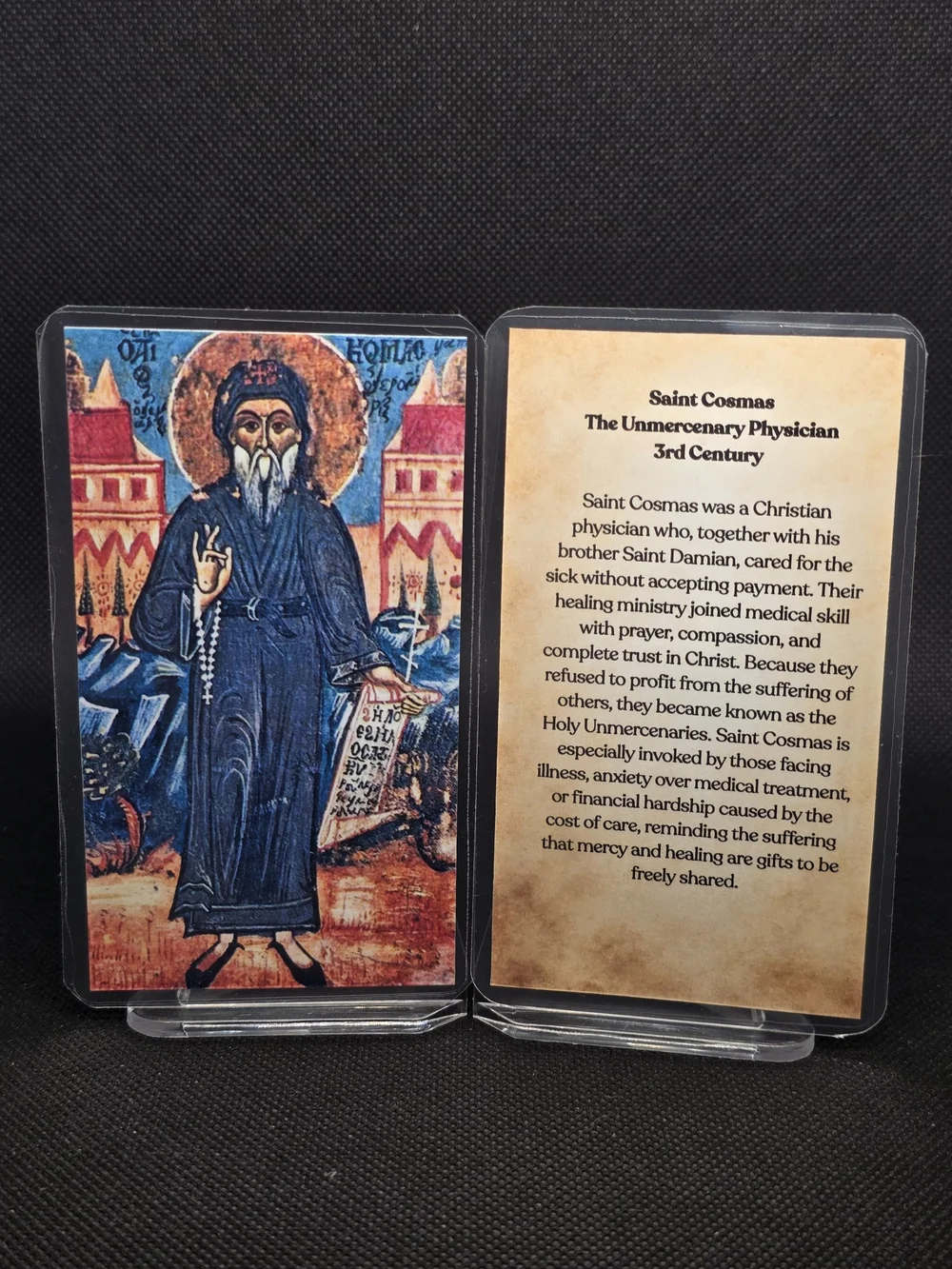
The Eastern Church calls certain healers anargyroi, “the silverless,” because they treated the sick without charging a fee. The title rests on Matthew 10:8: “You received without paying, give without pay.” Three of them are most often asked for help by patients.
Saint Panteleimon. He was a Christian martyr from Nicomedia, in what is now Turkey, who died around 305. The name means “all-compassionate.” According to the standard reference, he studied medicine, became physician to the emperor, and was beheaded during the Diocletian persecution. Veneration of him is attested in the fifth century, and Justinian rebuilt his shrine at Nicomedia. The detailed miracles and tortures come from late lives that the Catholic Encyclopedia calls valueless, so they are legend. His feast is July 27. See our page on Saint Panteleimon.
Saints Cosmas and Damian. They are honored as twin physicians and martyrs who took no payment. Little can be verified about their lives. The Orthodox Church honors three different pairs with these names, and the Catholic feast is September 26. They are patrons of physicians by devotion, and families call on them before a hospital stay. Our Saint Cosmas card is for healing, medical anxiety, and the money worry that comes with illness.
Part V
Saint Blaise: The Physician-Bishop of the Throat
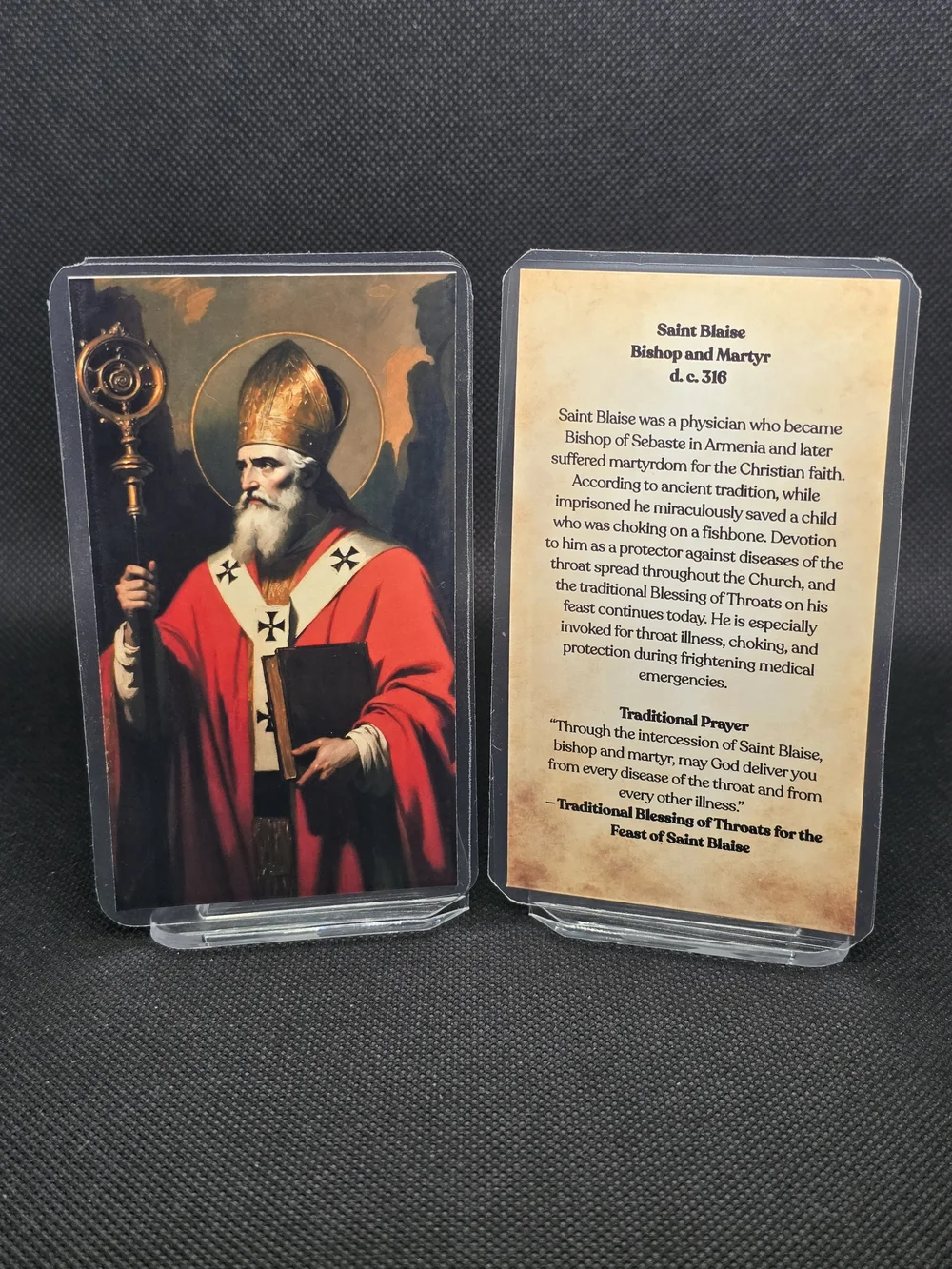
Blaise was a physician and bishop of Sebaste, in modern Turkey, and was beheaded in 316 under the governor Agricola, according to the standard reference. The earliest reference is in the medical writings of Aetius of Amida, around AD 500, who invoked his aid for something stuck in the throat. The story of the mother who laid her choking son, with a fishbone in his throat, at his feet appears only in later Acts written some four centuries after his death, so it is legend.
On his feast, February 3 in the Latin Church and February 11 in the Orthodox Church, a priest blesses throats with two candles held in the form of a cross, which were blessed at the feast of the Presentation. He is invoked against throat ailments and is counted among the Fourteen Holy Helpers. For anyone facing a tonsil, ear, nose or throat operation, or a child with breathing trouble, he is the saint people think of. The Church has not made him patron of those operations by decree; that is devotion. See our article on Saint Blaise.
Part VI
Saint Peregrine: The Leg That Was Not Amputated
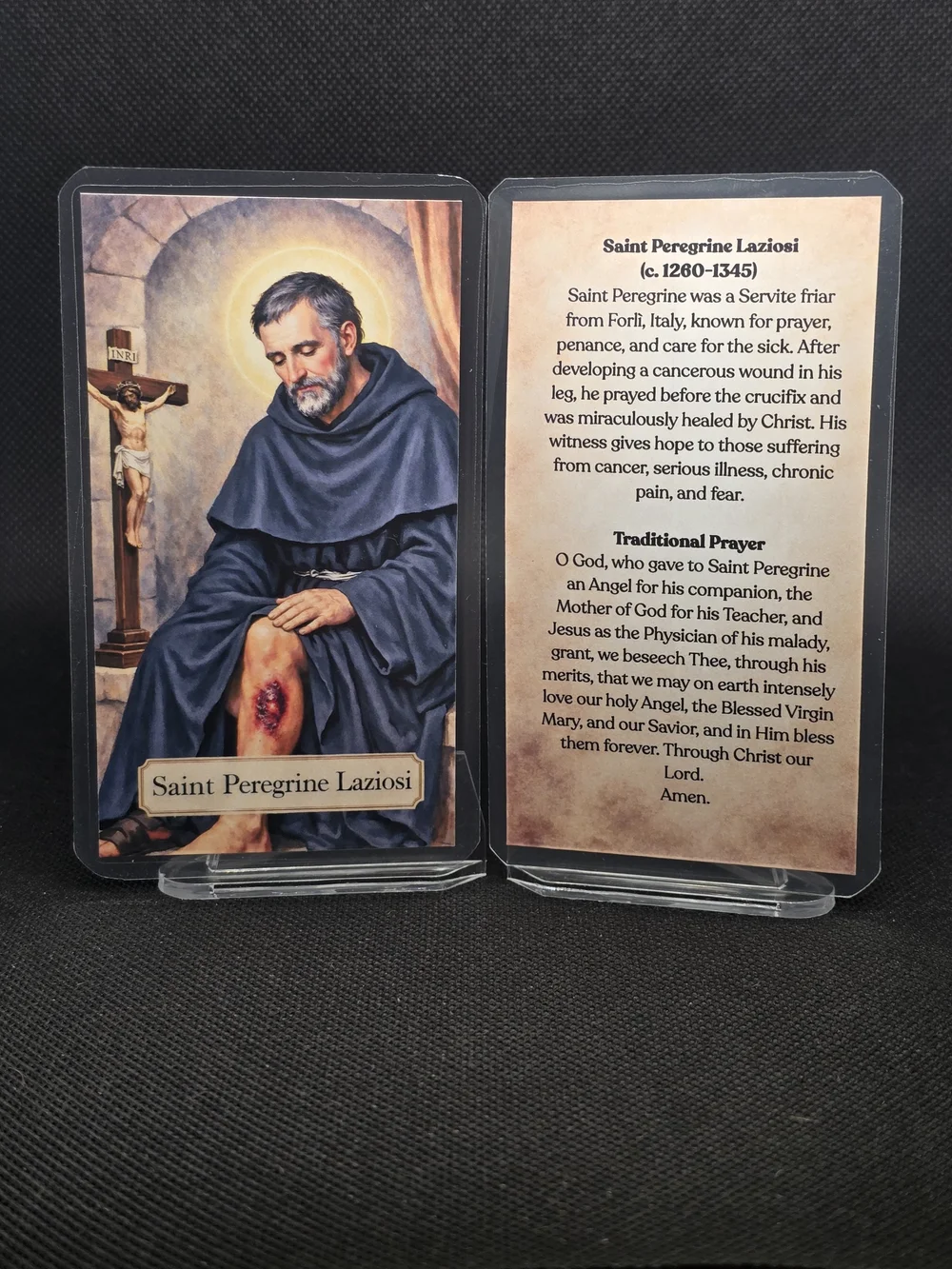
Peregrine Laziosi was born around 1260 in Forli, Italy, and joined the Servite Order. The standard account says that at about sixty he developed a serious infection in his right leg, described as cancerous, and the doctor decided to amputate. The night before the operation he prayed before a fresco of the crucifixion. He is said to have seen Christ come down from the cross and touch his leg. The next day the doctor found no sign of the disease.
That story is tradition, and the account itself presents it as attributed. What is documented is that he lived, joined the Servites, died on May 1, 1345, was beatified in 1609 by Paul V, and was canonized on December 27, 1726, by Benedict XIII. He is invoked by people with cancer and other life-threatening illnesses, which is devotion. Many people facing surgery pray to him because the story concerns a surgery that did not happen. Do not read it as a promise. Read it as a saint who knew what it is to wait for an operation. Our card carries him for cancer healing and for hope when doctors run out of answers. See our article on Saint Peregrine.
Part VII
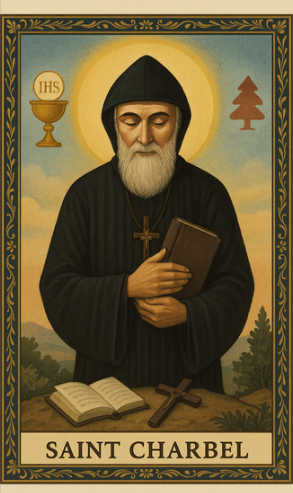
Saint Charbel: The Hermit the Sick Seek
Youssef Makhlouf was born on May 8, 1828, in Bekaa Kafra, Lebanon, and became a Maronite monk and priest. He was ordained in 1859 and lived as a hermit from 1875 under the care of the Monastery of Saint Maron at Annaya. He died on December 24, 1898, after a stroke, and was buried at the monastery on Christmas Day. Paul VI beatified him on December 5, 1965, and canonized him on October 9, 1977, according to the standard reference. His feast is July 24 in the Latin Church and the third Sunday of July among the Maronites.
Many healings are attributed to his intercession, and people gather at Annaya on the twenty-second of each month. Those are reported experiences, and reported healings figured in the cases for his beatification and canonization. He is not a patron of children or of surgery by decree. He is widely venerated, and the sick are among those who seek his prayers. Our limited edition card is for those seeking his prayers. See our article on Saint Charbel.
Part VIII
Saints for a Sick Child
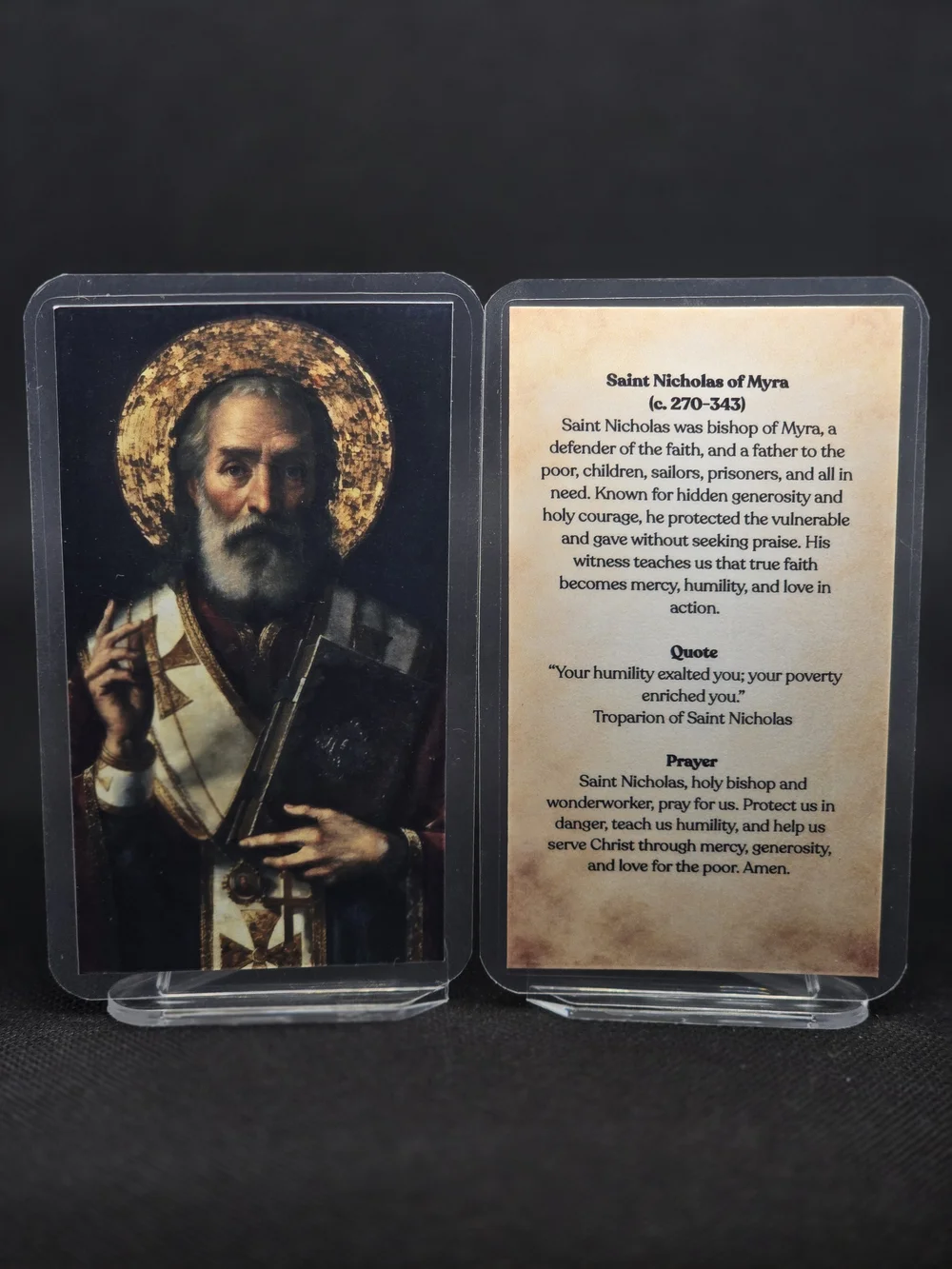
Saint Nicholas of Myra
Nicholas, the fourth-century bishop of Myra, is remembered above all as a protector of children, and the faithful of East and West pray to him for them. Little can be known about him with certainty, and the best-known stories were written down long after his death. His patronage of children is devotion, rooted in tradition. His feast is December 6. Our card carries him for protection of children and rescue in impossible situations. See our article on Saint Nicholas the Wonderworker.
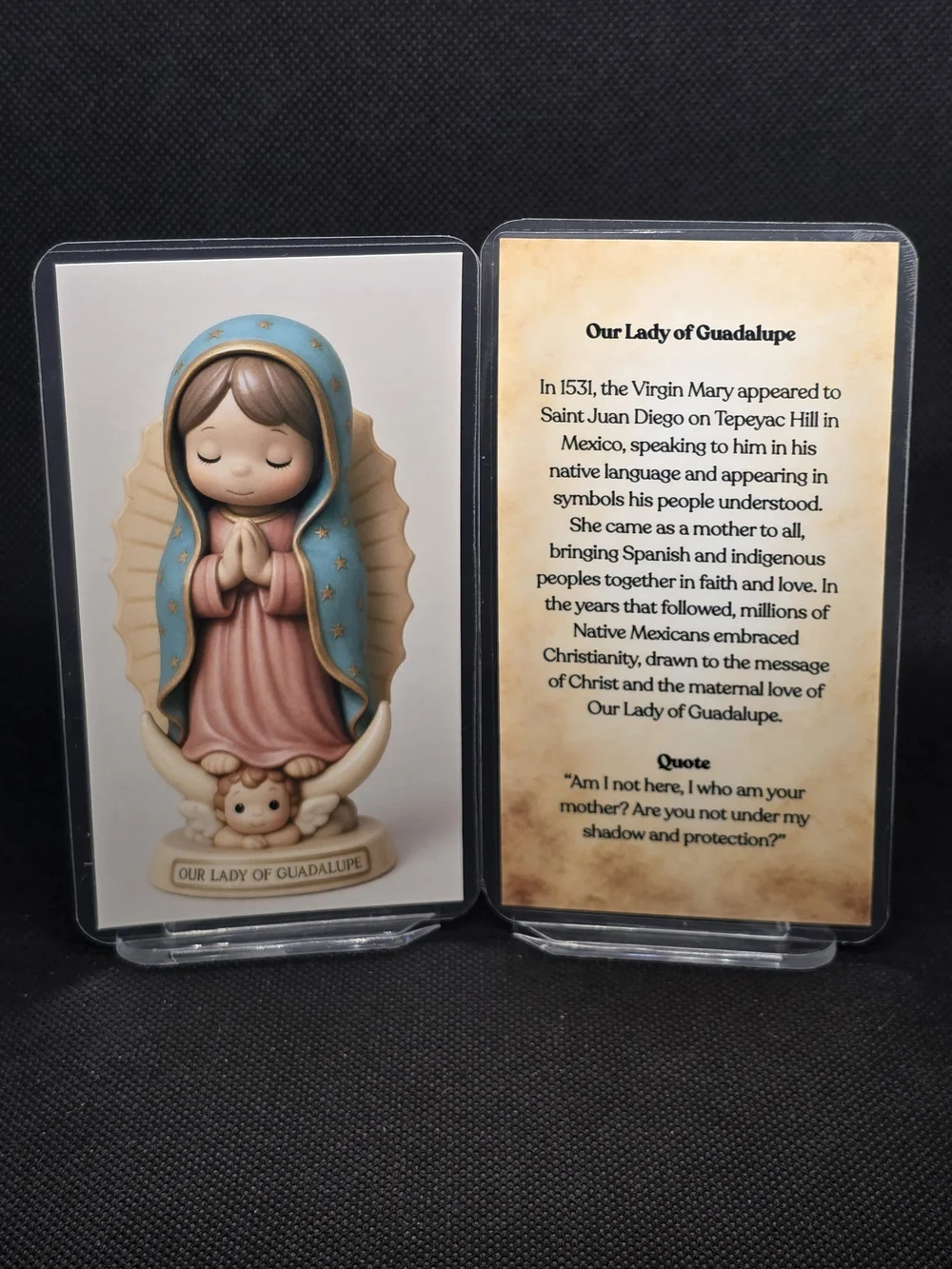
Our Lady of Guadalupe
Tradition tells that in December 1531 the Virgin appeared to Juan Diego on Tepeyac Hill, near Mexico City. When his uncle Juan Bernardino fell gravely ill, Juan Diego set out to find a priest, and the Virgin met him on the way. She is recorded as saying, “Am I not here, I who am your mother?” The earliest surviving written account is the Nahuatl Nican Mopohua, with a manuscript dated about 1556, and historians debate the earliest evidence. The feast is December 12.
The words matter to a parent beside a hospital bed. Devotion to Our Lady of Guadalupe is common among Catholic families facing illness, and her children’s card is made for sick children and a gentle bedtime prayer. It is small enough for a child to hold.
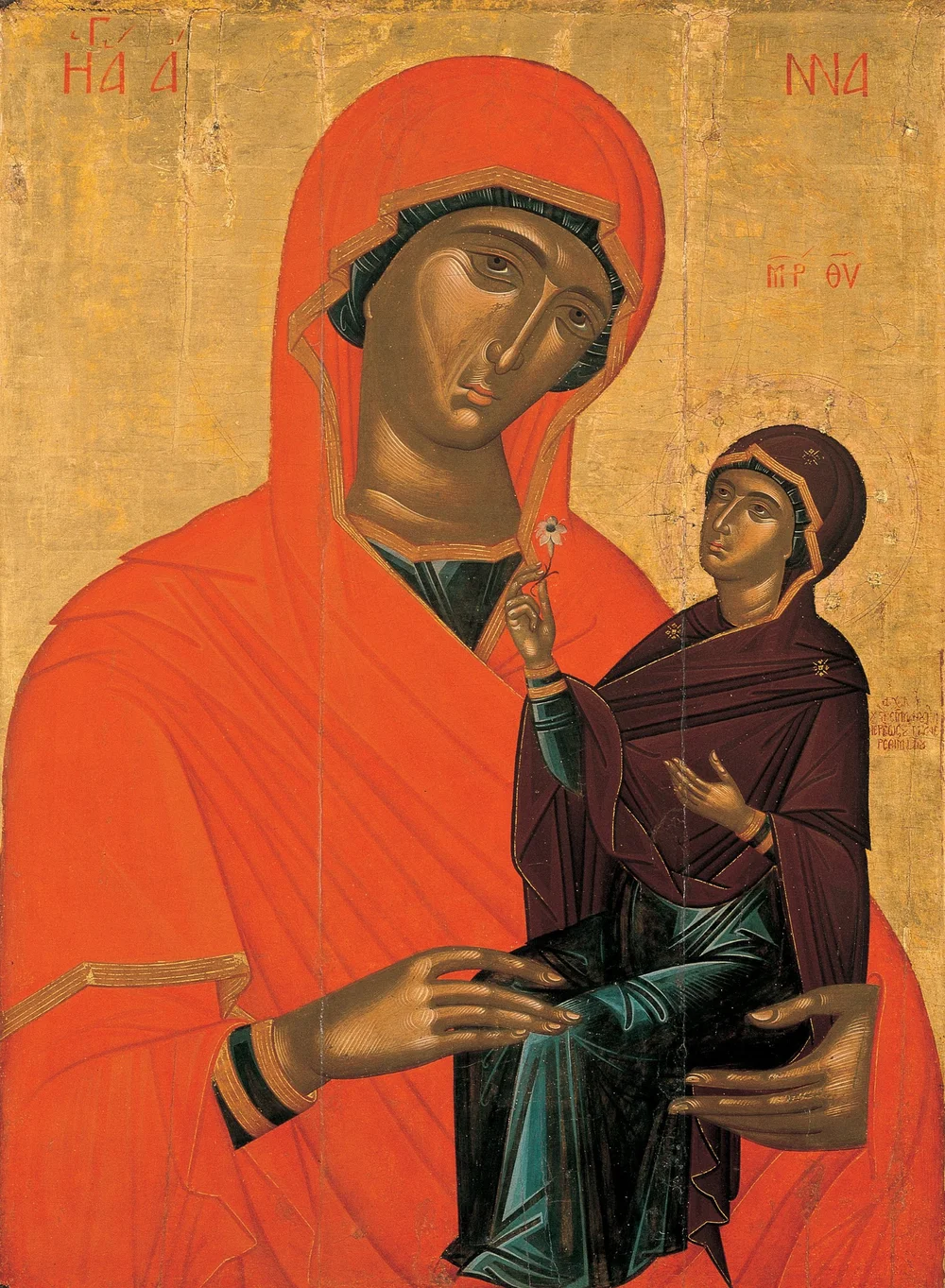
Saint Anne
Anne, the mother of Mary, is not named in the canonical Gospels. Her name comes from the Protoevangelium of James, probably written around AD 150, which early popes condemned as unreliable, so the details of her life are tradition. The Catholic Church keeps her feast with Joachim on July 26, and the Orthodox on July 25. She is invoked as patron of mothers and grandmothers. For mothers praying for a sick child, she is a companion: another woman who prayed for a child. Our card carries her for mothers praying for their children. See our article on Joachim and Anne.
Part IX
Practical Help for Families
Ask for a chaplain, or call your priest. Hospitals commonly have chaplains, and you can ask the nurse or the hospital operator. If you are Catholic, ask for the Anointing of the Sick before a serious operation. If you are Orthodox, call your priest about Holy Unction and Communion. Tell the staff you would like to pray with your child before the procedure, and ask what is allowed in the room.
Lodging near the hospital. Ronald McDonald House programs offer families of ill or injured children “all the comforts of home and essential resources, all just steps away from the hospital.” Find a location through the Ronald McDonald House find-a-chapter page. Ask the hospital social worker about it.
The cost of care. St. Jude Children’s Research Hospital says it raises donations so that “families never receive a bill for treatment, travel, housing or food.” Its patients come by referral, so ask your child’s doctor whether St. Jude is an option. For other bills, ask the hospital for the financial counselor. Dial 211 or visit 211.org for local help with rent, utilities and food, and see our guide to saints and practical help for money problems.
Caring for yourself. Parents and caregivers carry a weight that is easy to ignore. If you are overwhelmed, call or text 988. The Church also asks you to receive the sacraments, to accept help from your parish, and to sleep when someone offers to sit with your child.
If the worst happens. If a child has died, our guides to Orthodox saints on grief and loss and the saints of comfort may help. The Church does not hurry grief.

Part X
Prayers
Lord Jesus Christ, physician of souls and bodies, I place myself in your hands before I go into the hands of the surgeon. Calm my fear. Guide the surgeon, the anesthetist and the nurses, and keep their minds clear and their hands steady.
By the prayers of Saint Luke, who began his operations with the sign of the cross, and of Saint Panteleimon, Saint Cosmas and Saint Damian, who healed without payment, be with me in the room. Let me wake in peace. If the road is long, give me patience. Whatever comes, I am yours. Amen.
Lord, you said, “Let the children come to me.” I bring my child to you. You know the name, the fear and the pain. Take what I cannot carry, and hold what I cannot hold.
Through the prayers of Saint Nicholas, Our Lady of Guadalupe and Saint Anne, who prayed for a child, give healing if it is your will, and give strength to my child and to me in every case. Bless the doctors and nurses. Let no one in this room be alone. Amen.
Part XI
Cards and Gifts
Prayer cards to carry or leave on a bedside table: Saint Luke the Surgeon, Saint Cosmas, and Saint Blaise.
Prayer cards for a long road: Saint Peregrine, Saint Charbel, and Saint Nicholas.
Our Lady of Guadalupe children’s card, Saint Anne, and the Jesus Prayer shirt.
You Are Not Alone in That Room
The saints in this article include a surgeon who crossed himself before the first cut, a friar who waited for an amputation, a bishop who was a doctor, and a mother who prayed for a child. None of them promised that illness would go away. What they offer is company. Ask them to pray with you, follow your doctors, and let your parish carry some of the weight.
Appendix
