Patron Saints for Addiction and Recovery: Catholic and Orthodox Intercessors
Ji Tianxiang • Camillus • Dutton • Augustine • Moses the Black • Mary of Egypt
Patron Saints for Addiction and Recovery: Catholic and Orthodox Intercessors
There is no single official patron saint of addiction. There are saints who knew bondage to a habit, lost years to it, and came back, and the Church has kept their names. Here is who they are, what is known about each, and what is only devotion.
Which Saint for Which Struggle
- Opioids and Drugs
- Saint Mark Ji Tianxiang, physician and martyr, canonized 2000
- Alcohol
- Venerable Matt Talbot • Servant of God Joseph Dutton • the Orthodox icon of the Inexhaustible Chalice
- Gambling
- Saint Camillus de Lellis, founder of the Camillians
- Sexual Compulsion
- Saint Mary of Egypt • Saint Augustine of Hippo
- Anger and Violence
- Saint Moses the Black, the robber who became a monk
- For the Family
- Saint Monica, who prayed for her son for years
- Orthodox Devotion
- Saint John of Kronstadt • the Inexhaustible Chalice • Mary of Egypt • Moses the Black
- Official Status
- No papal decree naming a patron of addiction was found • The patronages below are devotion unless stated
- Help Today
- SAMHSA National Helpline, 1-800-662-HELP (4357), free, confidential, 24/7
How the Church Speaks About Addiction
People look for a patron saint of addiction because they need someone to ask. The honest answer is that the Church has not named one by decree, at least not that I could find. What it has is a long list of men and women who knew bondage to a habit, and whom the faithful have turned to for exactly that reason. In this article a patronage is called official only when a pope or a Church authority made it so. Everything else is devotion, which is real and old, but is a different thing.
The Catholic view. The Catechism asks for temperance, which it describes as guarding against the abuse of food, alcohol, tobacco, and medicines (CCC 2290). On drugs it is blunt: “The use of drugs inflicts very grave damage on human health and life” (CCC 2291). But the same Catechism says that a person’s responsibility for an act “can be diminished or even nullified by ignorance, inadvertence, duress, fear, habit, inordinate attachments, and other psychological or social factors” (CCC 1735). Habit is on that list. The Church does not excuse harm, and it also does not pretend that a person in the grip of a compulsion is as free as everyone else.
The Orthodox view. Orthodox teaching speaks of the passions as sicknesses of the soul. The remedy is not willpower alone but the sacraments, confession, a spiritual father, steady prayer such as the Jesus Prayer, and the patience to begin again. The word for this beginning again is repentance, which means a turning of the mind and not a mood of guilt.
Neither tradition sets prayer against medicine. That point matters enough to say before anything else.
Stopping alcohol and some other substances suddenly can be medically dangerous. If you are dependent, talk to a doctor before you stop. If you are in danger right now, call or text 988. For treatment referrals, the SAMHSA National Helpline is 1-800-662-HELP (4357). Details are in Part X.
Part II
Table 1: The Saints at a Glance
| Name | Struggle or story | Tradition | Standing in the Church |
|---|---|---|---|
| Mark Ji Tianxiang (d. 1900) | Opium addiction; denied Communion for about thirty years; martyred | Catholic, China | Saint; beatified 1946, canonized October 1, 2000; feast July 9 |
| Camillus de Lellis (1550 to 1614) | Gambling; lost everything; founded the Ministers of the Sick | Catholic, Italy | Saint; canonized 1746; patron of hospitals and the sick (Leo XIII, 1886) and of nurses (Pius XI, 1930) |
| Joseph “Ira” Dutton (1843 to 1931) | Alcoholism after the Civil War; stopped drinking; served Molokai | Catholic, United States | Servant of God; cause opened May 10, 2022 |
| Matt Talbot (1856 to 1925) | Alcoholism; took the pledge in 1884; sober for the rest of his life | Catholic, Ireland | Venerable (Paul VI, October 3, 1975); not yet beatified |
| Augustine of Hippo (354 to 430) | Bondage to desire and habit; described in the Confessions | Catholic and Orthodox | Saint and Doctor of the Church |
| Monica (c. 332 to 387) | Prayed for her son for years; her own near-habit with wine as a girl | Catholic and Orthodox | Saint |
| Moses the Black (d. c. 405) | Violence and theft; became a desert monk; killed by raiders | Orthodox, Coptic, Ethiopian, Catholic | Saint; feast August 28 (Orthodox), 24 Paoni (Coptic) |
| Mary of Egypt (5th century, by tradition) | Years of bondage to passion; repentance in the desert | Orthodox and Catholic | Saint; feast April 1 and the Fifth Sunday of Great Lent |
| John of Kronstadt (1829 to 1908) | Pastor of the poor; invoked in devotion for alcohol and drug addiction | Russian Orthodox | Saint; canonized 1964 (ROCOR) and 1990 (Moscow Patriarchate) |
| Inexhaustible Chalice (icon, 1878) | Icon invoked for alcoholism and drug addiction | Russian Orthodox | Commemorated in the Church calendar since 1997 |
Each entry is covered below, with the source named. Where a patronage rests on devotion and not on a decree, the text says so.
Part III
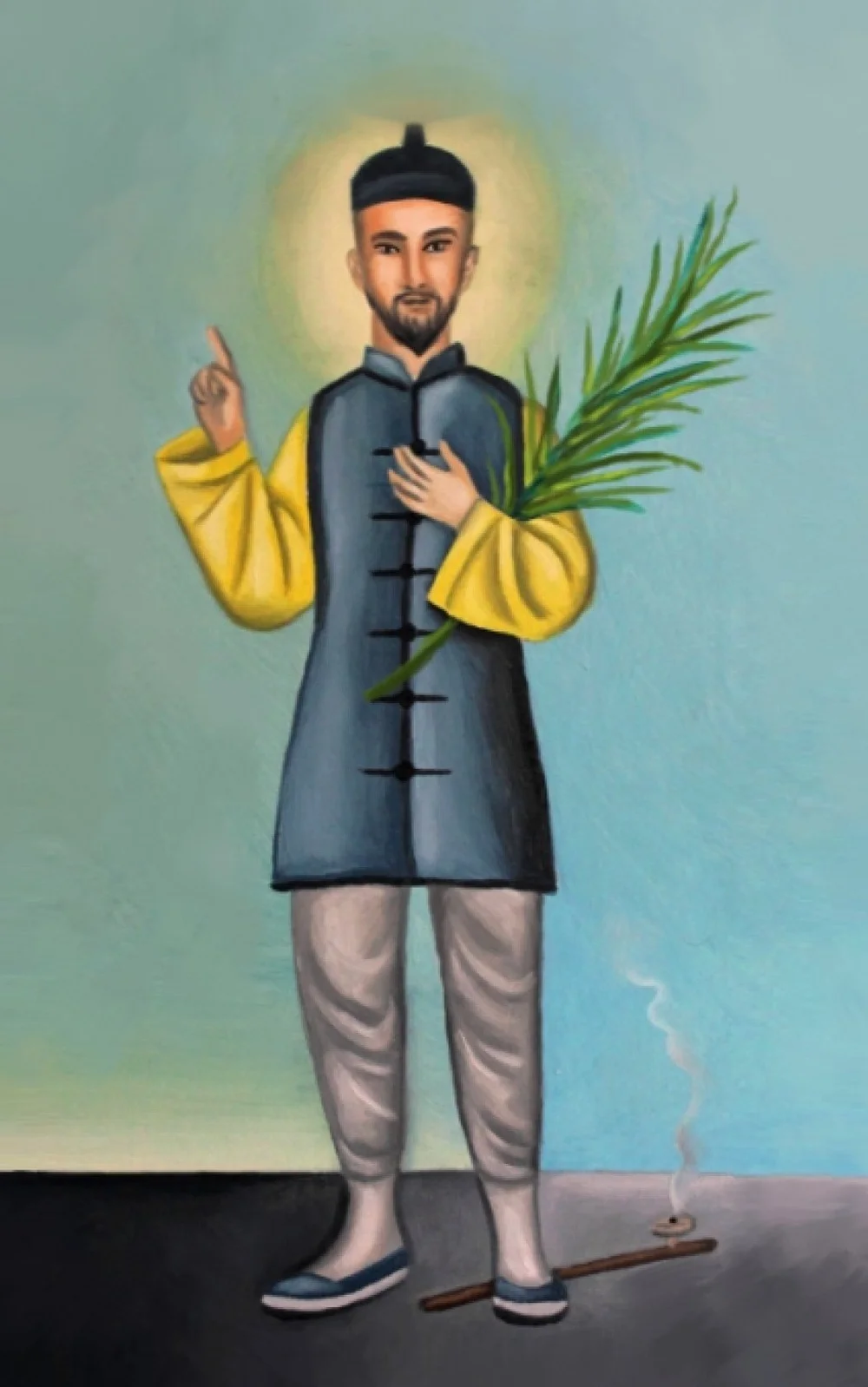
Saint Mark Ji Tianxiang: The Doctor Who Could Not Stop
Mark Ji Tianxiang was a physician in Jizhou, in what is now Hebei province, born into a Catholic family, and his brother became a priest. By the accounts in the National Catholic Register, he treated poor patients for free. In his early thirties he suffered severe stomach pain and treated it with opium, smoked in a pipe. He kept using it, and the craving grew until it ruled him.
Addiction carried shame in his world as it does in ours. He prayed and confessed the same sin week after week for years. A priest finally refused him absolution until he gave up the habit. For about thirty years he did not receive Communion. He did not leave. He kept going to Mass, daily, and stayed in the church as a man standing at the edge of the table.
In 1900, during the Boxer Rebellion, he was arrested with his family and told to renounce the faith. He refused. He asked to be executed last so that no one else would die alone, and according to the Register account he sang the Litany of the Blessed Virgin Mary while others were killed. He was beheaded on July 9, 1900, at about the age of sixty-six. Pius XII beatified him in 1946, and John Paul II canonized him on October 1, 2000, with the other martyrs of China. His feast is July 9.
What is not known. I did not find a reliable account of when, or whether, he fully broke free of opium before his death, and I will not guess. What the accounts agree on is the shape of his life: a man who could not stop, who was kept from Communion for three decades, and who stayed and died a martyr. That is why people who work with addicts keep his name.
What his patronage is. The Church has never declared him a patron of addicts. The Register article presents his witness as a source of hope for people struggling with addiction, and devotion has taken it from there. Our prayer card carries him as an unofficial patron for opioid and drug addiction.
If you carry a habit into the confessional. Ask the priest plainly for help with it, and ask how he advises you to proceed. Do not stay away. Ji Tianxiang never did.
Part IV
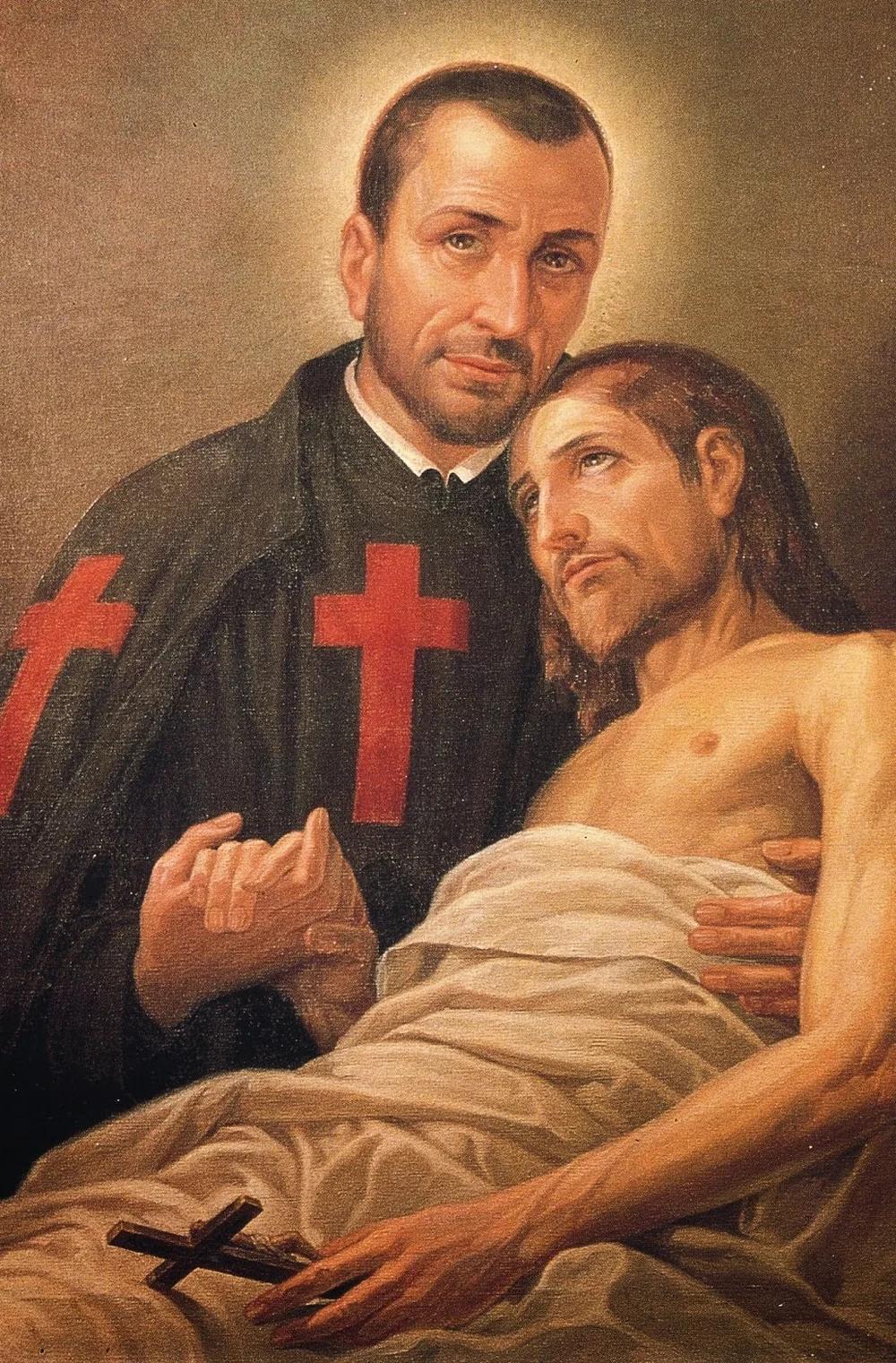
Saint Camillus de Lellis: The Gambler Who Founded a Hospital Order
Camillus was born in 1550 in Bucchianico, in Italy, and became a soldier. According to the standard biographical account, he suffered a leg wound that never healed, and he was a gambler who lost everything he owned. In 1575 a Capuchin friar at Manfredonia encouraged him, and he turned to God. The Capuchins refused to admit him because of the wound, which physicians called incurable.
He spent his recovery working among the sick. He was ordained at Pentecost in 1584 at the age of thirty-four, and in 1586 Pope Sixtus V gave formal recognition to the group of men he had gathered. In 1591 Gregory XIV raised it to an order, today the Camillians, formally the Order of Clerks Regular, Ministers of the Infirm. Benedict XIV canonized Camillus in 1746.
His patronages. These are official. Leo XIII proclaimed him patron of hospitals and the sick in 1886, and Pius XI named him patron of nurses in 1930, together with Saint John of God. He is also invoked against gambling. That last patronage comes from devotion, not from a papal decree.
His story is useful for a reason beyond his gambling. He did not recover and then go away. He turned the thing that had wrecked him into a lifetime of service to people at their lowest, and he built an order around it. For people in recovery who feel pulled to help others, he is the clearest example the Church has.
Part V
Joseph Dutton and Matt Talbot: Two Men in Recovery
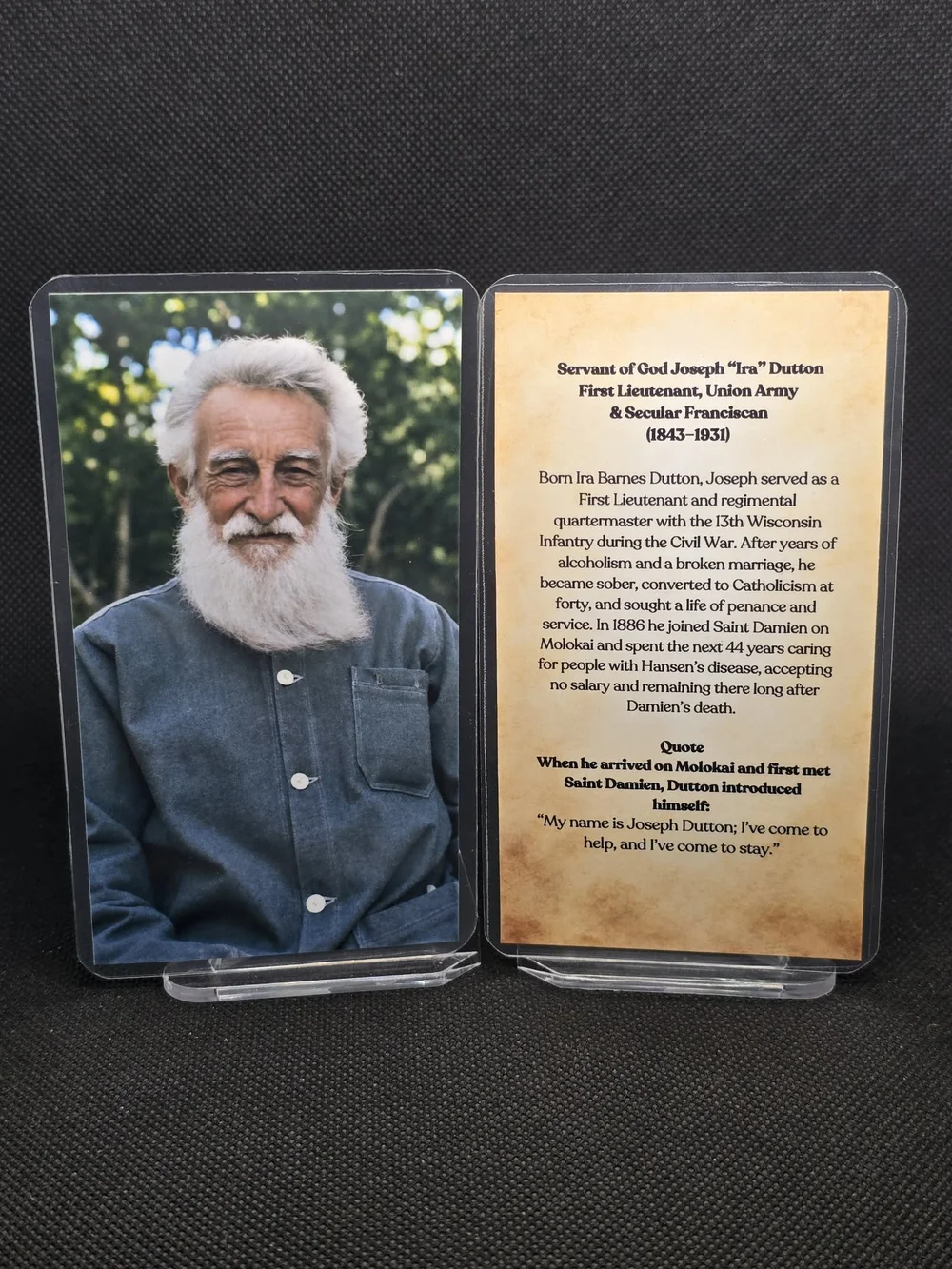
Servant of God Joseph “Ira” Dutton
Ira Barnes Dutton was born in 1843 in Stowe, Vermont. He served in the Union Army in the Civil War, rising from private to first lieutenant and regimental quartermaster. After a failed marriage he fell into heavy drinking and went from job to job. By the standard biography he stopped drinking in 1876 (see his biography), became Catholic in 1883, and spent time at the Trappist Abbey of Gethsemani. In 1886 he went to Molokai to help Father Damien, who was caring for people with leprosy. He told Damien, “I’ve come to help, and I’ve come to stay,” and he stayed until his death on March 26, 1931, caring for the sick and running the Baldwin Home for Boys.
His cause for sainthood opened on May 10, 2022, which made him a Servant of God. The Hawaii Catholic Herald reported that the diocesan inquiry was scheduled to close in January 2024, with about 2,000 pages of evidence going to the Dicastery for the Causes of Saints in Rome. He is not yet a saint, and no patronage has been conferred on him. Our card carries him for people in recovery, veterans, and caregivers, which is the shape of his life.
Venerable Matt Talbot
Matt Talbot was born in 1856 in Dublin, the second of twelve children. He left school at twelve to work in a wine merchant’s shop, where he began to drink, and he kept drinking at the dockside pubs for years. In 1884, out of money and credit, he could not get a drink, and went home and told his mother he would take the pledge. According to the National Catholic Register, he stopped that day and stayed sober for the remaining forty years of his life, working to pay back his debts, and relying on daily Mass and constant prayer.
He died on June 7, 1925, on his way to Mass. The medical examiner found penitential chains and cords on his body. His extreme penances are not a model for anyone’s recovery, and the Church has never asked anyone to follow them. Paul VI declared him Venerable on October 3, 1975, which is the first step toward canonization and not the last. He is not yet a blessed or a saint, so it is wrong to call him “Saint Matt Talbot.” Many people in recovery still call him their patron, and that is devotion.
Part VI
Augustine, Monica, and the Chain of Habit
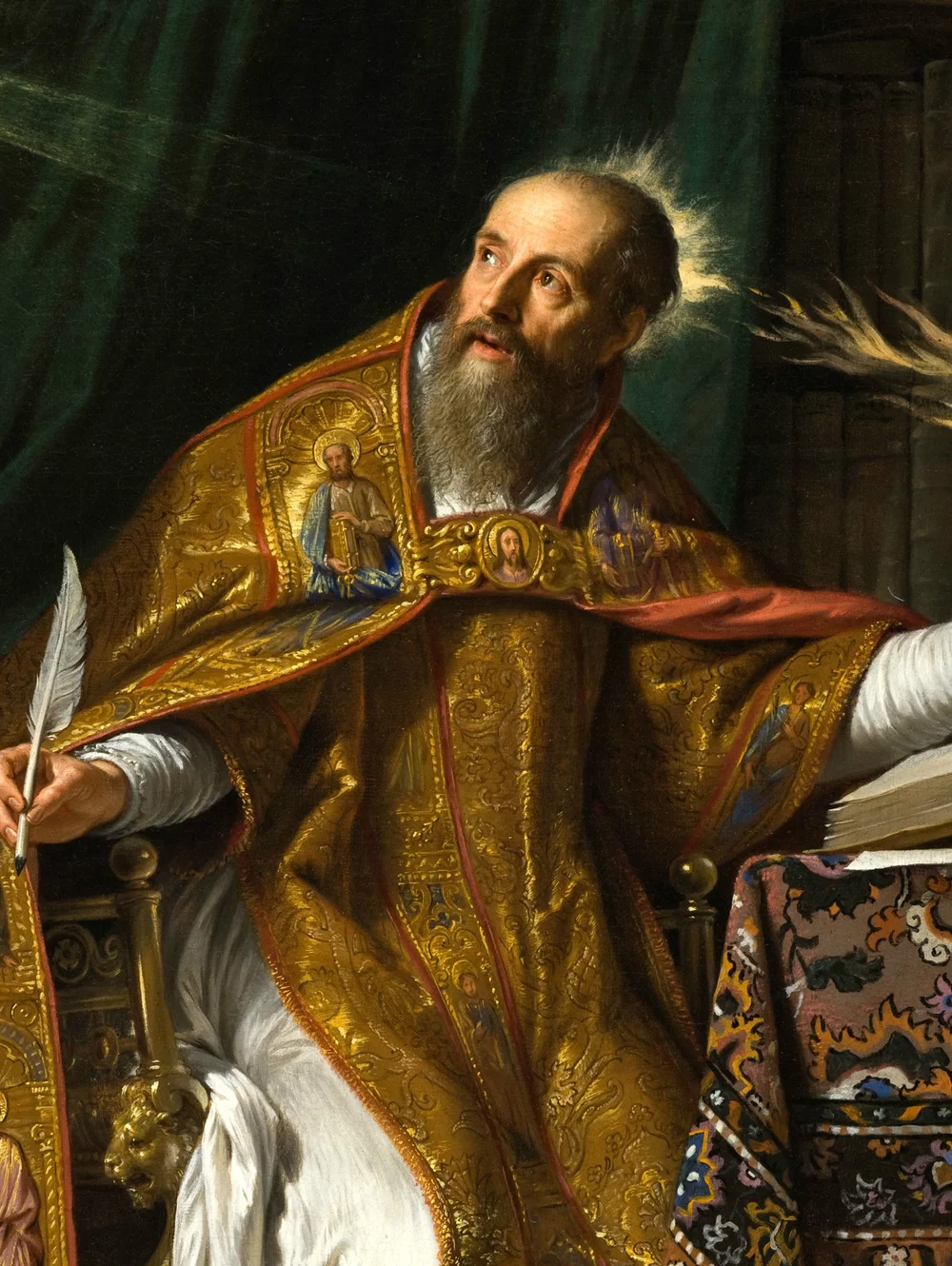
No Christian writer has described how a habit takes hold as well as Augustine of Hippo. In Book 8 of the Confessions he looks back on his years of bondage and writes: “Lust indulged in became custom; and custom not resisted became necessity.” He calls it a chain, link joined to link, and says his two wills, one old and carnal and one new and spiritual, tore his soul apart. Earlier he had prayed, “Grant me chastity and continency, but not yet,” afraid that God would answer too soon.
Anyone who has bargained with a habit knows that prayer. The freedom came in a garden in Milan in the summer of 386. He heard a child’s voice chanting, “Take up and read,” opened the epistles, and read: “Not in rioting and drunkenness, not in chambering and wantonness, not in strife and envying; but put on the Lord Jesus Christ, and make not provision for the flesh, to fulfil the lusts thereof” (Romans 13:13-14). He writes that he needed to read no further. His conversion did not come by reading about his problem. It came by reading a command to put on Christ.
Augustine matters for addiction because he refuses two lies. One is that the problem is only weakness of will, which he knew was not true. The other is that it cannot end, which his own life disproved.
Saint Monica
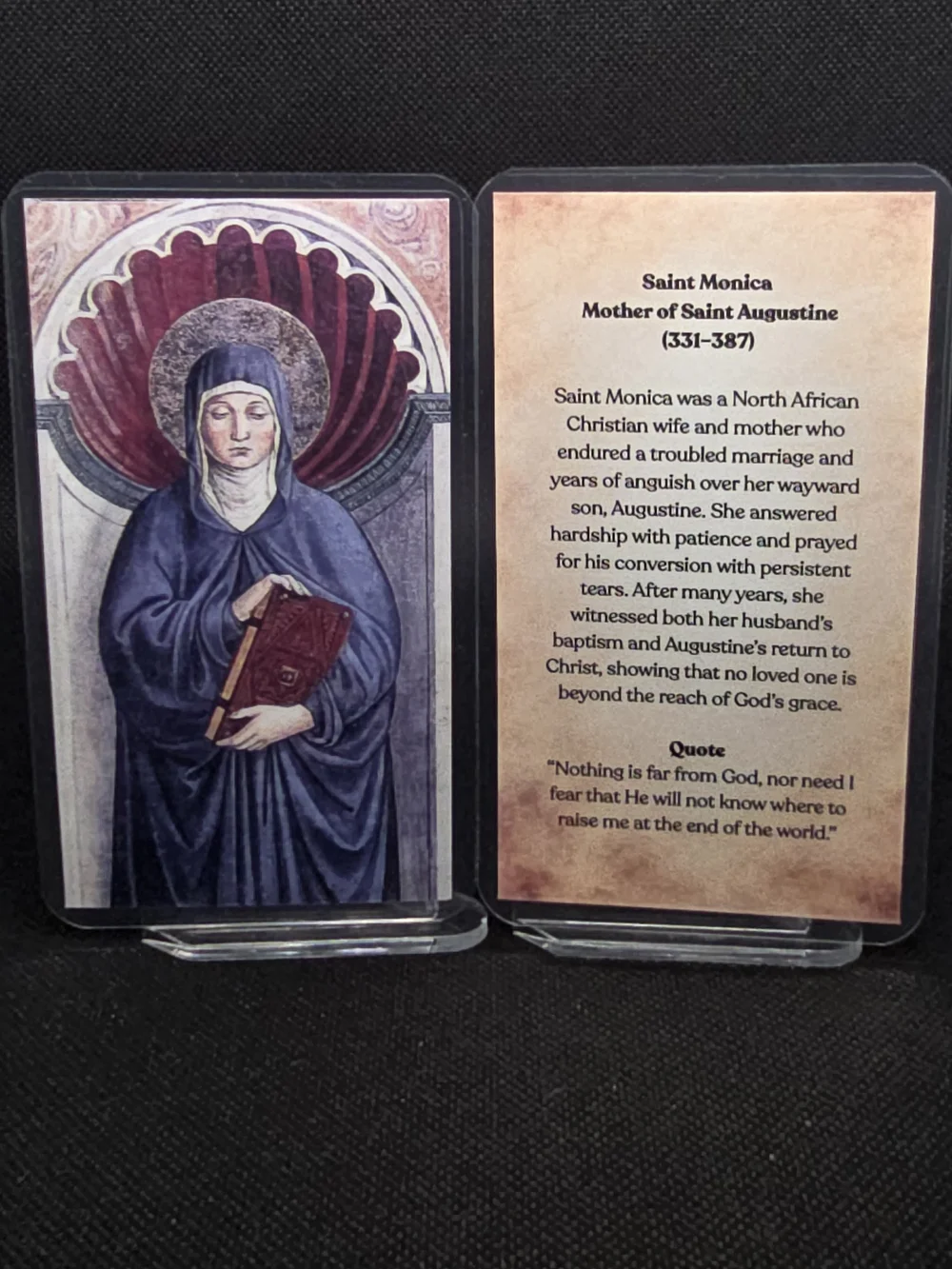
Monica is the saint for the people who love someone with an addiction, and she is the one who shows what waiting looks like. In Book 3 of the Confessions Augustine tells how she once begged a bishop to talk with her son, weeping, until the bishop, a little vexed, said: “Go your way, and God bless you, for it is not possible that the son of these tears should perish.” She treated the answer as a voice from Heaven.
Book 9 contains something less often quoted. Augustine writes that as a girl Monica was sent to the cellar to draw wine for the household and began to sip a little, adding “daily littles,” until she was draining a nearly full cup. A maidservant who quarreled with her called her a wine-bibber, and, stung by the insult, she saw it and renounced it at once. Augustine says she did it not from craving, but from the high spirits of youth, and that God used a bitter word from an enemy to heal her. It is a small story, and it shows how a habit builds by degrees and how one honest word can break it. (See Book 9.)
I found no source that makes Monica an official patron of alcoholics, so I do not call her one. She is the patron of mothers, of those who pray for a child who has gone astray, and of families who are tired and still praying. That is who her card is for.
Part VII
Moses the Black: The Robber Who Became a Monk
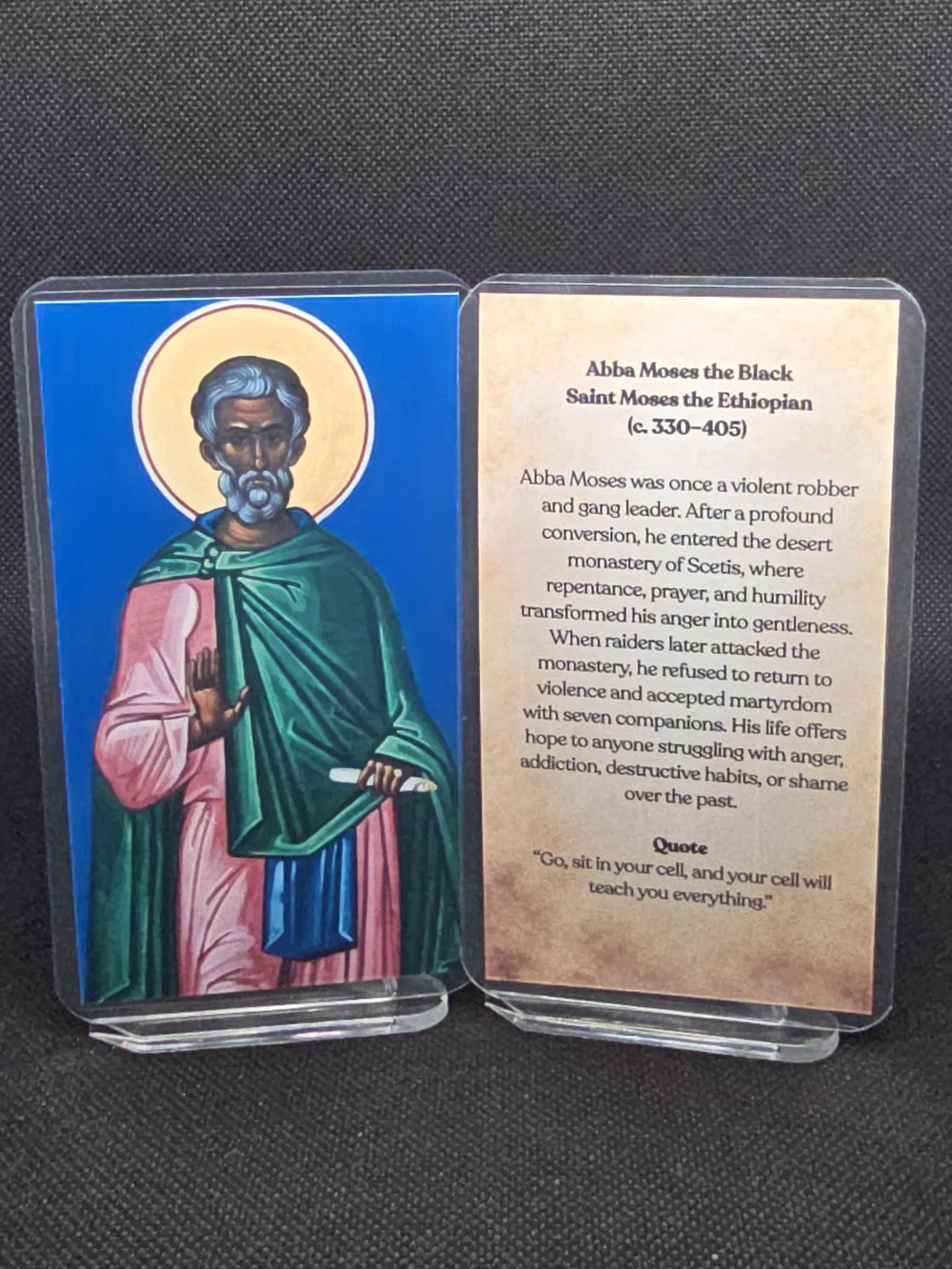
Moses was a Nubian, black-skinned, and known in the Egyptian monastic tradition as Moses the Ethiopian or Moses the Robber. In his youth he was enslaved to an important man. Eventually he fell in with a band of robbers and became its leader, a huge and violent man who terrorized the Nile valley. Hiding from the authorities, he took refuge among the monks of Scetis, in the desert of Wadi El Natrun. According to the account summarized in the standard reference, their dedication and contentment changed him. He was baptized and joined them.
The tradition does not call him an addict. What it records is a life ruled by violence and appetite, and the long labor of unlearning it. He struggled with monastic discipline for years. A famous saying attributed to him tells a restless brother who asked for a word: “Go, sit in your cell, and your cell will teach you everything.” The same tradition says he refused to fight when raiders came. He told the brothers to flee, stayed behind, and was killed, around the year 405, at about seventy-five. The Coptic Church keeps his feast on 24 Paoni (July 1) and the Orthodox Church on August 28.
That is why our card carries him for anger control, addiction recovery, and radical life change. It is devotion, built on a real life. For the full story and sayings, see our biography of Saint Moses the Black.
Part VIII
Saint Mary of Egypt: A Life Read Every Great Lent
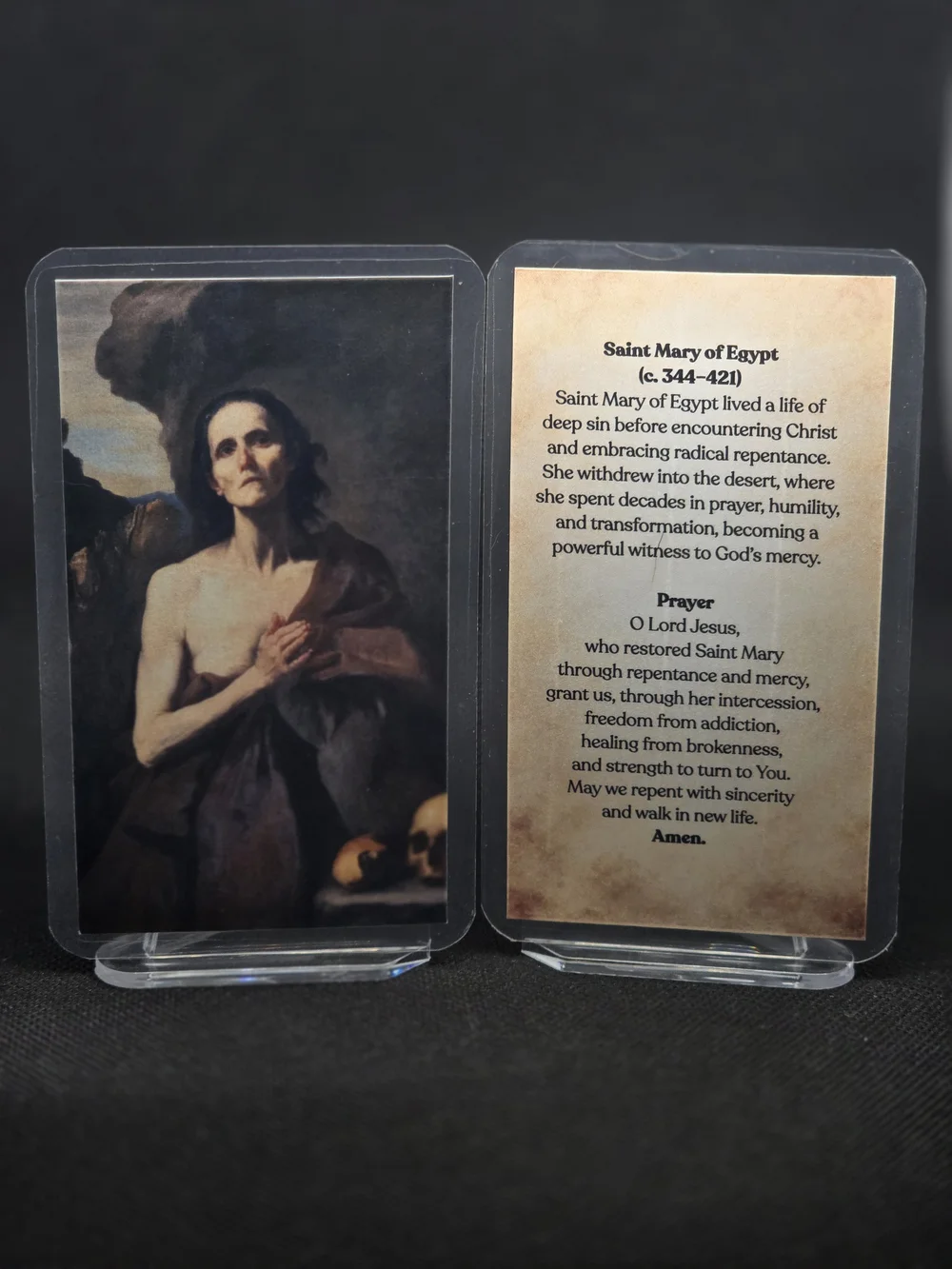
The Life of Mary of Egypt is attributed to Sophronius, Patriarch of Jerusalem in the seventh century. Scholars are unsure of its historical details, but the Church has read it for well over a thousand years, and it is appointed for Great Lent. According to the text as summarized here, she ran away at twelve and lived in Alexandria for seventeen years in bondage to what the Life calls an insatiable passion. She later traveled to Jerusalem for the feast of the Exaltation of the Cross.
At the door of the church she was held back by an unseen force. She prayed before an icon of the Mother of God outside, repented, and was able to enter and venerate the cross. A voice told her to cross the Jordan, and she lived in the desert for decades. A monk named Zosimas met her near the end of her life. She recounted her story, received Communion from him, and died. When he returned a year later he found her body, and, as the story goes, a lion helped him bury her. Her feast is April 1, and she is remembered on the Fifth Sunday of Great Lent.
Tradition, not record. The Life is a hagiographic text, and the details after the desert are tradition. It is nonetheless the Church’s central story of a person bound by compulsion who is set free, and not by her own strength: she cannot enter until she asks the Mother of God, and she cannot live the desert until she receives Communion. Our card carries her for addiction, sexual brokenness, and radical repentance. For the full life, see our biography of Saint Mary of Egypt.
Part IX
Kronstadt and the Inexhaustible Chalice
Saint John of Kronstadt
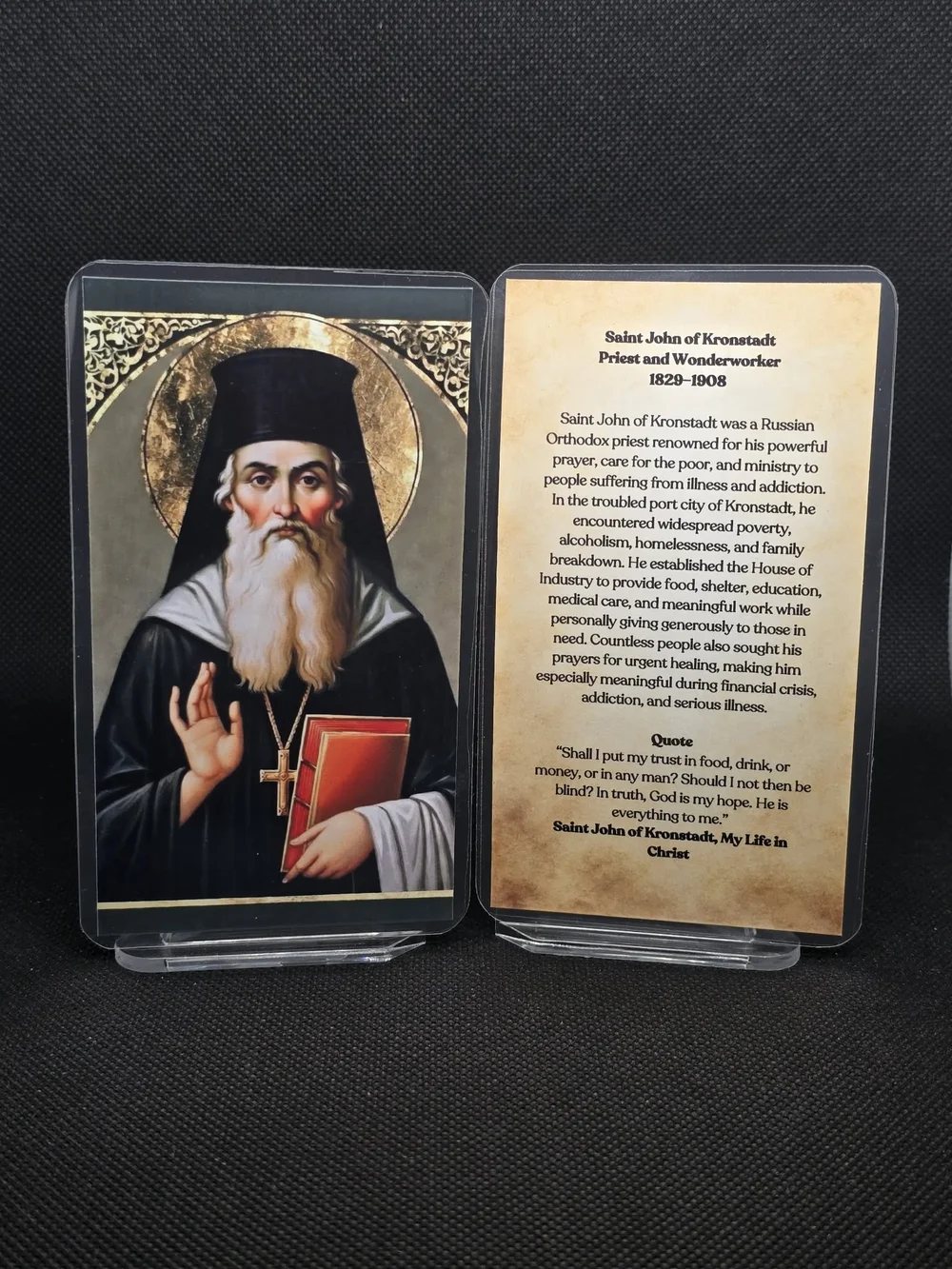
John of Kronstadt (1829 to 1908) was a priest at Saint Andrew’s Cathedral in Kronstadt from 1855. The record shows him promoting frequent confession and Communion, practicing mass confessions, and opening a House of Industry in 1882 with a school, a hospital, a library, and shelter for thousands of homeless people each year. He was canonized in 1964 by the Russian Orthodox Church Outside Russia and in 1990 by the Moscow Patriarchate.
Orthodox faithful invoke him as a patron of people struggling with alcohol and drug addiction. That is devotion. The documented work is a pastor’s work with the poor: the confessional, the chalice, and a roof for people who had none. For many families that is what recovery needs first.
The Icon of the Inexhaustible Chalice
The Mother of God of the Inexhaustible Chalice is the Orthodox icon most closely tied to alcoholism and drug addiction. By the account in the standard reference, the icon is said to have revealed itself in 1878 at the Vladychny Convent in Serpukhov, Russia. The tradition, which is not independently verified, tells of a retired, penniless soldier from Tula province who had drunk heavily for years. In a vision an elder told him to find the icon and hold a prayer service before it. He is said to have crawled to the convent, and his legs regained their strength.
The documented parts are more modest. The original icon and its copies were lost after the cathedral closed in 1929. The monastery reopened in the 1990s and a new copy was installed. The Russian Orthodox Church entered the icon in its liturgical calendar in 1997, with the blessing of Patriarch Alexy II, for May 18 (May 5 in the old calendar). The Church in Russia has since run drug rehabilitation programs, and an akathist and a prayer service to the icon are in use. Believers say that people who pray before it have stopped drinking. That is the believers’ testimony, and not a verified outcome.
Part X
What Helps Besides Prayer
The sacraments and a spiritual guide. In the Catholic Church that means confession and the Eucharist, and a priest or a spiritual director who knows the struggle. In the Orthodox Church it means confession, a spiritual father, and the Divine Liturgy. Be specific. Say the name of the habit. Ji Tianxiang’s story is a warning against hiding it and a model for coming back.
Medical care. Addiction affects the body and the brain, and treatment works. Withdrawal from alcohol and from some other substances can be dangerous, so ask a doctor before you stop suddenly. A priest will tell you the same thing.
Groups. Twelve-step programs are widely used, and many people find that they pair well with the sacraments. The Calix Society is a Catholic association for people in recovery, founded in 1947 in Minneapolis. According to a report on the Philadelphia units, it asks members for total abstinence and pairs each meeting with Mass or a Holy Hour. It is not a substitute for a twelve-step program, members stay in those programs, and it is not an official Church body, though each unit needs its bishop’s approval.
Help lines. The SAMHSA National Helpline is 1-800-662-HELP (4357). It is a free, confidential, 24-hour treatment referral and information service in English and Spanish. If you or someone you love is in crisis, call or text 988.
For the family. You are allowed to protect yourself and to set limits, and you are allowed to keep praying. Monica did all of it. She wept, she asked for help, and she did not stop.
Part XI
Prayers
Lord Jesus Christ, Son of God, you know the habit that I have not been able to break. I will not hide it from you. I am tired of the promises I break and of the shame I carry.
By the prayers of your holy ones who knew the same bondage, Saint Mark, Saint Camillus, Saint Moses, Saint Mary, and Saint Augustine, give me one clear day. Give me the courage to tell the truth to a priest and to a doctor, to ask for help, and to begin again after I fall.
You said to the weary, “Come to me, all who labor and are heavy laden, and I will give you rest.” I come. Hold me today. Amen.
Lord, you know the name of the one I am praying for. I am afraid, and I am tired, and sometimes I am angry. Give me the patience of Saint Monica and the wisdom to tell love from enabling.
Do not let me lose heart. Keep the one I love alive. Open a door for treatment and send honest friends. Give me rest when I cannot sleep, and give me someone to talk to. Amen.
Part XII
Cards and Gifts
Three handmade cards for those in recovery: Saint Mark Ji Tianxiang, Saint Camillus de Lellis, and Servant of God Joseph Dutton.
Saint Augustine, Saint Monica, and Abba Moses the Black.
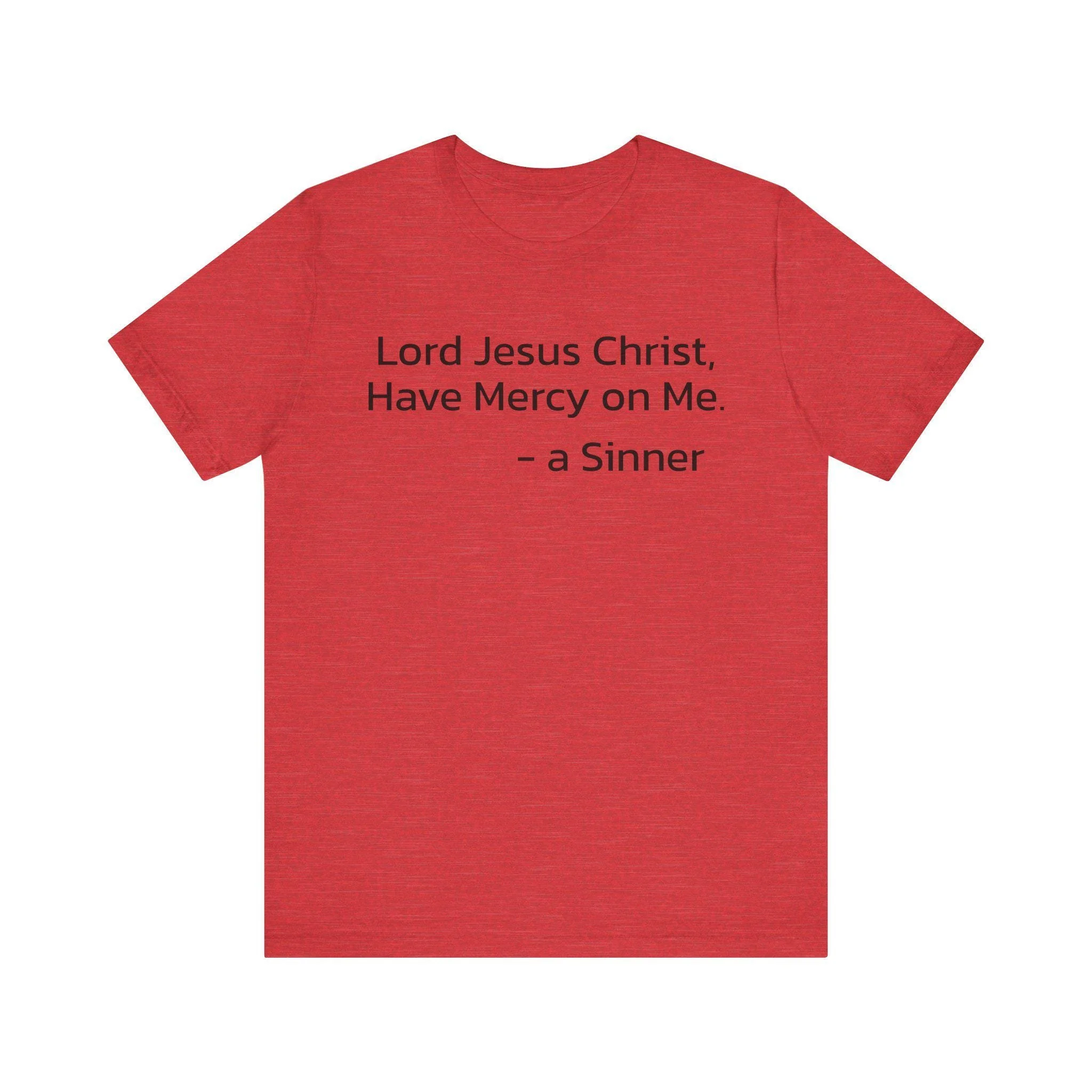
Saint Mary of Egypt, Saint John of Kronstadt, and the Jesus Prayer shirt.
Other names you will see. Some Catholic reference lists give Saint Maximilian Kolbe as a patron of drug addicts. I found no papal decree behind it, so it belongs with the other devotional patronages here. Saint Dymphna, the patron of mental illness, is also often invoked by families dealing with addiction, since the two struggles often travel together.
Begin Again Today
The saints in this article did not all get free the same way or at the same speed. One went thirty years without Communion. One lost everything at the gaming table. One needed a servant’s insult, and one needed a garden and a book. What they have in common is that they did not stop asking, and the Church remembers them for it. If you are in the fight, or you love someone who is, ask them to pray with you today.
Appendix
