Roman Catholic vs. Oriental Orthodox vs. Eastern Orthodox vs. Eastern Catholic: Side-by-Side Comparison
Four Families of Churches • One Table • Every Church Guide
Roman Catholic vs. Oriental Orthodox vs. Eastern Orthodox vs. Eastern Catholic: Side-by-Side Comparison
Four families of ancient Christian Churches, compared in one table you can cite, with plain answers to the questions people actually ask: who is in communion with whom, what separates them, and what they still share. Below the table is a map to every Church guide on this site.
The Four Families: At a Glance
- Roman Catholic
- The Latin Church, the largest of 24 Churches in the Catholic Communion • Led by the Pope • Most of about 1.42 billion baptized Catholics (2024)
- Oriental Orthodox
- Six Churches (Coptic, Ethiopian, Eritrean, Syriac Orthodox, Armenian Apostolic, Malankara) • Accept three councils • About 60 million members
- Eastern Orthodox
- A communion of self-governing Churches • Accept seven councils • Not in communion with Rome • About 220 million members
- Eastern Catholic
- 23 Churches with Eastern liturgies, in communion with the Pope • About 18 million members
- Biggest Split Points
- Chalcedon (451) divides Oriental Orthodox from the other three • The papacy and the Filioque divide Rome from Eastern and Oriental Orthodoxy
- What All Four Share
- The Creed of Nicaea and Constantinople • Bishops in apostolic succession • Seven sacraments • Veneration of Mary and the saints
- Table Last Reviewed
- October 2026
The Four Families in Plain Language
People often ask which of these Churches is “the real one,” or what actually separates them. This article does not answer the first question. Each family claims to be the Church the apostles founded, and we do not rule between them here. It does answer the second, with a table, and it tells you where to go next if you want to read about any single Church in depth.
Roman Catholic. The Catholic Church is a communion of 24 Churches that govern themselves in their own traditions and are all in communion with the Pope, the Bishop of Rome. One of them, the Latin Church, is by far the largest, and when people say “Roman Catholic” they usually mean the Latin Church and its Roman Rite Mass. According to the 2026 edition of the Vatican’s yearbook, as reported by Vatican News, there were just over 1.422 billion baptized Catholics in 2024, about 17.8 percent of the world’s population.
Oriental Orthodox. Six Churches that did not accept the definition of the Council of Chalcedon in 451: the Coptic, Ethiopian, Eritrean, Syriac Orthodox, Armenian Apostolic, and Malankara Orthodox Syrian Churches. They accept the first three ecumenical councils and hold that Christ is one incarnate nature of God the Word, the formula of Cyril of Alexandria. They call this miaphysite and reject the label “Monophysite” as inaccurate. The reference article on Oriental Orthodoxy puts the total at about 60 million, and other estimates run higher.
Eastern Orthodox. A communion of self-governing Churches, mostly in the Byzantine tradition, that accept seven ecumenical councils and are not in communion with Rome. The reference article on the Eastern Orthodox Church gives a 2020 estimate of about 220 million. Pew Research, counting Eastern and Oriental Orthodox together, put the world total at about 260 million in 2017.
Eastern Catholic. Twenty-three Churches that keep an Eastern liturgy, hierarchy, and law and are in full communion with the Pope. They share the heritage of the Eastern and Oriental Churches and the faith of the Catholic Church. The reference article on the Eastern Catholic Churches gives about 18 million members, citing the 2023 Vatican yearbook. Most of them have an Orthodox or Oriental Orthodox counterpart: the Melkite and Greek Orthodox Churches of Antioch, the Coptic Catholic and Coptic Orthodox Churches, the Armenian Catholic and Armenian Apostolic Churches, and so on.
A short note on the Church of the East. The Assyrian Church of the East, with an estimated 413,000 members, accepts only the first two councils and belongs to none of the four families. It is a close relative of the Chaldean Catholic Church, and we cover its history in The History of the Church of the East.
Part II
Side-by-Side Comparison Table
The table below compares the four families on 24 points. Each Church has its own history and its own exceptions, especially the Eastern Catholic Churches, which range from the Maronites to the Ukrainians to the Syro-Malabar Church. Where a cell says “usually” or “varies,” read it literally. The notes after the table list the sources.
| Point of comparison | Roman Catholic | Oriental Orthodox | Eastern Orthodox | Eastern Catholic |
|---|---|---|---|---|
| Identity and size | ||||
| What it is | The Latin Church, the largest of the 24 Churches of the Catholic Communion | Six ancient Churches that do not accept the Council of Chalcedon (451) | A communion of self-governing Churches that accept seven councils | 23 Churches with Eastern liturgies, in communion with the Pope |
| Members | Most of about 1.42 billion baptized Catholics (2024) | About 60 million; estimates vary | About 220 million (2020 estimate) | About 18 million (2023) |
| Churches in the family | One Church (Latin), with the Eastern Catholic Churches in the same communion | Coptic, Ethiopian, Eritrean, Syriac Orthodox, Armenian Apostolic, Malankara Orthodox Syrian | Fourteen autocephalous Churches commonly counted, with a few recent or disputed cases | 23, from the Maronite and Melkite to the Ukrainian and Syro-Malabar |
| Heartlands | Worldwide, with large populations in Latin America, Europe, Africa, and Asia | Egypt, Ethiopia, Eritrea, Armenia, the Levant, Iraq, India | Russia, Eastern and Southeastern Europe, Greece, Cyprus, Georgia, the Middle East | Ukraine, Romania, Slovakia, Hungary, the Middle East, India, and the diaspora |
| Authority and councils | ||||
| Head | The Pope, Bishop of Rome | No single head; each Church has its own Pope, Patriarch, or Catholicos | No single head; the Ecumenical Patriarch of Constantinople is first among equals | The Pope, plus each Church’s own Patriarch, Major Archbishop, or Metropolitan |
| Role of the Pope | Universal jurisdiction and, in defined cases, infallibility (Vatican I, 1870) | Rejects papal jurisdiction and infallibility | Historic primacy of honor; rejects universal jurisdiction and infallibility | Accepts the Pope’s primacy while keeping its own hierarchy and law |
| Ecumenical councils | 21, through Vatican II (1962 to 1965) | 3: Nicaea I, Constantinople I, Ephesus | 7: Nicaea I through Nicaea II (787) | 21, as part of the Catholic Church |
| Church law | Code of Canon Law (1983) | Each Church’s own synodal canons and ancient collections | Canons of the councils and Fathers, applied by each Church | Code of Canons of the Eastern Churches (1990) |
| Separation | Mutual excommunications of 1054 with Constantinople, lifted in 1965; communion not restored | Separated after Chalcedon (451) | Separated from Rome in 1054 (a gradual process) | Union or reunion with Rome, from the Middle Ages to the 20th century (for example the Union of Brest, 1595 to 1596) |
| Doctrine | ||||
| Christ | Two natures in one Person (Chalcedon) | One united nature of the incarnate Word (miaphysite) | Two natures in one Person (Chalcedon) | Two natures in one Person (Chalcedon) |
| The Filioque | Included in the Latin Creed | Not included | Rejected as an unauthorized addition | Never adopted in the Eastern liturgies |
| Mary | Theotokos; dogmas of the Immaculate Conception (1854) and Assumption (1950) | Theotokos and ever-virgin; feasts of her Dormition or Assumption; no Latin-style dogma | Theotokos and all-holy; feast of the Dormition; does not accept the Latin dogma of the Immaculate Conception | Accepts the Catholic dogmas while keeping Eastern feasts and hymns |
| After death | Defined doctrine of purification (purgatory) | Prayers for the departed; no formal doctrine of purgatory | Prayers for the departed; rejects the Latin doctrine of purgatory | Holds the Catholic teaching, often expressed in Eastern terms |
| Sacraments | Seven | Seven, called Mysteries | Mysteries, usually counted as seven | Seven, called Mysteries |
| Old Testament | 73-book canon | Septuagint-based canons; the Ethiopian Church has the largest, including 1 Enoch and Jubilees | Septuagint-based canon, a few books more than the Catholic canon | The 73-book Catholic canon, read within Eastern tradition |
| Worship | ||||
| Principal liturgy | The Mass of the Roman Rite | Coptic, Ethiopian, Armenian, West Syriac, and other rites | The Divine Liturgy of the Byzantine rite, usually of Saint John Chrysostom | Byzantine, Alexandrian, Antiochene, Armenian, and Chaldean rites |
| Liturgical languages | Mostly vernacular since Vatican II; Latin remains the official language of the Roman Rite | Coptic and Arabic, Ge’ez, Classical Armenian, Syriac, and others | Greek, Church Slavonic, Romanian, Arabic, English, and many local languages | Church Slavonic, Greek, Arabic, Syriac, Armenian, Ge’ez, and many local languages |
| Baptism, Chrismation, Communion | Infant baptism; Confirmation and first Communion come later | Given together, including to infants | Given together, including to infants | Usually given together, including to infants |
| Eucharistic bread | Unleavened | Leavened; the Armenian Church uses unleavened | Leavened | Follows each Church’s tradition, leavened in most |
| Sacred art | Statues, paintings, stained glass, crucifixes | Icons; the Armenian Church also carves khachkars, or cross-stones | Icons and an iconostasis; sculpture in the round is not traditional | Icons, with some Latin influence in places |
| Clergy and Church life | ||||
| Priests and marriage | Celibate, with exceptions such as married convert clergy | Married men may be ordained; bishops are unmarried and usually monks | Married men may be ordained; bishops are unmarried and usually monks | Most Churches ordain married men; bishops are celibate; some Churches keep celibacy |
| Fasting | Ash Wednesday and Good Friday, no meat on Fridays of Lent, and a one-hour fast before Communion | The strictest in Christianity; the Ethiopian Church counts about 250 fast days a year | Four fasting seasons plus most Wednesdays and Fridays; no meat, dairy, or eggs on fast days | Follows each Church’s tradition, often with lighter norms |
| Calendar | Gregorian | Coptic and Ethiopian calendars; the Armenian Church keeps Christmas on January 6 | Julian or Revised Julian for fixed feasts, depending on the Church; Pascha on the Julian reckoning in nearly all | Varies by Church: Gregorian, Revised Julian, or Julian |
| Sharing Communion | Allows Communion for Orthodox and Oriental Orthodox Christians in defined cases (Canon 844) | Normally only for its own members | Normally only for Orthodox Christians | Follows the Catholic rules on Communion with other Christians |
Sources and notes. Membership figures come from Vatican News on the 2026 Annuario Pontificio, and from the reference articles on the Eastern Catholic Churches, the Eastern Orthodox Church, and Oriental Orthodoxy. Council counts are from the reference article on ecumenical councils. The status of the Latin Church, the Filioque, and clerical celibacy follow the reference article on the Latin Church. Orthodox membership is hard to count, and Oriental Orthodox estimates differ widely, from about 50 million to about 87 million in the sources we reviewed. Where Churches disagree among themselves, the table gives the majority position and says so.
Part III
The Differences That Matter Most
Most of the 24 rows in the table come down to five questions. If you understand these, the rest follows.
1. Who has authority over the whole Church?
All four families have bishops in apostolic succession, and all agree that Peter held a special place among the apostles. They disagree about what that means for his successors. The Catholic Church teaches that the Bishop of Rome has universal jurisdiction over the Church, and the First Vatican Council defined papal infallibility in 1870. The Eastern Orthodox grant the Bishop of Rome an honor among the bishops, as they do the Ecumenical Patriarch of Constantinople today, but not a power over other Churches. The Oriental Orthodox likewise have no single head. Both sides read the same words of Christ:
“And I say also unto thee, That thou art Peter, and upon this rock I will build my church; and the gates of hell shall not prevail against it.” (Matthew 16:18, KJV)
The Eastern Catholic Churches sit inside this disagreement. They accept the Pope’s primacy but keep their own Patriarchs, synods, liturgies, and law. The Second Vatican Council’s decree Orientalium Ecclesiarum (1964) asked them to preserve their traditions, and the Code of Canons of the Eastern Churches (1990) gave them a law of their own, as the reference article records. For the Catholic and Orthodox comparison in depth, see Eastern Orthodox versus Roman Catholic, and for Eastern Catholics against the Latin Church, Eastern Catholic versus Roman Catholic.
2. Who accepted Chalcedon?
The Council of Chalcedon in 451 taught that Christ is one Person in two natures, divine and human, without confusion or change. The Catholic, Eastern Orthodox, and Eastern Catholic Churches accept this. The Oriental Orthodox did not. They hold to the formula of Cyril of Alexandria, one incarnate nature of God the Word, and say this is the same faith in different words. They call their teaching miaphysite and reject the label Monophysite, which implies that Christ’s humanity was absorbed. Beginning in the 1980s, joint statements between the Oriental Orthodox and Rome, and later with several Eastern Orthodox Churches, have said the two formulas confess the same Christ. The Churches have not yet restored communion. Our article on Oriental versus Eastern Orthodoxy tells the story at length.
3. Does the Creed say “and the Son”?
The Creed of 381 says the Holy Spirit proceeds from the Father. The Latin Church later added Filioque, “and from the Son.” The addition appears in Spain at the Third Council of Toledo in 589 and was taken into the liturgy of Rome in 1014, according to the reference article on the Latin Church. The Eastern Orthodox object both to the addition and to the theology behind it. The Eastern Catholic Churches never adopted it in their liturgies. The Oriental Orthodox Creed does not contain it either. This is why the same Creed can sound different in a Latin parish and in a Ukrainian Catholic one.
4. Can a priest be married?
In the Latin Church priests are celibate, with exceptions for married clergy who convert. In the Eastern Orthodox and Oriental Orthodox Churches, a married man may be ordained, but a priest may not marry after ordination, and bishops are unmarried, usually monks. Most Eastern Catholic Churches follow the same custom. A few, including the Syro-Malabar, Syro-Malankara, and Coptic Catholic Churches, keep celibacy as the rule. For decades the Church in the United States restricted married Eastern Catholic priests. According to the reference article, a June 2014 decree approved by Pope Francis allowed Churches with married clergy to ordain married men in traditionally Latin territories as well.
5. Who may receive Communion where?
The rules are not symmetrical. Catholic law allows Catholic ministers, in defined cases, to give Communion to Orthodox and Oriental Orthodox Christians who ask for it and are properly disposed, and it allows Catholics in need to receive from them. The Orthodox Churches, for their part, normally restrict Communion to their own members. A Catholic visiting an Orthodox parish should not expect to receive, and the reverse is a matter of Catholic law, not of the Orthodox Church’s agreement.
What All Four Families Share
Reading a comparison table can leave the impression that these Churches have little in common. The opposite is true. Beneath the differences is a shared faith, and it is much larger than the disagreements.
- The Creed of Nicaea and Constantinople. All four families confess one God in three Persons, and that the Son became man, was crucified, rose, and will come again. The first three ecumenical councils (Nicaea in 325, Constantinople in 381, and Ephesus in 431) are accepted by all of them.
- Bishops in apostolic succession. Each family teaches that its bishops are the successors of the apostles, and each holds that the Church is visible and sacramental.
- Seven sacraments. Baptism, Chrismation or Confirmation, the Eucharist, Penance, Anointing of the Sick, Marriage, and Holy Orders, whether they are called sacraments or Mysteries.
- The Real Presence. All four teach that the bread and wine of the Eucharist become the Body and Blood of Christ.
- Mary, the Mother of God. The title Theotokos was affirmed at Ephesus, and all four honor her above all the saints.
- The communion of saints. All ask the prayers of the saints in Heaven and pray for the departed.
- Monasticism. The desert tradition of Anthony and Pachomius belongs to all four families, and monks and nuns stand at the heart of Eastern and Oriental life.
Even the quarrel over Chalcedon has a shared center: Cyril of Alexandria, who is honored in all four families, and Athanasius, who defended the Creed that none of them has given up.
Part V
Common Mix-Ups
Roman Catholic, Latin Catholic, and Catholic
“Catholic Church” names the whole communion, Latin and Eastern. “Latin Church” names the largest Church within it. “Roman Catholic” is used both ways. Strictly, an Eastern Catholic is Catholic and in communion with Rome, but is not a member of the Latin Church. Many Eastern Catholics prefer not to be called Roman Catholic, so we use the term for the Latin Church only.
Greek Orthodox and Greek Catholic
A Greek Orthodox Christian belongs to an Eastern Orthodox Church. A Greek Catholic belongs to an Eastern Catholic Church that follows the Byzantine rite, often called “Greek” for the heritage of the liturgy and not for the nation. The Melkite Greek Catholic Church, the Ukrainian Greek Catholic Church, and the Romanian Greek Catholic Church are examples. See Greek Orthodox versus Roman Catholic and the history of the Melkite Greek Catholic Church.
Coptic Orthodox and Coptic Catholic
They share a liturgical heritage and a history in Egypt, but the Coptic Orthodox Church is governed by the Pope of Alexandria and is Oriental Orthodox, and the Coptic Catholic Church is in communion with Rome. We compare them in Coptic Catholic versus Coptic Orthodox.
Armenian Apostolic and Armenian Catholic
The same pattern repeats: one Church is Oriental Orthodox, and the other is in communion with Rome. The details are in Armenian Catholic versus Armenian Apostolic.
Ethiopian Orthodox and Ethiopian Catholic
The Ethiopian Orthodox Tewahedo Church is the largest Oriental Orthodox Church, and the Ethiopian Catholic Church shares the Ge’ez heritage under Rome. See Ethiopian Orthodox versus Ethiopian Catholic.
Ukrainian Greek Catholic and Ukrainian Orthodox
The two Churches use similar Byzantine liturgies and share many saints. The decisive difference is communion with the Pope. Read the history of the Ukrainian Greek Catholic Church.
Oriental and Eastern Orthodox
Both words mean “of the East,” which is the source of the confusion. The Eastern Orthodox accepted Chalcedon, and the Oriental Orthodox did not. The Eastern Orthodox are mostly of the Byzantine tradition. The Oriental Orthodox are of the Egyptian, Ethiopian, Syriac, and Armenian traditions. Our article Oriental versus Eastern Orthodox covers it all.
Western Rite Orthodox
A small number of Eastern Orthodox parishes use Western liturgical forms. They are Orthodox in communion and Latin in style. Our history of Western Rite Orthodoxy lists them.
The Church of the East
The Assyrian Church of the East is none of the four. It accepts two councils, and its relation to the Chaldean Catholic Church is close. A Common Christological Declaration was signed by Patriarch Dinkha IV and Pope John Paul II in 1994. Read The History of the Church of the East.
Part VI
Guide to Every Church
This section is a directory. Find the family, then the Church, and follow the link to the guide. Where a Church does not yet have an article of its own, the table points to the closest overview.
Roman Catholic (the Latin Church)
These guides compare the Latin Church with the Eastern Churches, and explain how an Eastern Christian prays.
- Eastern Orthodox versus Roman Catholic
- Greek Orthodox versus Roman Catholic
- Eastern Catholic versus Roman Catholic: the differences
- Eastern Catholic Church versus Roman Catholic Church
- The Roman Mass versus the Eastern Divine Liturgy
- Catholic or Orthodox: a guide for seekers
- Eastern spiritual practices for Roman Catholics
- Roman Catholic hesychasm
Eastern Orthodox
The Eastern Orthodox Church is a communion of about fourteen self-governing Churches, and our guides here are written for readers who want to learn the faith and practice of Orthodoxy.
- Orthodox Christian terminology
- How to become an Orthodox Christian
- Western Rite Orthodoxy: history and parish directory
- An Orthodox prayer rule for beginners
- The Orthodox prayer corner
- The most popular Orthodox saints
Oriental Orthodox
The six Oriental Orthodox Churches, with the guide to each one. The Coptic and Ethiopian guides were written to match this one, and each opens with what the Church teaches in plain language.
| Church | Where | Guide |
|---|---|---|
| Coptic Orthodox Church | Egypt and the diaspora | Coptic Orthodox Church beliefs |
| Ethiopian Orthodox Tewahedo Church | Ethiopia | Ethiopian Orthodox Tewahedo Church beliefs The Ethiopian Bible |
| Eritrean Orthodox Tewahedo Church | Eritrea | Covered in the Ethiopian guide (sister Church) |
| Armenian Apostolic Church | Armenia and the diaspora | Armenian Apostolic Church beliefs The Armenian Christian tradition explained |
| Syriac Orthodox Church of Antioch | Syria, Iraq, Lebanon, India, and the diaspora | Covered in Oriental versus Eastern Orthodox |
| Malankara Orthodox Syrian Church | Kerala, India | The Saint Thomas Christians of India |
Three books for readers who want to hear the Oriental Orthodox side in its own voice: an introduction to the Coptic Church, a history of the Ethiopian Church, and the Ethiopian liturgy book.


Book links on this page are Amazon affiliate links. If you buy through them we may earn a small commission at no extra cost to you.
The Church of the East
The Assyrian Church of the East belongs to none of the four families and is close to the Chaldean and Syro-Malabar traditions. Start with The History of the Church of the East.
Eastern Catholic
Twenty-three Churches in five liturgical traditions: Alexandrian, Antiochene, Armenian, Chaldean, and Byzantine. The table lists each one. The general guides are below it.
| Church | Liturgical tradition | Guide |
|---|---|---|
| Coptic Catholic Church | Alexandrian | Coptic Catholic versus Coptic Orthodox Coptic Catholic saints |
| Ethiopian Catholic Church | Alexandrian | Ethiopian Orthodox versus Ethiopian Catholic Ethiopian Catholic saints |
| Eritrean Catholic Church | Alexandrian | History of the Eritrean Catholic Church |
| Maronite Church | Antiochene (West Syriac) | Maronite Church history Maronite saints |
| Syriac Catholic Church | Antiochene (West Syriac) | Syriac Catholic Church history Syriac Catholic saints |
| Syro-Malankara Catholic Church | Antiochene (West Syriac) | Syro-Malankara Church history Syro-Malankara saints |
| Armenian Catholic Church | Armenian | Armenian Catholic versus Armenian Apostolic Armenian Catholic saints |
| Chaldean Catholic Church | Chaldean (East Syriac) | Chaldean Church history Chaldean Catholic saints |
| Syro-Malabar Church | Chaldean (East Syriac) | Syro-Malabar Church history Syro-Malabar saints |
| Albanian Greek Catholic Church | Byzantine | Albanian Byzantine Catholic Church |
| Belarusian Greek Catholic Church | Byzantine | Belarusian Greek Catholic history |
| Bulgarian Greek Catholic Church | Byzantine | Bulgarian Greek Catholic history |
| Greek Catholic Church of Croatia and Serbia | Byzantine | Overview of the Eastern Catholic Churches |
| Greek Byzantine Catholic Church | Byzantine | Greek Byzantine Catholic history |
| Hungarian Greek Catholic Church | Byzantine | Hungarian Greek Catholic history |
| Italo-Albanian Catholic Church | Byzantine | Italo-Albanian Catholic history |
| Macedonian Greek Catholic Church | Byzantine | Overview of the Eastern Catholic Churches |
| Melkite Greek Catholic Church | Byzantine | Melkite Greek Catholic history Melkite saints |
| Romanian Greek Catholic Church | Byzantine | Romanian Greek Catholic history Romanian Greek Catholic saints |
| Russian Greek Catholic Church | Byzantine | Overview of the Eastern Catholic Churches |
| Ruthenian Greek Catholic Church | Byzantine | Ruthenian Byzantine Catholic history |
| Slovak Greek Catholic Church | Byzantine | Slovak Greek Catholic history |
| Ukrainian Greek Catholic Church | Byzantine | Ukrainian Greek Catholic history Ukrainian Greek Catholic saints |
General guides to the Eastern Catholic Churches:
Part VII
How the Families Divided: A Timeline
- 325 • Nicaea IThe first ecumenical council defines the divinity of the Son. Accepted by all four families.
- 381 • Constantinople IThe Creed is completed with the confession of the Holy Spirit. Accepted by all four families.
- 431 • EphesusMary is confirmed as Theotokos. The last council the Oriental Orthodox accept.
- 451 • ChalcedonThe council teaches two natures in one Person. The Churches that would become the Oriental Orthodox do not accept it.
- 589 • Third Council of ToledoThe Filioque appears in the Creed in Spain.
- 787 • Nicaea IIThe last of the seven councils the Eastern Orthodox accept, defending the veneration of icons.
- 1014 • Rome takes up the FilioqueThe addition enters the liturgy of Rome.
- 1054 • The mutual excommunicationsRome and Constantinople exchange excommunications. The separation is gradual and is not complete for generations.
- 1431 to 1445 • Basel, Ferrara, and FlorenceThe council addresses the Filioque, unleavened bread, purgatory, and papal authority. Union with the East is declared but is not accepted in the East.
- 1595 to 1596 • Union of BrestThe Ruthenian Church of the Polish-Lithuanian Commonwealth enters communion with Rome, an event that gives rise to the Ukrainian and Belarusian Greek Catholic Churches.
- 1646 • Union of UzhhorodThe Ruthenian Church of the Carpathian region enters communion with Rome.
- 1854 and 1870 • Immaculate Conception and Vatican IThe Latin Church defines the Immaculate Conception and papal infallibility.
- 1930 • Syro-Malankara reunionA part of the Malankara Church in India enters communion with Rome and becomes the Syro-Malankara Catholic Church.
- 1964 • Orientalium EcclesiarumThe Second Vatican Council asks the Eastern Catholic Churches to keep their traditions.
- 1965 • The excommunications are liftedPaul VI and Athenagoras lift the mutual excommunications of 1054.
- 1990 • Code of Canons of the Eastern ChurchesThe Eastern Catholic Churches receive a common code of their own.
- 2014 • Married priests in the diasporaA decree approved by Pope Francis allows married Eastern Catholic priests in traditionally Latin territories.
- 2017 • Coptic and Catholic baptismThe Coptic Orthodox Church and the Catholic Church recognize each other’s baptism.
- 2025 • Nicaea at 1700 yearsPope Leo XIV and Ecumenical Patriarch Bartholomew I sign a joint declaration at the Phanar in Istanbul on November 29, marking the anniversary of Nicaea.
Part VIII
Dialogue Today
The four families are closer than they have been in a thousand years, though none of the main divisions has been healed. Three conversations matter most.
Rome and Constantinople. On November 29, 2025, Pope Leo XIV and Ecumenical Patriarch Bartholomew I signed a joint declaration at the Phanar in Istanbul. According to the text on the Vatican’s website, it describes the Council of Nicaea of 325 as “a providential event of unity,” names the Nicene Creed as what binds the Churches, and states the aim of “the restoration of full communion between our sister Churches.” It also supports the Joint International Commission for Theological Dialogue and the search for a common date of Easter every year.
Rome and the Oriental Orthodox. According to the reference article on Oriental Orthodoxy, there are common statements between Rome and the Syriac Orthodox (1984), the Copts (1986), the Malankara Orthodox Syrians (1990), and the Armenians (1996), and in 2017 the Coptic and Catholic Churches recognized each other’s baptism.
Eastern and Oriental Orthodox. A Joint Commission issued its first agreed statement in 1989, and the Oriental Orthodox have signed declarations with the Greek Orthodox Churches of Alexandria, Antioch, and Romania. Most of the wider Eastern Orthodox world has asked for clarification or declined, so the two families are not in communion.
The Eastern Catholic Churches stand where these conversations meet. Their members pray the Eastern liturgies and keep the Eastern fasts, and they hold communion with Rome. We do not settle the larger questions here. We hope this page helps every reader find the Church they are looking for, and understand the others fairly.
Part IX
The Creed and a Prayer for Unity
The one text that every family in this article prays is the Creed of Nicaea and Constantinople. The Latin Church adds a phrase to it, which is discussed in Part III. The wording below is the form of 381, which the Eastern, Oriental, and Eastern Catholic Churches pray.
I believe in one God, the Father Almighty, Maker of Heaven and earth, and of all things visible and invisible.
And in one Lord Jesus Christ, the only-begotten Son of God, begotten of the Father before all ages; Light from Light, true God from true God, begotten, not made, of one essence with the Father, through whom all things were made.
Who for us men and for our salvation came down from Heaven, and was incarnate of the Holy Spirit and the Virgin Mary, and became man. He was crucified for us under Pontius Pilate, and suffered, and was buried. And on the third day He rose again, according to the Scriptures. He ascended into Heaven, and sits at the right hand of the Father. And He will come again in glory to judge the living and the dead; His kingdom shall have no end.
And in the Holy Spirit, the Lord and Giver of life, who proceeds from the Father, who with the Father and the Son is worshiped and glorified, who spoke through the prophets.
In one holy, catholic, and apostolic Church. I confess one baptism for the remission of sins. I look for the resurrection of the dead, and the life of the age to come. Amen.
The wording of English translations varies. Latin Church parishes add “and the Son” after “proceeds from the Father.”
On the night before His death, Christ prayed for the unity of those who would believe in Him.
“That they all may be one; as thou, Father, art in me, and I in thee, that they also may be one in us: that the world may believe that thou hast sent me.” (John 17:21, KJV)
Lord Jesus Christ, You prayed that we might all be one. We thank You for the Churches that have kept Your Gospel through persecution and exile: the Church of Rome, the Churches of the East, the ancient Churches of Egypt, Ethiopia, Syria, Armenia, and India, and the Eastern Churches that keep their liturgies in communion with the Pope.
Forgive us the pride, the fear, and the long memory of wrongs that keep us apart. Give our bishops wisdom and humility, and give each of us a love of the truth that is greater than the love of being right. Teach us to speak of one another with charity, and to pray for one another by name.
Through the prayers of the Virgin Mary, the Mother of God, and of all Your saints, gather Your people into the unity for which You prayed. To You be glory, with the Father and the Holy Spirit, now and forever. Amen.
Part X
Books, Shirts, and Prayer Cards for Your Study
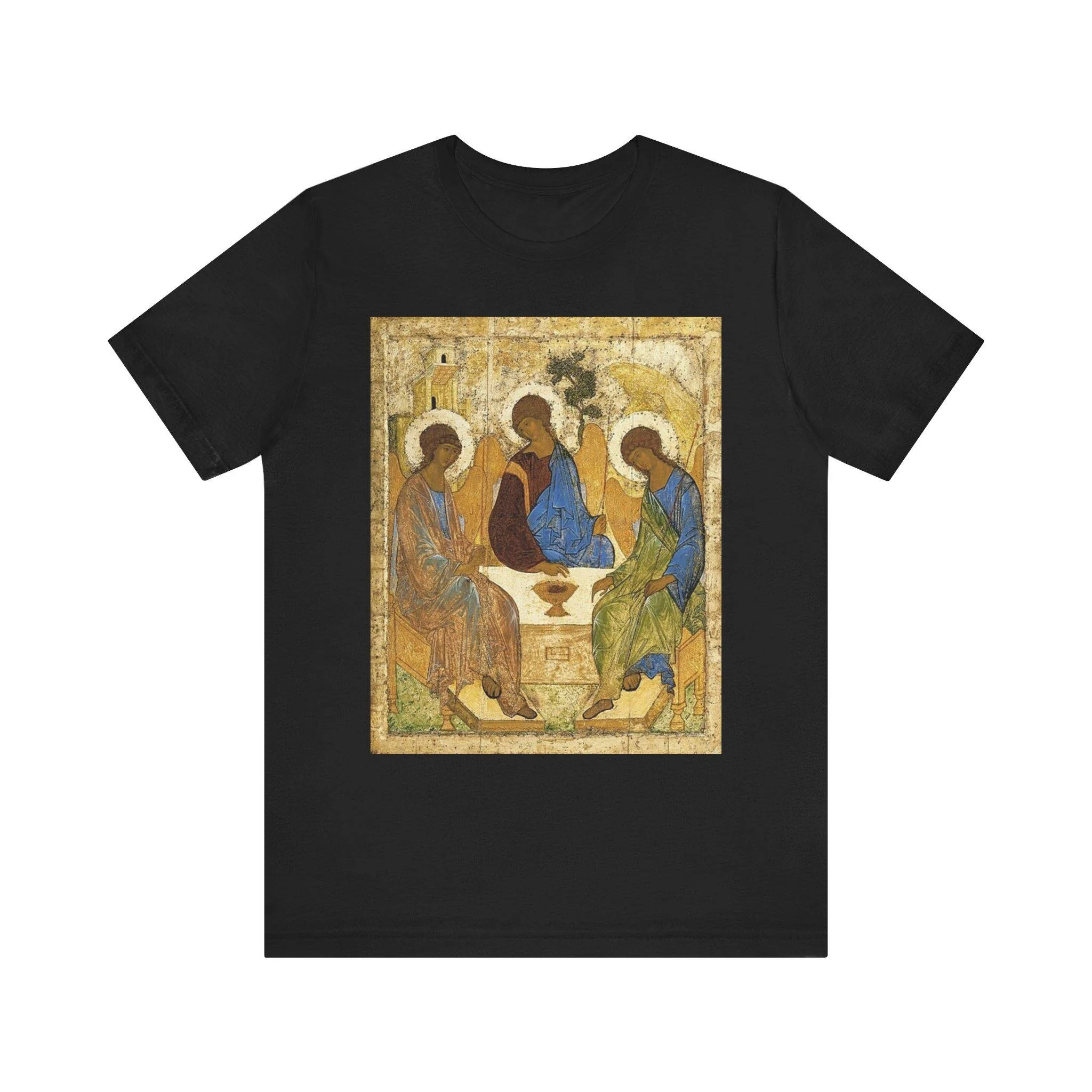
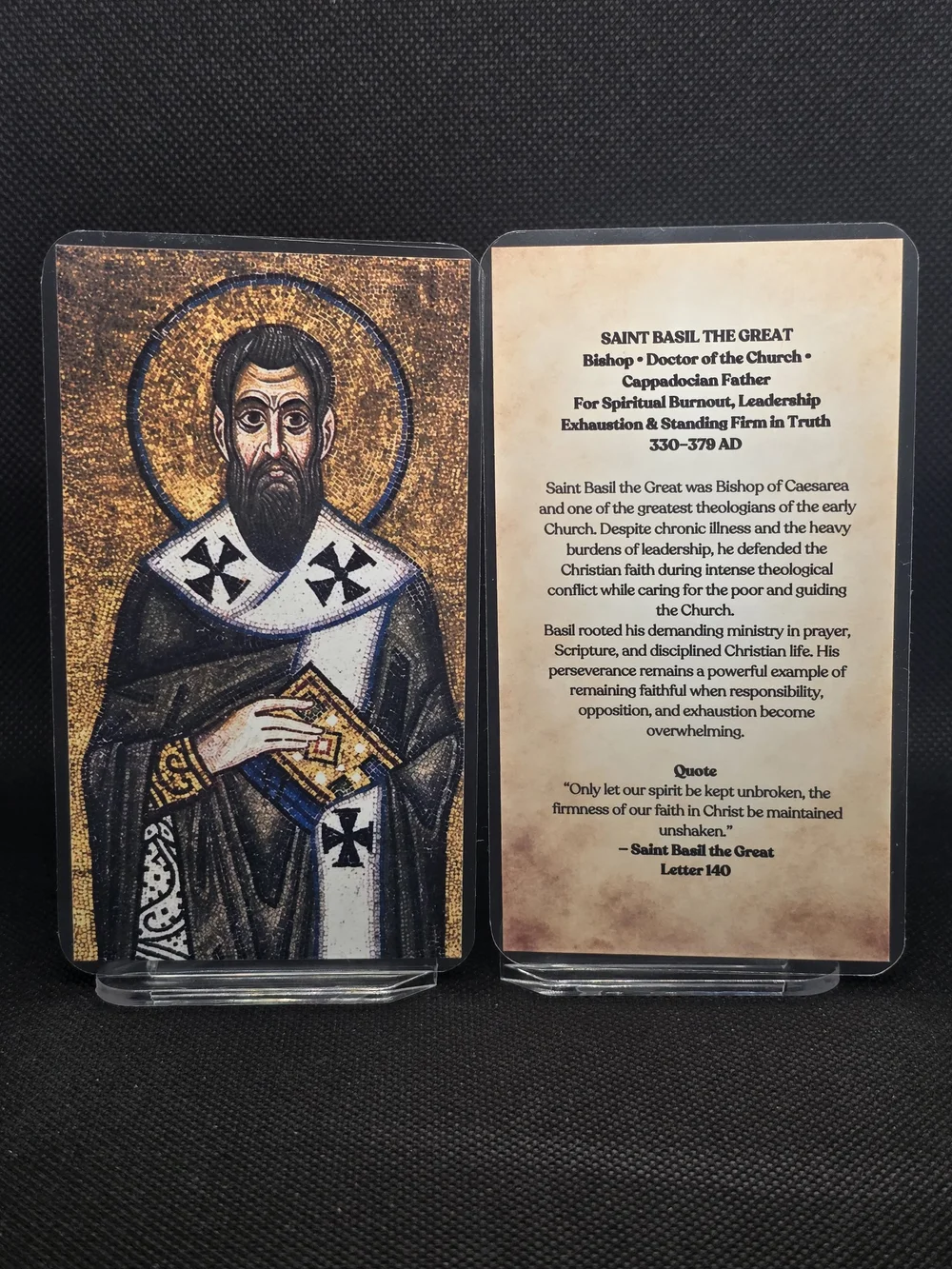
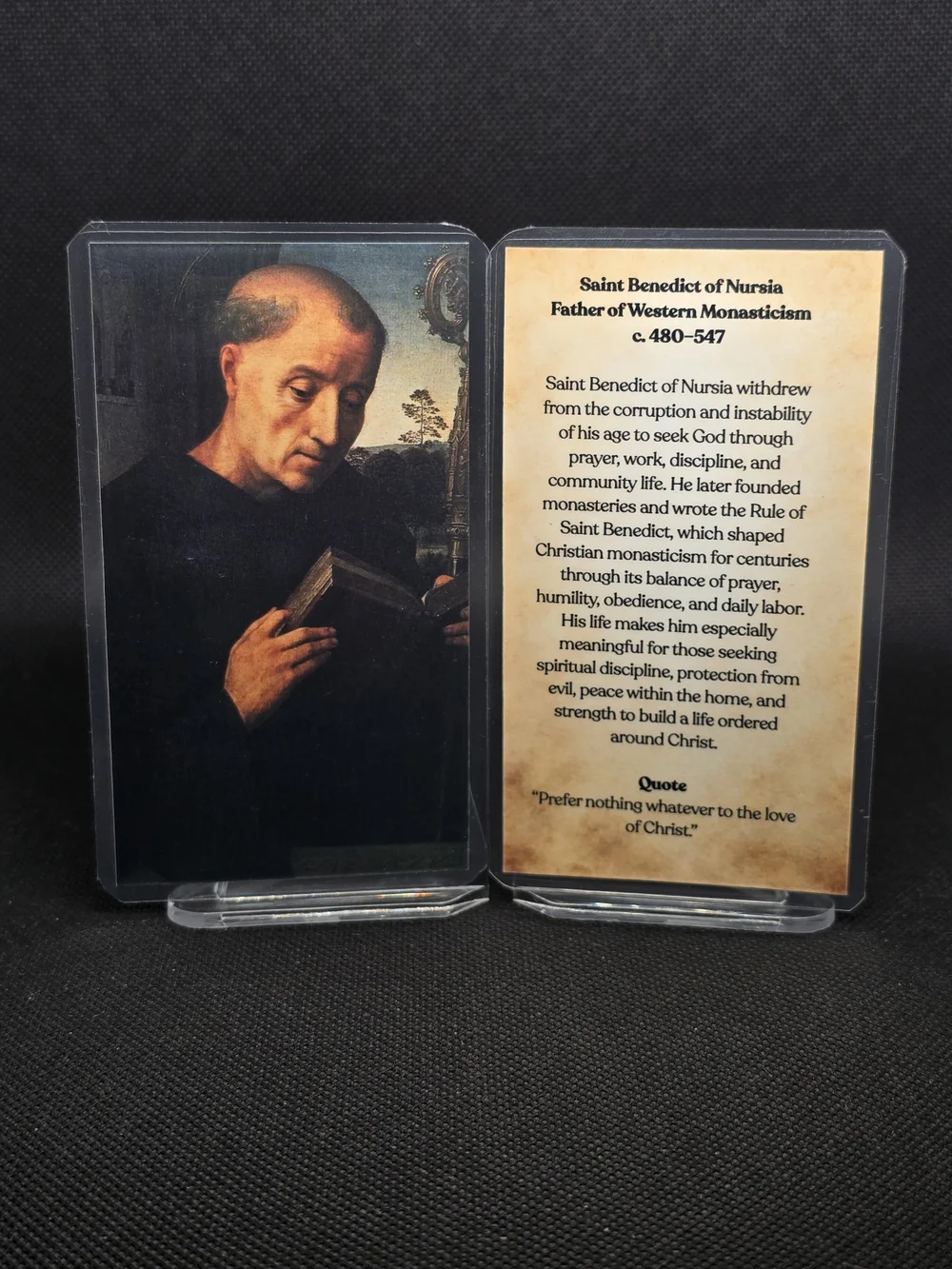
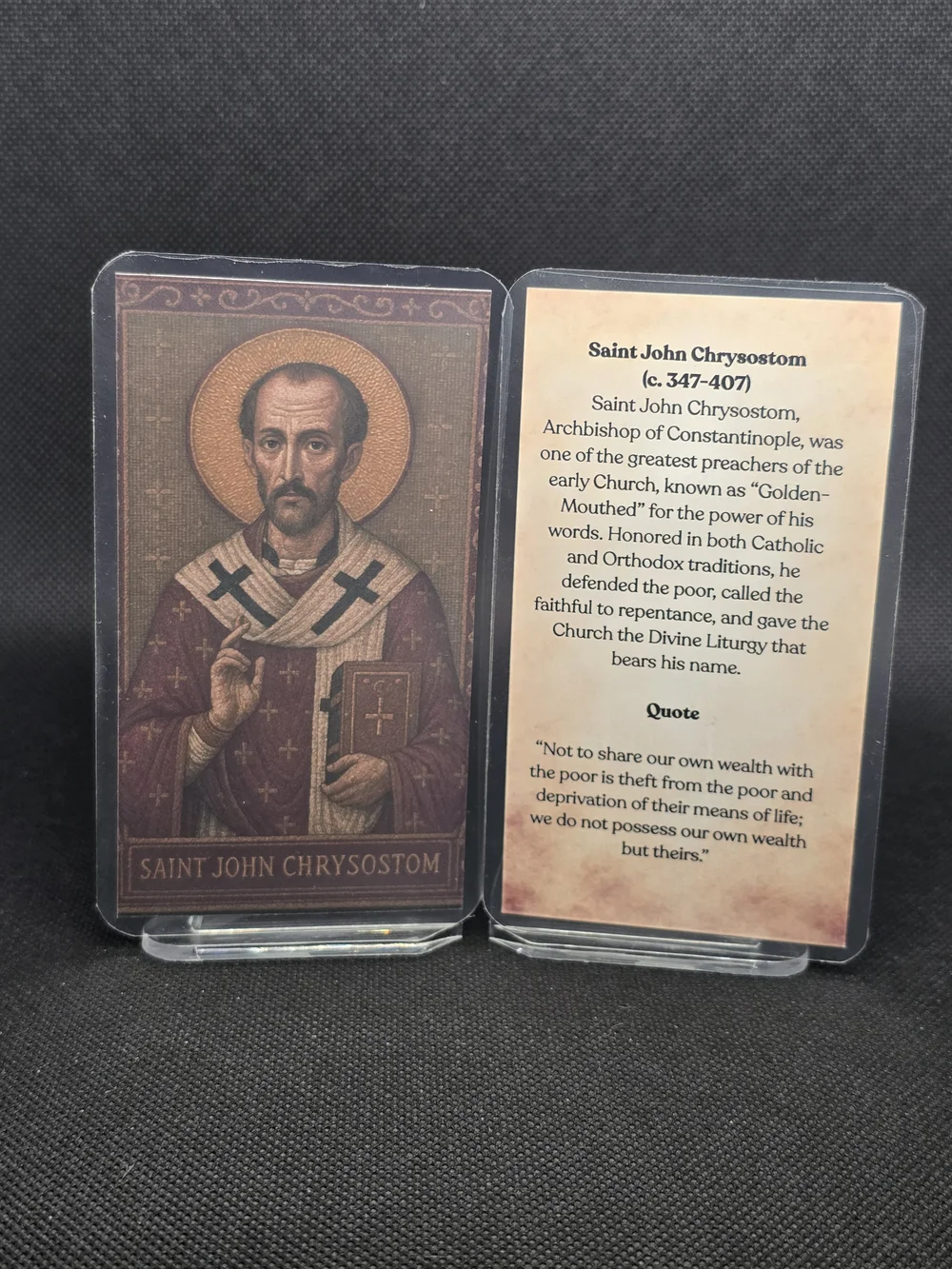
If this table has made you want to read more, the books below are good places to go next, and they come from the Oriental Orthodox side, which is the least familiar to most Western readers. We have also gathered four shirts and nine handmade prayer cards from our store, one set for each family of Churches. Saints like Athanasius, Cyril, Basil, and Chrysostom are honored by more than one family, so a prayer card of any of them is a good companion for an article like this one.
The same three books as in the directory above, gathered in one place: an introduction to the Coptic Church, a history of the Ethiopian Church, and the Ethiopian liturgy book.
Book links on this page are Amazon affiliate links. If you buy through them we may earn a small commission at no extra cost to you.
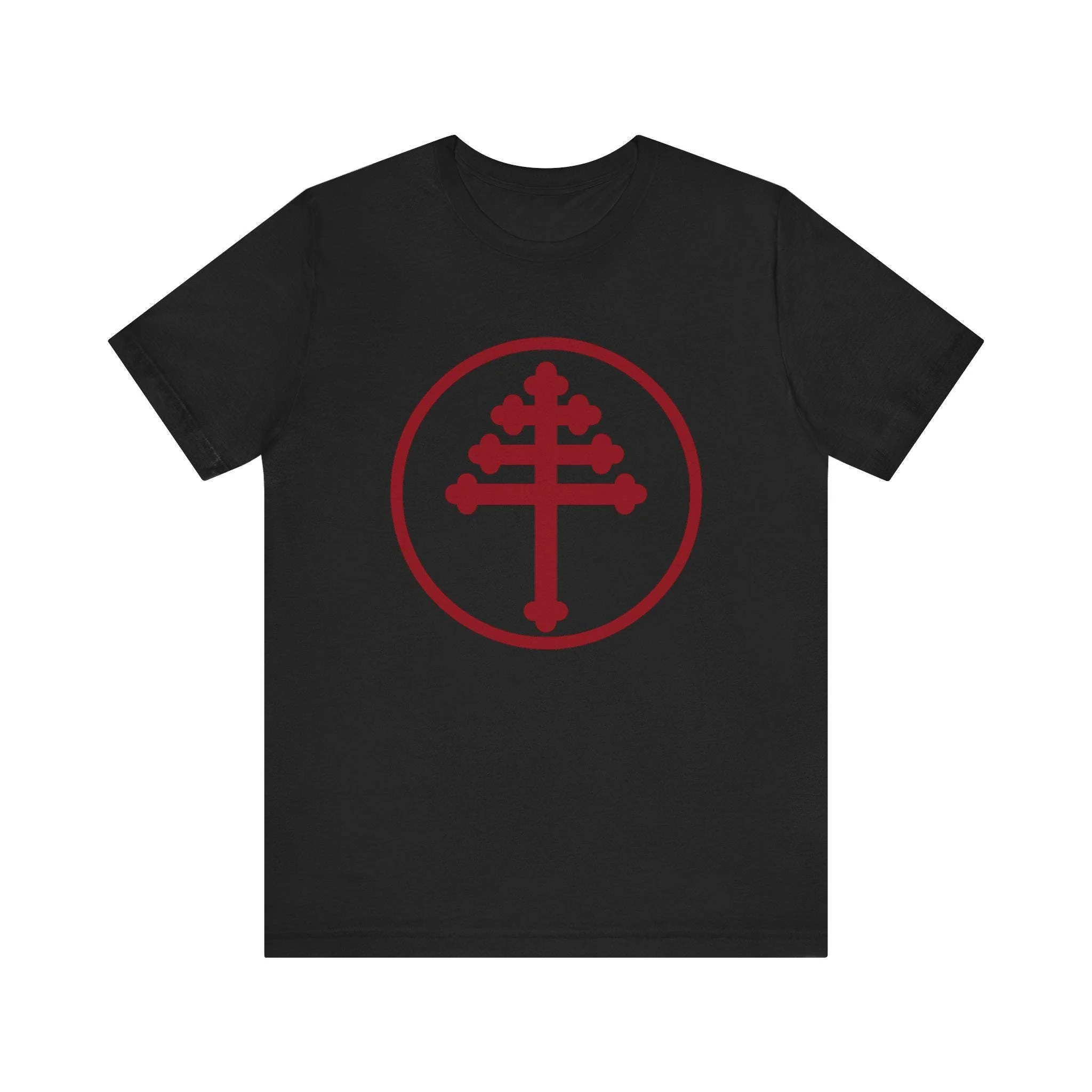
Four designs for people who want to wear the faith they share: the Trisagion in Syriac, the Rublev Trinity, the Maronite cross, and the Jesus Prayer.
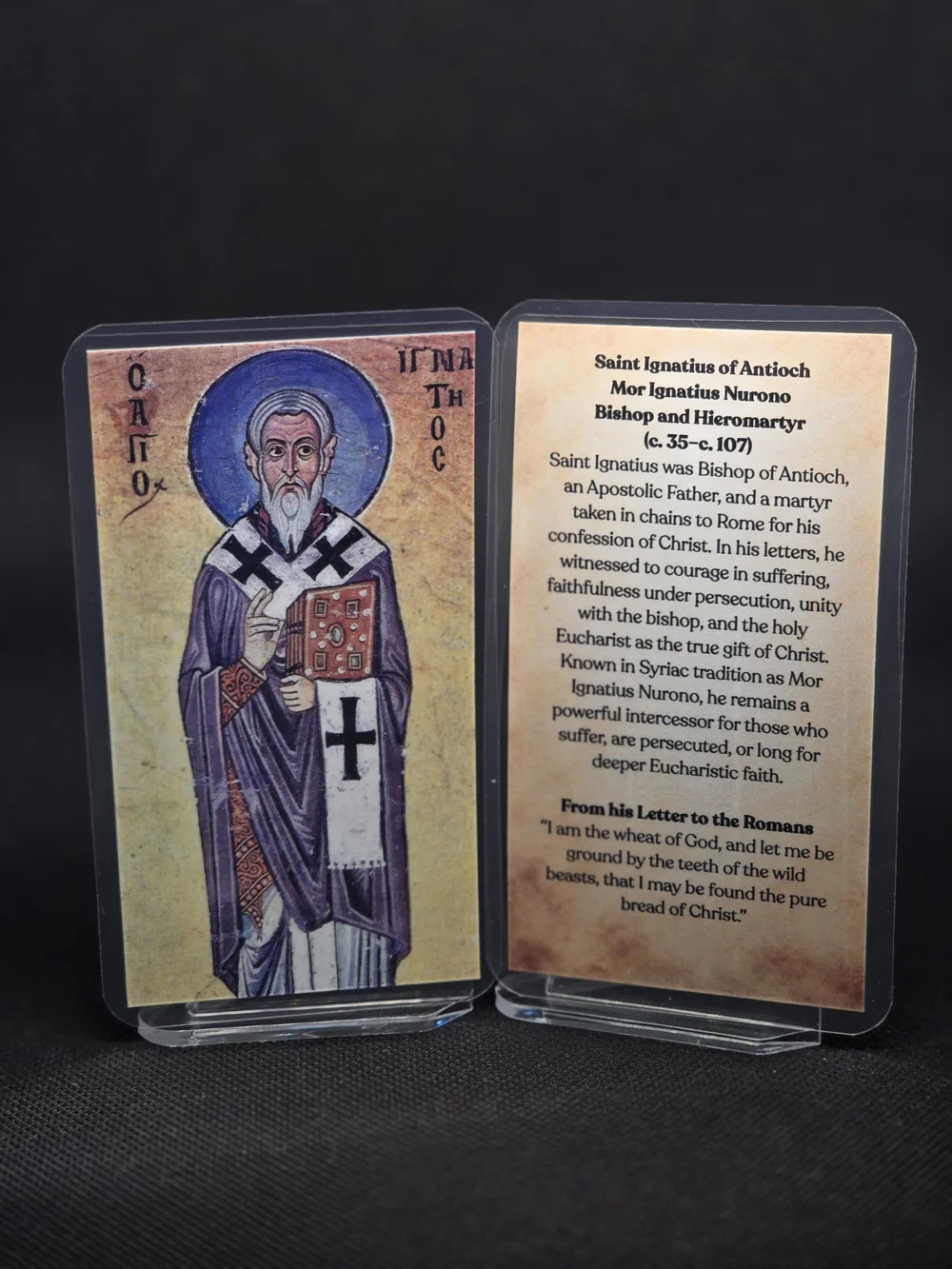
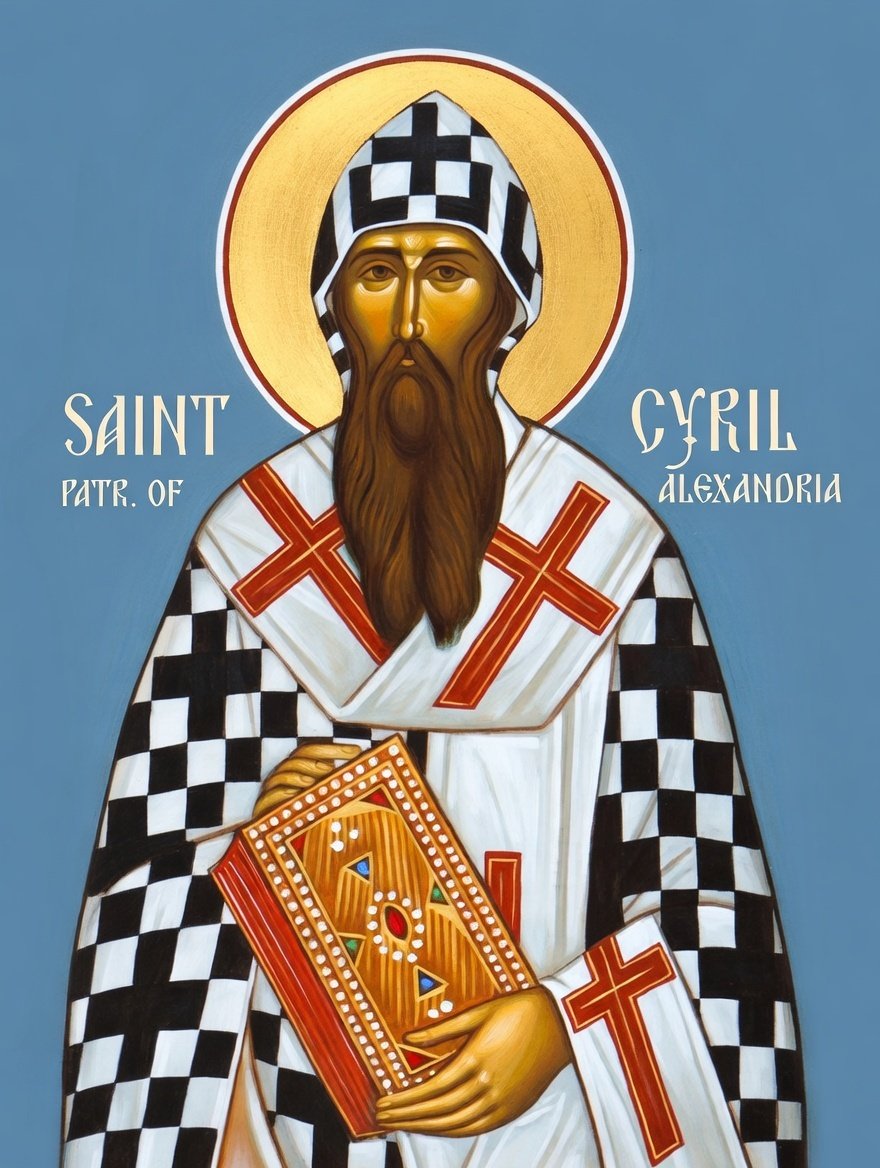
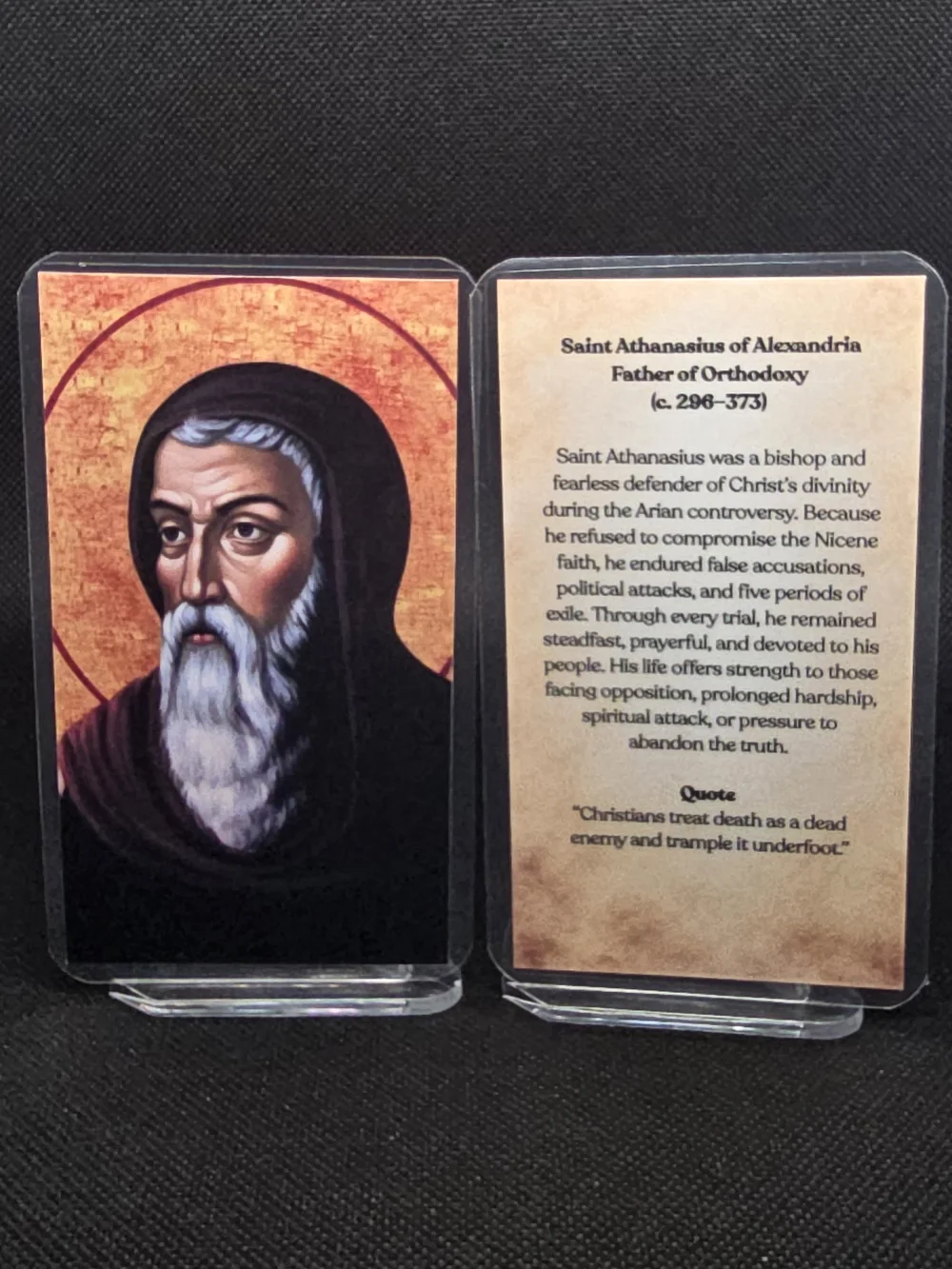
Athanasius, Cyril, and Ignatius belong to the early Church that all four families claim.
Basil and Chrysostom stand behind the Byzantine liturgy, and Benedict behind the Latin monastic tradition.
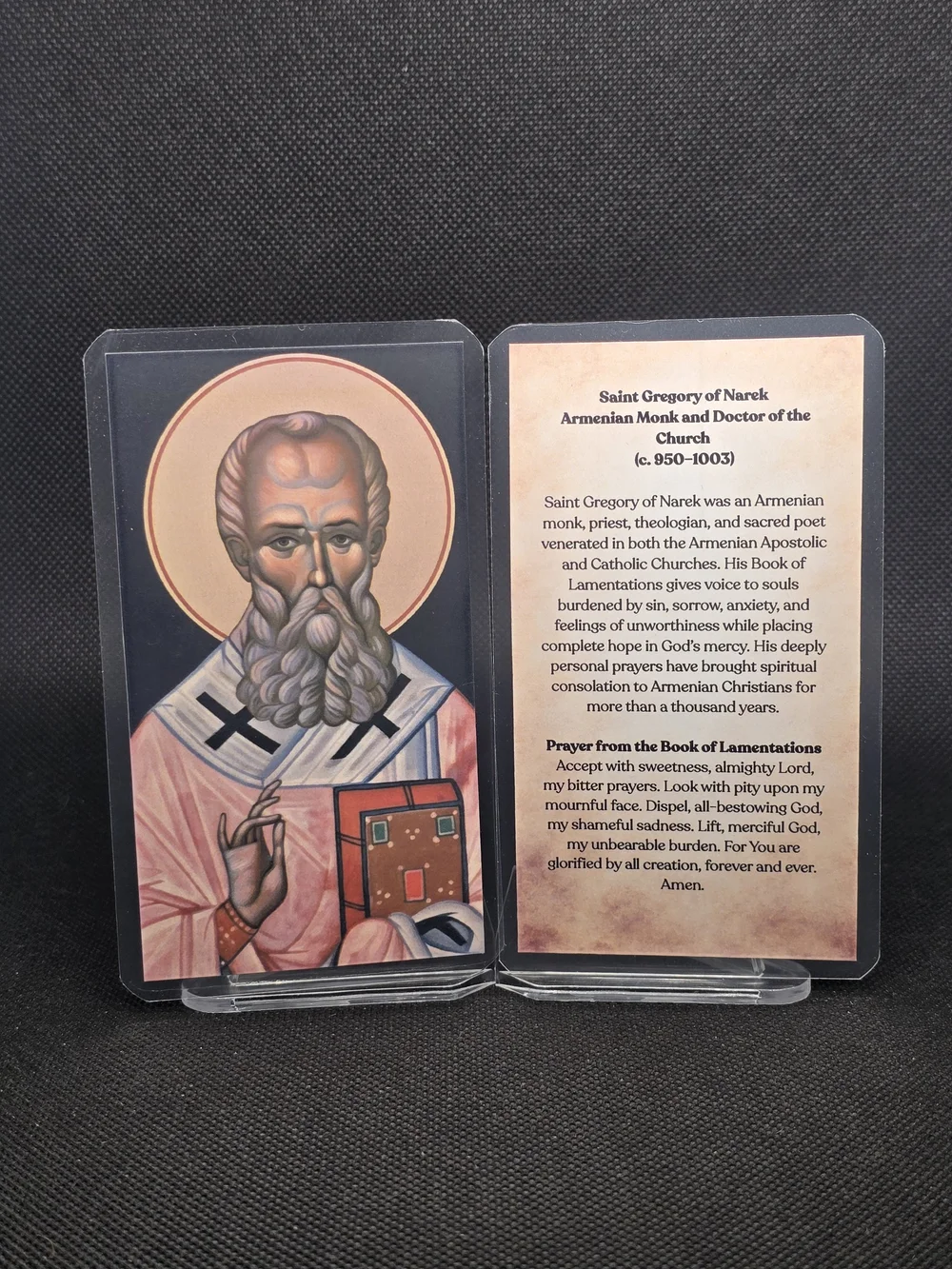
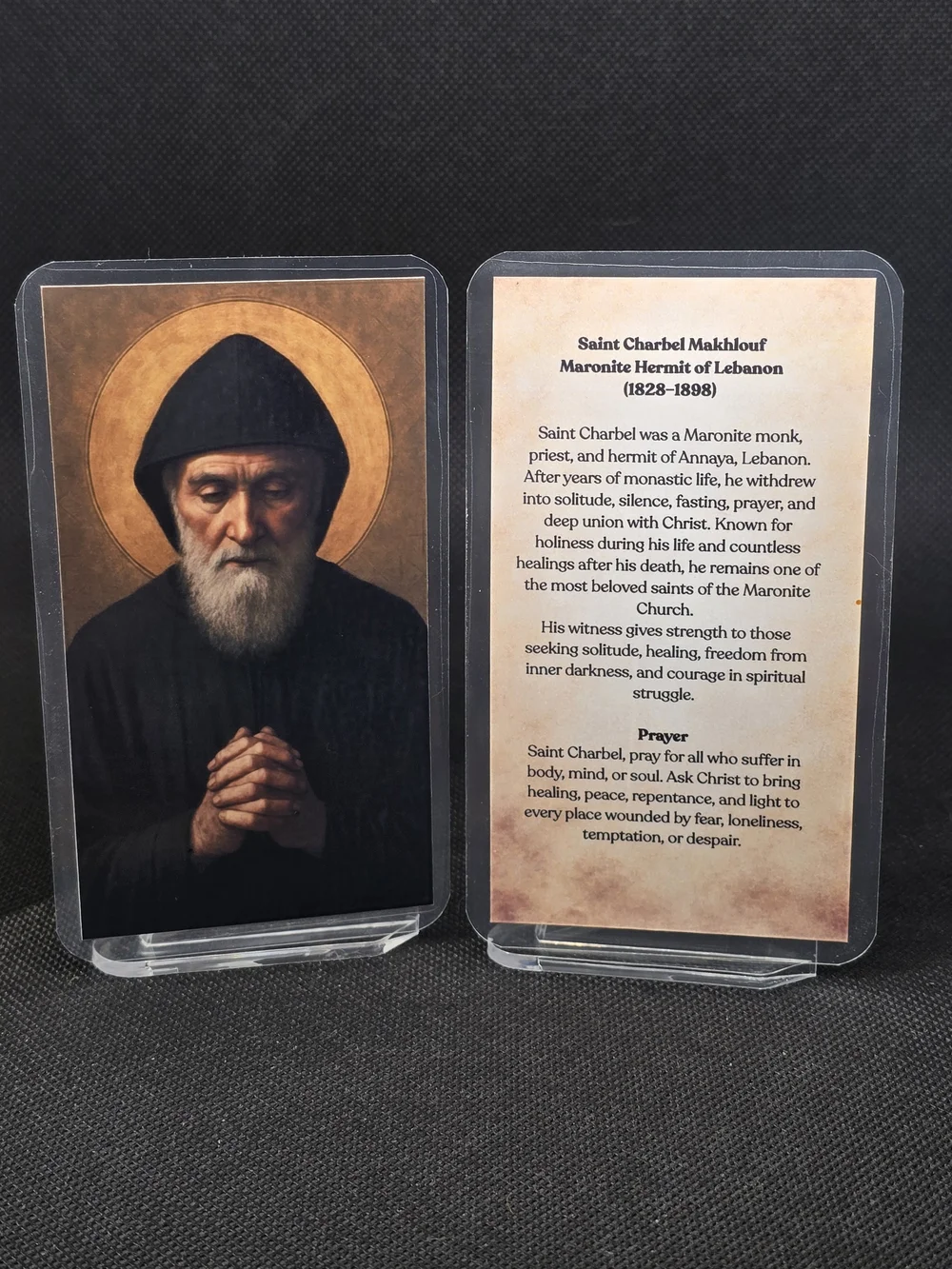
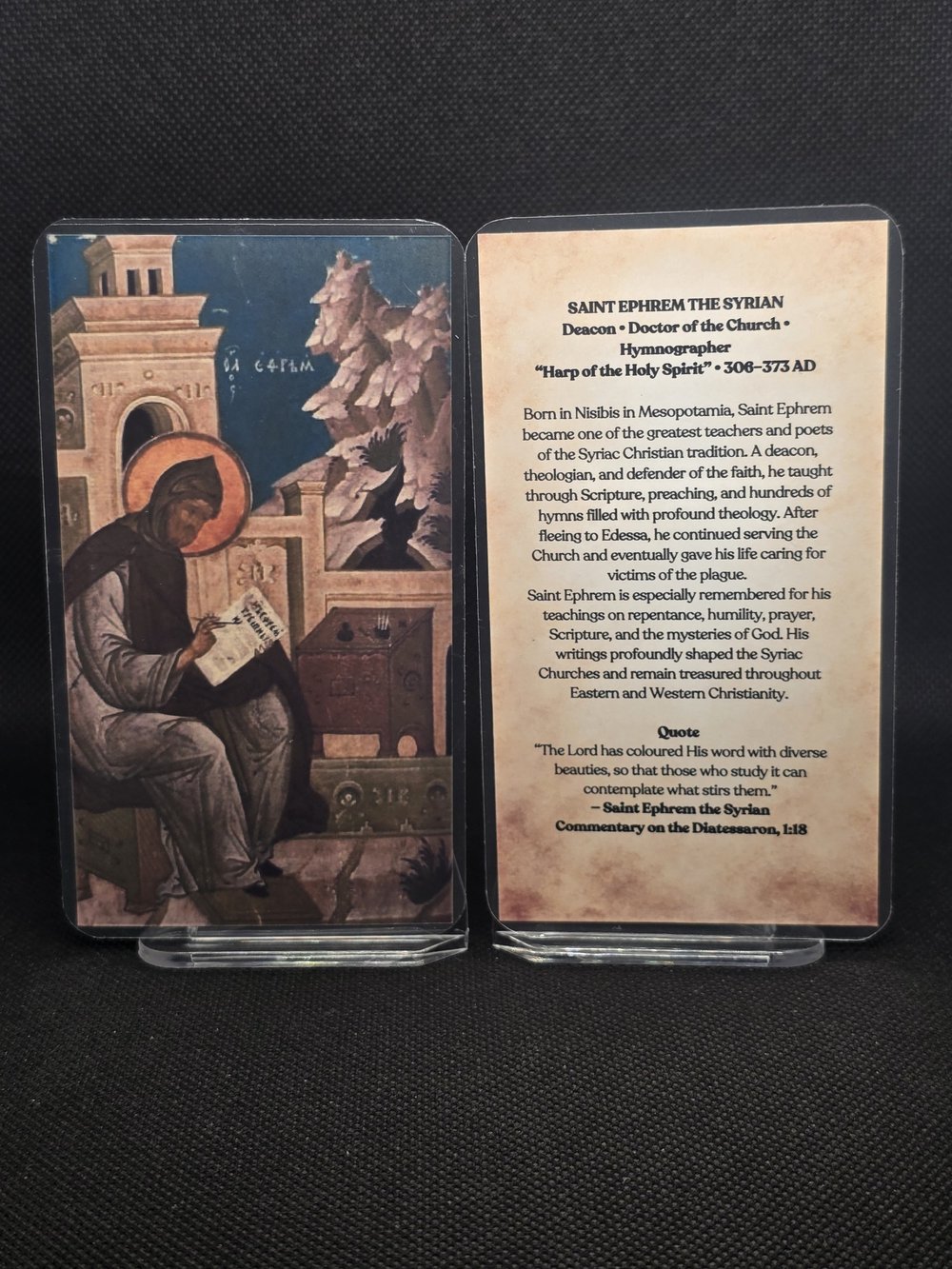
An Armenian poet, a Maronite hermit, and a Syriac hymn-writer, three saints from three ancient traditions.
Where to Go From Here
Pick the Church you want to understand and follow its guide above. If you are building a prayer corner for any of the traditions in this article, our handmade prayer cards are a good place to begin.
Appendix