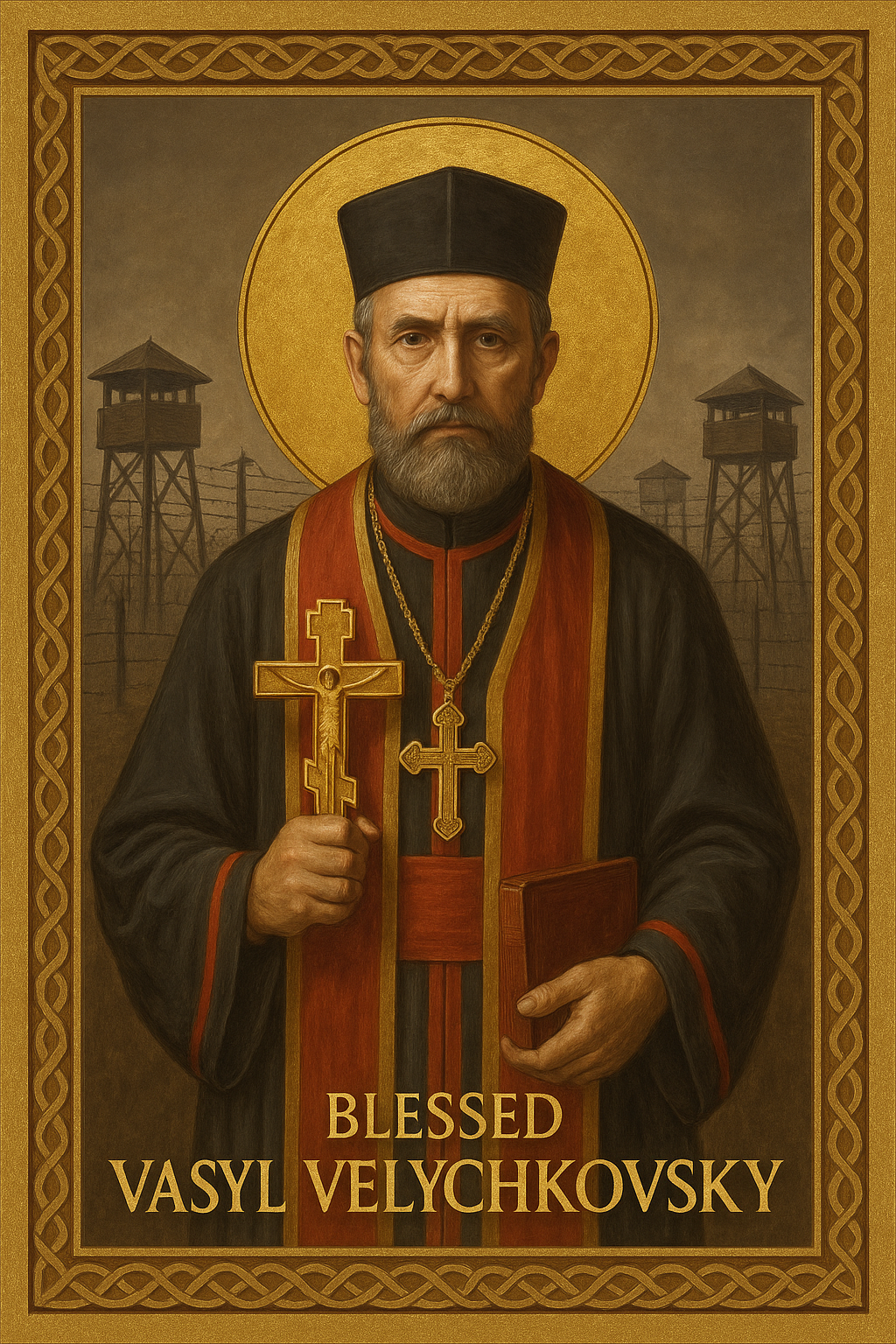
Byzantine Catholic catechesis differs from Latin practice since infants already receive Communion. How the Divine Liturgy, chant, and modern martyrs shape it.
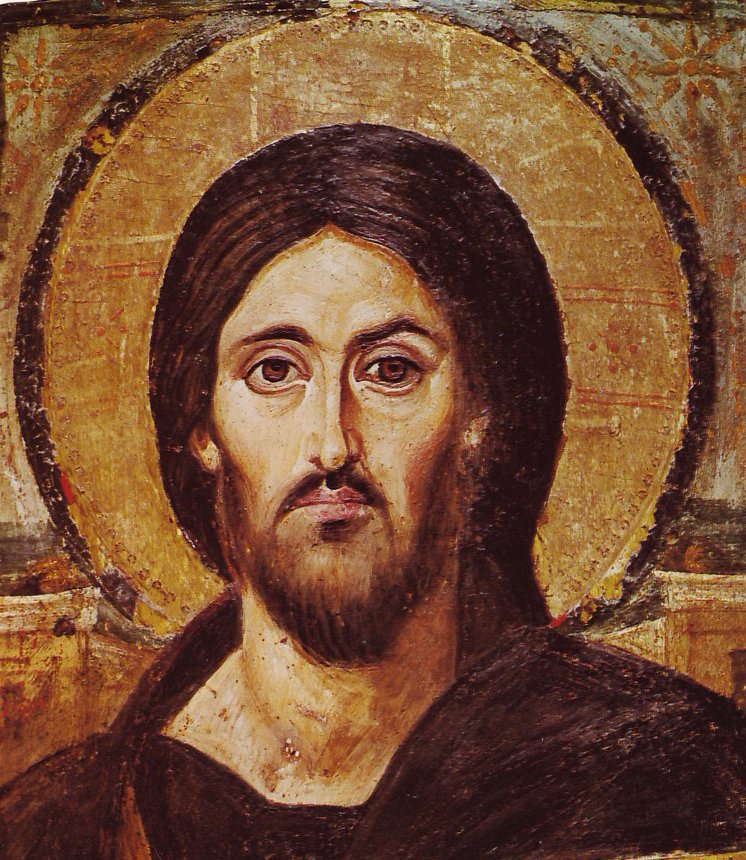
A complete guide to the Orthodox and Eastern Catholic icon corner tradition: which icons belong where, what each one means, and a full guide to every icon canvas available, from Christ Pantocrator to the saints of the desert, Lebanon, and the modern Church.
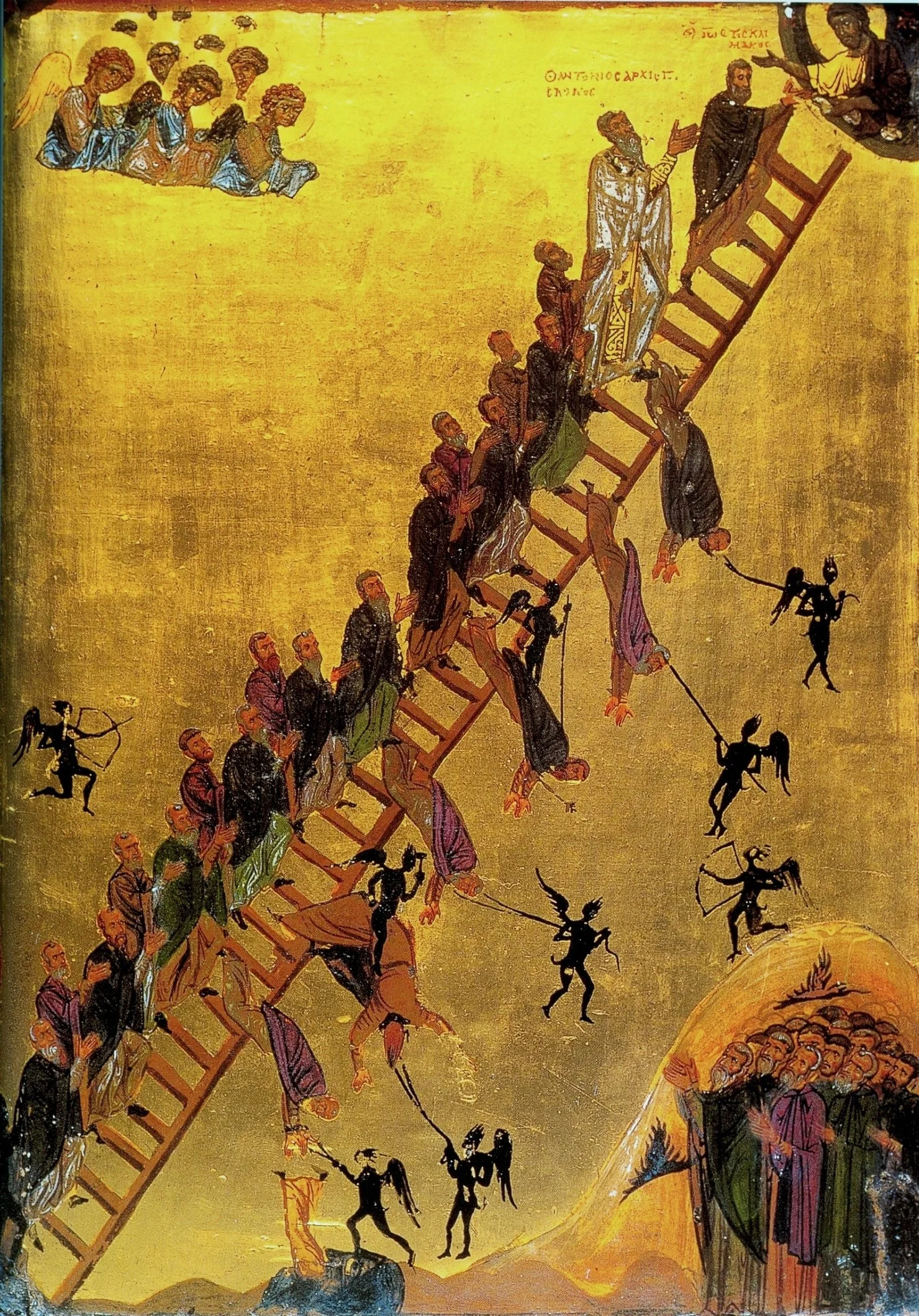
A complete guide to Christian t-shirt symbolism: what the three-bar Orthodox cross means, why the Jesus Prayer is worn on apparel, the meaning behind icon shirts, warrior saint tees, and Marian devotion apparel, with a full guide to every design available.
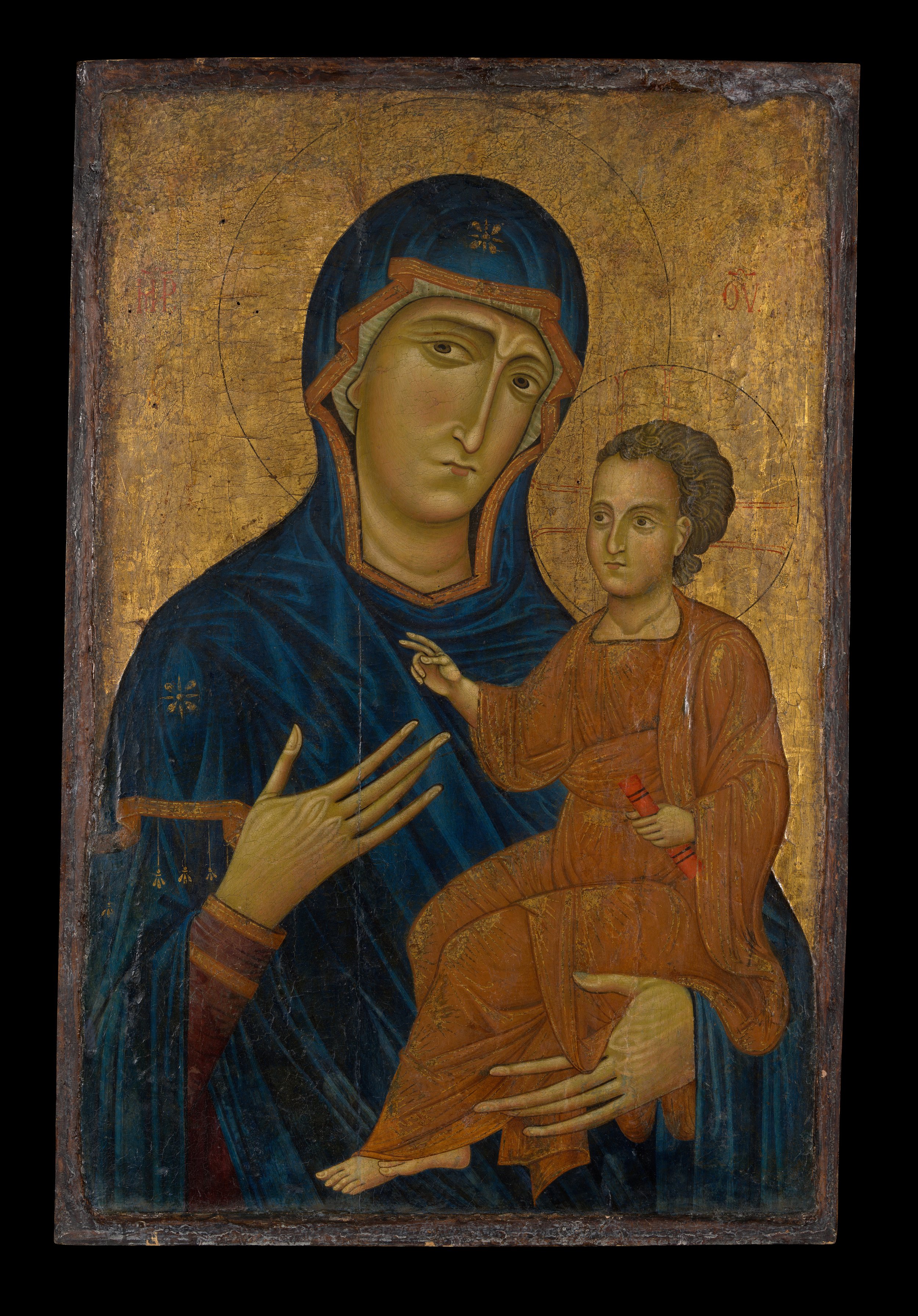
The complete history of the 626 AD siege of Constantinople: a combined Avar, Slavic, and Persian assault on a city defended by fewer than 8,000 troops while the emperor campaigned elsewhere, the icon of the Theotokos carried along the walls, and the origin of the Akathist Hymn still sung standing today.
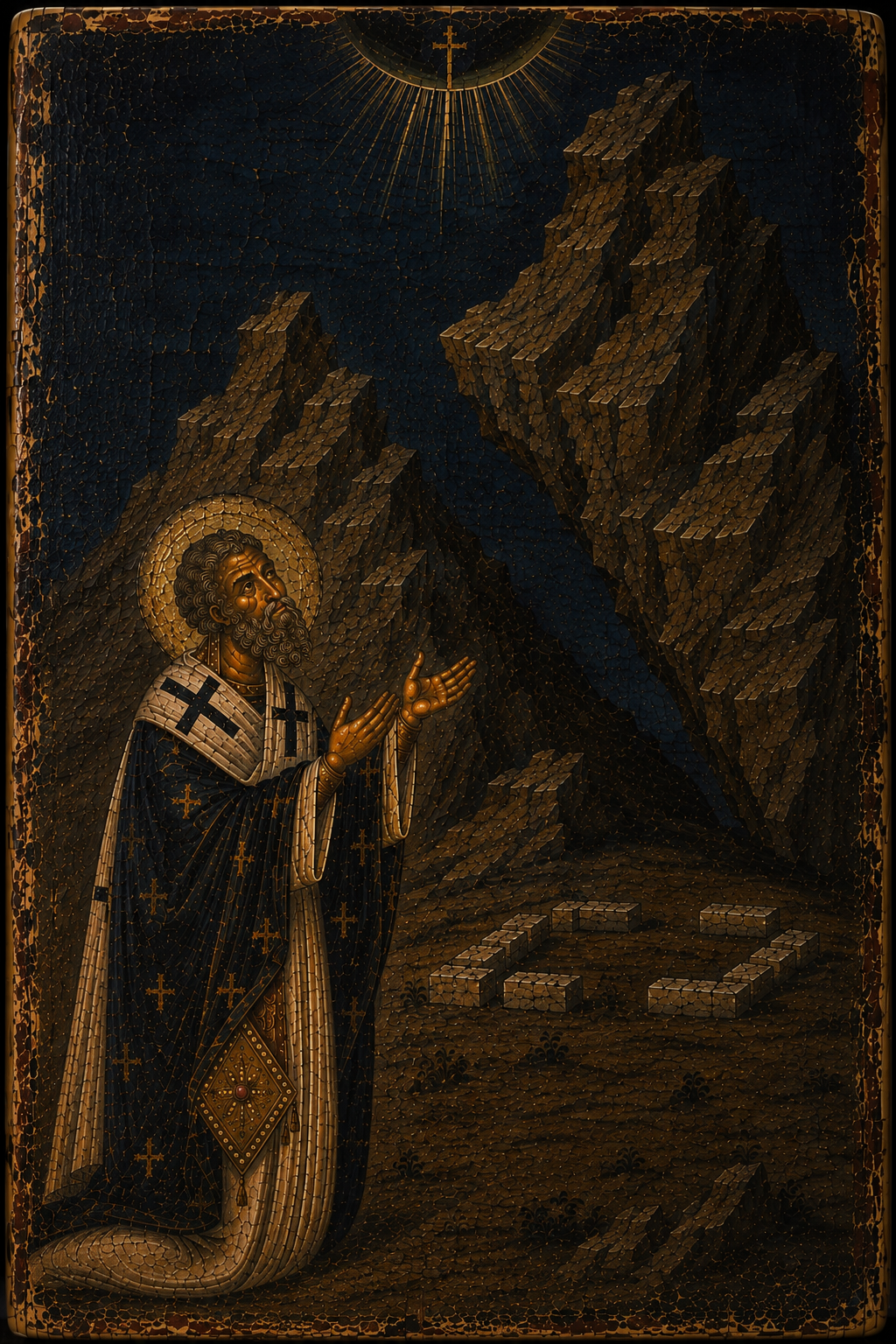
The complete story of Saint Gregory Thaumaturgus, the 3rd-century bishop of Neocaesarea credited by Basil the Great and Gregory of Nyssa with moving a mountain through prayer, with an honest look at what the earliest surviving source actually says.
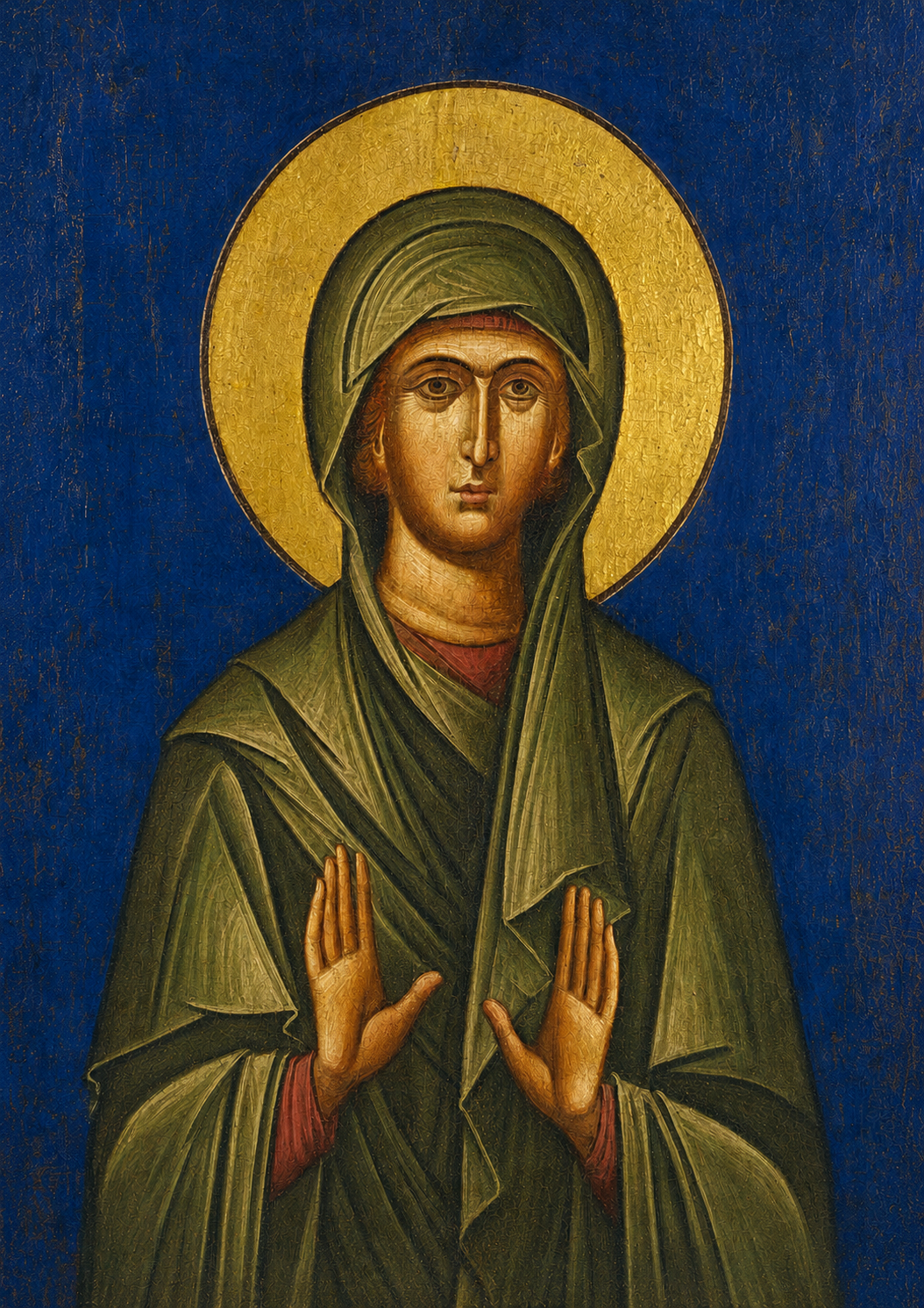
The most detailed account available of Saint Pelagia the Actress — her conversion by Bishop Nonnus, her disguise as the monk Pelagius, the source text of James the Deacon, and the scholarly debate over her historicity and identity.
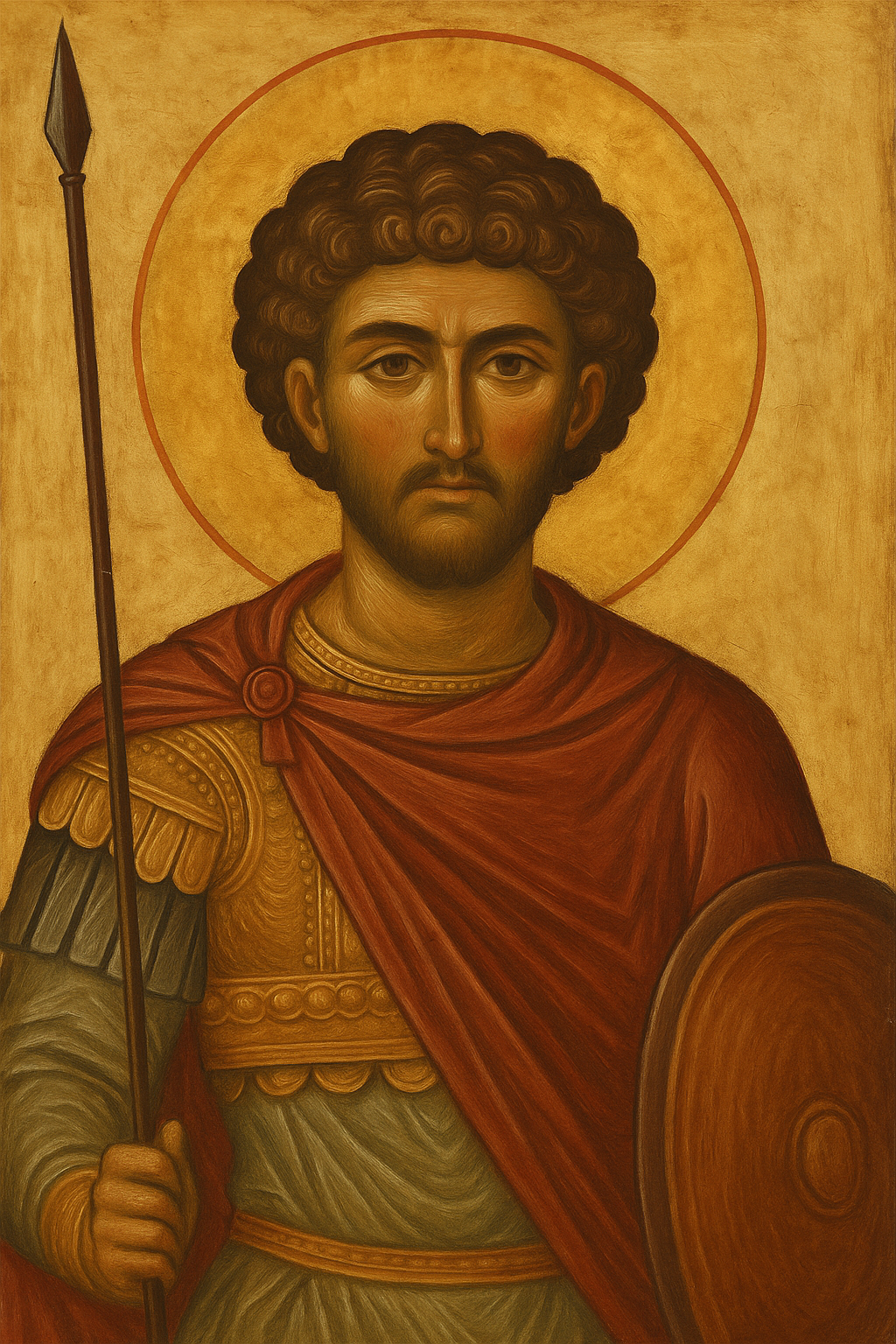
The most complete guide to Byzantine Catholicism — its history in Constantinople, how it differs from Roman Catholic and Eastern Orthodox, all 14 Byzantine Catholic churches, the Divine Liturgy, theology, saints, and where to find a parish near you.
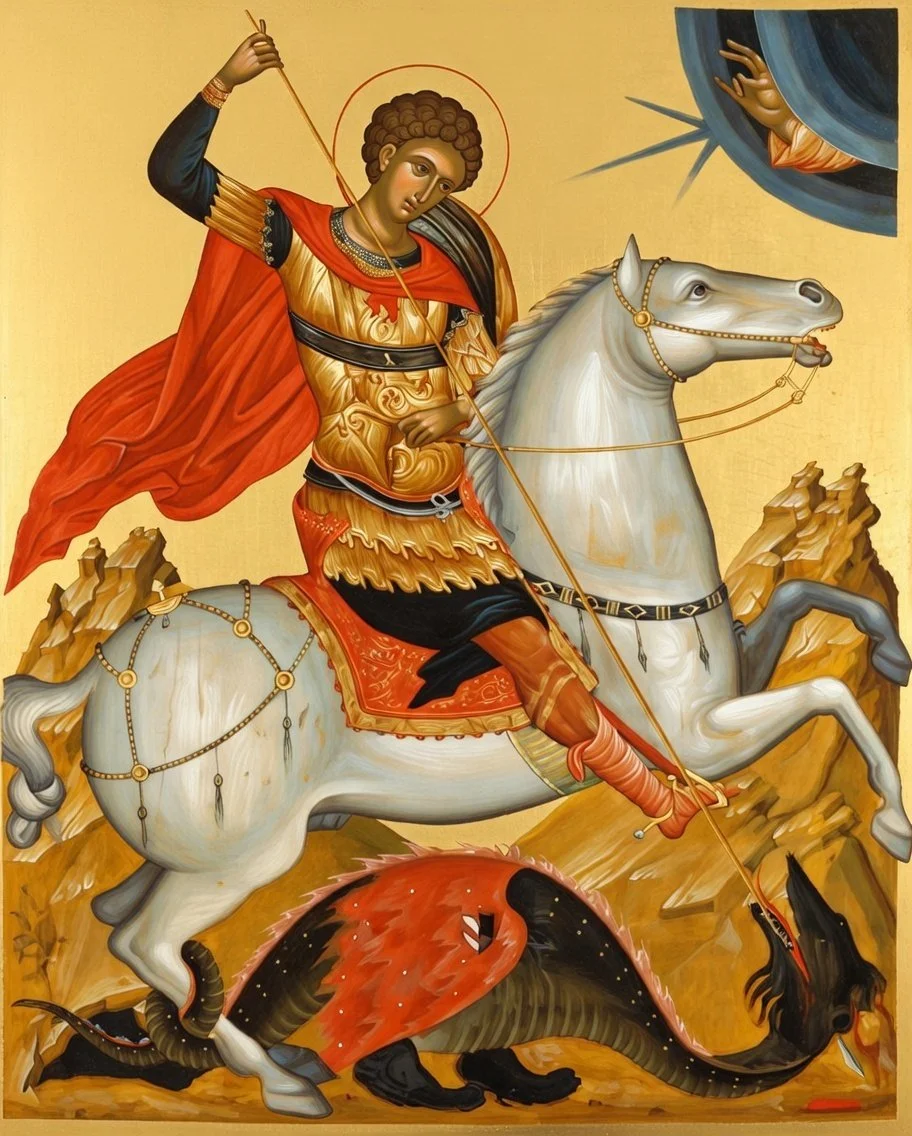
The most complete biography of Saint George: his Cappadocian origins, the 1964 Nubian manuscript, the Praetorian Guard, three deaths, the dragon's true origin, every nation he protects, and why Al-Khidr may be him.
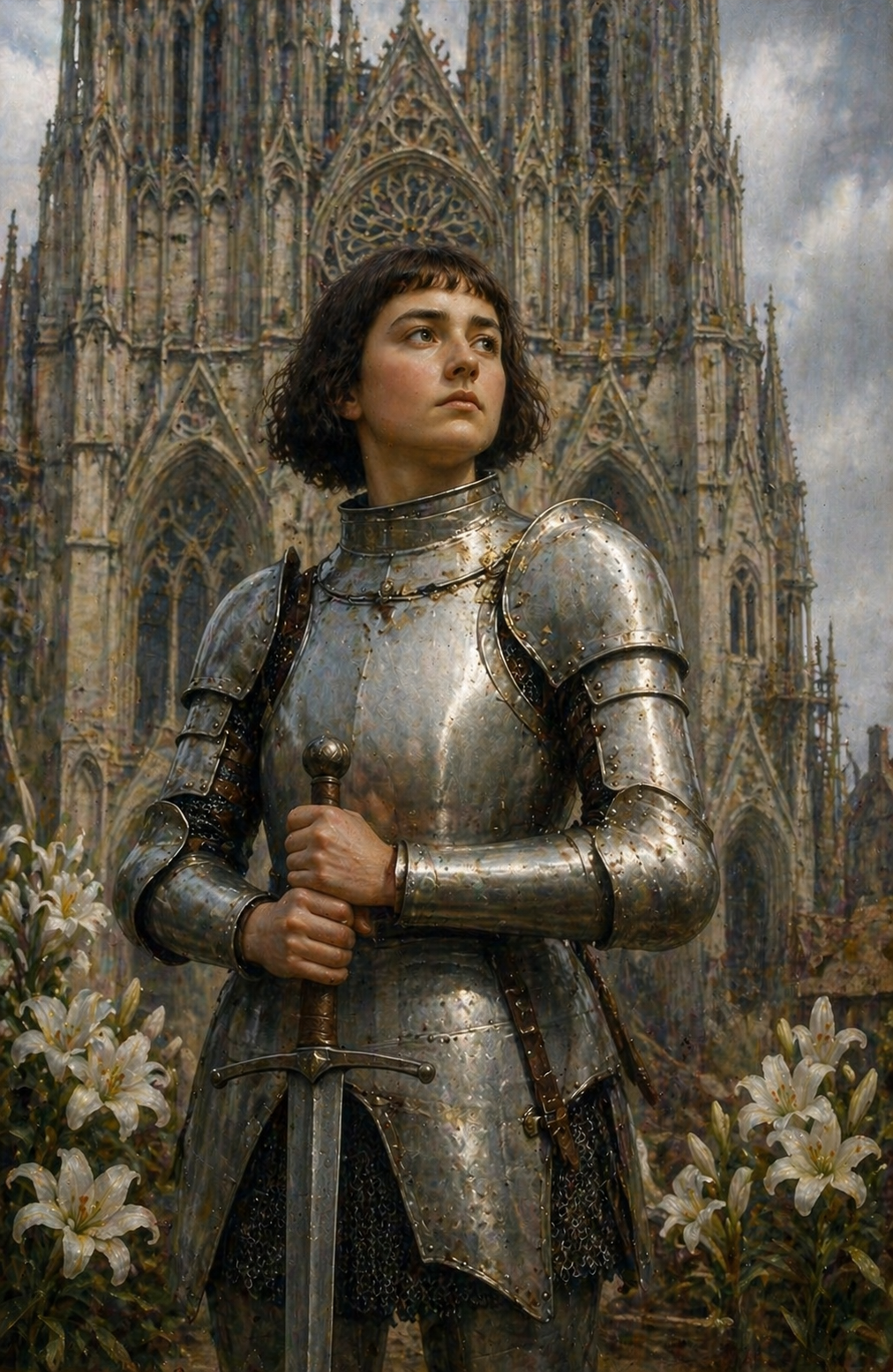
17 warrior saints for soldiers & spiritual warriors—Catholic & Orthodox patrons from St. Michael to Joan of Arc. Find your patron. Complete guide with prayer cards.
From St. John Chrysostom to the crowning ceremony, discover what the Eastern Church Fathers truly teach about Christian marriage — as sacrament, domestic church, and living icon of Christ's love.
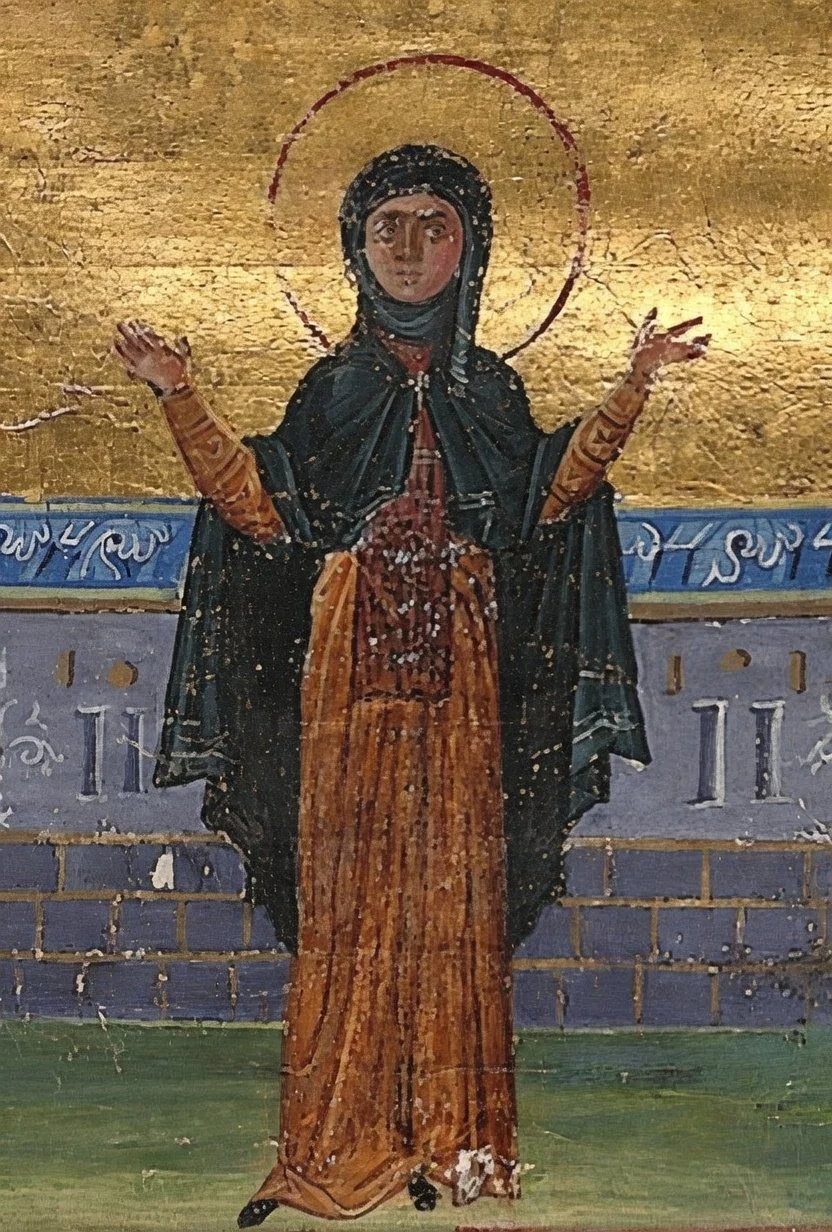
Nine women saints who disguised themselves as monks — Pelagia, Theodora, Euphrosyne, Marina, and more. Their full stories, feast days, and what the Eastern Church teaches through their lives.
Compare the Roman Catholic Mass and all Eastern Catholic Divine Liturgies. A complete guide to the 23 Eastern Rites, covering bread, posture, icons, and theology.
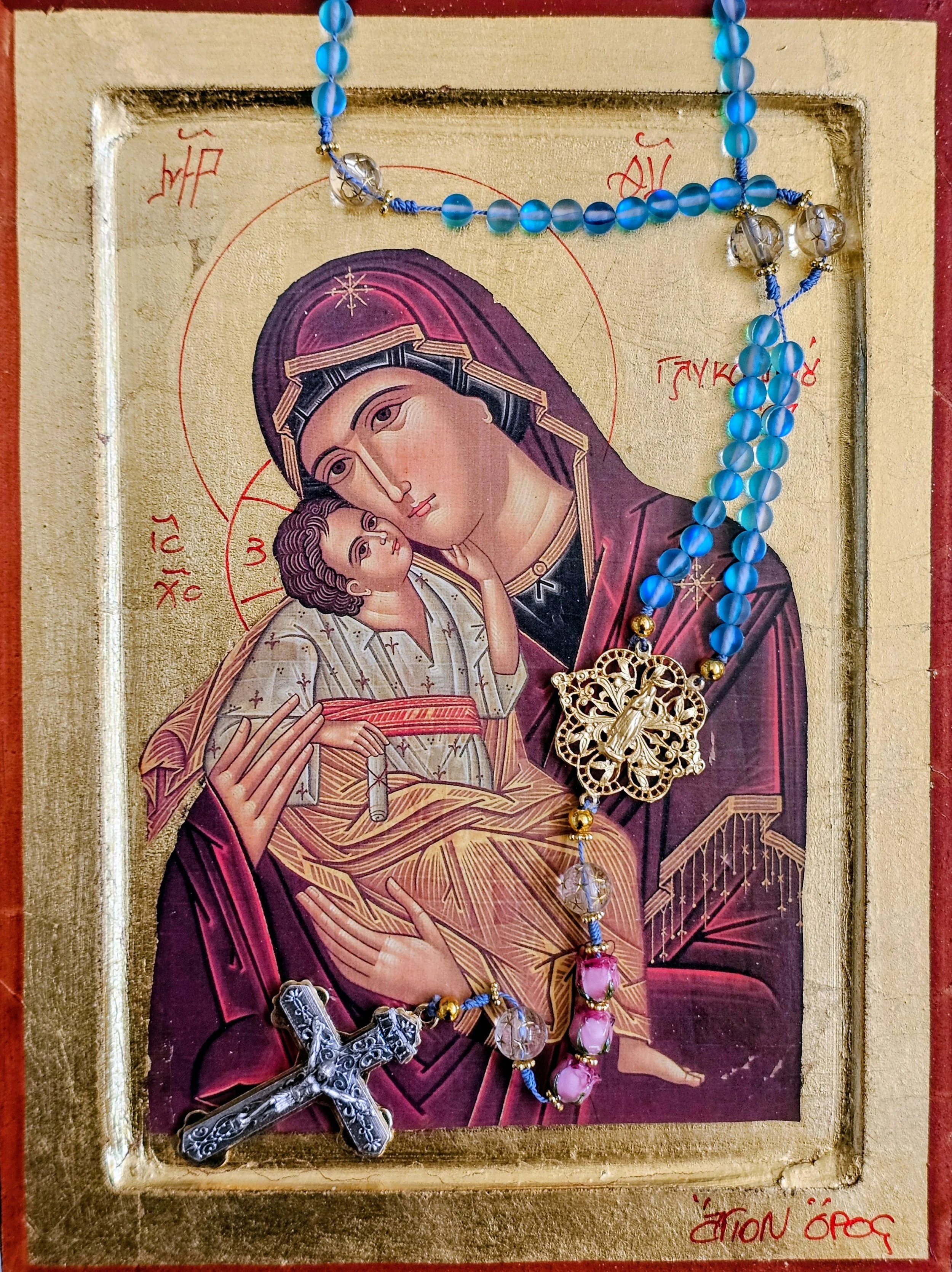
Complete guide to the Vatican's February 2026 Eastern Canonical Commission and the CCEO review. What it means for Maronite, Byzantine, Chaldean, Melkite, Ukrainian, Syro-Malabar, Armenian, Coptic, and all Eastern Catholic families — sacraments, marriage, parish governance, diaspora rights. Open submission deadline April 15, 2026.
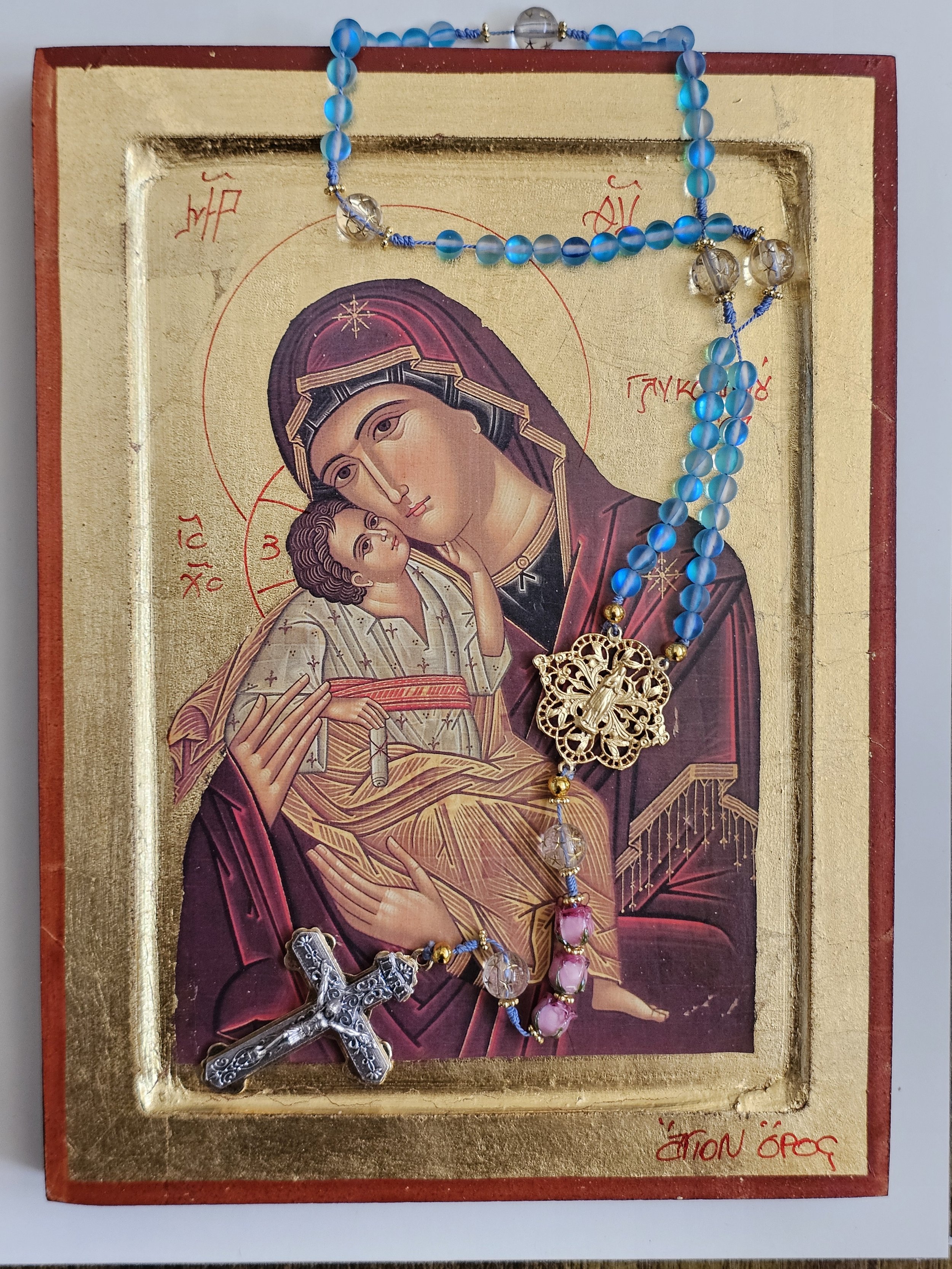
What is the difference between Eastern and Roman Catholic? Discover all 23 Eastern Catholic Churches, their unique liturgies, married priests, theology of theosis, and fasting rules in this definitive guide to the Eastern lung of the Church.
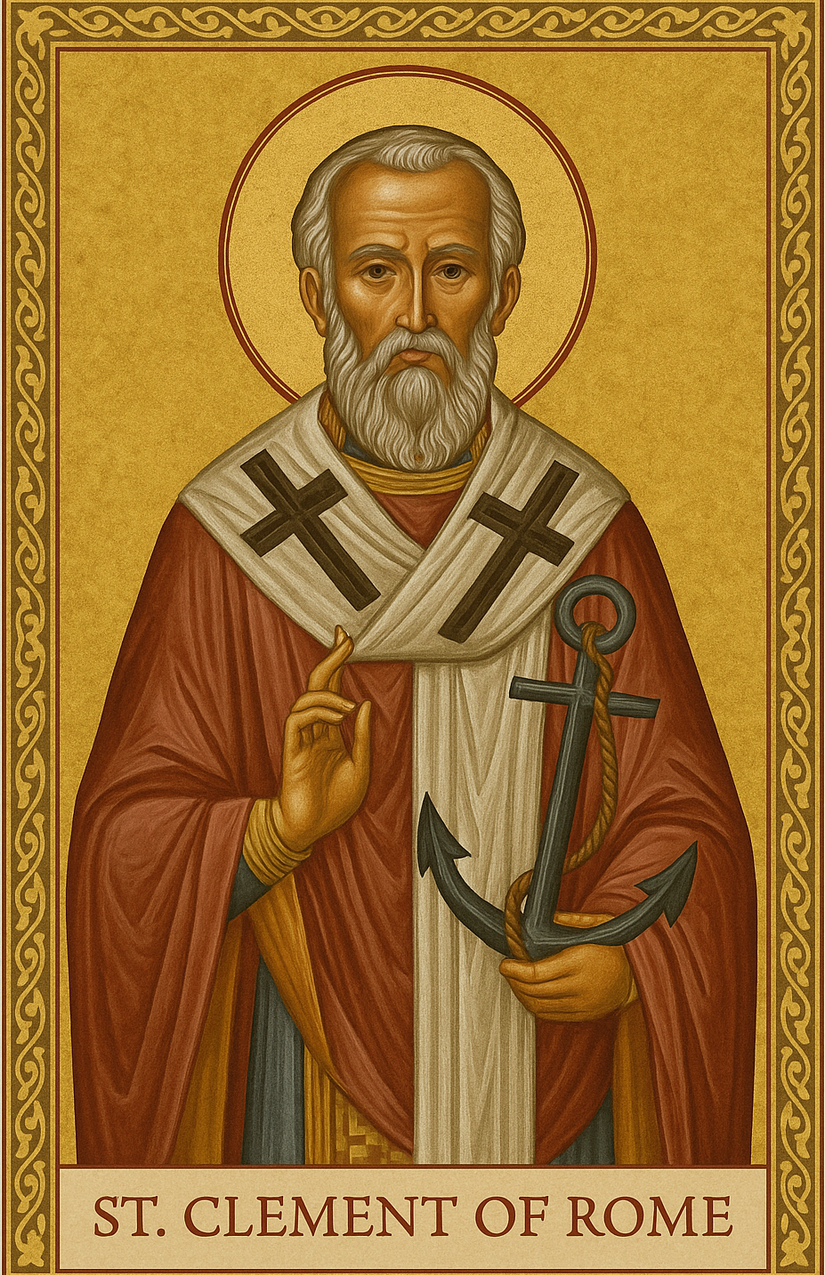
Byzantine Catholics don't use one standardized Bible. Their Old Testament is rooted in the Septuagint — the Bible the Apostles used — and Scripture is primarily experienced through liturgy. Here's the full answer.
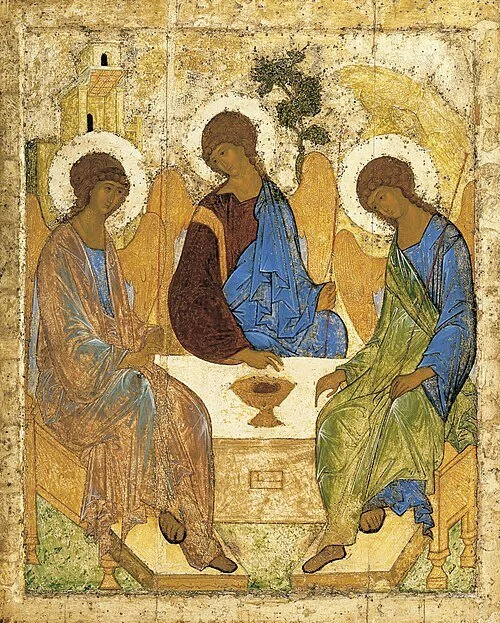
Why do Orthodox and Eastern Catholic Christians kiss icons? Learn the difference between veneration and worship, the theology of icons, and why sacred images matter in Eastern Christianity.
Learn Eastern Catholic Hesychasm through prayer of the heart, theosis, Jesus Prayer, saints, and living tradition. The most complete guide online.
An in-depth guide to the Byzantine Rite, explaining Eastern Catholic liturgy, theology, symbolism, and how the Divine Liturgy shapes Christian life.
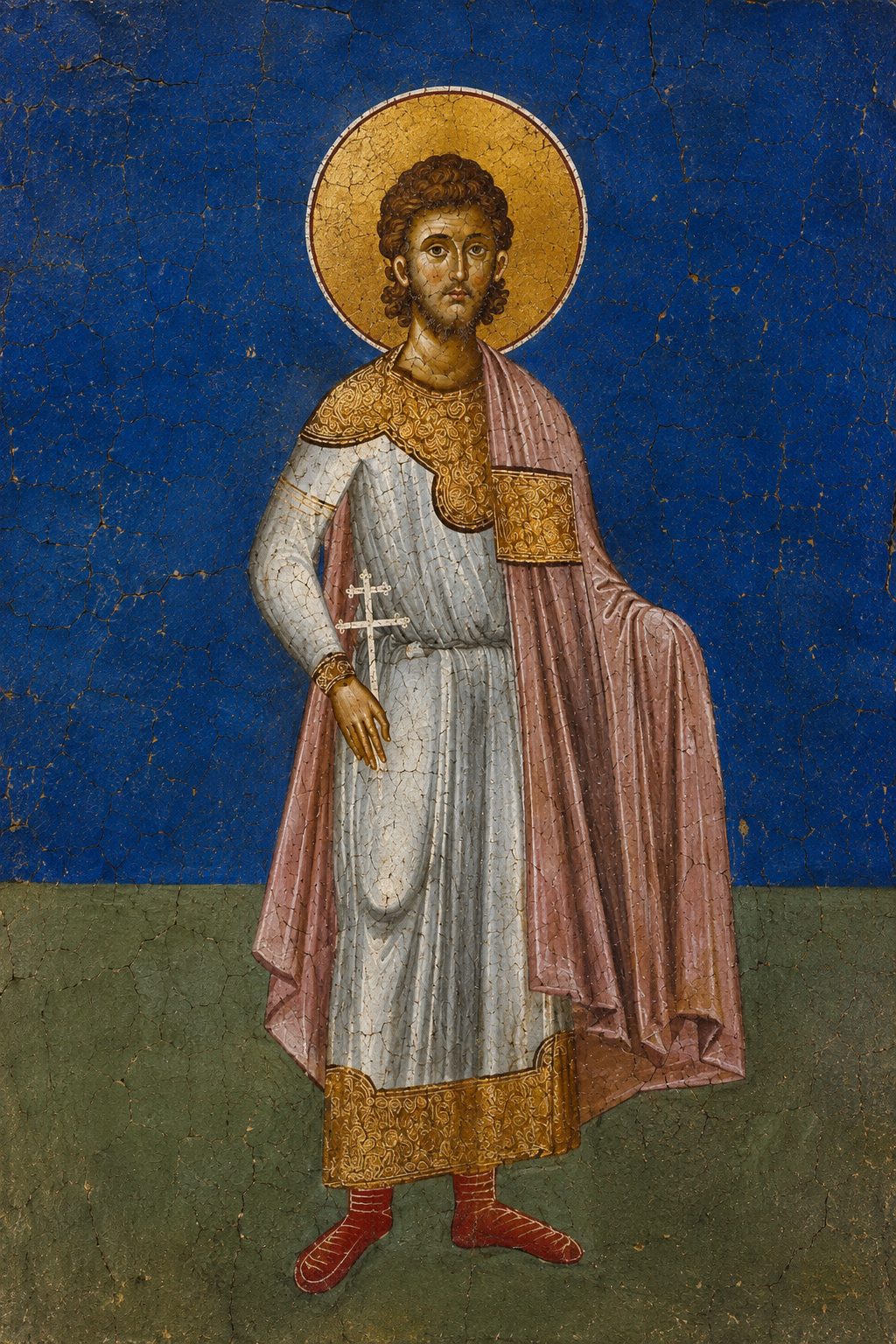
Saint Gordius of Caesarea, also called Saint Gordios of Cappadocia, was an early fourth-century Christian soldier, Roman centurion, desert ascetic, and martyr remembered for one of the boldest public confessions of faith in the age of persecution. Born into a Christian family in Caesarea of Cappadocia, in present-day Turkey, Gordius became a successful military officer before anti-Christian measures forced a choice between his position and his faith. He left military life, withdrew into the wilderness for fasting and prayer, and then did something extraordinary: instead of remaining safely hidden, he deliberately returned to Caesarea during a packed public festival and openly proclaimed himself a Christian before the entire city.
Saint Gordius is especially meaningful for soldiers, veterans, military officers, Christians facing persecution, people under pressure to hide their faith, men seeking courage and discipline, those afraid of public ridicule, and anyone who needs the strength to remain faithful when compromise would be easier. These associations grow directly from his Life rather than from invented formal patronages. Gordius understood military courage, but Saint Basil the Great remembers his greatest act of bravery as walking voluntarily into a hostile crowd and publicly identifying himself with Christ when he already knew what the confession could cost.
What makes Saint Gordius particularly important historically is the source for his story. Saint Basil the Great, Bishop of Caesarea, preached a surviving homily honoring Gordius in the same city where the martyr had died, only several decades after the event. Modern scholarship identifies Basil's homily as the earliest surviving witness to the cult and story of Gordius, giving us a much earlier source than the medieval Lives through which many other ancient martyrs are primarily known.
His story also combines two forms of Christian discipline that are rarely brought together so dramatically: the soldier and the ascetic. Gordius had learned military discipline, command, courage, and endurance, but after leaving the army he entered the wilderness and trained through fasting, vigils, prayer, and meditation on Scripture. Saint Basil deliberately describes this preparation using athletic language, presenting Gordius as a spiritual athlete training himself for the final contest of martyrdom.
This makes Saint Gordius especially compelling for soldiers and martial-minded Christians who understand that courage is not merely the ability to confront physical danger. A person may be brave in combat and still be terrified of losing career, reputation, social approval, or status. Gordius ultimately demonstrated a deeper freedom because after surrendering his military rank and years of safety in the wilderness, he voluntarily walked back into danger simply because he believed Christ should be confessed openly.
This prayer card is especially fitting for active-duty military personnel, veterans, cadets, police officers, first responders, Christian men, people facing workplace pressure over their faith, converts afraid to speak openly about Christianity, and anyone who needs courage to refuse an immoral compromise. It can also make a meaningful gift before deployment, military graduation, a difficult assignment, baptism or chrismation, or any moment when someone needs the reminder that being faithful can require standing alone.
Each 2.5" x 4.25" prayer card is handmade in Austin, Texas and prepared prayerfully with each order. It is printed on museum-quality photo paper rather than cardstock, double-laminated for durability, and made while the recipient and their intentions are lifted before Christ in prayer, with Saint Gordius asked to intercede for them.
THE LIFE & STORY
Saint Gordius was born near the end of the third century in Caesarea of Cappadocia, the same great Christian city later associated with Saint Basil the Great. The Orthodox Church remembers him as coming from a Christian family and entering Roman military service as a young man, where his courage and ability eventually earned him the rank of centurion.
A Roman centurion was not merely an ordinary enlisted soldier. Centurions were professional officers responsible for discipline, leadership, training, and the lives of the men under their command, so the title tells us something significant about the kind of man Gordius had become before persecution forced him from military life.
A ROMAN CENTURION
Saint Basil's ancient tradition identifies Gordius as a military officer whose position was lost during the anti-Christian policies surrounding the reign of Licinius. Later Orthodox tradition similarly remembers him as a centurion renowned for military valor and skill before persecution drove him away from public life.
This background gives Gordius an unusually direct relationship with soldiers and veterans. He was not imagined as a warrior centuries later simply because iconographers wanted him to look heroic, because military service belongs to the oldest surviving tradition about him.
WHEN MILITARY SERVICE COLLIDED WITH FAITH
The early fourth century was a dangerous period for Christians serving in imperial institutions. The Roman state could demand participation in pagan religious rites closely tied to public office and military loyalty, placing Christians in situations where obedience to superiors could become incompatible with worship of Christ.
According to the tradition summarized in the ancient sources, Gordius relinquished or was deprived of his military position rather than participate in what his Christian conscience could not accept. He then withdrew completely from civic life, leaving behind the uniform, authority, salary, status, and social identity that came with being a Roman centurion.
THE SOLDIER GOES INTO THE WILDERNESS
Gordius retreated into the wilderness and became an anchorite, living in solitude, prayer, fasting, and severe ascetic discipline. Saint Basil describes him fleeing the noise and corruption of the city and seeking God in the desert, comparing his withdrawal with the prophet Elijah seeking God on Horeb.
The desert did not make Gordius passive. It became a second form of training in which the discipline once exercised through military life was redirected toward mastery of the passions, continual prayer, purification of the heart, and preparation for whatever God might ask of him.
A SOLDIER BECOMES A SPIRITUAL ATHLETE
Saint Basil specifically uses athletic imagery to describe Gordius' preparation. Through fasting, vigils, prayer, and constant meditation upon Scripture, Gordius trained himself like an athlete preparing for a contest, eventually believing that the time had come to make his confession publicly.
This makes Gordius especially meaningful for athletes, martial artists, and military personnel even without assigning him a formal patronage over those groups. His Life presents physical discipline as useful, but incomplete, unless the inner person is also trained to master fear, pride, comfort, and attachment to worldly status.
HE COULD HAVE STAYED SAFE
One of the most remarkable parts of Gordius' story is that nobody forced him to leave his hiding place. He had successfully escaped the persecution and could apparently have remained in the wilderness, living out his Christian life in relative isolation.
Instead, Gordius concluded that his faith required a public witness. The man who had withdrawn precisely because Christians were in danger voluntarily began walking back toward the city from which he had escaped.
CAESAREA GATHERS FOR THE GAMES
Saint Basil describes Caesarea crowded for a major public festival associated with Mars, the Roman god of war. Horse and chariot races filled the theater, citizens packed the seats, children were released from school, slaves were given an opportunity to attend, and even Christians were among those watching the spectacle.
The setting was almost perfectly chosen for the former soldier's return. A city gathered to celebrate a pagan god of war suddenly saw one of its former military officers emerge from the mountains to proclaim another allegiance.
THE WILD-LOOKING MAN FROM THE DESERT
Years of asceticism had transformed Gordius' appearance. Later summaries of Basil's homily describe the former officer entering the stadium with a long beard, worn clothing, a body hardened by fasting, and skin darkened by exposure to the wilderness.
The contrast would have been dramatic. The polished military centurion once recognizable through his insignia and rank now appeared as a desert ascetic stripped of every outward symbol of Roman status.
HE WALKED INTO THE MIDDLE OF THE STADIUM
Gordius did not remain at the edge of the crowd. Saint Basil says that he came down from the mountains, passed through the spectators without fear, and stood in the middle of the stadium while everyone turned away from the races to look at him.
Basil describes him as possessing the confidence of a lion. That detail captures the transformation his years of prayer had produced because the former military officer had become more fearless without his weapons and rank than he had ever needed to be while possessing them.
“I AM A CHRISTIAN”
Gordius openly revealed who he was and why he had returned. The received tradition remembers him identifying himself before the authorities, explaining his former military rank, his withdrawal during persecution, and his deliberate decision to come back so that he could publicly testify to his faith in Christ.
The spectacle therefore changed instantly. A crowd that had gathered to watch athletes and horses was now watching a man voluntarily place his life at risk for the Gospel.
A SAINT FOR PUBLIC COURAGE
Saint Gordius is particularly meaningful for Christians who are not being asked to deny Christ formally but who feel strong pressure to keep Christianity hidden. Fear of ridicule, professional consequences, hostile coworkers, family criticism, or social rejection can make silence seem safer.
Gordius' example does not mean Christians should seek confrontation merely for attention. His years in the wilderness show the opposite because his public confession came only after prolonged prayer and spiritual preparation, making his courage the fruit of discernment rather than ego.
COURAGE WITHOUT ANGER
Saint Basil's account does not portray Gordius entering the stadium in a rage. He appears remarkably composed, willingly offering himself for confession and apparently possessing a peace that confused those who expected threats to frighten him.
That distinction matters for Christians today. Courage does not require becoming combative, hostile, or consumed with hatred toward opponents, because Gordius' strength came from becoming less controlled by fear rather than more controlled by anger.
THE GOVERNOR TRIES TO FRIGHTEN HIM
Once Gordius had publicly confessed Christianity, the authorities responded with threats of increasingly terrible punishments. Saint Basil's tradition lists scourging, the rack, fire, beasts, the sword, and the cross among the torments invoked to terrify him into changing his mind.
Instead of retreating, Gordius answered with one of the most memorable sayings attributed to an early martyr. His response expressed regret not that he might die, but that one human life allowed him to die for Christ only once.
A VERIFIED SAYING OF SAINT GORDIUS
Saint Basil's account preserves the remarkable response:
“What a bad thing for me that I cannot die for Christ again and again!”
The line reveals the radical change in Gordius' understanding of death. The authorities regarded death as their ultimate weapon, while Gordius regarded faithful death as something capable of taking him into eternal life.
HIS FAMILY & FRIENDS BEG HIM TO RECONSIDER
The ancient tradition remembers people surrounding Gordius as his execution approached, pleading with him to preserve his life. Appeals to family, youth, future possibilities, and ordinary human happiness all represented powerful reasons to make some compromise and survive.
Gordius' response was not contempt for life. His position was that earthly life is temporary regardless of how successfully we protect it, so preserving a few additional years cannot justify losing the eternal life promised by Christ.
THE CHRISTIAN UNDERSTANDING OF DEATH
Saint Basil summarizes Gordius' final teaching as an exhortation to turn unavoidable mortality into a voluntary offering to God. Every human being eventually dies, Gordius reasoned, so the Christian should value eternal life more highly than temporary survival.
This makes his story particularly meaningful for someone terrified of death, aging, serious illness, or danger. Gordius does not trivialize death because he radically changes the question, asking whether death actually possesses the final victory for someone united to Christ.
HE MADE THE SIGN OF THE CROSS
As the moment of execution arrived, Saint Basil remembers Gordius making the sign of the Cross and approaching death without losing his composure. His demeanor was so peaceful that Basil compares him not to a condemned prisoner walking toward an executioner, but to someone placing himself into the hands of angels.
The final gesture is particularly fitting for a prayer card. The soldier who once carried Roman military insignia completed his life beneath a different sign, the Cross of Christ.
MARTYRDOM BY THE SWORD
Saint Gordius was killed by the sword, with the Orthodox tradition normally describing his martyrdom as beheading. Modern Orthodox calendars commonly place his death around 320 AD, although different older traditions give dates somewhat earlier within the persecution under Licinius.
Because the ancient evidence does not establish one exact year beyond all dispute, “around 320 AD” is the safest wording for a prayer card date line. His feast, however, is firmly preserved on January 3.
SAINT BASIL THE GREAT PRESERVED HIS STORY
Gordius has an unusually important connection with Saint Basil the Great, who became Bishop of the same Caesarea later in the fourth century. Basil's surviving Homily 18, On the Martyr Gordius, is the earliest known literary witness to the saint and provides the foundation for much of what later Christian tradition remembers about him.
This means Gordius' story did not first appear many centuries later in a medieval collection. Basil was preaching in the martyr's own city while memories of the period of persecution still belonged to the relatively recent past.
HOW HISTORICALLY SECURE IS SAINT GORDIUS' STORY?
Modern scholarship treats Basil's homily as the earliest attestation of Gordius and his cult, while also warning that later hagiography expanded the story with additional details. Scholar Aude Busine notes that relatively little independent information survives concerning Gordius' biography, but his local cult at Caesarea and Basil's fourth-century witness make him significantly better anchored than saints whose narratives first appear centuries later.
The strongest product-page wording is therefore to distinguish carefully between the core story preserved by Saint Basil and later elaborations. His identity as a Cappadocian martyr associated with military service, desert withdrawal, public confession, and execution is rooted in the earliest tradition, while some precise chronological details vary in later accounts.
A LOCAL MARTYR OF CAESAREA
Gordius was not originally a saint imported from a distant country into Cappadocian devotion. He belonged to Caesarea itself, and Basil's homily shows the local Christian population assembling for his commemoration.
That local character is important because Cappadocia would become one of the great centers of fourth-century Christianity. Saint Basil, Saint Gregory of Nyssa, Saint Gregory Nazianzen, and other Fathers emerged from the same broader Christian world in which Gordius' martyrdom was remembered.
FROM ROMAN SOLDIER TO SOLDIER OF CHRIST
The transformation of Gordius can be summarized through two uniforms. He began as a Roman centurion whose belt and insignia signified obedience to the empire, but he ended as a martyr marked by the Cross.
Eastern Christianity frequently uses the language of Christ's soldiers for martyrs, not because martyrdom glorifies warfare but because courage, endurance, loyalty, discipline, and willingness to sacrifice are redirected toward the Gospel.
A SAINT FOR SOLDIERS
Saint Gordius is an especially fitting saint for active-duty soldiers, veterans, officers, cadets, and military families because his actual biography contains military service rather than a purely symbolic association. His story also confronts the serious question of how obedience and conscience relate when a military system demands something contrary to faith.
For a Christian soldier, Gordius does not teach disloyalty or rejection of discipline. He teaches that earthly authority is real but never absolute, because no commander, government, or institution can rightfully occupy the place belonging to God.
A SAINT FOR VETERANS
Gordius can also be especially meaningful after military service ends. His identity changed dramatically when his rank disappeared, yet losing the role that had defined him did not mean losing his purpose.
Veterans who struggle with the transition from uniformed service into another stage of life may find something powerful in that transformation. Gordius' military discipline did not disappear when he entered the wilderness because it was redirected toward another kind of service.
A SAINT FOR CHRISTIAN MEN
Gordius presents a particularly strong model of Christian masculinity because his Life contains strength without domination, courage without rage, discipline without vanity, and sacrifice without self-pity. He had once held real authority and possessed real military skill, yet he became willing to surrender all of it when those things came into conflict with Christ.
His example asks whether strength is merely the ability to impose one's will or the ability to remain faithful when fear, reputation, and self-preservation are pulling in the opposite direction.
A SAINT FOR PEOPLE FACING WORKPLACE PRESSURE
Most Christians will never be ordered to sacrifice incense to a Roman god, but many experience subtler pressures to conceal, compromise, or contradict their beliefs for professional acceptance. Gordius' story speaks directly to the temptation to treat career preservation as though it were the highest possible good.
The proper application is not reckless confrontation. His long preparation in prayer suggests that Christian witness should be thoughtful and discerning, but once conscience becomes clear, fear of losing status cannot become the final authority.
A SAINT FOR PEOPLE AFRAID OF RIDICULE
The packed stadium makes Gordius particularly meaningful for anyone terrified of being embarrassed publicly. He chose the most visible setting imaginable for his confession, surrounded by people who could mock, condemn, or demand his death.
His freedom came not from believing everyone would approve but from accepting in advance that their approval could no longer determine his faithfulness.
A SAINT FOR CONVERTS
Converts sometimes experience intense pressure from family, friends, or a previous social community when they begin practicing Christianity seriously. Gordius can become a meaningful intercessor whenever following Christ creates the fear of losing relationships or an identity built over many years.
His story demonstrates that losing an old identity can sometimes reveal a deeper one. The centurion disappeared into the wilderness, but what emerged was a man whose identity in Christ no longer depended upon a Roman title.
A SAINT FOR SPIRITUAL DISCIPLINE
Gordius did not walk straight from the barracks into martyrdom. Between the army and the stadium came years of ascetic preparation through fasting, prayer, vigils, solitude, and Scripture.
That sequence matters because dramatic Christian courage is usually built through ordinary habits before a crisis arrives. The ability to stand firm publicly may depend upon thousands of smaller decisions made privately when nobody is watching.
A SAINT FOR MARTIAL ARTISTS & ATHLETES
There is no historical basis for calling Gordius the formal patron saint of a modern martial art, but Saint Basil's description makes him naturally meaningful for athletes and disciplined fighters. Basil explicitly portrays the desert years as training for a contest, with fasting and prayer functioning as the ascetic preparation of a spiritual athlete.
For a Christian martial artist, the lesson is clear. The body may be trained to endure pain and pressure, but the deeper question is whether the will has been trained to resist fear, temptation, ego, and compromise.
A SAINT FOR STANDING ALONE
One of the hardest forms of courage is acting rightly when the surrounding crowd has chosen something else. Gordius entered a stadium containing pagans, authorities, and even Christians who had simply come to enjoy the games, yet he made his confession without waiting for someone else to go first.
His card can therefore be especially meaningful for someone who feels isolated in defending a moral conviction. The crowd's size does not determine truth, and being outnumbered does not mean being abandoned by God.
FEAST DAY
Saint Gordius is commemorated on January 3 in the Byzantine tradition. Both the Orthodox Church in America and the Greek Orthodox Archdiocese's contemporary Menaion place the Holy Martyr Gordios on that date during the Forefeast of Theophany.
The January 3 feast offers a natural annual day to pray especially for soldiers, persecuted Christians, people struggling with fear, and anyone who needs courage to confess Christ without shame.
ICONOGRAPHY
Traditional icons commonly portray Saint Gordius either as a Roman military martyr in armor or as a martyr holding the Cross. Both forms are appropriate because his story contains a genuine transition from military officer to ascetic and martyr.
Some icons emphasize the centurion through armor, spear, or military cloak, while others clothe him more simply and place the martyr's cross in his hand. The cross ultimately explains why the Church remembers him because his earthly military career became secondary to his final confession.
PRAYERS
Saint Gordius possesses established Byzantine liturgical hymns for his January 3 feast, so there is no need to invent a saint-specific prayer. The Orthodox Troparion praises the strength God gave His martyr, remembers his victory over spiritual enemies, and concludes by asking for his intercession.
A short traditional line especially suitable for the back of a prayer card is:
“Through his intercessions, save our souls!”
His Kontakion likewise remembers Gordius' ascetic labor and the blood he shed as a martyr, asking that those who honor him in faith be helped through his prayers. The Greek Orthodox Menaion also praises Gordius as a brilliant light arising from the East and an ornament of Christ's martyrs.
FAQ
Who was Saint Gordius? Saint Gordius was an early fourth-century Christian from Caesarea in Cappadocia who served as a Roman centurion before withdrawing into the wilderness during persecution. After years of ascetic preparation, he returned publicly to Caesarea, confessed Christ before a crowded stadium, and was executed as a martyr.
Is Saint Gordius the same as Saint Gordios? Yes, Gordius and Gordios are different English transliterations of the same name. Greek Orthodox sources frequently use Gordios, while English and Slavic Orthodox material often uses Gordius.
When did Saint Gordius live? He lived around the end of the third and beginning of the fourth century. Orthodox tradition commonly places his martyrdom around 320 AD, although some older sources give somewhat earlier dates under Licinius.
When is Saint Gordius' feast day? His feast is January 3 in the Byzantine calendar. The OCA and Greek Orthodox Archdiocese both commemorate the Holy Martyr Gordius or Gordios on that date.
Where was Saint Gordius from? Gordius was from Caesarea in Cappadocia, an important city in Asia Minor corresponding to the region around modern Kayseri, Turkey. The city later became famous as the episcopal see of Saint Basil the Great.
Was Saint Gordius really a soldier? Yes, his military identity appears in the earliest tradition surrounding him. Both Saint Basil's tradition and modern Orthodox sources remember him as a centurion who had achieved his position through courage and military ability.
What was a Roman centurion? A centurion was a professional Roman military officer responsible for leading and disciplining a body of soldiers. Gordius therefore had genuine command experience rather than simply being described generically as a soldier.
Why did Saint Gordius leave the army? Anti-Christian policies created a conflict between military service and his Christian faith. Gordius relinquished or lost his rank rather than submit to requirements incompatible with his allegiance to Christ.
Did Saint Gordius become a monk? The earliest tradition describes him more precisely as withdrawing into the wilderness and living as an anchorite or desert ascetic. He practiced fasting, prayer, vigils, and contemplation before returning to Caesarea.
Did Saint Gordius go to Mount Sinai? Later Orthodox tradition specifically places his retreat in the Sinai wilderness or near Horeb. Saint Basil's earlier homily clearly preserves his withdrawal into remote wilderness, while some of the more precise geographical details belong to later tradition.
Why did Saint Gordius leave the desert? According to Saint Basil, his ascetic preparation convinced him that the time had come to confess Christ openly. Rather than remaining safe, he deliberately returned to Caesarea during a major public gathering.
What happened at the stadium in Caesarea? Caesarea had gathered for games connected with a pagan festival when Gordius walked into the crowded stadium and publicly identified himself as a Christian. The spectators turned their attention away from the races toward the former centurion who had emerged from the desert.
Why is Saint Gordius associated with courage? His story contains both military courage and an even more striking form of moral courage. He voluntarily returned from safety to confess Christianity publicly despite knowing that torture and execution were likely.
Is Saint Gordius a patron saint of soldiers? It is safest not to claim a universal formal patronage unless a particular Church assigns it explicitly. He is nevertheless exceptionally meaningful for soldiers and veterans because he genuinely served as a Roman centurion and his martyrdom centers on the relationship between military obedience and Christian conscience.
Can soldiers pray to Saint Gordius? Yes, especially for courage, integrity, obedience to legitimate authority, and the wisdom to recognize when conscience must come before earthly commands. His military biography gives this devotion a strong historical foundation.
Can veterans pray to Saint Gordius? Yes, and his life after military service can be particularly meaningful for veterans. Gordius lost the rank that had helped define his public identity but discovered a deeper vocation through prayer and Christian witness.
Is Saint Gordius good for people afraid to speak about their faith? Yes, this is one of the clearest modern applications of his story. Gordius' defining act was publicly confessing Christ before a massive crowd when remaining silent would have been much safer.
Is Saint Gordius good for Christians facing workplace pressure? Yes, particularly when professional advancement or security appears to require compromising one's faith or conscience. His story reminds Christians that careers are important but cannot become more important than God.
Is Saint Gordius good for martial artists? He is not an established formal patron of modern martial arts, but the association can be meaningful. Saint Basil explicitly describes Gordius' fasting, vigils, and prayer as the training of a spiritual athlete preparing for a contest.
What did Saint Gordius say before his martyrdom? Saint Basil preserves several sayings attributed to him, including his striking wish that he could die for Christ more than once. The homily presents Gordius as facing execution with unusual calm and even joy.
How was Saint Gordius killed? The Byzantine tradition remembers him as dying by the sword, ordinarily described as beheading. Before the final blow, Saint Basil says Gordius made the sign of the Cross and approached death without losing his peaceful demeanor.
Did Saint Basil the Great know about Saint Gordius? Yes, and this is one of the most historically important things about Gordius' story. Basil preached a surviving homily devoted specifically to the martyr in Caesarea during the fourth century.
How early is Saint Basil's account? Basil served as bishop from 370 to 379, placing his homily only several decades after Gordius' traditional martyrdom. Modern scholarship identifies it as the earliest surviving literary witness to Gordius and the development of his cult at Caesarea.
How historically reliable is the story of Saint Gordius? His local veneration and Basil's fourth-century homily provide unusually early evidence for a martyr of this period, although scholars caution that later hagiographic traditions added details over time. The safest approach is to rely most heavily upon the core narrative already found in Basil.
Why is Saint Gordius sometimes shown in armor? Armor identifies his remembered earthly profession as a Roman centurion. Other icons emphasize his martyrdom by showing him holding the Cross instead, and both traditions express genuine parts of his story.
Does Saint Gordius have an established prayer? Yes, Byzantine liturgical tradition provides a Troparion and Kontakion for his January 3 commemoration. The Troparion ends by invoking his intercession, so there is no need to invent a new prayer for the saint.
What does Saint Gordius teach about courage? He teaches that courage is not simply absence of fear during physical danger. The deeper freedom is becoming willing to lose status, comfort, reputation, or even life rather than allow fear to dictate what one believes and confesses.
What does Saint Gordius teach about military service? His story respects military courage while placing all earthly authority beneath God. A Christian can serve faithfully and honorably, but no institution can demand the worship, conscience, or ultimate loyalty that belongs to Christ.
What does Saint Gordius teach about spiritual discipline? His years in the wilderness show that courageous moments are often prepared by long periods of hidden discipline. Prayer, fasting, Scripture, and mastery over the passions trained Gordius before the day when he had to stand publicly before the crowd.
Who would appreciate a Saint Gordius prayer card? It is especially meaningful for soldiers, veterans, military officers, cadets, police officers, converts, persecuted Christians, Christian men, athletes, and anyone facing a situation in which remaining faithful may have professional or social consequences. His story speaks particularly strongly to people who need courage without anger and conviction without fear.
What is the main message of Saint Gordius' life? Saint Gordius teaches that the greatest courage may begin after the weapons are put down. The accomplished Roman centurion surrendered his military rank when it conflicted with Christ, entered the wilderness and trained himself through years of fasting and prayer, then voluntarily returned to a crowded pagan festival and confessed his faith before the city that could condemn him. Threats could not frighten him, public opinion could not shame him, and death could not control him because he had already decided that Christ was worth more than rank, safety, reputation, and earthly life. Saint Basil the Great preserved that witness for the Christians of Caesarea, and the Church still commemorates Gordius every January 3 as a martyr whose strength was finally measured not by the men he commanded, but by the fear he overcame.
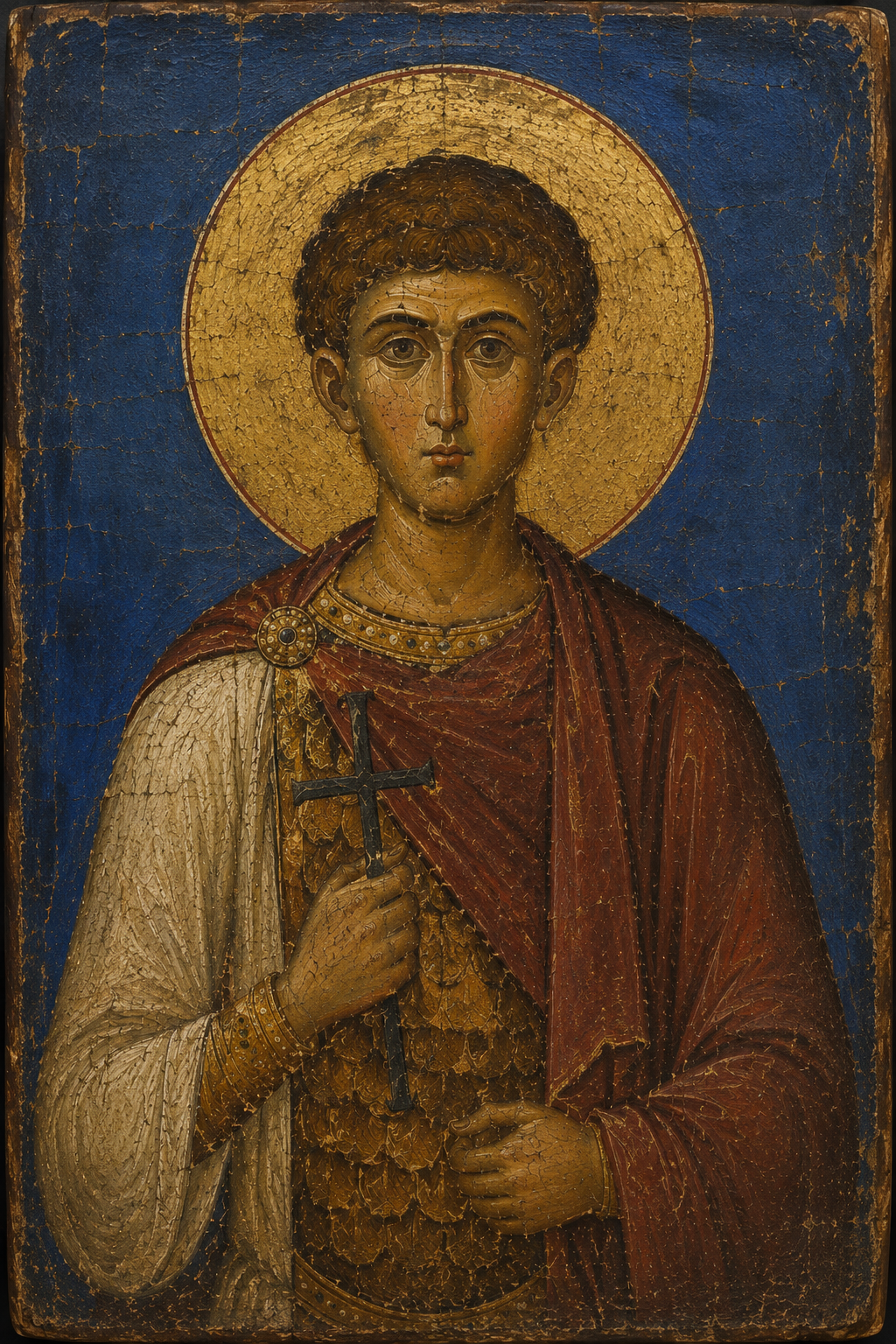
Saint Artemios of Antioch, also written Artemius, was a fourth-century Roman military commander, governor of Egypt, Great Martyr, and one of the most fascinating healing saints of the early Byzantine Church. He served at the highest levels of the Roman Empire under Constantius II, was entrusted with transporting precious apostolic relics to Constantinople, and was ultimately executed at Antioch during the reign of Julian the Apostate after refusing to abandon Christianity. The Orthodox Church commemorates him on October 20 and specifically preserves the ancient practice of invoking his intercession for people suffering from hernias.
Saint Artemios is especially meaningful for hernia patients, people awaiting surgery, those suffering from abdominal or groin disorders, soldiers, military officers, government officials, people facing persecution, Christians dealing with powerful opposition, and anyone needing courage to defend the faith publicly. These associations are not modern inventions. A remarkable seventh-century collection known as the Miracles of Saint Artemios records dozens of healings at his Constantinopolitan shrine, with an unusually large number involving hernias and ailments of the abdomen, groin, and male reproductive system.
His military story is equally striking. Artemios had already achieved significant authority within the Roman state, yet according to the received Byzantine tradition he publicly confronted Emperor Julian when Christians were being persecuted at Antioch. The confrontation cost Artemios his position, freedom, and eventually his life, making him an especially powerful saint for people who must choose between career security and fidelity to conscience.
Saint Artemios also has a fascinating connection with Saint Luke the Evangelist. The Greek Orthodox tradition records that Emperor Constantius entrusted Artemios with bringing Saint Luke's relics from Thebes to Constantinople, where they were placed in the great Church of the Holy Apostles. The Orthodox Life also credits him with transporting the relics of Saint Andrew from Patras, placing this military governor at the center of one of the great translations of apostolic relics in fourth-century Constantinople.
For someone facing surgery or a painful hernia, Saint Artemios provides an unusually specific ancient devotion. His Constantinopolitan shrine became a genuine healing center, where Christians prayed through the night near his relics and recorded cures generation after generation. The surviving miracle collection, assembled during the seventh century, gives modern readers an extraordinary window into how Christians more than thirteen centuries ago were already seeking Saint Artemios' intercession for precisely these physical conditions.
This prayer card is especially fitting for a person preparing for hernia surgery, abdominal surgery, treatment for a painful groin condition, military deployment, leadership responsibility, or a difficult confrontation in which Christian conviction may have consequences. It can also make a meaningful gift for soldiers, veterans, physicians, surgeons, men facing serious medical problems, Christians named Artemios or Artemius, and people devoted to the ancient military martyrs of the Church.
Each 2.5" x 4.25" prayer card is handmade in Austin, Texas and prepared prayerfully with each order. It is printed on museum-quality photo paper rather than cardstock, double-laminated for durability, and made while the recipient and their intentions are lifted before Christ in prayer, with Saint Artemios asked to intercede for them.
THE LIFE & STORY
Saint Artemios lived during one of Christianity's most dramatic historical transitions. He rose to prominence after the age of Constantine the Great, when Christianity had moved from persecution toward imperial recognition, yet he lived long enough to witness Emperor Julian's attempt to restore pagan religious dominance within the Roman Empire.
The historical Artemios was not merely a fictional soldier later created by hagiographers. Modern scholarship recognizes Flavius Artemius as a real fourth-century Roman official who served as dux Aegypti, the military commander or governor of Egypt, during the reign of Constantius II and was put to death during Julian's reign. The fuller Christian story of his confrontation with Julian, torture, visions, and martyrdom comes through later hagiographic tradition, so it is helpful to distinguish the historically documented official from details preserved within his received Church Life.
A HIGH-RANKING ROMAN MILITARY COMMANDER
The Orthodox tradition remembers Artemios as a distinguished soldier who received honors for courage and military service. He ultimately held authority over Egypt, one of the Roman Empire's wealthiest and strategically most important provinces.
His story is therefore quite different from that of a Christian martyr who possessed no public authority before persecution began. Artemios knew command, hierarchy, politics, military responsibility, and the expectations that accompany serving close to imperial power.
DUX AEGYPTI, GOVERNOR OF EGYPT
The Latin title dux Aegypti referred to a senior military command in Roman Egypt. The exact wording used in later Lives varies, with Artemios sometimes described as governor, commander, or viceroy, but his connection with high-level authority in Egypt is historically well established.
This makes Artemios especially meaningful for people carrying serious responsibility. Authority can provide prestige and influence, but it also creates situations in which conscience may eventually be tested by what superiors demand.
HE STRENGTHENED CHRISTIANITY IN EGYPT
The Orthodox Life remembers Artemios using his authority to support and strengthen Christianity in Egypt. Whatever historical complexities surrounded imperial Christianity during Constantius II's reign, later Byzantine memory clearly understood Artemios as a powerful official who placed his position at the service of Christian faith.
His life therefore offers a useful example for Christians working inside government, the military, business, or other institutions. Possessing influence is not necessarily contrary to holiness, but Christians eventually have to decide what their influence is serving.
THE RELICS OF SAINT LUKE
One of the most remarkable episodes associated with Artemios occurred when Emperor Constantius II ordered the translation of important apostolic relics to Constantinople. Greek Orthodox tradition specifically records Artemios bringing the relics of Saint Luke the Evangelist from Thebes to the imperial capital.
The relics were placed at the Church of the Holy Apostles, one of the most important churches of Constantinople. This gave Artemios a direct role in preserving and relocating some of the most precious physical links between the fourth-century Church and the apostolic generation.
THE RELICS OF SAINT ANDREW
The Orthodox Life further remembers Artemios bringing the relics of Saint Andrew the Apostle from Patras. These relics likewise entered the great apostolic shrine of Constantinople.
For someone interested in relics and early Christian history, this is an extraordinary detail. The man later invoked for healing had himself once been entrusted with carrying the bodies of men whose preaching had carried Christianity across the ancient world.
JULIAN THE APOSTATE
The political world changed radically when Julian became emperor in 361 AD. Raised within a Christian imperial family, Julian rejected Christianity and attempted to revive traditional Greco-Roman paganism while reducing Christian influence throughout the empire.
His policies did not simply return the empire to the religious situation existing before Constantine. Christianity had already become deeply embedded in society, so restoring pagan institutions inevitably created conflict with Christians who had spent decades living openly.
ARTEMIOS ARRIVES IN ANTIOCH
The Byzantine Life places Artemios in Antioch while Julian was persecuting Christian leaders who refused to cooperate with his religious program. Artemios saw bishops being tortured and publicly denounced the emperor's treatment of Christians.
This was an extraordinary confrontation because Artemios was not an anonymous private citizen yelling from a crowd. He was a man who understood imperial government from the inside and knew precisely what challenging an emperor could cost.
A SAINT FOR COURAGE OF CONSCIENCE
Saint Artemios therefore has a particularly strong connection with moral courage. Military courage is demonstrated when a person confronts physical danger, while moral courage appears when someone willingly risks career, status, reputation, or security because conscience will not allow silence.
That second kind of courage can sometimes be harder. Artemios could understand exactly how powerful Julian was and still refuse to treat imperial authority as something greater than God.
STRIPPED OF POWER
The emperor who had once benefited from Artemios' military service now regarded him as an opponent. According to the received Life, Julian ordered him tortured and imprisoned after Artemios openly condemned his actions.
The reversal is one of the strongest spiritual elements in the story. Titles can disappear, governments can change, powerful friends can become enemies, and years of public service cannot guarantee security when conscience collides with political power.
CHRIST APPEARS TO ARTEMIOS
The Orthodox Life preserves a vision during Artemios' imprisonment in which Christ appeared surrounded by angels and strengthened the suffering martyr. Christ assured Artemios that his confession had not gone unseen and that a heavenly crown awaited him.
The spiritual message is particularly important for someone enduring consequences for doing what they believe is right. Human institutions may remove honors, but Christianity measures success according to another tribunal entirely.
TORTURE DID NOT BREAK HIM
Julian again demanded that Artemios honor the pagan gods. Artemios refused, and the traditional account describes increasingly severe tortures intended to destroy his resistance.
The Church calls him Great Martyr, or Megalomartyr, because his witness was remembered not merely as a momentary execution but as an extended contest of suffering and steadfast confession.
MARTYRDOM AT ANTIOCH
Saint Artemios was finally executed by beheading at Antioch, probably around 362 AD. His feast on October 20 has preserved his memory in the Byzantine Church for centuries.
Antioch therefore became permanently attached to his name even though much of his public life had unfolded in Egypt. He is commonly called Saint Artemios of Antioch because the city became the setting of his final confession and martyrdom.
THE DEATH OF JULIAN
The traditional Life also connects Artemios with a prophecy that Julian's persecution would soon end. Julian died during his Persian campaign in 363 AD, only a short time after Artemios' execution.
Later Christian tradition surrounded Julian's death with dramatic stories, some of which are difficult to verify historically. The secure point is that Julian's reign ended unexpectedly after only about nineteen months as sole emperor, while devotion to the Christian martyr he had executed continued for centuries.
THE RELICS ARE TAKEN TO CONSTANTINOPLE
The Christian tradition says Artemios' relics were eventually transferred from Antioch to Constantinople. By the early Byzantine period they were venerated in the Church of Saint John the Forerunner in the Oxeia district, where an extraordinary healing cult developed around the martyr.
His relics rested in a crypt beneath the principal altar inside a lead sarcophagus. Sick people traveled to the church hoping for healing, especially from the illnesses for which Artemios became famous.
ONE OF BYZANTIUM'S GREAT HEALING SHRINES
During the sixth and seventh centuries, the shrine became a significant Christian healing center in Constantinople. Pilgrims attended vigils, prayed near Artemios' relics, used blessed oil, and sometimes slept within the church hoping to receive healing or guidance through a dream.
Forty-five miracle stories associated with the shrine were eventually gathered into the Miracles of Saint Artemios. Scholars date most of the collection to the seventh century, making it an exceptionally important source for understanding both Byzantine medicine and popular Christian devotion.
SAINT ARTEMIOS & HERNIAS
The connection between Saint Artemios and hernias is unusually strong and unusually well documented. The Orthodox Church in America explicitly states that he is invoked by those suffering from hernias, while the seventh-century miracle collection repeatedly describes people receiving healing for exactly this condition.
This is therefore not an internet-era assignment of an obscure medical patronage. Christians were traveling to Artemios' shrine seeking healing from hernias more than 1,300 years ago.
WHY HERNIAS?
The surviving miracle collection contains multiple stories of men and children suffering from different forms of hernia. Some accounts describe dramatic dream encounters with Artemios, while others involve prayer, vigils, blessed oil, or unexpected physical cures.
One scholarly survey of the collection notes that diseases of the male groin and reproductive organs form an unusually large percentage of Artemios' recorded miracles. His reputation therefore became highly specialized compared with many other healing saints.
A SAINT FOR HERNIA SURGERY
For someone awaiting inguinal, umbilical, femoral, incisional, or another type of hernia surgery, Saint Artemios has one of the strongest historically grounded Christian devotions available. A prayer card can be carried into the hospital, kept beside the bed during recovery, or given by a family member before surgery.
Seeking his intercession does not replace medical treatment. The ancient miracle stories themselves reveal Christians living within a world where physicians and healing shrines both existed, while modern devotion can similarly combine responsible medical care with prayer.
A SAINT FOR MEN'S HEALTH
Because so many of his ancient miracles involved ailments of the groin and male reproductive organs, Saint Artemios can also be particularly meaningful for men facing painful or embarrassing health problems they may be reluctant to discuss openly. The ancient Christian community clearly did not treat these conditions as subjects too undignified to bring before God.
That may itself be reassuring. Physical suffering remains worthy of prayer regardless of whether the illness is visible, easily discussed, or socially uncomfortable.
HEALING CHILDREN
The Miracles of Saint Artemios also includes children. One account concerns a boy suffering from a testicular hernia whose mother was directed toward Artemios' shrine and sought the martyr's intercession for her child.
Parents can therefore find a particularly ancient precedent for praying to Saint Artemios when a child faces surgery or a congenital hernia. His healing tradition was never limited only to adult soldiers or men.
HEALING BEYOND HERNIAS
Although hernias became his most distinctive medical association, Artemios' miracle tradition was not confined completely to them. The collection includes healing from other illnesses, including plague and different painful conditions.
His Kontakion consequently celebrates him more broadly as a martyr generous in performing miracles. The Church remembers the specialist patronage without restricting the saint's intercession to only one diagnosis.
SAINT ARTEMIOS & SAINT FEBRONIA
An especially interesting feature of the Constantinopolitan healing shrine is Saint Febronia of Nisibis, whose chapel stood beside Artemios' shrine. The seventh-century miracle accounts sometimes present Febronia as a kind of companion healer, particularly in stories involving women.
This gives the healing complex a fascinating place in Byzantine religious history. Men, women, and children came to a church dedicated to Saint John the Baptist and sought the intercession of Artemios and Febronia through vigils, prayer, relics, and sacred images.
WHEN A CHURCH FUNCTIONED LIKE A HEALING CENTER
The shrine of Artemios also tells us something important about early Christian attitudes toward sickness. Ill people were not hidden away as inconvenient because they entered the church, stayed for vigils, slept near the saint's relics, prayed, and expected the Christian community to take their suffering seriously.
The stories also preserve interaction with contemporary physicians. The result is an unusually vivid picture of Byzantine Christians seeking both ordinary medical help and divine mercy.
A SAINT FOR SOLDIERS
Before he became famous for healing, Artemios had been a professional military commander. His story therefore makes him a natural saint for soldiers, veterans, commanders, military families, and people carrying heavy responsibility within hierarchical organizations.
His life also adds a warning to military virtue. Discipline and obedience are valuable, but neither can become absolute when they require denial of Christ or cooperation with what conscience recognizes as evil.
A SAINT FOR MILITARY LEADERS
Artemios is especially interesting for senior officers because his life concerns more than battlefield courage. He governed territory, interacted with emperors, managed imperial responsibilities, transported treasured relics, and experienced the dangers of political power.
A Christian leader can therefore seek his intercession not merely for bravery but for wisdom, justice, integrity, and the courage to say no when authority crosses a moral boundary.
A SAINT FOR GOVERNMENT OFFICIALS
The same historical background makes Saint Artemios meaningful for people working in government. He understood how quickly political conditions can change and how an official can suddenly face a conflict between career and conscience.
It is best to describe this as a natural devotional association rather than inventing a universal formal title such as “patron saint of politicians.” His actual biography already provides a much stronger reason for public officials to appreciate him.
A SAINT FOR PERSECUTED CHRISTIANS
The heart of Artemios' martyrdom is his refusal to remain silent while other Christians were being harmed. According to his received Life, he intervened precisely because he saw Christian bishops suffering under imperial persecution.
His prayer card can therefore be especially meaningful for Christians facing government pressure, discrimination, public ridicule, workplace retaliation, or situations in which defending another believer may carry personal consequences.
DEFENDING OTHER CHRISTIANS COST HIM EVERYTHING
Artemios could have preserved himself by refusing to become involved. He instead spoke when the suffering belonged initially to other Christians.
That distinction gives his courage an important character. Christian solidarity sometimes means accepting risk because another member of the Church is being treated unjustly, rather than waiting until persecution reaches us personally.
SAINT ARTEMIOS AS MAR CHALLITA
Saint Artemios also has an important place in the Syriac and Lebanese Christian tradition, where he is known as Mar Challita, Mar Shalita, or Saint Challita. Lebanese Christian sources explicitly identify Challita with Artemios of Antioch, and numerous churches and old hermitages in Lebanon bear the name.
The connection is particularly visible in the Maronite world. Maronite church directories list multiple churches dedicated to Saint Challita in Lebanon, preserving a Syriac form of the martyr's name far from the Greek-speaking Byzantine tradition in which he is normally called Artemios.
AN EASTERN SAINT WITH AN UNUSUALLY WIDE LEGACY
This means the same martyr can appear under different names depending upon the Christian community. A Greek Orthodox Christian may know him as Artemios the Great Martyr, while a Lebanese Christian may recognize Mar Challita immediately.
That diversity makes him particularly interesting for an Eastern Christian prayer card. His story crosses Greek, Egyptian, Antiochian, Byzantine, and Syriac Christian worlds.
HOW HISTORICAL IS THE STORY OF SAINT ARTEMIOS?
Saint Artemios is unusual because there really was a powerful Roman official named Flavius Artemius serving as dux Aegypti under Constantius II, and ancient non-hagiographic sources confirm his execution during Julian's reign. The fuller martyrdom narrative developed later, and modern scholars note important differences between the historical evidence and the later Christian Passion.
For a devotional product page, the best wording is therefore to distinguish between what history securely confirms and what the Church's received hagiographic tradition preserves. His Roman office, service under Constantius, death under Julian, early cult, Constantinopolitan relic shrine, and seventh-century healing tradition have substantial historical evidence, while individual conversations, tortures, visions, and speeches belong to his later sacred Life.
THE MIRACLES ARE HISTORICALLY IMPORTANT DOCUMENTS
Whatever one concludes about individual supernatural cures, the Miracles of Saint Artemios themselves are real late-antique documents. The Oxford Cult of Saints database dates the healing accounts principally between the late sixth and seventh centuries and identifies the collection as assembled around 658 to 668 AD.
This is important because it proves something beyond doubt about his devotion. Byzantine Christians were genuinely traveling to Artemios' shrine, keeping vigils, invoking his name, and associating him particularly with hernia healing more than a millennium ago.
FEAST DAY
Saint Artemios the Great Martyr is commemorated on October 20 in the Byzantine Orthodox calendar. The Greek Orthodox liturgical readings for that day explicitly name the commemoration of the Holy Great Martyr Artemios.
The feast provides a natural annual day for someone devoted to Artemios to attend Divine Liturgy, ask his intercession for healing, and pray particularly for people facing surgery, military danger, or persecution.
ICONOGRAPHY
Saint Artemios is normally depicted as a military martyr, wearing armor or richly decorated military clothing and often holding a cross, spear, sword, or shield. These elements recall both his Roman command and the martyr's victory that the Church considers greater than any earthly military success.
Some icons show him as a mature bearded commander rather than a youthful soldier. That fits his traditional identity as an experienced imperial official who had already held substantial authority before his confrontation with Julian.
PRAYERS
Saint Artemios has established Byzantine liturgical hymns, so there is no need to invent a prayer for him. His Troparion praises the martyr for receiving an incorruptible crown through suffering and asks for salvation through his intercession, while his Kontakion calls him a victorious martyr and generous miracle-worker.
A short established line that works beautifully on the back of a prayer card is:
“Through his intercessions, save our souls!”
Another simple traditional form for personal devotion is “Holy Great Martyr Artemios, pray to God for us.” Someone facing hernia surgery can then ask specifically for a successful procedure, protection from complications, relief from pain, wisdom for the medical team, and patient recovery according to God's will.
FAQ
Who was Saint Artemios of Antioch? Saint Artemios was a fourth-century Roman military commander and governor of Egypt who was executed during the reign of Julian the Apostate. Byzantine Christian tradition venerates him as a Great Martyr who publicly defended Christianity and refused to renounce the faith.
Is Saint Artemios the same as Saint Artemius? Yes, Artemios and Artemius are different English transliterations of the same name. Greek-oriented sources usually prefer Artemios, while Latinized sources commonly use Artemius.
When did Saint Artemios live? He lived during the fourth century and served under Constantius II before dying during Julian's reign. His death is generally placed around 362 AD.
When is Saint Artemios' feast day? His feast day is October 20 in the Byzantine tradition. Greek Orthodox liturgical sources commemorate him that day as the Holy Great Martyr Artemios.
Was Saint Artemios really a Roman military commander? Yes, this part of his biography has unusually strong historical support. Modern scholarship identifies the historical Flavius Artemius as dux Aegypti under Constantius II.
What does dux Aegypti mean? It was a senior Roman military command associated with Egypt. Later Christian Lives describe Artemios in terms such as governor or ruler of Egypt, but dux Aegypti is the more historically precise title.
Why is he called Saint Artemios of Antioch if he governed Egypt? Antioch is associated with his martyrdom rather than the majority of his administrative career. According to Christian tradition, he confronted Julian there and was eventually executed in the city.
Did Saint Artemios transport Saint Luke's relics? Greek Orthodox tradition says Emperor Constantius sent Artemios to bring Saint Luke's relics from Thebes to Constantinople. They were placed in the Church of the Holy Apostles.
Did Saint Artemios also transport Saint Andrew's relics? The Orthodox Life says he brought Saint Andrew's relics from Patras as well. This mission became one of the most remarkable responsibilities attributed to Artemios before his governorship and martyrdom.
Why was Saint Artemios killed? The received Byzantine Life says he publicly condemned Julian's persecution of Christians and refused demands to honor pagan gods. Julian consequently ordered his torture and eventual execution.
How did Saint Artemios die? He was ultimately beheaded according to the Orthodox tradition. His death took place at Antioch during Julian's reign.
Is Saint Artemios a Great Martyr? Yes, Byzantine liturgical tradition explicitly calls him a Great Martyr, or Megalomartyr. The title reflects both the severity of his suffering and the importance of his witness within the Church.
Why is Saint Artemios associated with hernias? His ancient Constantinopolitan shrine became famous for healing hernias, and the surviving seventh-century Miracles of Saint Artemios contains numerous stories of such cures. The OCA explicitly states that people suffering from hernias invoke his intercession.
Is he actually a patron for hernia patients? It is historically accurate to say that Saint Artemios is traditionally invoked for hernias. That wording comes directly from an Orthodox Church source and is stronger than simply assigning him a modern patronage label.
Can I pray to Saint Artemios before hernia surgery? Yes, and this is one of the most historically grounded uses of devotion to him. Christians were already seeking his intercession for hernia healing at his Constantinopolitan shrine during the early Byzantine period.
Is Saint Artemios associated with men's health? Yes, particularly through the seventh-century healing accounts involving hernias and illnesses of the male groin and reproductive organs. Scholars studying the collection have noted how prominent these conditions are within his miracle tradition.
Did Saint Artemios heal children? His ancient miracle collection includes healings involving children, including a boy suffering from a testicular hernia. The account describes his mother seeking the saint's help for her son.
Was there a major shrine dedicated to Saint Artemios? His relics were venerated at the Church of Saint John the Forerunner in the Oxeia district of Constantinople. The shrine became an important healing center in the sixth and seventh centuries.
Where were Saint Artemios' relics kept? Historical sources describing the shrine place his relics in a lead sarcophagus in a crypt beneath the main altar of the Church of Saint John the Forerunner. The medieval church no longer survives.
What were the Miracles of Saint Artemios? They are a collection of approximately forty-five late-antique healing stories associated with his shrine in Constantinople. The collection was assembled principally in the seventh century and is important both for Church history and for the history of medicine.
Did people sleep inside his church hoping to be healed? Yes, some pilgrims participated in overnight vigils and a practice known as incubation, sleeping in the church while praying for healing or a dream encounter with the saint. The surviving miracle accounts provide unusually detailed descriptions of this devotional practice.
Is Saint Artemios good for soldiers? Yes, because he was himself a senior military commander and later became a military martyr in Byzantine tradition. His Life is especially meaningful for soldiers who want courage and obedience to remain subordinate to Christian conscience.
Can military officers pray to Saint Artemios? Yes, and his high rank makes him particularly relevant to people who carry command responsibility. His story raises the Christian question of what a leader should do when authority requires something conscience cannot accept.
Can government officials pray to Saint Artemios? Yes, because he personally held major governmental and military authority in Egypt. It is better to describe him as especially meaningful for public officials than to claim a universal formal patronage not clearly established by the Church.
Is Saint Artemios associated with courage? Courage is central to his Life because the Church remembers him confronting Emperor Julian publicly despite understanding the likely consequences. His courage involved both military experience and willingness to sacrifice political power for Christian conviction.
Is Saint Artemios associated with persecuted Christians? Yes, particularly because his received Life says he intervened when he saw other Christian leaders being tortured. His martyrdom consequently became a witness not only to personal faith but to solidarity with persecuted Christians.
Who was Julian the Apostate? Julian was Roman emperor from 361 to 363 and attempted to restore pagan religious institutions after decades of increasing imperial support for Christianity. Artemios' martyrdom tradition is set within this conflict.
Is Saint Artemios historically documented? Yes, the fourth-century official Artemius is historically attested independently of his later Christian Life. The detailed martyrdom narrative comes from later hagiographic texts, so the strongest product description distinguishes between those two layers of evidence.
Is Saint Artemios also called Mar Challita? Yes, he is known in Syriac and Lebanese Christian tradition as Mar Challita or Mar Shalita. Churches and old Christian sites in Lebanon continue bearing that name.
Is Saint Challita the same saint as Artemios of Antioch? In this Lebanese and Syriac usage, yes. Christian sources in Lebanon explicitly identify Saint Challita with Saint Artemios, and Maronite churches continue using the Challita form of the name.
Do Maronites know Saint Artemios? Lebanese Maronite tradition preserves him under the name Saint Challita or Mar Challita. Multiple Maronite churches in Lebanon are dedicated under that name, showing that his devotion extends beyond the Greek Byzantine tradition.
Is there a traditional prayer to Saint Artemios? Yes, he has established Byzantine Troparion and Kontakion hymns for October 20. The texts celebrate his martyrdom, victory over evil, miracles, and continuing intercession.
What does Saint Artemios teach about authority? His story teaches that authority can be used for good but can never replace God as the final standard of conscience. The same man who once exercised imperial power accepted death when obedience to earthly power became incompatible with Christian faith.
What does Saint Artemios teach about courage? He demonstrates that courage is not limited to surviving physical danger. The deeper test can be whether a successful person is willing to lose position and security rather than remain silent when faith requires speaking.
What does Saint Artemios teach about illness? His healing cult shows that Christians have long brought even painful and deeply personal physical problems before God. The ancient records surrounding his shrine make especially clear that there is nothing shameful about asking the Church's prayers for illnesses involving the abdomen, groin, or reproductive system.
What is the main message of Saint Artemios of Antioch's life? Saint Artemios' life brings together military courage, public responsibility, martyrdom, relics, and one of the most unusual healing traditions in Byzantine Christianity. The powerful Roman commander who governed Egypt and carried apostolic relics to Constantinople eventually stood against Emperor Julian when Christianity was again under pressure, surrendered the security his rank had once provided, and accepted martyrdom rather than compromise. Centuries later, Christians crowded around his relics in Constantinople asking for healing, especially from hernias and painful conditions of the groin, leaving behind dozens of written miracle accounts that still survive. His prayer card therefore speaks to two very different human battles at once: the struggle to remain faithful when worldly power becomes threatening, and the struggle to trust God while the body is suffering.
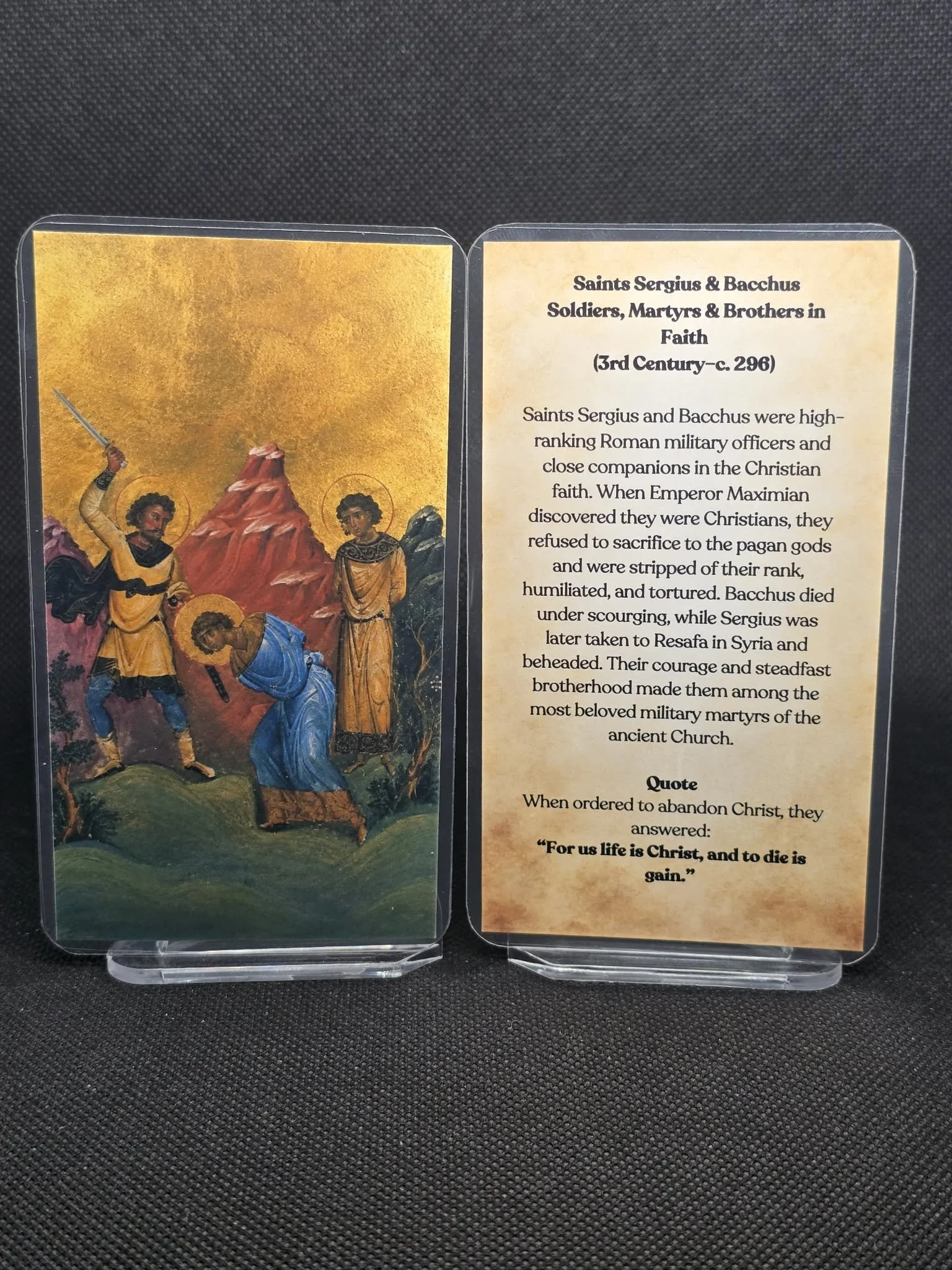
Saints Sergius and Bacchus were early Christian military martyrs whose friendship, courage, and refusal to place imperial loyalty above Jesus Christ made them among the most beloved soldier-saints of the ancient Christian East. According to the received tradition, both men held important positions in the Roman military establishment under Emperor Maximian. When their Christian faith was exposed and they refused to sacrifice to the pagan gods, they lost their rank, endured deliberate public humiliation and torture, and ultimately chose martyrdom rather than deny Christ. Their feast is celebrated on October 7 in both Byzantine Orthodox tradition and the Catholic calendar.
Saints Sergius and Bacchus are especially meaningful for soldiers, veterans, military families, close Christian friends, brothers in faith, men serving together in dangerous professions, Christians facing ridicule or persecution, and anyone asking for courage to remain faithful when loyalty to Christ becomes costly. Their connection with military life is ancient, while their joint liturgical commemoration emphasizes that they faced persecution together rather than as isolated individuals. The Greek Orthodox Kontakion calls them “two brethren in the Faith,” while another Orthodox hymn remembers them acting “with one heart.”
Their story is also particularly powerful for men who understand the value of brotherhood formed through shared hardship. Sergius and Bacchus possessed rank, status, and the favor of powerful men, yet when they were stripped of those honors they still had Christ and one another. Bacchus died first under torture, and Sergius then continued toward his own martyrdom without abandoning the faith they had confessed together. Their relationship became such a strong image of spiritual brotherhood that later Byzantine prayers for ritual brotherhood invoked Sergius and Bacchus as examples of men made brothers through faith rather than biological kinship.
For soldiers and veterans, the story contains an especially important Christian distinction. Sergius and Bacchus were not condemned because they lacked discipline or loyalty, but because they recognized that military and political obedience have limits when an earthly ruler commands something contrary to God. The men who had been trusted within the imperial system accepted disgrace rather than allow the emperor to determine whom they would worship.
This prayer card can make a meaningful gift for active-duty military personnel, veterans, military academy graduates, brothers serving together, police officers, first responders, close male friends, godbrothers, men entering dangerous work, Christians experiencing persecution, or anyone trying to remain faithful when social acceptance depends upon compromise. It is also especially appropriate for two friends who want their friendship centered upon Christ rather than merely shared interests, because the Church remembers Sergius and Bacchus not simply as companions but as companions whose bond endured persecution and martyrdom.
Each 2.5" x 4.25" prayer card is handmade in Austin, Texas and prepared prayerfully with each order. It is printed on museum-quality photo paper rather than cardstock, double-laminated for durability, and made while the recipient and their intentions are lifted before Christ in prayer, with Saints Sergius and Bacchus asked to intercede for them.
THE LIFE & STORY
Saints Sergius and Bacchus are traditionally placed in the late third or early fourth century, during the period of Roman persecution associated with Maximian. The exact year varies among liturgical and hagiographic traditions, with Greek Orthodox sources placing their martyrdom around 296 and other traditions closer to the opening years of the fourth century. What remains consistent is their identity as high-ranking military Christians who were punished after refusing pagan sacrifice.
The surviving Passion of Sergius and Bacchus was written after their lifetime, probably in late antiquity rather than as a contemporary court record. Modern scholarship notes that their cult is securely visible by the early fifth century at Resafa, where archaeological evidence confirms an early shrine later replaced by a larger martyrium. The best historical wording is therefore to distinguish between the ancient and firmly established cult of the martyrs and the detailed narrative preserved in their later hagiographic Passion.
HIGH-RANKING MEN IN THE ROMAN MILITARY
The Orthodox tradition remembers Sergius and Bacchus as men occupying important positions in the imperial military establishment. Maximian trusted them without realizing they were Christians, and their prominence appears to have provoked jealousy among others who reported that the two officers refused to participate in pagan religious ceremonies.
Their Christianity therefore existed inside an environment where political loyalty and public religion were closely connected. Refusing sacrifice was not viewed merely as a private religious preference because Roman officials could interpret rejection of the gods as rejection of the imperial order itself.
ORDERED TO SACRIFICE TO THE PAGAN GODS
The emperor decided to test the accusation himself and ordered Sergius and Bacchus to participate in pagan sacrifice. Both refused and openly confessed that they worshiped the one true God.
That refusal transformed successful officers into criminals almost immediately. Rank that had once brought prestige could no longer protect them because the very authority that had rewarded their service now demanded something their consciences would not permit.
STRIPPED OF THEIR MILITARY HONORS
Maximian ordered their military insignia, belts, gold ornaments, and rings removed. These objects were not merely decorative because they publicly represented the rank and identity the two men had earned within the imperial system.
The humiliation therefore struck deliberately at their identity as honored military men. Everything that told the public, “These men possess status and authority,” was taken from them before the crowd.
PUBLICLY HUMILIATED FOR CHRIST
The traditional Passion says Sergius and Bacchus were dressed in feminine clothing, iron chains were placed around their necks, and they were paraded publicly to ridicule them. The purpose was psychological as much as physical: the emperor wanted men accustomed to military honor to experience public shame until they preferred conformity over humiliation.
They refused to allow mockery to control their confession of faith. Their story therefore speaks powerfully to Christians who fear ridicule, professional embarrassment, loss of reputation, or public rejection more than physical danger.
A PRAYER CARD FOR COURAGE UNDER RIDICULE
Modern Christians will rarely face the exact punishment described in their Passion, but the pressure behind it remains recognizable. People can be pushed toward compromise because they fear becoming the person everyone mocks, excludes, or treats as foolish.
Sergius and Bacchus demonstrate a form of courage distinct from battlefield bravery. A soldier can become accustomed to physical danger and still find social humiliation difficult, yet these martyrs endured both because their identity in Christ had become more important than public approval.
THE EMPEROR TRIED TO WIN THEM BACK
According to the Orthodox account, Maximian did not immediately give up on two men who had been valuable to him. He summoned them again and urged them to abandon Christianity and return to the traditional gods of the empire.
The temptation therefore involved restoration, not merely relief from suffering. They could regain status and return to the life they had known if they would make the required religious compromise.
They refused again.
SENT TO ANTIOCHUS
Sergius and Bacchus were eventually placed under the authority of Antiochus, governor of the eastern Syrian region. The cruelty of the situation was intensified by the fact that, according to their Life, Antiochus owed his own advancement to Sergius and Bacchus and therefore personally knew the men he was being required to condemn.
The Orthodox account even remembers Antiochus addressing them as his fathers and benefactors and pleading with them to save themselves. Their answer made clear that preserving earthly life was no longer their highest goal.
BACCHUS IS BEATEN TO DEATH
Bacchus was subjected to a severe beating and died from his injuries. The Greek Orthodox tradition remembers this as the first of the pair's martyrdoms, after which Sergius was forced to continue the ordeal without his companion physically beside him.
This gives their friendship an especially painful dimension. Sergius did not simply face his own approaching death because he first had to endure the loss of the man who had confessed Christ beside him.
SERGIUS CONTINUES ALONE
After Bacchus' death, Sergius was subjected to further torture. The Orthodox Life says iron sandals fitted with nails were placed on his feet and he was forced onward before finally being taken to Resafa in Syria, where he was executed by beheading.
The man whose story had been inseparable from Bacchus now had to complete his martyrdom outwardly alone. Yet the Church continued commemorating them together, joining their names permanently in worship.
BROTHERS IN THE FAITH
The Greek Orthodox liturgical tradition describes Sergius and Bacchus as brethren in the Faith. That language makes Christian brotherhood one of the most natural devotional themes for their prayer card.
Their bond was not based simply upon shared hobbies, military assignments, or social status. When rank disappeared and suffering began, their common allegiance to Christ remained.
For Christian men, that provides a demanding model of friendship. A good friend does more than accompany someone toward comfort because sometimes friendship means helping another person remain faithful when compromise would be easier.
A PRAYER CARD FOR CHRISTIAN FRIENDSHIP
Saints Sergius and Bacchus are especially meaningful for close friends who want their friendship to strengthen rather than weaken their faith. Their liturgical memory emphasizes courage together, shared confession, and spiritual brotherhood.
This can make the card particularly meaningful between longtime friends, godbrothers, military brothers, fraternity brothers who share Christian faith, men in a parish brotherhood, or two people who have helped one another survive a difficult period.
The deeper question behind the card is simple: Does this friendship help both people become more faithful to Christ?
A PRAYER CARD FOR BROTHERS
Biological brothers can also connect strongly with Sergius and Bacchus even though the martyrs themselves were not remembered as blood brothers. Their story demonstrates another kind of brotherhood formed through shared belief, loyalty, sacrifice, and suffering.
For brothers who have served together, endured family difficulties together, returned to the faith together, or simply want Christ to remain at the center of their relationship, Sergius and Bacchus provide a compelling shared devotion.
A PRAYER CARD FOR SOLDIERS SERVING TOGETHER
Military service forms relationships under conditions unlike ordinary friendship. Training, deployment, danger, separation from family, fear, exhaustion, responsibility for another person's safety, and sometimes combat can create bonds that remain for life.
Saints Sergius and Bacchus understood military hierarchy and the mutual dependence of people serving inside it. Their story adds a Christian dimension to military brotherhood by insisting that loyalty to a fellow soldier should ultimately help both men remain loyal to God.
MILITARY OBEDIENCE & CHRISTIAN CONSCIENCE
One of the most significant parts of their story is that Sergius and Bacchus were punished by the very system in which they had successfully served. They did not reject discipline merely because they disliked authority because the conflict emerged only when imperial command required pagan worship.
Their witness therefore establishes a Christian hierarchy of loyalties. Country, commanders, military units, friends, and institutions can deserve genuine loyalty, but God remains above them all.
A SAINTLY PAIR FOR VETERANS
Veterans often understand that leaving military service does not erase the identity and relationships formed there. Sergius and Bacchus can therefore become meaningful saints not only during active duty but long afterward.
Their story speaks to loyalty, memory, fallen companions, courage under pressure, and the question of what remains when rank and uniform are eventually removed. In their case, the answer was faith and the brotherhood formed through it.
RESAFA BECOMES SERGIOPOLIS
Saint Sergius' burial place at Resafa in Syria became one of the great pilgrimage centers of Late Antiquity. Greek Orthodox sources note that pilgrims came from as far away as Western Europe, and the city became known as Sergiopolis in his honor.
Archaeological scholarship confirms a shrine at Resafa by the early fifth century, with evidence of an earlier mud-brick sanctuary beneath a later martyrium. This gives the cult of Sergius particularly strong material evidence from Late Antiquity.
ONE OF THE GREAT MILITARY SAINTS OF SYRIA
Saint Sergius became particularly beloved in Syria, Mesopotamia, and Christian Arabia. His shrine stood in a strategically important frontier landscape, and devotion to him became strongly associated with military protection.
Bacchus remained inseparably joined with him in the liturgical feast, even as Sergius' shrine at Resafa became the more geographically famous center of pilgrimage.
This widespread eastern devotion helps explain why Sergius and Bacchus appear so frequently in military dress within Byzantine iconography.
JUSTINIAN & THE CHURCH OF SAINTS SERGIUS AND BACCHUS
Their cult became important even at the highest level of the Byzantine Empire. Emperor Justinian I built a major church dedicated to Saints Sergius and Bacchus in Constantinople during the sixth century, a building known today as the Little Hagia Sophia. Scholarly work on the church places its construction within Justinian's reign and shows the importance their cult had achieved in the imperial capital.
Art historians have even proposed that Justinian's devotion to Sergius and Bacchus reflected their role as protectors of the empire's eastern frontier. Their identity as military saints had therefore expanded from the story of two individual soldiers into a broader Byzantine idea of heavenly protection.
AN ANCIENT ICONIC PAIR
Sergius and Bacchus were repeatedly portrayed together, usually as youthful military martyrs standing side by side. Their matched appearance emphasizes the unity of their witness, while crosses identify their martyrdom and military clothing recalls their earthly vocation.
The Sinai tradition preserves remarkable images of the pair, including a thirteenth-century double-sided icon of Saints Sergius and Bacchus on one side and the Virgin Hodegetria on the other. The Princeton and University of Michigan Sinai archive documents the icon and its continued preservation at Saint Catherine's Monastery.
CHRIST BETWEEN THE TWO MARTYRS
One famous early icon traditionally associated with Sinai depicts Sergius and Bacchus side by side with Christ above and between them. Art-historical scholarship has discussed this image among the important early icons connected with Saint Catherine's Monastery.
The composition gives an especially appropriate spiritual reading of their friendship. Christ is not merely another person added to the pair because He is the One who stands over, unites, and gives meaning to their relationship.
That is precisely what makes their card meaningful for Christian friendship today.
WERE SAINTS SERGIUS AND BACCHUS A COUPLE?
A modern interpretation popularized in the late twentieth century argued that Sergius and Bacchus should be understood as a romantic or sexual couple and connected them with Byzantine rites of adelphopoiesis. That interpretation became widely repeated online, but it goes beyond what the ancient evidence securely establishes.
The Church's traditional liturgy calls them martyrs, companions, and brethren in the Faith, while scholarship on Byzantine adelphopoiesis generally rejects identifying the ceremony simply as a same-sex marriage rite. A Cambridge scholarly discussion notes that the balance of academic opinion rejected the argument that these brotherhood ceremonies were essentially marriages and instead understands them as rites creating spiritual or ritual brotherhood.
Ancient Christian texts can use extremely affectionate language for spiritual friendship without implying a sexual relationship. The historically responsible product-page wording is therefore to describe Sergius and Bacchus as close companions, fellow soldiers, martyrs, and spiritual brothers in faith, without assigning them a sexual relationship the sources do not establish.
WHY THEY ARE IMPORTANT FOR CHRISTIAN MEN
Modern male friendship can sometimes become emotionally shallow, revolving only around entertainment, sports, work, or shared nostalgia. Sergius and Bacchus represent something deeper because their companionship survived the point at which following Christ became dangerous.
A Christian friend should be someone who can stand beside another person when faith becomes difficult. He should be willing to discourage sin, strengthen courage, tell the truth, pray, remain loyal during suffering, and point his friend back toward Christ.
That kind of friendship is demanding, but it is much closer to the brotherhood reflected in the liturgical memory of Sergius and Bacchus.
A SAINTLY PAIR FOR COURAGE
Courage appears throughout their story, but the most important courage was not physical combat. They endured loss of military status, public mockery, threats from people they knew, torture, separation, and death without changing whom they worshiped.
Their card is therefore fitting for anyone who needs courage to say no when everyone else says yes, especially when compromise would protect reputation, career, relationships, or safety.
A SAINTLY PAIR FOR CHRISTIANS UNDER PERSECUTION
The martyrs' lives naturally connect with Christians facing persecution because the accusation against them was specifically religious. Their professional success did not protect them once their faith was treated as incompatible with imperial demands.
For persecuted Christians today, Sergius and Bacchus offer the memory of two people who discovered that earthly security can disappear quickly while Christ remains.
THEIR FEAST DAY
Saints Sergius and Bacchus are commemorated together on October 7. The date is maintained by the Greek Orthodox Archdiocese, the Orthodox Church in America, and Vatican News.
Their joint feast is itself meaningful because the Church does not separate their memory even though Bacchus died before Sergius. The two men who confessed Christ together continue to be named together in worship centuries later.
PRAYERS
Saints Sergius and Bacchus already possess established Byzantine liturgical hymns, so there is no need to invent a new prayer for them. Their Troparion praises God for strengthening the martyrs against their adversaries and asks for salvation through their intercession, while their Kontakion remembers their shared courage and unity.
A short established line especially suitable for devotional use is:
“Through their intercessions, save our souls!”
Their Kontakion also provides one of the most beautiful descriptions of their unity, remembering Sergius and Bacchus acting “with one heart.” That phrase makes the liturgical text particularly fitting for a prayer card given between brothers, close friends, fellow soldiers, or men trying to help one another remain faithful.
FAQ
Who were Saints Sergius and Bacchus? Sergius and Bacchus were early Christian martyrs traditionally remembered as high-ranking Roman military men who were exposed as Christians and ordered to sacrifice to pagan gods. They refused, lost their military honors, endured torture, and died rather than deny Christ.
When did Saints Sergius and Bacchus live? They are traditionally placed during the reign of Emperor Maximian in the late third or early fourth century. Exact dates differ among later sources, so it is safest to place their martyrdom around the turn of the fourth century rather than insist upon one universally certain year.
When is their feast day? Saints Sergius and Bacchus are celebrated on October 7. The same date appears in Orthodox and Catholic calendars.
Were Sergius and Bacchus soldiers? Yes, their received Christian tradition remembers both men in high-ranking military positions under Maximian. Their later Byzantine cult also developed a strong association with military protection.
Are Saints Sergius and Bacchus good saints for soldiers? Yes, this is one of their strongest historically grounded associations. They were remembered as military martyrs and later became important protectors within Byzantine military devotion.
Why were they arrested? They were accused of refusing to honor the pagan gods expected within Roman public and military life. When Maximian ordered them to sacrifice, they openly confessed the one God and refused.
Why were their military belts removed? Their insignia represented rank and honor within the Roman system. Stripping those objects from them publicly demonstrated that the emperor was removing their status before subjecting them to further humiliation.
Why were they dressed in women's clothing? Their traditional Passion says this was done deliberately to mock and humiliate two honored military men before the public. The important spiritual point is that ridicule failed to make them deny Christ.
How did Saint Bacchus die? Bacchus was brutally beaten and died as a result of the torture. Sergius then continued through additional suffering before receiving his own martyrdom.
How did Saint Sergius die? Sergius was taken to Resafa in Syria and ultimately beheaded. His tomb there later became one of the most important pilgrimage shrines of the Christian East.
What was Sergiopolis? Resafa became so closely associated with Saint Sergius that the city came to be called Sergiopolis. Pilgrims traveled long distances to venerate him there.
Is there archaeological evidence for their ancient cult? Yes, particularly at Resafa. Archaeological research has found an early shrine beneath a later martyrium, with the cult securely visible by the early fifth century.
Were Sergius and Bacchus biological brothers? The traditional sources do not present them as biological brothers. Byzantine liturgy instead calls them brethren in the Faith, emphasizing spiritual brotherhood.
Are they good saints for close friends? Yes, as a devotional association rooted in their shared martyrdom and liturgical identity as brethren in faith. They provide a strong Christian image of friendship that helps another person remain loyal to Christ.
Are they patrons of friendship? It is better not to claim a universal formal patronage that the historic Churches do not clearly assign. Their ancient story and liturgical texts nevertheless make them exceptionally meaningful for Christian friendship, loyalty, brotherhood, and companionship during hardship.
Were Saints Sergius and Bacchus gay? Modern writers have proposed that interpretation, but the surviving evidence does not establish a sexual relationship between them. Traditional Christian sources remember them as companions and brothers in faith, while scholarship has generally rejected treating Byzantine ritual brotherhood as equivalent to same-sex marriage.
Were Sergius and Bacchus married to each other? There is no historical basis for saying that they were married to one another. The modern argument arose partly from interpretations of later Byzantine brotherhood rites, but scholarly discussion generally distinguishes those rites from marriage.
Why are they almost always shown together in icons? Their martyrdom tradition and feast are inseparable, so iconography commonly presents them side by side. This emphasizes their shared confession and continuing identity as a pair within Christian worship.
Why do they wear military clothing in icons? Their clothing refers to their remembered service in the Roman military. Crosses or martyr's symbols identify the greater victory for which the Church honors them, their willingness to die for Christ.
Is Christ sometimes shown between them? Yes, one famous early icon associated with the Sinai tradition places Christ above and between the martyrs. The composition naturally emphasizes that Christ stands at the center of their shared witness.
Is there an icon of them at Saint Catherine's Monastery on Mount Sinai? Yes. The Sinai archive documents a thirteenth-century double-sided icon showing Saints Sergius and Bacchus together, with the Hodegetria on the reverse.
Did Emperor Justinian honor Saints Sergius and Bacchus? Yes, a major sixth-century church dedicated to them was built in Constantinople during Justinian's reign. The building survives today and is commonly known as the Little Hagia Sophia.
Why were they important to Byzantine soldiers? Their own military identity and martyrdom made them natural military saints, and later Byzantine devotion treated them as heavenly protectors. Scholars have even connected Justinian's devotion to them with protection of the empire's eastern frontier.
Can veterans pray to Saints Sergius and Bacchus? Yes. Their story speaks especially strongly to people who understand military duty, brotherhood, sacrifice, loss of rank, and the lasting bonds formed through difficult service.
Can police officers and first responders pray to them? Yes, particularly through the broader themes of courage, loyalty, dangerous service, and Christian conscience. This is best described as a meaningful devotional association rather than an exclusive formal patronage.
Can I give this card to my best friend? Yes. Their identity as brethren in faith makes the card particularly meaningful between close Christian friends who want their friendship to help both men remain faithful to Christ.
Can I give this card to my brother? Yes. Although Sergius and Bacchus were spiritual rather than biological brothers, the devotion communicates loyalty, courage, prayer for one another, and faithfulness during hardship.
Can this card be given before military deployment? Yes. Their military history and later association with protection make it especially fitting for a deployment, enlistment, military graduation, or difficult assignment.
What do Saints Sergius and Bacchus teach about friendship? Their story teaches that the deepest friendship does more than provide companionship because it helps each person remain faithful when obedience to Christ becomes costly. Their liturgical remembrance as brethren in faith gives that lesson a particularly strong foundation.
What do they teach about courage? They demonstrate that courage includes enduring ridicule, loss of status, and social rejection as well as physical suffering. The officers who once possessed imperial prestige remained faithful even after every visible sign of that prestige was removed.
What do they teach about military obedience? Their story teaches that legitimate earthly authority deserves respect but never replaces God. When ordered to perform idolatry, Sergius and Bacchus accepted the consequences of refusal rather than violate Christian conscience.
What is the main message of Saints Sergius and Bacchus? Their lives teach that Christian brotherhood becomes most visible when remaining together in faith costs something. Sergius and Bacchus possessed military rank, imperial favor, public respect, and promising futures, but when those things were offered back only at the price of denying Christ, they chose Christ instead. They were stripped of their honors, mocked publicly, separated by Bacchus' death, and finally united again in the Church's memory as martyrs whose friendship had been tested by something far greater than ordinary hardship. Their story makes them especially powerful saints for soldiers, veterans, brothers, close Christian friends, and anyone who needs the courage to say, “I will not abandon Christ merely because remaining faithful has become expensive.”
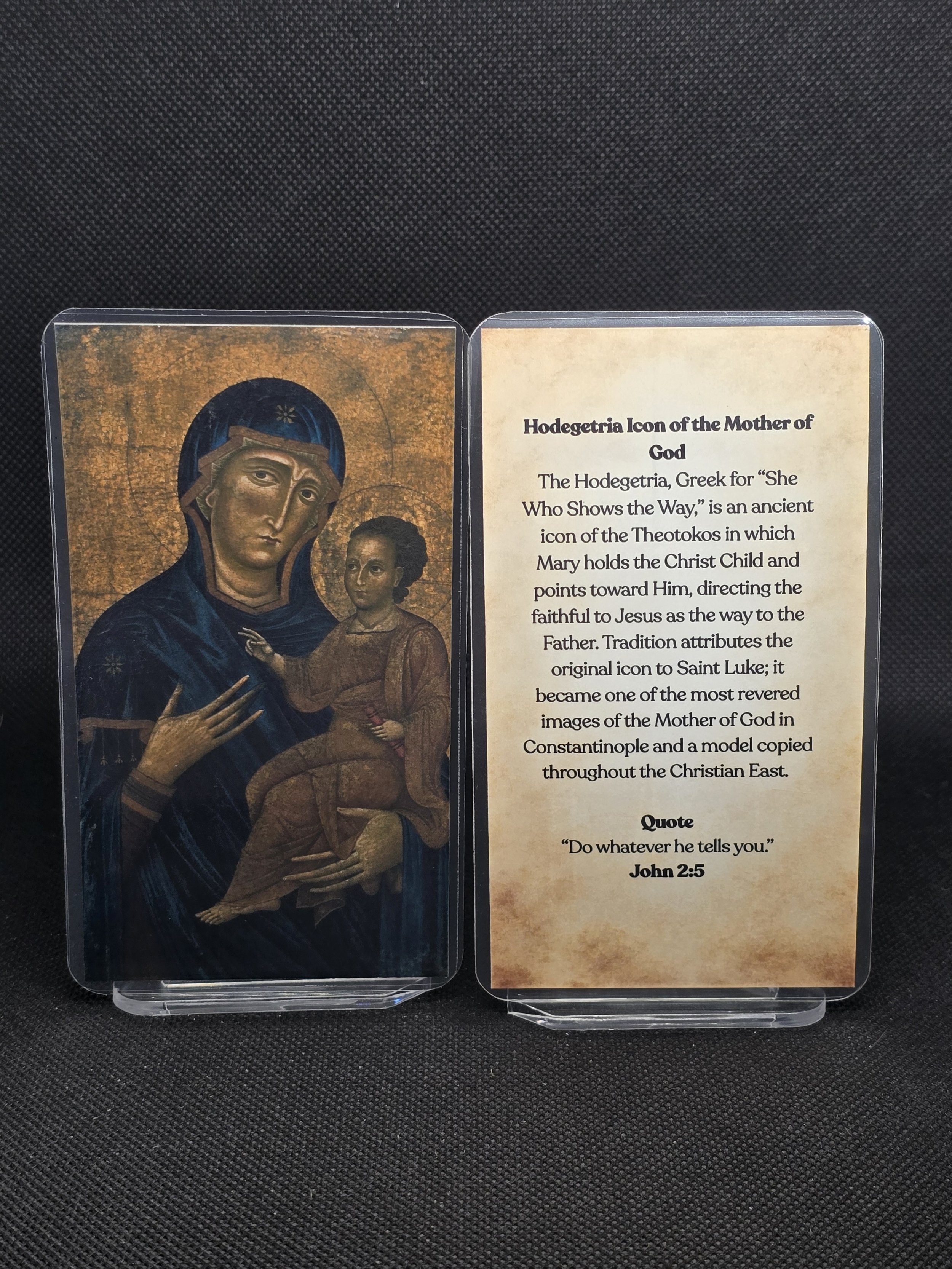
The Hodegetria Icon of the Mother of God, also called the Hodigitria, Odigitria, Directress, or “She Who Shows the Way,” is one of the oldest, most influential, and most widely copied images of the Theotokos in Christianity. Mary holds the Christ Child upon her arm while extending her free hand directly toward Him, visually proclaiming that Jesus Christ is the Way. The Orthodox Church explicitly interprets the gesture through Christ's words in John 14:6, “I am the way, and the truth, and the life,” while Saint John Paul II likewise described the Hodegetria as Mary who leads to Christ and manifests Him.
For that reason, the Hodegetria is especially meaningful for guidance, discernment, choosing the right path, vocational decisions, major life changes, conversion, spiritual direction, people who feel lost, parents praying for their children, and anyone asking the Mother of God to lead them more completely to Jesus Christ. These are not artificial modern patronages placed upon the icon. They arise from the icon's very composition and from the theological meaning that Eastern Christianity has given it for centuries: Mary does not draw attention finally to herself, but stretches out her hand and shows us where to look.
The Hodegetria is therefore a particularly powerful prayer card for someone standing at a crossroads. A person may be discerning marriage, priesthood, religious or monastic life, a career change, conversion, relocation, a difficult family decision, or simply asking what God wants next. The icon does not promise that Mary will reveal every answer immediately. Instead, it gives a more fundamental direction: before asking which road to take, fix your eyes upon Christ, because every truly Christian path must ultimately lead toward Him.
The icon also speaks strongly to parents and grandparents praying for children who seem to have lost their way. Mary's hand does not point toward an abstract idea, self-improvement program, or worldly success. She points to her Son. Saint John Paul II drew precisely this lesson from Hodegetria imagery, explaining that the Church sees in Mary a model of its own mission: to indicate Christ to the world as the path that leads to life.
This prayer card can make a meaningful gift for someone beginning RCIA or catechism, entering the Orthodox or Catholic Church, discerning a vocation, graduating, moving, beginning a new job, making a difficult decision, starting a pilgrimage, or trying to return to Christ after a period away from the faith. It is also especially appropriate for a prayer corner because the icon's central message remains useful regardless of the particular intention: “Look to Christ. Follow Him.”
Each 2.5" x 4.25" prayer card is handmade in Austin, Texas and prepared prayerfully with each order. It is printed on museum-quality photo paper rather than cardstock, double laminated for durability, and made while the recipient and their intentions are lifted before Christ in prayer, asking the Most Holy Theotokos to guide them toward her Son.
THE HISTORY & MEANING OF THE HODEGETRIA ICON
The Hodegetria is not merely the name of one painting. It became one of the foundational iconographic types of the Mother of God, copied throughout Byzantium and later throughout the Orthodox, Eastern Catholic, and Western Christian worlds. The Metropolitan Museum of Art describes it as a widespread Byzantine type in which the Virgin supports Christ with her left arm, while related Hodegetria images preserve the characteristic gesture of Mary indicating her Son as the path of salvation.
The famous prototype was associated with Constantinople, where an image of the Virgin and Child was venerated at the Hodegon Monastery. The Met notes that the very name Hodegetria comes from the Hodegon Monastery, while the Orthodox Church preserves a much older sacred tradition concerning the icon's origin and arrival in the imperial city.
“SHE WHO SHOWS THE WAY”
Hodegetria is commonly translated “She Who Shows the Way,” “Directress,” or “Guide.” Greek Orthodox teaching describes the image as the Theotokos showing the way to God, while Catholic teaching likewise identifies the Hodegetria as Mary pointing toward Christ, the one Mediator and true Way to the Father.
The title works on two levels. Historically, the name is connected with the Hodegon Monastery in Constantinople, which housed the celebrated icon. Theologically, Mary's gesture toward Jesus makes the title almost perfectly visual: she literally directs the viewer away from spiritual confusion and toward Christ.
That theological interpretation became so strong that Pope Saint John Paul II described Mary in the Byzantine tradition as “the way that leads to Christ and manifests him” when discussing the Hodegetria. In another address he summarized the image even more directly: Mary points toward the Son in her arms and reminds Christians that Christ is the path to follow.
WHY IS MARY POINTING TO JESUS?
Mary's extended hand is the defining theological gesture of the Hodegetria. She holds Christ securely, yet instead of enclosing Him within a private mother-and-child embrace, she opens the image outward toward the person praying before it and presents Christ to the world.
This distinguishes the Hodegetria from icons such as the Eleousa, or Virgin of Tenderness, where the faces of Mary and Christ press together in an intimate expression of maternal love. In the Hodegetria, the relationship remains loving, but the emphasis becomes proclamation: the Mother of God presents the incarnate Son and directs us toward Him.
For devotional use, this makes the Hodegetria particularly powerful whenever someone asks, “What am I supposed to do?” Mary's gesture gives the first answer before any specific decision is settled: choose nothing that pulls you away from Christ, and measure every road by whether it leads you toward greater communion with Him.
JOHN 14:6 & THE HODEGETRIA
The Gospel verse most directly associated with the icon is John 14:6:
“I am the way, and the truth, and the life.”
The Orthodox Church's own account of the Hodegetria explicitly uses this verse to explain Mary's gesture. Her hand indicates that the earthly pilgrimage of the Christian must lead toward Christ, who identifies Himself as the Way.
This is important because the icon does not present Mary as an alternative road competing with Christ. The entire composition says the opposite. Authentic Marian devotion is Christ-directed. The closer one comes to Mary as depicted in the Hodegetria, the more insistently she points toward her Son.
“DO WHATEVER HE TELLS YOU”
Another Gospel passage that beautifully expresses the spirituality of the Hodegetria is John 2:5, Mary's instruction to the servants at Cana: “Do whatever he tells you.” Saint John Paul II connected these words directly with the Hodegetria, describing Mary as pointing toward Jesus while continuing to give Christians the same direction she gave at Cana.
The icon can therefore be understood as a visual form of Mary's words at Cana. Her hand says what her voice said in the Gospel: listen to Him, trust Him, and follow what He tells you.
For someone using this prayer card for discernment, that is an especially useful distinction. Prayer for guidance is not primarily asking Mary to make our preferred plan succeed. It is asking for the grace to hear Christ clearly enough that we become willing to follow even when His road differs from the one we expected.
THE TRADITION OF SAINT LUKE
Orthodox tradition attributes the original Hodegetria to Saint Luke the Evangelist. The OCA preserves the Synaxarion tradition that Luke painted the Mother of God from life and that Mary blessed the image, asking that the grace of her Son remain with it.
The same tradition says the icon eventually came from Palestine to Constantinople during the reign of Emperor Theodosius II, when Empress Eudokia sent it to Saint Pulcheria. It was then associated with the Monastery of the Guides and became one of Constantinople's most revered Marian images.
For historical accuracy, it is best to describe this explicitly as the ancient Church tradition concerning the icon, rather than claiming that modern art history can independently prove Saint Luke painted the surviving Byzantine prototype. Art-historical sources securely confirm that the Hodegetria became an extremely important Byzantine image type and that its name was associated with the celebrated Constantinopolitan icon housed at Hodegon.
SAINT LUKE & THE TRADITION OF ICONOGRAPHY
The tradition that Saint Luke painted the Mother of God became enormously influential in Eastern Christianity. Icons connected with Luke were regarded not merely as artistic portraits but as witnesses to the Incarnation: the invisible God truly became visible in Jesus Christ, and His Mother and saints could therefore be represented in sacred images.
The Hodegetria became one of the most important expressions of that principle. Rather than depicting Mary independently, the icon always places the identity of the Mother of God in relationship with the incarnate Christ whom she carries and reveals.
THE HODEGON MONASTERY IN CONSTANTINOPLE
The original celebrated Hodegetria was housed at the Hodegon Monastery in Constantinople. Museum scholarship identifies the monastery directly as the source of the image type's name.
The monastery itself became associated with guidance, and later Byzantine tradition connected it with guides who assisted blind pilgrims. This historical association strengthened the image of the Theotokos as the one who directs, leads, and guides toward healing and ultimately toward Christ.
The combination is striking: an icon named for a place of guides became Christianity's great visual image of Mary guiding humanity toward Jesus.
THE HODEGETRIA & CONSTANTINOPLE
The icon became one of the most important sacred images of the Byzantine capital. The Met describes the Virgin as widely venerated in Byzantium not only as Mother of Christ but also as protectress of Constantinople, while the Hodegetria held a particularly prominent place among the city's sacred images.
The Orthodox tradition credits the Hodegetria with numerous miracles and specifically remembers its role in the deliverance of Constantinople from Arab attack in the early eighth century.
The icon therefore developed a secondary devotional connection with protection as well as guidance. Christians did not only look to the Mother of God for direction along the spiritual road, but also sought her intercession when the city itself faced danger.
A GREAT ICON OF BYZANTIUM
By the Middle Byzantine period, the Hodegetria had become one of the most recognizable representations of Mary anywhere in the Christian world. Surviving Byzantine ivories, mosaics, panels, manuscripts, and later paintings repeat the basic composition, demonstrating how extensively the type spread.
Its influence did not stop at the boundaries of the Byzantine Empire. The Met notes that Byzantine Marian images were adopted widely in Western Europe, and the Hodegetria provided a model for numerous medieval Madonna-and-Child compositions.
This makes the Hodegetria one of those rare sacred images whose visual language became familiar even to Christians who may never have heard its Greek name.
THE HODEGETRIA & THE SUNDAY OF ORTHODOXY
The Hodegetria occupies a place of honor in the famous icon of the Sunday of Orthodoxy, the feast commemorating the restoration of sacred icons after the Byzantine Iconoclast controversy. Greek Orthodox teaching identifies the Hodegetria as the central icon being carried within that composition.
Its presence is significant. When the Church celebrates the restoration of icons, the image at the center is itself an icon in which Mary points to the incarnate Christ.
The symbolism expresses the entire theology of Christian iconography: sacred images are possible because the Son of God truly became flesh, truly entered visible human history, and can therefore be depicted.
WHAT IS CHRIST HOLDING?
In many Hodegetria icons, the Christ Child holds a scroll in His left hand while raising His right hand in blessing. The scroll identifies Him not simply as an ordinary infant but as the eternal Word and divine Teacher, while His blessing hand presents Him with the authority of the Lord.
This is another reason the Hodegetria should not be read as a sentimental portrait of a mother and baby. The Child is often depicted with unusual maturity and solemnity because the icon is confessing that the infant Mary holds is Jesus Christ, the eternal Son and Word of God.
Mary points toward Him because He is not merely her child. He is the Savior.
WHY DOES THE CHRIST CHILD LOOK SO MATURE?
Byzantine iconography is not primarily trying to recreate a photographic snapshot of a particular afternoon in Jesus' infancy. The Christ Child is often shown with mature facial features, a blessing gesture, and the scroll of teaching precisely because the icon is revealing who this Child truly is.
He is simultaneously the infant born from Mary and the eternal Logos through whom all things were made. The icon therefore compresses theological truth into the visual image rather than limiting itself to naturalistic age.
WHY DOES MARY LOOK SO SERIOUS?
The Hodegetria is often solemn rather than smiling. Her expression invites contemplation instead of sentimental emotion, and many variants give her a grave or pensive gaze while she presents Christ to the viewer. The Met notes that Hodegetria imagery can carry awareness of the future suffering of the Son whom Mary presents as the path to salvation.
Her seriousness therefore should not be interpreted as coldness. The icon's purpose is larger than showing affectionate motherhood. Mary knows whom she carries and directs the entire attention of the viewer toward the mystery of Christ.
A PRAYER CARD FOR GUIDANCE
Guidance is probably the strongest devotional use for this particular icon. Someone uncertain about the future can place the difficult decision before Christ while asking His Mother to help remove fear, pride, impatience, and self-deception from the discernment process.
The Hodegetria does not offer a mystical shortcut around prudence, counsel, Scripture, prayer, or the sacramental life. Instead, it places every part of discernment into proper order by insisting that Christ must remain the destination.
For someone who keeps asking, “Which way should I go?” the icon quietly asks an even more important question: Which choice leads me closer to Him?
A PRAYER CARD FOR VOCATIONAL DISCERNMENT
The Hodegetria is especially meaningful for someone discerning priesthood, diaconate, monastic life, religious life, marriage, or another major Christian vocation. Mary's own life was marked by extraordinary willingness to accept God's direction even when she could not see the entire road ahead.
Yet the icon's primary message remains focused upon Jesus. A genuine vocation is never primarily about obtaining a title or finding the most personally impressive path. It is about following Christ in the particular way through which He calls the person to love God and neighbor.
A PRAYER CARD FOR SOMEONE WHO FEELS LOST
Some seasons of life do not present two obvious paths. They feel instead like there is no path at all.
Grief, divorce, unemployment, illness, family conflict, spiritual dryness, and major disappointment can leave someone unable to imagine what comes next. The Hodegetria is especially meaningful in those moments because Mary is not pointing toward a detailed map. She is pointing toward a Person.
Sometimes guidance begins not by understanding the next ten years, but by knowing whom to follow today.
A PRAYER CARD FOR CONVERSION & RETURNING TO CHRIST
The Hodegetria can also be especially meaningful for catechumens, converts, and people returning to Christian faith after many years away. Mary's gesture embodies the work of Christian evangelization itself: she introduces the person not to an ideology but to Jesus Christ.
This also makes the card an excellent gift for baptism, chrismation, reception into the Church, First Communion, confirmation, or completion of catechetical formation.
The message remains simple enough to last for the rest of a Christian life: however far you travel, keep returning to Christ.
A PRAYER CARD FOR PARENTS PRAYING FOR THEIR CHILDREN
Parents cannot control every road their children eventually choose. They can teach, protect, advise, correct, and pray, but eventually children begin making decisions beyond a parent's direct control.
The Hodegetria offers a particularly beautiful image for that pain. Mary points the child toward Christ.
A parent using this card can therefore pray not merely for a child's success, but for something greater: that the Mother of God continually direct that son or daughter toward Jesus, especially when the parent no longer knows how to reach them.
A PRAYER CARD FOR TRAVEL & PILGRIMAGE
Because the Hodegetria is fundamentally an icon of the way and the Christian journey, it also fits naturally with travel and pilgrimage. The OCA interpretation explicitly speaks of Mary's gesture as indicating the way Christians must follow on their earthly pilgrimage toward Christ.
This makes the card meaningful for someone leaving home, beginning a pilgrimage, traveling abroad, entering military service, relocating, or moving into a new stage of life.
The prayer need not be simply, “Make my journey easy.” It can become, “Wherever I go, do not let me lose the road that leads to Christ.”
THE HODEGETRIA & CHRISTIAN PROTECTION
The icon's ancient Constantinopolitan history also gives it a strong connection with protection. Byzantine Christians regarded the Mother of God as a protector of the imperial city, and the OCA tradition specifically associates the Hodegetria prototype with miraculous deliverance during military danger.
For modern devotion, this can make the Hodegetria meaningful for families asking protection over a home, travelers, military families, or someone beginning an uncertain journey.
The greater protection represented by the icon, however, is protection from losing the way spiritually.
THE ORIGINAL ICON & THE FALL OF CONSTANTINOPLE
According to the Orthodox Synaxarion tradition preserved by the OCA, the famed Constantinopolitan Hodegetria was lost or destroyed during the Fall of Constantinople in 1453. The prototype itself therefore does not survive for modern pilgrims to venerate in its original shrine.
Its image nevertheless survived through countless copies and related icon traditions across the Christian world. The Met emphasizes just how widespread the Hodegetria type became, while the OCA notes that a copy is preserved at Xenophontos Monastery on Mount Athos.
In this sense, the icon that disappeared from Constantinople continued living visually everywhere.
HODEGETRIA-TYPE ICONS THROUGHOUT CHRISTIANITY
Many famous Marian icons belong broadly to the Hodegetria family or developed from its visual pattern. The type became so influential that Byzantine models traveled into Eastern Europe and western European art, creating generations of sacred images in which Mary holds Christ and directs the believer toward Him.
One famous Western example of the broader Hodegetria tradition is the Black Madonna of Częstochowa, which Vatican sources identify as a Byzantine icon of the Hodegetria type.
This wide influence demonstrates something important about the icon's message. The visual language crosses later Catholic-Orthodox divisions because it is rooted in the fundamental Christian confession that salvation comes through Christ.
ORTHODOX & EASTERN CATHOLIC DEVOTION
The Hodegetria is one of the characteristic images of the Byzantine Christian tradition, and devotion to the type belongs naturally within both Orthodox and Eastern Catholic spirituality. Saint John Paul II repeatedly praised the Hodegetria specifically as part of the Marian heritage of the Christian East and interpreted its meaning in thoroughly Christ-centered terms.
For an Eastern Catholic prayer card, the Hodegetria therefore needs no adaptation into a Western devotional framework. Its theology already belongs deeply within Byzantine Christian prayer: Theotokos, point us toward Christ.
FEAST DAY
The Orthodox Church in America commemorates the Hodegetria Icon of the Mother of God on June 20. Its liturgical commemoration includes an established Troparion and Kontakion directed to the Theotokos.
Because Hodegetria is also a broad iconographic family, many specific wonderworking Hodegetria-type icons possess their own histories and feast days. For the Hodegetria itself, however, June 20 is the clearest feast date to use on this product page.
PRAYERS
There is an established Byzantine Troparion and Kontakion for the Hodegetria Icon, so there is no need to write a new prayer. The OCA's June 20 liturgical texts ask the Mother of God for compassion, help, protection, and intercession while placing Christian hope ultimately in God's mercy.
A short established portion especially suitable for devotional use is:
“O Sovereign Lady, have compassion on us, help us, and come quickly.”
Another traditional Hodegetria Kontakion invokes the Theotokos as the steadfast protectress of Christians and asks her to make supplication for those who honor her.
For someone using this card specifically for discernment, a simple personal intention can then be offered after the established prayer: ask the Mother of God to direct every desire, fear, plan, and decision toward Christ, and to close any road that would lead away from Him.
The Hodegetria is particularly suited to prayer before a major decision because its message does not depend upon knowing the future. Mary simply points toward the One who already knows it.
FAQ
What is the Hodegetria Icon of the Mother of God? The Hodegetria is one of the great Byzantine iconographic types of the Theotokos. Mary holds the Christ Child while directing her free hand toward Him as the way to salvation.
What does Hodegetria mean? It is commonly translated as “She Who Shows the Way,” “Directress,” or “Guide.” The name is historically associated with Constantinople's Hodegon Monastery and spiritually interpreted through Mary's gesture pointing toward Jesus.
Why does Mary point to Jesus in the Hodegetria? Her hand identifies Christ as the Way and directs the believer toward Him. Orthodox teaching explicitly links the gesture to John 14:6.
What Bible verse is most closely associated with the Hodegetria? John 14:6 is the clearest scriptural connection because Christ says, “I am the way, and the truth, and the life.” The OCA directly uses this verse when explaining the icon.
Is John 2:5 also connected with the Hodegetria? Yes, Saint John Paul II connected the icon's message with Mary's words at Cana, “Do whatever he tells you.” Both the Gospel verse and the icon direct attention away from Mary as an endpoint and toward obedience to Christ.
Who painted the original Hodegetria icon? Orthodox tradition attributes the prototype to Saint Luke the Evangelist, who is said to have painted the Theotokos from life. This is an ancient Church tradition rather than something modern art history can independently prove.
Did the Virgin Mary bless Saint Luke's icon? According to the Orthodox Synaxarion tradition, yes. The OCA preserves the account that Mary received the image with joy and blessed it with reference to the grace of her Son.
How did the Hodegetria reach Constantinople? Church tradition says Empress Eudokia sent the icon from Palestine to Saint Pulcheria in Constantinople during the reign of Theodosius II. It became associated with the Monastery of the Guides and later with the wider devotional life of Constantinople.
What was the Hodegon Monastery? It was a Byzantine monastery in Constantinople that housed the famous Hodegetria icon. Museum scholarship identifies the monastery as the historical source of the icon type's name.
Why is the Hodegetria called a guide? Mary's hand guides the viewer visually toward Christ, while the title's Constantinopolitan history is also associated with the Hodegon, the place of guides. The two meanings became beautifully intertwined in Christian devotion.
What is Christ holding in Hodegetria icons? He commonly holds a scroll while blessing with His other hand. The scroll visually identifies Him as divine Teacher and eternal Word rather than portraying Him simply as an ordinary infant.
Why does Jesus sometimes look like a small adult in the icon? Byzantine iconography emphasizes theological identity rather than photographic naturalism. The mature features, blessing hand, and scroll proclaim that the Child Mary carries is the eternal Son and divine Logos.
Why does Mary look serious in Hodegetria icons? The icon has a solemn theological purpose: Mary presents Christ as Savior rather than simply displaying maternal affection. Some Hodegetria variants also suggest awareness of the future suffering Christ will endure.
Is the Hodegetria the same as the Virgin of Tenderness? No. The Hodegetria emphasizes Mary pointing toward Christ, while the Eleousa or Virgin of Tenderness emphasizes the intimate affection between Mother and Child with their faces touching.
Is the Hodegetria Orthodox? It is fundamentally a Byzantine Christian icon type and remains especially prominent in Orthodox spirituality. Its influence, however, spread through Eastern Catholic and Western Catholic Christianity as well.
Can Eastern Catholics venerate the Hodegetria? Yes. Saint John Paul II repeatedly identified the Hodegetria with the Marian patrimony of the Churches of the East and praised its Christ-centered theology.
Do Roman Catholics also venerate Hodegetria icons? Yes. Hodegetria-type images spread widely into Western Christianity, and famous Catholic Marian images such as the Black Madonna of Częstochowa belong to the broader Hodegetria tradition.
When is the Hodegetria Icon commemorated? The Orthodox Church in America commemorates the Hodegetria Icon on June 20. An established Troparion and Kontakion are provided for the commemoration.
Is there a traditional prayer for the Hodegetria Icon? Yes. The June 20 Orthodox commemoration includes established liturgical hymns asking the Theotokos for help, protection, compassion, and intercession.
Is the Hodegetria good for discernment? Yes, this is perhaps its strongest devotional application because the icon literally presents Mary as the one who directs the believer toward Christ. It is especially meaningful when someone needs to choose a path without losing sight of the ultimate destination.
Is the Hodegetria good for vocational discernment? Yes. Someone discerning marriage, priesthood, diaconate, monastic life, religious life, or another vocation can use the icon as a reminder that the right vocation is ultimately the one through which Christ is faithfully followed.
Is the Hodegetria good for someone who feels lost? Yes, because its entire spiritual message concerns direction. Mary does not promise a complete map of the future but points to Christ as the Way through whatever uncertainty remains.
Can parents pray before the Hodegetria for their children? Yes. The icon offers a particularly beautiful image for parents who cannot control every choice their children make but can continue asking the Mother of God to direct them toward Jesus.
Is the Hodegetria associated with protection? Yes. The famous Constantinopolitan icon became deeply connected with the protection of the Byzantine capital, and Orthodox tradition attributes miraculous deliverance to it during periods of danger.
Is the Hodegetria suitable for travelers? Yes, especially because the OCA explicitly interprets it through the Christian's earthly pilgrimage toward Christ. It can be a meaningful devotional image for travel, relocation, pilgrimage, or beginning a new stage of life.
What happened to the original Hodegetria icon? The Orthodox tradition preserved by the OCA says the famous Constantinopolitan prototype was destroyed during the Fall of Constantinople in 1453. Its iconographic form survived through innumerable copies throughout the Christian world.
Are any old copies still venerated? Yes. The OCA specifically notes a Hodegetria copy at Xenophontos Monastery on Mount Athos, while countless Hodegetria-type icons survive across Orthodox and Catholic Christianity.
Why is the Hodegetria in the Sunday of Orthodoxy icon? Greek Orthodox teaching identifies the Hodegetria as the central sacred image carried within the icon celebrating the restoration of icons. Its presence emphasizes the Incarnation, the theological foundation that makes Christian sacred imagery possible.
Who would appreciate a Hodegetria prayer card? It is especially meaningful for someone discerning a vocation, making a major decision, converting, returning to faith, moving, graduating, traveling, beginning a new life stage, or praying for a child who seems spiritually lost.
What is the main message of the Hodegetria Icon? The Hodegetria says something remarkably simple and inexhaustible: Mary shows us Jesus. Her hand points toward the Son she carried in her womb and now presents to the world, reminding every Christian that guidance, vocation, discernment, protection, conversion, and the entire pilgrimage of life find their proper direction only when they lead toward Christ. The ancient icon of Constantinople may have disappeared, but its gesture survived across centuries precisely because the message never became obsolete: when you do not know the way, look where the Mother of God is pointing.
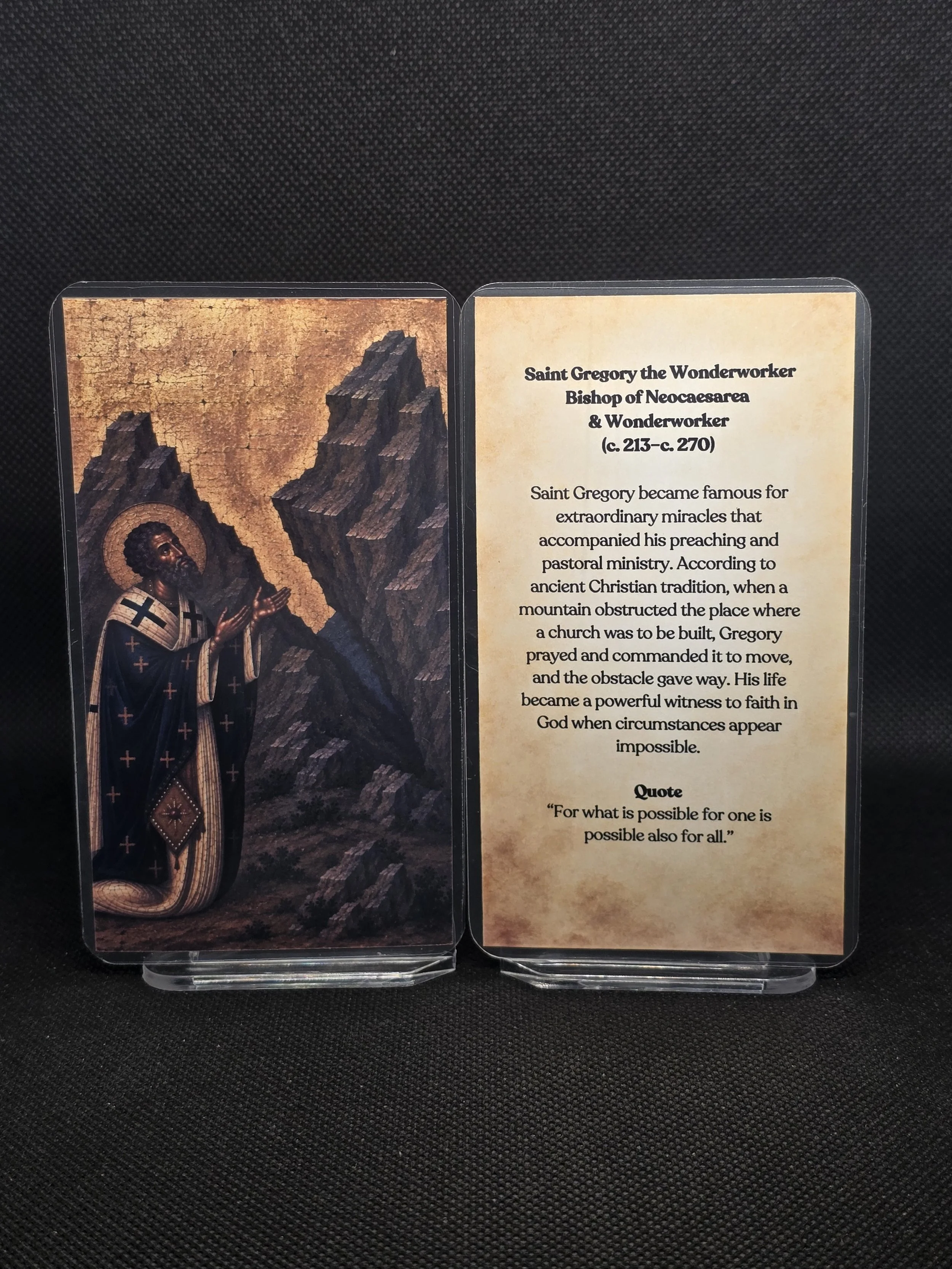
This prayer card depicts one of the most striking miracles associated with Saint Gregory the Wonderworker, also called Gregory Thaumaturgus of Neocaesarea, the third-century bishop whose extraordinary works of healing, deliverance, evangelization, and miracles earned him the permanent title “Wonderworker.” In the received Orthodox tradition, when Christians were constructing a new church and a hill obstructed the site, Gregory commanded the hill to move so that sufficient ground could be opened for the foundation. The Orthodox Church in America continues to preserve this miracle in his official Life, remembering that during the construction of a church, Gregory commanded the hill to move and make room for the foundation.
The scene naturally calls to mind Matthew 17:20, where Christ teaches that faith like a mustard seed can say to a mountain, “Move,” and it will move. The ancient sources do not record Gregory quoting Matthew 17:20 word for word at the moment of this particular miracle, so the most historically accurate way to present the card is to say that Gregory's mountain-moving miracle became a remarkable illustration of Christ's teaching about faith that moves mountains, rather than claiming that we know the exact words of his prayer.
Saint Gregory is especially meaningful for impossible situations, immovable obstacles, desperate problems, healing, serious illness, natural disasters, difficult conversions, spiritual protection, and moments when every ordinary human solution seems exhausted. His Life contains so many wonders that the title Thaumaturgus, “Wonderworker,” became inseparable from his name. He healed the sick, delivered people from demonic oppression, miraculously settled a dangerous dispute over a lake, survived persecution through divine protection, and presided over the extraordinary conversion of Neocaesarea from a city with only a tiny Christian community into one overwhelmingly Christian by the end of his ministry.
This particular prayer card focuses upon something visually simple but spiritually enormous: a mountain standing where the Church needed to be built, and faith refusing to accept that the obstacle was greater than God. For anyone looking at an illness, family crisis, financial hardship, addiction, broken relationship, difficult vocation, impossible decision, or seemingly closed door, Gregory's miracle gives physical form to the Gospel's challenge not to confuse what is impossible for us with what is impossible for God.
Each 2.5" x 4.25" prayer card is handmade in Austin, Texas and prepared prayerfully with each order. It is printed on museum-quality photo paper rather than cardstock, double laminated for durability, and made while the recipient and their intentions are lifted before Christ in prayer, with Saint Gregory the Wonderworker asked to intercede for them.
THE MIRACLE OF THE MOUNTAIN THAT MOVED
Saint Gregory served as Bishop of Neocaesarea in Pontus, in what is now northern Turkey, during the third century. When he began his episcopal ministry, Christians formed only a very small minority of the city, but his preaching and miracles quickly drew people toward the Gospel. The later fourth-century Life of Gregory the Wonderworker by Saint Gregory of Nyssa describes the Christian community growing rapidly enough that the faithful soon undertook the construction of a church together, contributing both their possessions and their physical labor.
The present Orthodox Synaxarion preserves the tradition that an obstacle arose during that construction: a hill occupied ground needed for the church foundation. Gregory commanded it to move, and the obstruction yielded, leaving room for the church to be built.
The miracle made Gregory one of the earliest saints in Christian tradition to become famous for an event that so directly resembles Christ's teaching about faith moving mountains. Gregory lived approximately seven centuries before the tenth-century Coptic tradition of Saint Simon the Tanner and the moving of Mokattam Mountain, making the Gregory tradition dramatically earlier in the history of Christian mountain-moving miracle accounts.
AN IMPORTANT DETAIL ABOUT THE EARLIEST SOURCE
There is an interesting historical distinction worth preserving because it makes the description more accurate rather than less impressive. Saint Gregory of Nyssa wrote his Life of Gregory the Wonderworker in the late 370s or 380s, roughly a century after Gregory the Wonderworker's death. Modern scholarship considers it the earliest of the major surviving Lives and likely dependent upon oral traditions circulating in Neocaesarea and within Gregory of Nyssa's own family.
In that earliest surviving Life, Gregory of Nyssa does not tell the church-site miracle in exactly the compressed form used by later Orthodox Synaxaria. Instead, he preserves two closely adjacent traditions. First, a pagan temple custodian asks Gregory to demonstrate the power of Christian faith by commanding an enormous rock, explicitly described as impossible for human strength to move, to relocate. Gregory commands it, and the rock moves to the exact place indicated, leading the pagan priest to believe in Christ. Shortly afterward, Gregory of Nyssa describes Gregory entering Neocaesarea and the rapidly growing Christian community constructing its church.
The modern Orthodox Life preserves the tradition in the familiar form that during the church's construction Gregory commanded a hill to move so the foundation could be dug. For this prayer card, that received Orthodox version is therefore completely appropriate, while the product description can remain unusually precise about how the surviving written tradition developed.
THE ROCK THAT OBEYED A WORD OF FAITH
The rock-moving episode in Gregory of Nyssa's ancient account deserves special attention because it explains why Gregory's later mountain-moving tradition fits his earliest hagiography so naturally. A pagan temple custodian wanted proof that Gregory's Christian preaching represented genuine divine power rather than philosophical argument alone. He pointed to an enormous rock that no human strength could move and challenged Gregory to make it change position through faith.
Gregory did not assemble machinery, workers, or animals. According to the account, he simply commanded the massive rock to move to the place the man had specified, and it obeyed. The temple custodian immediately abandoned his former pagan priesthood and became Gregory's disciple.
Saint Gregory of Nyssa then draws the theological lesson directly from the miracle. If a servant of God could command something considered immovable, he argues, how immeasurably greater must be the power of the Lord who created the world itself. The miracle therefore was never meant to glorify Gregory's personal power. It was evidence pointing through Gregory toward the power of God.
THE CHURCH THAT SURVIVED THE EARTHQUAKE
The church connected with Gregory's early episcopal ministry developed another remarkable tradition. Saint Gregory of Nyssa says that the building erected by Gregory and his new Christian community was still standing in his own lifetime, more than a century later.
Gregory of Nyssa then records that a devastating earthquake struck Neocaesarea in his own era and destroyed almost every public and private building in the city, yet Gregory the Wonderworker's church remained standing and unshaken. To Gregory of Nyssa, the church's survival provided another testimony to the divine help under which its foundation had originally been laid.
That detail adds another beautiful layer to this prayer card. The miracle was not simply about clearing ground so a building could exist. The resulting church itself became remembered as something that endured when the city around it was shaken.
MATTHEW 17:20 & THE FAITH THAT MOVES MOUNTAINS
The natural scriptural heart of this card is Matthew 17:20, where Jesus speaks about faith as small as a mustard seed and says that such faith can command a mountain to move. Gregory's tradition became an extraordinary physical image of precisely that Gospel teaching.
Christ's words should not be reduced to the idea that sufficiently intense belief forces God to perform any miracle we request. Christian faith is not mental power directed toward an object. It is trust in God, whose power is not limited by the boundary of what human beings can accomplish.
That distinction is especially important on a prayer card intended for impossible situations. The person carrying the card may be unable to move the mountain in front of them, and the mountain may not move in precisely the way they expect. Gregory's story nevertheless says that the Christian never has to worship the obstacle as though it possesses the final word.
ONE OF CHRISTIANITY'S EARLIEST GREAT MOUNTAIN-MOVING TRADITIONS
Saint Gregory lived in the third century, centuries before many of the better-known medieval miracle stories of Christianity. His early reputation as a Wonderworker was already firmly established by the fourth century, when Saint Gregory of Nyssa delivered his Life and panegyric recounting his wonders.
That chronology makes the miracle especially fascinating when placed beside the later Coptic story of Saint Simon the Tanner and Mokattam Mountain. Gregory the Wonderworker himself lived roughly seven centuries before Simon's tenth-century story, while Gregory of Nyssa's surviving fourth-century account of Gregory commanding an immovable rock already predates the Mokattam tradition by roughly six centuries.
The two traditions should not be treated as competing stories. Together they show how deeply Matthew 17:20 and the image of mountains yielding before faith entered Christian imagination and devotion across very different times, places, and Churches.
THE CHURCH BEGAN WITH ONLY A FEW CHRISTIANS
The mountain or hill was not the only seemingly immovable obstacle Gregory encountered. When he assumed responsibility for Neocaesarea, the Christian population was tiny. The Orthodox tradition famously remembers only seventeen Christians living there when his ministry began.
By the time Gregory approached death, the traditional account reverses the number: only seventeen pagans remained. Through preaching, healing, charity, spiritual authority, and extraordinary miracles, the bishop had watched almost an entire city turn toward Christianity.
In that sense, the physical mountain was only one of the mountains moved during Gregory's episcopacy. The transformation of an overwhelmingly pagan city may have been an even greater wonder.
WHY HE IS CALLED THAUMATURGUS
The Greek title Thaumaturgus means “Wonderworker,” a person through whom extraordinary wonders are worked. Gregory received the title because miracle accounts became inseparable from the memory of his ministry.
The Church's own Kontakion still praises him specifically for receiving the power to work miracles, terrifying demons, and healing the sick. His title therefore is not a modern nickname attached to him for dramatic effect but part of the Church's longstanding liturgical identity for the saint.
A PRAYER CARD FOR IMPOSSIBLE SITUATIONS
This scene makes an especially powerful prayer card for someone whose problem feels physically or emotionally immovable. The mountain can represent cancer, infertility, addiction, financial crisis, a marriage in trouble, a child far from God, a seemingly impossible legal problem, unemployment, grief, spiritual darkness, or a decision for which no good path seems visible.
The card does not promise a particular outcome. Instead, its message is that no Christian should look at an obstacle and conclude that because I cannot move it, therefore it cannot be moved.
Gregory's miracle shifts attention away from the size of our own strength and toward the immeasurable strength of God.
A PRAYER CARD FOR HEALING
Saint Gregory's wonderworking ministry was strongly associated with healing the sick. Saint Gregory of Nyssa describes crowds bringing people suffering from physical illnesses and spiritual afflictions to Gregory, while the Orthodox Kontakion explicitly celebrates the healing of the sick through his wonderworking gift.
For that reason, this card can be especially meaningful during surgery, cancer treatment, chronic illness, hospitalization, an unexplained medical condition, or any circumstance in which a family is asking God for healing.
A PRAYER CARD FOR CONVERSION
The rock-moving miracle itself ended in conversion. The pagan temple custodian who demanded evidence witnessed Gregory command the massive rock, believed in the God Gregory preached, abandoned his former religious position, and joined him.
Gregory's entire city then followed the same larger trajectory. The bishop who began with a tiny Christian flock eventually watched Neocaesarea become overwhelmingly Christian.
A Saint Gregory mountain miracle card is therefore especially fitting for parents praying for a child who has abandoned Christianity, spouses praying for one another, catechumens, converts, missionaries, and anyone praying for a person who appears completely closed to faith.
A PRAYER CARD FOR BUILDING SOMETHING FOR GOD
There is another meaning unique to this particular scene. The mountain stood where a church needed to be built.
For someone trying to establish a parish, monastery, ministry, school, mission, charitable project, business with a Christian purpose, or another work sincerely offered to God, the scene can become a reminder that obstacles encountered during good work do not necessarily mean the work should be abandoned.
Discernment is still necessary, because not every obstacle is meant to be miraculously removed. Gregory's story nevertheless encourages perseverance when a genuine calling encounters something that seems far larger than the people attempting it.
THE MIRACLE WAS ABOUT THE CHURCH, NOT GREGORY
The mountain-moving story becomes even more beautiful when understood within the growth of the Neocaesarean Church. The space was not being cleared so Gregory could construct a monument to himself. It was being cleared so a rapidly growing Christian community would have a place to worship.
The miracle therefore joins faith and mission. God removes the obstruction so the Church can continue its work.
That makes the scene particularly appropriate for church fundraisers, parish building campaigns, missions searching for permanent property, and Christians praying through seemingly impossible practical obstacles in ministry.
WHEN THE OBSTACLE IS BIGGER THAN YOU
A mountain makes a particularly powerful Christian image because there is no reasonable illusion that one person can move it by strength. It strips away the fantasy of self-sufficiency.
This is why Matthew 17:20 remains so memorable. Christ does not choose a small inconvenience as His image. He chooses something so large that the hearer immediately knows ordinary human power is insufficient.
Saint Gregory's miracle embodies the same lesson. The obstacle's size becomes the very reason the glory cannot finally belong to Gregory.
FAITH IS NOT SELF-CONFIDENCE
Gregory's story also helps distinguish faith from self-confidence. Self-confidence says, “I am strong enough.” Christian faith says, “God is God even when I am not strong enough.”
The difference matters especially when someone is sick, frightened, grieving, exhausted, or facing a problem that cannot simply be solved by trying harder. Gregory's mountain does not demand that the suffering person pretend to feel powerful. It directs the suffering person toward the One whose strength does not depend upon theirs.
GREGORY THE WONDERWORKER & NATURAL DISASTERS
Gregory's tradition contains repeated miracles involving the natural world, including the moving of an immovable rock, the church-site hill tradition, the drying of a disputed lake, and the miraculous survival of his church during a devastating earthquake.
This helps explain why later devotion has particularly associated him with earthquakes, floods, desperate causes, and seemingly uncontrollable natural dangers. His Life repeatedly presents creation itself as remaining subject to the Creator.
THE LAKE MIRACLE IS A DIFFERENT STORY
One detail is worth keeping separate because it is frequently blended into the mountain story in modern retellings. Gregory did spend an entire night alone in prayer, but Saint Gregory of Nyssa places that vigil at a different miracle involving two brothers who were preparing to fight over ownership of a marshy lake.
Gregory remained beside the lake through the night in prayer. At dawn, the water had disappeared and dry ground remained, eliminating the object over which the brothers were prepared to shed blood.
The all-night vigil is therefore completely authentic to his ancient Life, but attaching it specifically to the church-site mountain miracle would combine two separate wonders. Keeping them distinct makes the card's history stronger.
A MIRACLE PRESERVED BY SAINT GREGORY OF NYSSA
Saint Gregory of Nyssa is an unusually important witness because he did not write hundreds of years after everyone connected with Gregory the Wonderworker had disappeared from memory. His Life was composed in Asia Minor in the late fourth century, and modern scholarship notes that his family possessed connections with the traditions of Neocaesarea.
The modern scholarly introduction to the Fathers of the Church translation calls Gregory of Nyssa's work the closest of the surviving written accounts to the oral traditions of Neocaesarea, while still cautioning that a hagiographical Life cannot simply be treated as modern documentary biography.
For the product page, the strongest wording is therefore “according to the ancient and received Christian tradition preserved around Saint Gregory”, rather than presenting every miraculous detail as though it came from a contemporary government record.
SAINT GREGORY'S FEAST DAY
Saint Gregory the Wonderworker is commemorated on November 17. The Orthodox Church in America keeps his feast on that date and provides his traditional Troparion and Kontakion.
His November 17 feast provides a natural annual day for someone who carries this card to renew prayer for an impossible intention, healing, conversion, or another obstacle they have placed before God.
PRAYERS
Saint Gregory already has established Byzantine liturgical hymns, so there is no need to write a new saint-specific prayer. His Troparion remembers his vigilance in prayer and constant works of mercy and asks him to beseech Christ for spiritual enlightenment, while his Kontakion explicitly praises his miracles and healings.
A short traditional portion of his Troparion suitable for the back of a prayer card is:
“O Father Gregory, beseech Christ God to enlighten our minds.”
That established liturgical line pairs particularly well with the image of the mountain because it prevents the devotion from reducing Gregory to a saint for obtaining miracles. The Church first asks for the transformation of the person who prays.
A simple established form of invocation may also be used in personal devotion: “Holy Father Gregory the Wonderworker, pray to God for us.” Someone facing an impossible situation can then place the specific intention before Christ while asking Gregory to intercede.
FAQ
What miracle is shown on this Saint Gregory the Wonderworker prayer card? The card depicts the received Orthodox tradition that a hill obstructed the site where a new church was being built, and Saint Gregory commanded it to move so that room could be made for the foundation. The Orthodox Church in America continues preserving this event in its Life of Saint Gregory.
Did Saint Gregory the Wonderworker really move a mountain? The Orthodox hagiographic tradition says that Gregory commanded a hill obstructing church construction to move, and the miracle became one of the wonders associated with him. Saint Gregory of Nyssa's earlier fourth-century Life preserves a closely related miracle in which Gregory commands an enormous immovable rock to relocate through faith.
Is the mountain miracle in Saint Gregory of Nyssa's original Life? Not in exactly the later form commonly retold today. Gregory of Nyssa records the enormous rock moving at Gregory's command and then separately describes the construction of Gregory's church, while the modern Orthodox Synaxarion explicitly remembers a hill moving during church construction.
Did Gregory pray all night before the mountain moved? The earliest Life does record Gregory spending an entire night in prayer, but that belongs to his separate miracle involving the disputed lake. It is safer not to attach the all-night vigil specifically to the church-site hill miracle.
Is Matthew 17:20 connected with Saint Gregory's miracle? Matthew 17:20 is the natural Gospel text associated with the miracle because Christ speaks there about faith capable of commanding a mountain to move. The surviving ancient account does not record Gregory explicitly quoting that verse during this particular event, so it is best used as the scriptural lens through which the miracle is understood.
What does Thaumaturgus mean? Thaumaturgus means Wonderworker or miracle-worker. Gregory became so strongly associated with extraordinary miracles that the title became a permanent part of his name in Christian tradition.
When did Saint Gregory the Wonderworker live? Gregory lived during the third century and is generally dated to approximately 213 to 270 AD. He served as Bishop of Neocaesarea in Pontus, in northern Asia Minor.
When is Saint Gregory the Wonderworker's feast day? His feast is celebrated on November 17. Orthodox liturgical sources continue commemorating him on that date as Saint Gregory the Wonderworker of Neocaesarea.
Who wrote the ancient Life of Saint Gregory? Saint Gregory of Nyssa, one of the great Cappadocian Fathers, wrote the surviving Life and panegyric of Gregory the Wonderworker. Modern scholarship dates it to the late 370s or 380s, roughly a century after Gregory the Wonderworker's death.
How reliable is Saint Gregory of Nyssa's Life? It is a late antique hagiographical work rather than a modern documentary biography, so miraculous material should be identified as Church tradition. At the same time, scholarship regards it as the earliest of the principal surviving Lives and notes that Gregory of Nyssa's family was well positioned to know traditions preserved in Neocaesarea.
Was Saint Gregory's mountain miracle before Saint Simon the Tanner's miracle? Yes. Gregory the Wonderworker lived in the third century, roughly seven centuries before the tenth-century Coptic tradition surrounding Saint Simon the Tanner and Mokattam Mountain. Gregory of Nyssa's written fourth-century account of Gregory commanding an immovable rock is itself roughly six centuries earlier than the Mokattam tradition.
Are Saint Gregory and Saint Simon the Tanner connected? There is no evidence that one story historically caused the other, and they belong to different Christian traditions and periods. They are nevertheless striking parallels because both became associated with the Gospel image of faith confronting something as immovable as a mountain.
Why was the mountain moved? In the received Orthodox telling, the hill occupied space needed for the foundation of a new church. Gregory commanded it to move so that the Christian community could continue construction.
Did Saint Gregory build a church in Neocaesarea? Yes, Saint Gregory of Nyssa specifically records the rapidly growing Christian community joining together to construct a church under Gregory's leadership. He says that the building was still known in his own fourth-century lifetime.
Did Saint Gregory's church survive an earthquake? According to Gregory of Nyssa, yes. He says a severe earthquake devastated the city in his own era, destroying nearly every other building, while Gregory the Wonderworker's church remained standing.
Did Saint Gregory move anything else miraculously? The ancient Life records him commanding an enormous rock to move to a location specified by a pagan priest. That miracle immediately resulted in the man's conversion to Christianity.
Did Saint Gregory dry up a lake? According to Saint Gregory of Nyssa, two brothers were preparing for violence over ownership of a marshy lake, so Gregory spent the night there in prayer. At dawn the lake was dry, eliminating the cause of their conflict.
Is Saint Gregory good for impossible situations? His entire Wonderworker tradition makes this one of the strongest devotional associations with him. He is remembered in situations involving immovable physical objects, disease, demonic oppression, persecution, dangerous disputes, and seemingly impossible missionary work.
Can I pray to Saint Gregory for healing? Yes, healing is explicitly part of his liturgical and hagiographic tradition. His Kontakion remembers him healing the sick through the wonderworking grace given to him by God.
Can I pray to Saint Gregory for someone's conversion? Yes, his missionary life gives this devotion a very strong foundation. Tradition says he began his episcopacy with only seventeen Christians in Neocaesarea and died with only seventeen pagans remaining.
Can this card be given to someone facing cancer or serious illness? Yes, because Saint Gregory's tradition contains repeated healing miracles and his liturgy explicitly celebrates healing through his intercession. The mountain image also works powerfully for a diagnosis that feels like an enormous obstacle standing in front of a family.
Can this card be given to someone facing an impossible family problem? Yes, particularly because the mountain visually represents a problem that human strength cannot simply remove. Gregory's other miracles also include the peaceful resolution of a potentially violent conflict between two brothers.
Can this prayer card be used for a church building campaign? Yes, and that is one of the most distinctive uses of this particular image. The received tradition specifically connects the moving of the hill with making room for a church foundation.
Is Saint Gregory associated with earthquakes? His church was remembered by Gregory of Nyssa as surviving a devastating earthquake that destroyed most other buildings in Neocaesarea. That tradition contributed naturally to later devotion seeking his prayers in natural disasters.
Is there an established prayer to Saint Gregory the Wonderworker? Yes. The Byzantine Church possesses a traditional Troparion and Kontakion for his November 17 feast, so there is no need to invent a new saint-specific prayer.
What is the central message of this Saint Gregory mountain miracle prayer card? The card proclaims that an obstacle can be immovable to us without being immovable to God. Gregory's tradition remembers physical rock and earth yielding before faith, but the deeper Christian message reaches beyond geology: illness, fear, conversion, grief, family crisis, spiritual struggle, and every apparently closed path remain beneath the providence of the God whom Christ tells us to trust.

Blessed Theodore Romzha was a Ruthenian Byzantine Catholic bishop, priest-martyr, and Bishop of Mukachevo who gave his life rather than permit Soviet authorities to force his Church to break communion with Rome. Born in Veliky Bychkiv in Transcarpathia on April 14, 1911, he studied for the priesthood in Rome, served poor mountain parishes, became spiritual director and professor at the seminary in Uzhhorod, and was consecrated a bishop in September 1944 at only thirty-three years old. Within weeks, Soviet forces occupied his eparchy, beginning the struggle that would define the final three years of his life.
Blessed Theodore is especially meaningful for persecuted Christians, Byzantine Catholics, Ruthenian Catholics, bishops, priests, seminarians, pastors protecting their communities, Christians facing pressure to compromise their faith, people living under hostile governments, converts afraid of social consequences, and anyone asking for courage to remain faithful when obedience to Christ becomes costly. These associations arise directly from his life because Theodore resisted Soviet efforts to liquidate the Greek Catholic Church, continued visiting isolated parishes despite restrictions and danger, encouraged frightened clergy and faithful, rejected demands that his eparchy submit to the Moscow Patriarchate, and ultimately died as a martyr for his Catholic faith.
His connection with courage under religious persecution is particularly strong. Soviet authorities expelled priests, confiscated church property, intimidated clergy and laity, and demanded that Theodore abandon Catholic communion and submit his Church to Moscow. According to the Byzantine Catholic Archeparchy of Pittsburgh, his answer was uncompromising: “I will rather die than betray my Church!” His refusal was not rhetorical because he continued resisting until the state eventually arranged his murder.
Blessed Theodore is equally meaningful for priests and bishops who feel responsible for people they cannot completely protect. His episcopate unfolded during occupation, political annexation, church seizures, arrests, threats, and violence, yet he continued traveling through his mountainous eparchy after authorities confiscated his automobile, sometimes using a horse-drawn carriage simply to reach communities that needed their bishop. His ministry shows pastoral courage not as the ability to remove every danger, but as the refusal to abandon the flock when danger cannot be removed.
This prayer card is especially fitting for Byzantine Catholic clergy, seminarians, Ruthenian Catholic families, people preparing for ordination, Christians suffering religious discrimination, people praying for persecuted Churches, converts facing family or social pressure, and anyone seeking greater courage and fidelity. It can also make a meaningful ordination, seminary graduation, retreat, chrismation, baptism, name-day, parish anniversary, vocation, or clergy appreciation gift.
Each card is handmade in Austin, TX and created to order. We do not keep stock, because every prayer card is treated as a unique devotional offering. They are printed on museum-quality photo paper, not cardstock, and every card is made slowly during prayer with intentional reverence for the saint or blessed and for the person who will receive it. Names are lifted before Christ, intentions are held carefully, and each piece is handled multiple times in prayerful silence, asking God for mercy and asking Blessed Theodore Romzha to intercede for the soul it is being made for. This is devotional craftsmanship shaped with patience, care, and spiritual responsibility because every soul and every prayer matters.
THE LIFE & STORY
Blessed Theodore Romzha was born on April 14, 1911 in Veliky Bychkiv, a village in Transcarpathia within the complex borderlands historically known as Subcarpathian Ruthenia. The Byzantine Catholic Eparchy of Phoenix identifies him as the youngest of nine children in a modest family whose father worked for the railway and also maintained a small farm.
The political identity of his homeland changed repeatedly during his short life. The region passed from the Austro-Hungarian world into Czechoslovakia, returned to Hungarian control, and was eventually incorporated into Soviet Ukraine after the Second World War. Theodore's entire priesthood therefore unfolded amid changing borders, competing national identities, war, and political systems that increasingly placed pressure upon the Eastern Catholic Church.
Yet the deepest identity running through his life was not political. The sources consistently portray Theodore as a young man convinced that God was calling him to the priesthood and later as a bishop who interpreted his responsibility through fidelity to Christ and the Church entrusted to him.
A CARPATHO-RUSYN & RUTHENIAN CATHOLIC SAINTLY FIGURE
Blessed Theodore's ecclesial identity should be described carefully. He was bishop of the Greek Catholic Eparchy of Mukachevo, rooted in the Carpatho-Rusyn or Ruthenian Byzantine Catholic tradition of Subcarpathian Rus'. American Ruthenian Byzantine Catholic eparchies continue honoring him as one of their own principal modern martyrs, and their liturgical calendars commemorate him as the bishop-martyr of Mukachevo.
It is therefore more precise to call him a Ruthenian Byzantine Catholic bishop-martyr than simply to label him a Roman Catholic or Ukrainian Catholic saintly figure. He lived in territory that today belongs to Ukraine, and Ukrainian Greek Catholics also honor him, but his own episcopal see was Mukachevo and his spiritual heritage belongs especially to the Ruthenian Greek Catholic tradition.
For American Byzantine Catholics whose ancestors came from the Carpathian region, Theodore is particularly important because his story directly connects the Ruthenian Church in America with the persecuted mother Church of Transcarpathia.
HIS CHILDHOOD VOCATION
Theodore showed an early desire for the priesthood. The Eparchy of Passaic describes him as gifted, devout, friendly, academically successful, and even accomplished in athletics, particularly soccer, yet his announcement that he intended to become a priest surprised classmates at his graduation from the gymnasium in Chust.
This makes Blessed Theodore especially meaningful for young men discerning priesthood who do not fit a stereotypical image of a seminarian. Theodore was sociable, athletic, intelligent, and well liked, yet beneath those ordinary qualities was a vocation that would ultimately require extraordinary sacrifice.
His story reminds Christians that vocation is not necessarily recognizable because someone appears unusually solemn or separated from ordinary life. God can call someone directly through the middle of a completely recognizable youth.
SENT TO ROME
Theodore was sent to Rome for priestly formation, initially living at the German-Hungarian College before transferring in 1932 to the Pontifical Russian College, commonly called the Russicum. The Eparchy of Passaic explains that he made the move partly to prepare for possible missionary work among Christians living under Soviet rule.
At the Russicum he studied not only philosophy and theology but also the ideology of Communist atheism. What originally appeared to be preparation for missionary work somewhere inside the Soviet Union became unexpectedly relevant when the Soviet Union eventually came to him.
The Holy See's official biography confirms that Theodore completed philosophy and theology in Rome and earned a licentiate before returning to his homeland.
THE RUSSICUM
The Russicum had been established to prepare Catholic clergy for ministry connected with the Russian and Byzantine Christian world. Theodore's years there exposed him to Eastern Christian liturgy, Russian language and culture, and the ideological challenge posed by Soviet Communism.
This part of his formation later became providential. Theodore would eventually lead one of the few Greek Catholic communities still functioning openly inside Soviet-controlled territory, and the ideological system he once studied from afar became the government trying to destroy his Church.
His education therefore illustrates how formation that appears theoretical can suddenly become pastoral preparation for circumstances no seminarian could have predicted.
ORDAINED A PRIEST AT SANTA MARIA MAGGIORE
Theodore was ordained to the priesthood in Rome on December 25, 1936, and the Byzantine Catholic Eparchy of Phoenix identifies the Basilica of Santa Maria Maggiore as the place of his ordination.
He originally hoped to return to Rome and complete further academic work, but political events changed his plans. Military service and the approaching European crisis prevented the young priest from simply following the academic path he had anticipated.
This becomes another recurring theme in Theodore's life. He repeatedly accepted responsibilities he had not planned, yet the path he did not choose eventually became the path through which his holiness was revealed.
PRIEST AMONG THE POOR
After military service, Theodore was assigned to the remote parish of Berezovo, in the Maramorosh region. The Byzantine Catholic Archeparchy of Pittsburgh remembers him becoming a poor priest among poor parishioners, sometimes surviving on only one meal while giving his own money to those in greater need.
His pastoral success was not built on financial resources because he possessed very few. Instead, he taught people the faith through both instruction and example, helping a neglected rural community rediscover pride and seriousness in its Christian life.
This makes him especially meaningful for priests serving small, rural, financially struggling, or overlooked parishes. A parish's spiritual importance cannot be measured by budget, buildings, location, or public visibility.
A PRIEST WHO GAVE AWAY HIS MONEY
Theodore's generosity continued after leaving parish ministry for seminary work. The Pittsburgh Archeparchy records that money he earned through additional pastoral work was regularly distributed to the poor, leaving him personally with little.
This aspect of his life matters because later courage under persecution did not appear suddenly. The bishop who would eventually surrender his life had already spent years practicing smaller forms of surrender through poverty, service, obedience, and generosity.
Martyrdom was the final gift of a life that had already learned how not to hold tightly to itself.
SPIRITUAL DIRECTOR OF THE SEMINARY
In 1939, Theodore became spiritual director and professor of philosophy at the eparchial seminary in Uzhhorod. Former students remembered him as demanding in academic work while simultaneously fatherly, kind, deeply pious, and capable of inspiring seminarians toward serious priestly character.
His ministry there makes him particularly meaningful for seminarians, seminary professors, spiritual directors, and priests responsible for forming future clergy. Theodore understood that priestly formation required more than passing examinations because future priests needed habits of prayer, generosity, discipline, courage, and pastoral love.
The irony of his position would become visible only a few years later. He was forming men for priesthood at precisely the moment when their Church was approaching a persecution in which many priests would be imprisoned, pressured to defect, or forced underground.
FORMING PRIESTS FOR A PERSECUTION THEY DID NOT YET SEE
Neither Theodore nor his students could fully know what was coming. By the late 1940s the Greek Catholic Church in Soviet-controlled Transcarpathia would face liquidation, arrests, confiscation of churches, and pressure to enter the state-favored Orthodox structure.
The qualities Theodore emphasized in formation therefore became immediately practical. Fidelity, prayer, courage, generosity, and endurance were no longer abstract priestly ideals because they became qualities required for survival as Catholic clergy under an openly hostile regime.
His life can therefore encourage anyone responsible for Christian formation. We rarely know which future trials the people being formed today will eventually need the faith to endure.
A BISHOP AT THIRTY-THREE
After Bishop Alexander Stojka died in 1943 and the political situation rapidly deteriorated, Theodore was chosen to lead the Eparchy of Mukachevo. His episcopal consecration took place in Uzhhorod on September 24, 1944, when he was only thirty-three years old.
The Eparchy of Phoenix describes him at that time as the youngest Catholic bishop in the world. His youth made the responsibility extraordinary because he inherited an eparchy just as Soviet military power was moving permanently into the region.
Within approximately a month of his consecration, the Red Army controlled the entire territory of his eparchy. The young bishop therefore received almost no peaceful period in which to learn his office before entering a struggle for the survival of his Church.
HIS EPISCOPAL MOTTO
Theodore chose words from the Psalms as the guiding text for his episcopal ministry, beginning with the proclamation that the Lord was his strength, stronghold, and refuge. The Eparchy of Passaic and Archeparchy of Pittsburgh both preserve this Psalm as the motto by which he understood his episcopal vocation.
The choice became increasingly prophetic as ordinary institutional protections disappeared. Theodore could not depend upon political allies, military power, legal security, or even ownership of his Church's property because Soviet authorities gradually removed each of those protections.
His episcopal motto therefore became more than ceremonial language printed beneath a coat of arms. The circumstances of his final years forced him to decide whether the words were actually true.
THE SOVIET OCCUPATION
By 1945, Subcarpathian Ruthenia had been incorporated into Soviet Ukraine, bringing Theodore and the Mukachevo Eparchy under an explicitly atheistic Communist regime. Soviet policy regarded Catholic communion with Rome as politically dangerous and sought to eliminate Greek Catholic ecclesiastical structures.
Theodore initially tried to avoid unnecessary confrontation with Soviet authorities, but abuses against clergy, expulsions of priests, confiscation of church property, and attempts to dismantle the eparchy eventually made silence impossible.
His resistance was therefore not a political campaign for its own sake. It began as a bishop defending the right of his priests and faithful to remain the Church they already were.
PRESSURED TO BREAK WITH ROME
The central Soviet demand was clear: the Greek Catholic Church should cease its communion with the Pope and submit instead to the jurisdiction of the Moscow Patriarchate, which Soviet authorities were willing to recognize and control.
Theodore refused. The Byzantine Catholic source preserves his direct response that he would rather die than betray his Church, while later liturgical texts honor him specifically for preserving the ancient faith and his local Church's communion with the See of Peter.
This is the central reason Theodore is remembered as a Catholic martyr. His death was not merely the accidental result of political violence because the pressure directed against him concerned his refusal to renounce ecclesial communion and permit the liquidation of his Church.
A MARTYR FOR ECCLESIAL COMMUNION
Blessed Theodore's martyrdom is therefore unusually connected with the question of Church unity. Soviet authorities could have allowed him to remain a Christian bishop if he accepted the religious structure they prescribed, but he refused to separate his eparchy from Catholic communion.
Saint John Paul II later described Theodore as a zealous pastor who paid with his life for unwavering fidelity to the See of Peter. The Pope's language identifies the ecclesial meaning of Theodore's death with unusual clarity.
For Byzantine Catholics, his story is therefore particularly significant. Theodore died demonstrating that communion with Rome did not require abandoning the Byzantine tradition because the Church he defended was simultaneously Eastern, Byzantine, Ruthenian, and Catholic.
THE ATTEMPT TO DESTROY THE EPARCHY OF MUKACHEVO
Soviet authorities supported an Orthodox hierarchy in the region while increasing pressure upon Greek Catholic clergy and parishes. Priests were intimidated, removed, or imprisoned, and church property was progressively taken away.
The goal was not simply to reduce the political influence of one bishop. The Greek Catholic Eparchy itself was ultimately targeted for liquidation, with its clergy expected to enter the Orthodox structure recognized by the Soviet state.
Theodore understood that his own survival could not be separated from the fate of his people. Accepting the government's demand would have made the bishop personally safer while helping destroy the Church entrusted to him.
HIS CAR WAS CONFISCATED
Soviet authorities eventually confiscated Theodore's automobile, apparently hoping to limit his ability to travel through the mountainous eparchy and encourage frightened communities. The bishop responded by traveling by horse and carriage instead.
This small detail reveals his pastoral character particularly well. Persecution did not always arrive as dramatic arrest because sometimes it took the form of bureaucratic restrictions designed to make ministry progressively more difficult.
Theodore's answer was practical rather than theatrical. If one means of reaching the faithful disappeared, he found another.
A BISHOP WHO KEPT VISITING HIS PEOPLE
Theodore traveled throughout his eparchy encouraging priests and faithful not to surrender their faith. He knew that isolated communities could become easier to intimidate if they believed their bishop had disappeared or already compromised.
The Eparchy of Phoenix summarizes his episcopate as three years of traveling through the mountainous region and continually preaching fidelity. It preserves one of the sayings especially associated with him: “To die for Christ is to live forever!”
The words gained enormous force because Theodore eventually did exactly what he had encouraged others to be prepared to do.
A SAINTLY FIGURE FOR PRIESTS IN DANGEROUS PLACES
Blessed Theodore is especially fitting for priests serving amid war, political instability, persecution, anti-Christian hostility, or communities where the Church has little institutional protection. His pastoral method did not consist in waiting for safety before ministering because safety never returned during his episcopate.
He continued celebrating the mysteries, visiting parishes, instructing clergy, encouraging the frightened, and defending the Church even as the circle around him tightened.
His card can therefore make an especially meaningful ordination gift for a priest whose vocation requires courage and pastoral perseverance.
A SAINTLY FIGURE FOR BISHOPS
Theodore's life offers an unusually demanding image of episcopal ministry. A bishop is traditionally understood as shepherd, teacher, sanctifier, and guardian of ecclesial unity, and Theodore was forced to exercise all of those responsibilities under conditions in which failure could mean the destruction of the local Church.
The official Byzantine Catholic Moleben to Blessed Theodore specifically remembers him as the shepherd of Mukachevo, thanks God for his love of the poor, and praises his defense of both the Church and his people during war and persecution.
For bishops and church leaders, Theodore's intercession is especially appropriate when leadership requires choosing between institutional convenience and fidelity.
SECRET PREPARATION FOR AN UNDERGROUND CHURCH
The Eparchy of Phoenix reports that Theodore secretly consecrated two bishops in December 1944, preparing for the possibility that open episcopal leadership might become impossible. After the state formally suppressed the Eparchy in 1949, underground bishops and their successors helped maintain the Church until it emerged publicly again in 1989.
This detail reveals that Theodore's courage was strategic as well as personal. He did not simply prepare himself to die because he considered how sacramental and episcopal ministry might continue after his death.
Christian martyrdom therefore did not mean indifference toward earthly consequences. Theodore accepted death while simultaneously doing what he could to ensure that his people would still have shepherds.
THE UNDERGROUND CHURCH
After Theodore's death and the eventual suppression of the Eparchy, Greek Catholic life continued secretly. Priests, religious, and faithful faced arrests and persecution, but the Church survived underground until the collapse of Soviet restrictions permitted public life to re-emerge in 1989.
Theodore therefore became more than a remembered victim of Soviet violence. His actions before martyrdom helped prepare the structures through which the persecuted Church could continue.
His life is particularly meaningful for Christians in places where churches can be closed and organizations dissolved but faith itself cannot easily be confiscated.
THE GOOD SHEPHERD
The Gospel image of the Good Shepherd laying down his life for the sheep naturally became central to Theodore's later veneration. His official Moleben repeatedly presents his episcopal life through the image of Christ the Shepherd and describes Theodore's martyrdom as deeper identification with Christ.
This is especially fitting because Theodore had opportunities to increase his own safety. The pressure placed upon him was partly intended to induce cooperation, yet cooperation required abandoning the ecclesial identity of the flock entrusted to him.
His death therefore embodied the opposite choice: the shepherd remained with the sheep even when leaving them would have protected him.
A SAINTLY FIGURE FOR COURAGE WITHOUT RECKLESSNESS
Theodore's courage should not be confused with deliberately seeking death. His sources show that he initially attempted to avoid unnecessary confrontation, continued using ordinary pastoral means, and accepted practical ways of preserving ministry.
What changed was not a desire for martyrdom but the realization that the government demanded something he could not morally surrender. At that point, self-preservation became subordinate to fidelity.
His example can therefore help Christians distinguish courage from recklessness. Martyrdom is not looking for opportunities to suffer because it is refusing to purchase safety through betrayal when suffering cannot otherwise be avoided.
A SAINTLY FIGURE FOR PEOPLE PRESSURED TO COMPROMISE
Most Christians will never face a Communist official demanding formal apostasy. Smaller compromises can nevertheless carry similar spiritual logic when a person is asked to hide, deny, or contradict Christian convictions in exchange for acceptance, advancement, comfort, or security.
Blessed Theodore's life asks where the boundary lies beyond which compromise changes from prudence into betrayal. His own answer became unmistakable when Soviet authorities demanded abandonment of his Church.
His prayer card can therefore be especially meaningful during moral decisions in which fear makes the easier option appear increasingly attractive.
HIS LOVE FOR THE POOR
Long before persecution made Theodore famous, his priesthood was marked by generosity toward poor parishioners. He repeatedly gave away his own limited money and lived with very little while serving communities that themselves possessed little.
The official Moleben continues remembering this feature of his life, thanking God for giving Theodore a heart that loved the humble poor and made him a father to those entrusted to him.
This prevents Theodore's story from becoming only a political narrative. The bishop capable of resisting Soviet power was first a priest capable of noticing when an ordinary parishioner needed help.
A SAINTLY FIGURE FOR SEMINARIANS
Blessed Theodore is especially meaningful for seminarians because he personally served as both professor and spiritual director before becoming a bishop. Former students remembered intellectual seriousness joined with genuine pastoral fatherhood.
His life also gives seminarians a powerful perspective on what formation is ultimately preparing them for. Priesthood cannot be reduced to beautiful services, theological study, vestments, or parish administration because the priest may eventually be asked to remain faithful under circumstances no seminary curriculum can fully anticipate.
Theodore's card can therefore make a particularly meaningful seminary graduation or ordination gift.
A SAINTLY FIGURE FOR CATHOLICS UNDER COMMUNISM
Blessed Theodore belongs to the larger company of twentieth-century Catholic martyrs and confessors who suffered under Communist governments across Eastern and Central Europe. Saint John Paul II explicitly placed him among the heroic witnesses of the faith who endured persecution under the Communist regime.
His experience shares themes with other Eastern Catholic martyrs, including bishops and priests whose Churches were outlawed, properties confiscated, clergy imprisoned, and ecclesial structures forcibly absorbed into state-controlled religious institutions.
Theodore's distinctive place within that history comes from the Eparchy of Mukachevo and the Ruthenian Church he defended.
THE ATTEMPTED ASSASSINATION
On October 27, 1947, Theodore was returning from the rededication of a church near Mukachevo when a military truck deliberately rammed the horse-drawn carriage carrying him and his companions. The Holy See describes this as a Soviet attempt to kill him, while Byzantine Catholic sources provide additional details about the staged collision.
Theodore survived the crash despite being seriously injured. The Eparchy of Phoenix reports that attackers then beat the victims with iron rods until local people and another vehicle interrupted the assault.
The failed attack created a problem for those attempting to eliminate him because the bishop was still alive and recovering.
TAKEN TO THE HOSPITAL IN MUKACHEVO
The wounded bishop was brought to a hospital in Mukachevo, where his condition initially began to improve after the attack. Both the Holy See and Byzantine Catholic sources agree that Theodore survived the road assault and subsequently died after being poisoned while hospitalized.
The difference between the staged accident and the eventual poisoning is important because it demonstrates that his death was not simply the result of injuries suffered on the road. The assassination continued after the first attempt failed.
The hospital that should have represented safety became instead the setting of his martyrdom.
THE POISONING OF BLESSED THEODORE
Church sources preserve the account that a nurse connected with the Soviet security apparatus entered Theodore's room and administered poison after he began recovering. The Holy See's official biography states directly that he was poisoned in the hospital and died on November 1, 1947 according to the time then officially used under Soviet rule.
A later Vatican account identifies the poison as curare, while Ruthenian Byzantine Catholic sources likewise describe his death as deliberate poisoning following the failed road attack.
Theodore was only thirty-six years old. His episcopate had lasted just over three years.
OCTOBER 31 OR NOVEMBER 1?
Older biographies often give Theodore's death as November 1, 1947, and the Holy See's official beatification-era biography uses that date. The reason for the difference is unusually interesting because Soviet authorities had imposed Moscow time upon Transcarpathia, shifting official clocks away from the Central European time historically used in the region.
The Eparchy of Phoenix explains that Theodore was actually killed at approximately 10:30 p.m. Central European time on October 31, although Moscow time had already passed midnight into November 1. The Eparchy of Mukachevo later requested that his liturgical feast be moved to October 31 to correspond with the local historical time of his martyrdom.
Current 2026 calendars of both the Mukachevo Greek Catholic Eparchy and American Ruthenian Byzantine Catholics now commemorate Blessed Theodore on October 31.
HIS FINAL HOURS
The official historical biography of the Mukachevo Greek Catholic Eparchy records that Theodore received the Mysteries of Confession and the Eucharist on the morning of October 31, not knowing that they would be his final sacramental preparation. The same source remembers him enduring his injuries without complaint during the days between the attack and his death.
The bishop who had spent years feeding his people sacramentally therefore approached his own death through the sacramental life he had defended.
For Byzantine Catholics, this gives his martyrdom a particularly Eucharistic character. Theodore's final struggle was not simply about institutional allegiance because it concerned the continued sacramental and ecclesial life of an entire people.
“TO DIE FOR CHRIST IS TO LIVE FOREVER”
The saying “To die for Christ is to live forever” became closely associated with Theodore's episcopal preaching and is preserved by the Eparchy of Phoenix as a message he repeated while traveling throughout his endangered eparchy.
What makes the words extraordinary is their chronology. Theodore preached them before his murder, when he already understood that Soviet hostility made martyrdom a realistic possibility.
The saying therefore does not read like something created after his death to make his story more dramatic. It expresses the theology by which he was already preparing both himself and his people to understand whatever persecution might come.
MARTYRDOM, NOT POLITICAL ASSASSINATION ALONE
Theodore was certainly the victim of a political assassination, but Catholic recognition of his martyrdom goes beyond the political motive. He was targeted because the Soviet state could not persuade him to abandon the Catholic Church and assist the forced transformation of his eparchy.
His death therefore qualifies within Catholic devotion as martyrdom for the faith, not merely death because he happened to hold an inconvenient public office.
Saint John Paul II's beatification formally recognized that witness, allowing the Church publicly to venerate Theodore as a blessed bishop-martyr.
HIS FUNERAL
The Mukachevo Eparchy records that Theodore's funeral took place on November 4, 1947, with clergy and faithful paying final honor to the murdered bishop. His body was placed in the crypt of the Holy Cross Cathedral in Uzhhorod.
The funeral occurred before the Greek Catholic Church had been completely driven underground. Within only a few years, the public ecclesial world Theodore had led would effectively disappear under Soviet suppression.
His tomb therefore became connected not only with personal martyrdom but with the suffering of an entire local Church.
THE EPARCHY WAS SUPPRESSED
In 1949, Soviet authorities formally shut down the Eparchy of Mukachevo, and large numbers of priests, religious, and laypeople were arrested. The Church continued underground through clergy and secret bishops until religious freedom returned in the final years of the Soviet period.
From the Soviet perspective, Theodore's murder succeeded in removing the visible bishop. From the perspective of Church history, it failed to destroy what he had defended.
The underground survival of the eparchy became one of the strongest confirmations of his conviction that governments could take buildings and clergy away but could not simply confiscate faith from the human heart.
HIS BEATIFICATION
Saint John Paul II beatified Theodore Romzha in Lviv on June 27, 2001, during the Pope's historic visit to Ukraine. The Vatican records the beatification among the commemorations of Christians who suffered under twentieth-century totalitarian regimes.
The beatification transformed a devotion already deeply rooted among Ruthenian Catholics into formal universal Catholic recognition of Theodore's martyrdom and heavenly intercession.
The Pope later described Theodore as a zealous pastor who gave his life through unwavering fidelity to the See of Peter.
WHY HE IS CALLED “BLESSED” RATHER THAN “SAINT”
Theodore has been beatified but not canonized, so the correct formal Catholic title is Blessed Theodore Romzha, not Saint Theodore Romzha. His liturgical texts may also call him the holy priest-martyr or bishop-martyr according to Byzantine liturgical language, but product labeling should preserve his current canonical title as Blessed.
Beatification permits public ecclesial veneration according to the authorization given by the Church and formally recognizes the person's presence among the blessed in heaven.
For your product listing, Blessed Bishop-Martyr Theodore Romzha is therefore one of the strongest and most accurate forms of his name.
THE PRIEST-MARTYR TITLE
Byzantine liturgical sources frequently identify Theodore as the holy priest-martyr, while current Byzantine Catholic calendars commonly use Blessed Bishop-Martyr Theodore Romzha. Both expressions communicate that he was ordained and received martyrdom.
The term hieromartyr is also sometimes used in English-language Eastern Christian material for a bishop or priest who dies as a martyr.
For customers unfamiliar with Byzantine terminology, “Blessed Bishop-Martyr Theodore Romzha” communicates the meaning most clearly without losing the Eastern Christian identity of the feast.
HIS RELICS
Blessed Theodore's principal relics are enshrined today in Holy Cross Cathedral in Uzhhorod, Transcarpathia. The Byzantine Catholic Eparchy of Passaic explicitly identifies the cathedral as the current location of his relics.
The Mukachevo Eparchy's history of the cathedral records that Theodore's relics were returned there on June 28, 2003, after having spent several years elsewhere during the period surrounding his beatification and investigation.
This gives Blessed Theodore one of the clearest documented relic locations among modern Byzantine Catholic martyrs.
WHERE CAN HIS RELICS BE VENERATED?
The principal pilgrimage site is Holy Cross Cathedral in Uzhhorod, the cathedral connected directly with Theodore's episcopal ministry and burial. His relics are enshrined there for public veneration.
Smaller relics have also been distributed elsewhere. The Eparchy of Passaic documented relics of Blessed Theodore being placed inside the altar of Saint Nicholas Byzantine Catholic Church in Danbury, Connecticut during its dedication in 2015.
For American Byzantine Catholics, this means devotion to Theodore is not limited to historical interest in Transcarpathia because relics and icons of the bishop-martyr are present within Byzantine Catholic churches in the United States.
THE FEAST OF THE TRANSLATION OF HIS RELICS
The Mukachevo Eparchy also celebrates a feast connected with the translation or return of Blessed Theodore's relics on June 28. In 2024 the eparchy documented festal services associated with bringing the relics from Holy Cross Cathedral to the seminary that bears his name for the celebration.
This secondary observance is especially important locally because the return of his relics represented the restoration of the martyr to the Church that Soviet power had once attempted to erase.
For most prayer-card customers, October 31 should remain the principal feast date, while June 28 can be mentioned as the commemoration of the translation of his relics.
FEAST DAY
The current principal feast of Blessed Theodore Romzha is October 31 in the Ruthenian Byzantine Catholic calendar. The Metropolitan Cantor Institute, Eparchy of Phoenix, and current Mukachevo Eparchy calendar all place his liturgical commemoration on October 31.
Older publications may show November 1, and this is not necessarily an error because Soviet Moscow time placed his death after midnight. The Church's later decision to use October 31 reflects the local Central European time at which the murder actually occurred.
For this product page, the clearest listing is Feast Day: October 31.
AN OFFICIAL MOLEBEN TO BLESSED THEODORE
Blessed Theodore already has an established Byzantine Catholic Moleben, published by the Metropolitan Cantor Institute of the Byzantine Catholic Archeparchy of Pittsburgh. The service thanks God for Theodore's priesthood, love of the poor, episcopal ministry, defense of the Church during persecution, martyrdom, and continuing intercession.
This is particularly valuable for prayer-card devotion because there is no need to invent a modern prayer for him. His own Byzantine Catholic tradition already provides an ecclesial service centered specifically upon his life and martyrdom.
The Moleben also prays for bishops, clergy, faithful, and the continuing mission of the Byzantine Catholic Church, making it especially appropriate for parish groups, seminaries, clergy gatherings, and private devotion.
PRAYERS
A simple invocation consistent with the current prayer of the Mukachevo Greek Catholic Eparchy is: “Blessed Hieromartyr Theodore, pray to God for us.” The eparchy continues publicly invoking him in this form during celebrations connected with his relics and memory.
The official Byzantine Catholic Moleben may also be prayed for a fuller devotion. Its concluding prayer remembers Theodore's ministry to the Rusyn people, his love for the poor, his fidelity amid war and persecution, his defense of communion with Rome, and his martyrdom as a shepherd following Christ.
Someone facing pressure to compromise the faith can ask Blessed Theodore for courage, while a priest can seek his intercession for pastoral fidelity. Bishops and church leaders can ask for the strength to protect the people entrusted to them, and Byzantine Catholics can seek his prayers for their Churches to remain faithful to both their Eastern inheritance and Catholic communion.
A Christian who feels powerless before large political or cultural forces can also seek his intercession. Theodore possessed no army, police force, political party, or meaningful ability to prevent the Soviet government from taking church property, yet his faith ultimately survived the system that murdered him.
This prayer card is especially fitting beside a Byzantine prayer book, Psalter, Bible, chotki, seminary books, icon corner, clergy prayer book, vocation materials, or prayer list for persecuted Christians. It can also make a meaningful gift for a bishop, priest, seminarian, Byzantine Catholic convert, Ruthenian Catholic family, or person facing serious pressure because of Christian conviction.
FAQ
Who was Blessed Theodore Romzha? Blessed Theodore Romzha was a twentieth-century Ruthenian Byzantine Catholic bishop and martyr who led the Eparchy of Mukachevo during the Soviet occupation of Transcarpathia. He refused government demands that his Church break communion with Rome, survived a staged road attack, and was subsequently poisoned in a hospital in 1947.
When was Blessed Theodore Romzha born? Theodore was born on April 14, 1911 in Veliky Bychkiv in Transcarpathia. He was the youngest of nine children in a modest Christian family.
When did Blessed Theodore Romzha die? The Holy See records his death as November 1, 1947, according to the Soviet time then imposed upon the region. The Eparchy of Mukachevo now commemorates his martyrdom on October 31 because the murder occurred before midnight according to the local Central European time historically used there.
When is Blessed Theodore Romzha's feast day? His current feast day is October 31 in the Mukachevo and Ruthenian Byzantine Catholic calendars. Current 2026 calendars continue using that date.
Why do some sources say November 1? Soviet authorities had imposed Moscow time upon Transcarpathia, which placed the assassination after midnight even though local Central European time was still October 31. The Eparchy of Mukachevo later requested the October 31 feast to reflect the actual local time of his martyrdom.
Was Theodore Romzha Ukrainian Catholic? He lived in territory that today belongs to Ukraine and is honored by Ukrainian Greek Catholics, but his own ecclesial identity was specifically tied to the Greek Catholic Eparchy of Mukachevo and the Ruthenian or Carpatho-Rusyn Byzantine Catholic tradition. Calling him a Ruthenian Byzantine Catholic bishop-martyr is therefore more precise.
Was Theodore Romzha Ruthenian Catholic? Yes. American Ruthenian Byzantine Catholic eparchies honor him as a principal martyr of the Carpatho-Rusyn Greek Catholic tradition, and he served as bishop of Mukachevo.
Was Blessed Theodore Romzha a bishop? Yes, he was consecrated bishop for the Eparchy of Mukachevo on September 24, 1944 at only thirty-three years old. Within weeks his territory fell under Soviet military control.
Was Theodore Romzha really only thirty-three when he became bishop? Yes, and the Byzantine Catholic Eparchy of Phoenix describes him as the youngest Catholic bishop in the world at the time. His episcopate began under extraordinary wartime and political circumstances.
Was Blessed Theodore Romzha a priest before becoming bishop? Yes. He was ordained in Rome on December 25, 1936, served as a rural parish priest, and later became professor and spiritual director at the seminary in Uzhhorod.
Where did Theodore Romzha study for the priesthood? He studied in Rome, first at the German-Hungarian College and later at the Pontifical Russian College, or Russicum. His education there included preparation for ministry involving Soviet Russia and study of Communist ideology.
Why did he study at the Russicum? Theodore originally hoped to prepare for missionary service among Christians under Soviet rule. That preparation became unexpectedly relevant when Soviet rule later expanded into his own homeland.
Where was Theodore Romzha ordained a priest? The Byzantine Catholic Eparchy of Phoenix identifies the Basilica of Santa Maria Maggiore in Rome as the place where he was ordained on Christmas Day in 1936.
Was Theodore Romzha a poor parish priest? Yes. During his assignment in Berezovo he served an impoverished community and sometimes had only one meal a day while giving his own money to parishioners in need.
Was Theodore Romzha a seminary professor? Yes. Beginning in 1939 he taught philosophy and served as spiritual director at the Uzhhorod seminary. Former students remembered him as demanding academically while fatherly and kind in spiritual direction.
Why did the Soviet government oppose Theodore Romzha? The Soviet government sought to eliminate the Greek Catholic Church's communion with Rome and pressure its clergy into the Orthodox structure recognized by the state. Theodore refused to cooperate and continued publicly defending his clergy and faithful.
Was the Soviet government trying to force Byzantine Catholics to become Orthodox? In Theodore's region, Soviet authorities demanded that the Greek Catholic Church abandon communion with Rome and submit to the Moscow Patriarchate. Clergy and parishes faced intimidation, expulsions, confiscation, and imprisonment during the process.
Did Blessed Theodore Romzha oppose Orthodox Christianity itself? His martyrdom should be understood specifically within the context of a state-directed attempt to liquidate his Catholic eparchy, not as hatred of Orthodox Christians. His resistance concerned coercion, destruction of ecclesial freedom, and forced separation from Catholic communion.
What did Theodore Romzha say when ordered to leave the Catholic Church? The Byzantine Catholic Archeparchy of Pittsburgh preserves his reply that he would rather die than betray his Church. His later murder gave those words their full weight.
Why is Blessed Theodore associated with fidelity to Rome? Saint John Paul II specifically described him as a pastor who gave his life through unwavering fidelity to the See of Peter. His refusal to sever communion with Rome was a direct cause of Soviet hostility against him.
Did Theodore Romzha abandon the Byzantine tradition to remain Catholic? No. He remained fully Byzantine and Ruthenian while defending Catholic communion. His life demonstrates the Eastern Catholic conviction that fidelity to Rome and fidelity to an authentic Eastern Christian tradition need not oppose one another.
Did the Soviet authorities confiscate his car? Yes. After losing his automobile, Theodore continued traveling through the mountainous eparchy by horse and carriage so he could encourage isolated communities.
Did Blessed Theodore secretly consecrate bishops? The Byzantine Catholic Eparchy of Phoenix reports that he secretly consecrated two bishops in December 1944. Those hidden episcopal lines later helped sustain the underground Church after public structures were suppressed.
Did the Byzantine Catholic Church go underground after his death? Yes. The Eparchy of Mukachevo was suppressed by the Soviet state in 1949, while bishops, priests, religious, and faithful continued Catholic life secretly until the Church emerged publicly again in 1989.
How was Blessed Theodore Romzha attacked? On October 27, 1947, a military truck deliberately crashed into the horse-drawn carriage carrying Theodore and several companions. He survived despite serious injuries and was taken to the hospital in Mukachevo.
Was Blessed Theodore beaten after the crash? The Eparchy of Phoenix reports that soldiers attacked the survivors with iron rods after the staged collision, but local people and another vehicle interrupted them before they could finish the assassination.
Did Theodore Romzha die from the traffic accident? No. Although Soviet authorities initially claimed that his injuries caused his death, Church sources and later investigation identify poisoning in the hospital as the cause.
Was Blessed Theodore Romzha poisoned? Yes. The Holy See explicitly states that he was poisoned while hospitalized after surviving the assassination attempt.
What poison was used to kill Theodore Romzha? A later Vatican account identifies the poison as curare and describes a nurse administering it after Theodore began recovering from the road attack.
How old was Blessed Theodore when he was martyred? He was only thirty-six years old, having been born in April 1911 and killed in late October 1947.
Why is Theodore Romzha considered a martyr? He was killed after repeatedly refusing Soviet demands that he abandon Catholic communion and cooperate in the liquidation of his Church. The Catholic Church formally recognized his death as martyrdom when Saint John Paul II beatified him.
When was Theodore Romzha beatified? Saint John Paul II beatified him in Lviv on June 27, 2001 during the Pope's visit to Ukraine.
Why is he called Blessed rather than Saint Theodore Romzha? Theodore has been beatified but has not yet been canonized. The correct formal title for a product listing is therefore Blessed Theodore Romzha or Blessed Bishop-Martyr Theodore Romzha.
What is a bishop-martyr? In Byzantine Christian terminology, a bishop or priest who dies for Christ may be called a hieromartyr or priest-martyr. Current Byzantine Catholic liturgical material commonly identifies Theodore as the bishop-martyr or holy priest-martyr of Mukachevo.
What was Theodore Romzha's episcopal motto? He chose words from the Psalms proclaiming the Lord as his strength, stronghold, and refuge. The motto became particularly meaningful during the persecution that consumed his entire episcopate.
What is Blessed Theodore Romzha the patron of? The Church does not need an invented modern patronage list for him because his biography provides very strong associations with persecuted Christians, Byzantine Catholics, bishops, priests, seminarians, courage, fidelity to the Church, resistance to religious coercion, and pastoral perseverance. These themes arise directly from his ministry and martyrdom.
Is Blessed Theodore a good intercessor for persecuted Christians? Yes, this is one of the strongest applications of his devotion because persecution of the Church defined his episcopal ministry and ultimately caused his death.
Is Blessed Theodore a good intercessor for priests? Yes. He was a parish priest, seminary spiritual director, professor, bishop, and martyr, and his official Moleben specifically asks God's blessing upon bishops and clergy through his example and intercession.
Is Blessed Theodore a good intercessor for seminarians? Yes, especially because he spent years personally forming seminarians before becoming bishop. His life makes an especially meaningful example of priestly courage and pastoral responsibility.
Is Blessed Theodore a good intercessor for bishops? Yes. His martyrdom is fundamentally episcopal because he died protecting the people and ecclesial communion entrusted to him. His official Byzantine Catholic Moleben explicitly invokes his example for the Church's bishops and clergy.
Can someone facing pressure to hide their faith pray to Blessed Theodore? Yes, his entire martyrdom developed from refusing pressure to compromise or conceal his Catholic identity. His intercession is therefore especially fitting when fear of consequences makes fidelity difficult.
Can converts pray to Blessed Theodore Romzha? Yes, especially converts or Eastern Catholics whose commitment to the Church creates tension with family, friends, employers, or society. Theodore's story offers a particularly strong model of fidelity without pretending that fidelity is always socially comfortable.
Can I pray to Blessed Theodore for courage? Yes, courage is central to his life and official ecclesial memory. He repeatedly continued pastoral ministry despite explicit danger and eventually accepted death rather than cooperate with the destruction of his Church.
Is Blessed Theodore a good saintly figure for people suffering under anti-Christian governments? Yes. He lived under a government openly committed to atheistic control of religious life and died because he refused to surrender the freedom and communion of his Church.
Where is Blessed Theodore Romzha buried? His principal relics are enshrined at Holy Cross Cathedral in Uzhhorod, Transcarpathia. The cathedral was also the place associated with his original burial after his martyrdom.
Are Blessed Theodore's relics still in Uzhhorod? Yes. The Eparchy of Passaic identifies Holy Cross Cathedral as their current shrine, and the Mukachevo Eparchy records their return to the cathedral in 2003.
Are there relics of Blessed Theodore Romzha in the United States? Yes. The Eparchy of Passaic documented relics of Blessed Theodore being sealed into the altar of Saint Nicholas Byzantine Catholic Church in Danbury, Connecticut in 2015.
Does Blessed Theodore have an official prayer service? Yes. The Metropolitan Cantor Institute publishes a complete Moleben to Blessed Theodore Romzha for Byzantine Catholic devotional use.
Is there a traditional invocation to Blessed Theodore? The Mukachevo Eparchy publicly uses an invocation meaning “Blessed Hieromartyr Theodore, pray to God for us.” This provides established devotional wording rather than requiring an invented prayer.
Does Blessed Theodore have Byzantine liturgical hymns? Yes. The Metropolitan Cantor Institute publishes Vespers, Divine Liturgy propers, and other liturgical material for his October 31 commemoration.
Is Blessed Theodore especially important to Ruthenian Byzantine Catholics in America? Yes. The American Ruthenian Byzantine Catholic Church commemorates him liturgically, publishes his Moleben and feast texts, and preserves his relics and icons in American parishes.
Why is Blessed Theodore important to Eastern Catholics generally? His life embodies several themes central to Eastern Catholic identity: fidelity to an Eastern liturgical tradition, communion with Rome, resistance to forced ecclesial assimilation, pastoral courage, and survival under persecution.
Can I give this card to a Byzantine Catholic priest? Yes, it is particularly appropriate because Theodore lived every major stage of ordained ministry from rural pastor and seminary spiritual director to bishop and martyr. The card can make a meaningful ordination, anniversary, or clergy appreciation gift.
Can I give this card to a seminarian? Yes, especially to a Ruthenian or other Byzantine Catholic seminarian. Theodore's own work forming seminarians gives the gift a direct connection with his life.
Can I give this card to a bishop? Yes. Blessed Theodore is one of the strongest modern Eastern Catholic examples of episcopal courage because he remained with his flock when protecting himself would have required abandoning them.
Can I give this card to someone suffering religious discrimination? Yes, because Theodore endured escalating discrimination that eventually became outright persecution and murder. His intercession can accompany prayer for courage, wisdom, perseverance, and freedom from hatred.
What does Blessed Theodore teach about courage? His life teaches that courage is not the absence of danger or fear because he understood exactly what Soviet authorities were capable of doing. Courage meant refusing to let fear decide what he believed or whom he would abandon.
What does Blessed Theodore teach about being a priest? His ministry shows priesthood as spiritual fatherhood expressed through teaching, poverty, generosity, sacramental service, availability, and willingness to suffer with the people entrusted to the priest.
What does Blessed Theodore teach about being a bishop? His episcopate demonstrates that a bishop's authority is ultimately pastoral rather than merely administrative. When buildings, property, legal recognition, and transportation were stripped away, Theodore's essential work remained teaching, sanctifying, encouraging, defending, and remaining with his people.
What does Blessed Theodore teach about Church unity? He regarded communion with the Catholic Church as something worth dying to preserve. His martyrdom shows that ecclesial communion was not an abstract administrative arrangement to him because it belonged to his understanding of fidelity to Christ and his episcopal responsibility.
What does Blessed Theodore teach about persecution? His life demonstrates that persecution often develops gradually. Property confiscation, restrictions, intimidation, propaganda, and pressure to compromise can precede imprisonment or violence, making early fidelity especially important.
What does Blessed Theodore teach about political power? His story demonstrates how limited political power ultimately is before the human conscience. The Soviet state could seize churches, restrict clergy, kill the bishop, and suppress the eparchy publicly, but the faith survived underground and eventually returned to public life.
What does Blessed Theodore teach about martyrdom? His martyrdom shows that Christian willingness to die is not a rejection of life. Theodore's own preaching expressed the conviction that dying for Christ opens into eternal life, and his actions before death showed serious concern that his Church continue surviving after him.
What is the main message of Blessed Theodore Romzha's life? Blessed Theodore Romzha's life teaches that faithfulness becomes most visible when compromise would make life easier. A poor Carpatho-Rusyn boy followed a vocation to Rome, became a rural priest among the poor, formed seminarians, was made bishop at thirty-three, watched Soviet power descend upon his eparchy, resisted efforts to sever his Church from Catholic communion, continued traveling to frightened communities after losing even his automobile, prepared secret bishops for an underground future, survived a staged assassination, and was finally poisoned because authorities could not make him surrender. The state that murdered him eventually disappeared, while the Byzantine Catholic Church he defended emerged from underground, his relics returned to his cathedral, his liturgical feast is celebrated openly, and Christians throughout the world now invoke the bishop whom Soviet power could kill but could not convince to betray his faith.
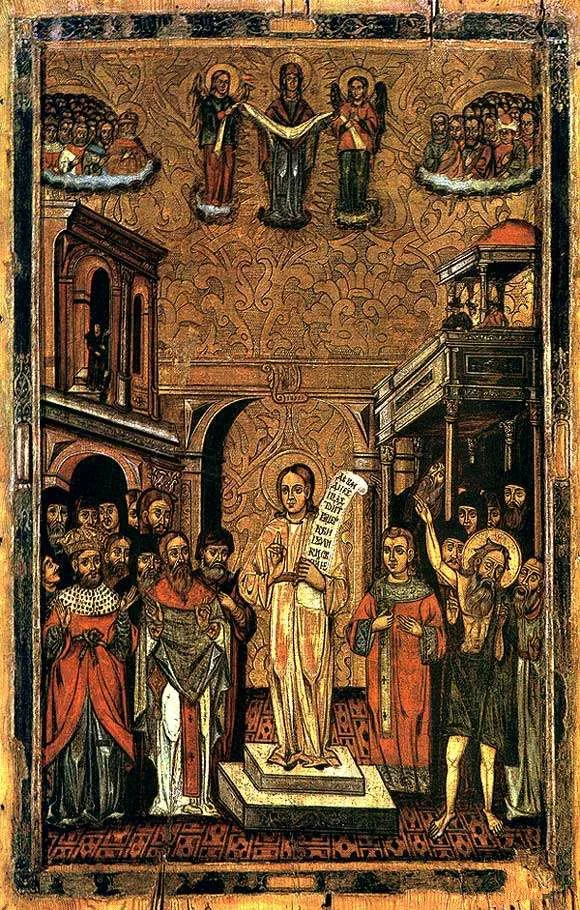
Saint Romanos the Melodist, also called Saint Romanus the Melodist, Romanos the Hymnographer, and Romanos the Sweet-Singer, was a sixth-century Syrian-born deacon, poet, composer, and one of the greatest hymnographers in Christian history. Born in Emesa, the modern city of Homs in Syria, Romanos eventually served the Church in Beirut and Constantinople, where his extraordinary sacred poetry helped shape Byzantine worship for centuries. The Orthodox Church in America remembers him as the composer of nearly a thousand hymns, while the Greek Orthodox Archdiocese describes him as a patron of those who sing for the Church.
Saint Romanos is especially meaningful for church musicians, Byzantine chanters, cantors, choir members, choir directors, singers, composers, hymnographers, poets, Christian writers, readers, deacons, music teachers, people nervous about singing in church, people who have been embarrassed because of their abilities, and anyone asking God to transform an ordinary or undeveloped talent into something that can serve Him. These associations come directly from his life because Romanos devoted his vocation to liturgical music and sacred poetry, and both the Greek Orthodox Archdiocese and Orthodox Church in America continue formally connecting his memory with church musicians.
His connection with church music is particularly strong and is much more than a modern devotional invention. The Greek Orthodox Archdiocese's National Forum of Greek Orthodox Church Musicians identifies Romanos with those who sing for the Church, while the Orthodox Church in America has established an Order of Saint Romanos honoring distinguished composers, arrangers, conductors, teachers, and church musicians. The OCA also observes the Sunday on or after his October 1 feast as Church Musician Sunday, specifically recognizing choir directors, singers, chanters, readers, composers, arrangers, and bell-ringers.
Romanos is also an unusually meaningful saint for someone who feels that his or her voice is not good enough. The ancient devotional tradition preserved by the Churches remembers Romanos as a poor or unimpressive singer who was humiliated by other clergy before receiving, through the intercession of the Mother of God, the extraordinary gift for which he eventually became famous. His story therefore does not simply honor naturally talented musicians because it speaks powerfully to people who love worship but fear that their own abilities are inadequate.
This prayer card is especially fitting for cantors beginning Byzantine chant, children joining a church choir, music directors, seminarians learning liturgical music, deacons, composers writing sacred music, Christian poets, singers preparing for services, and people who have experienced criticism or embarrassment while trying to use their gifts. It can also make a meaningful ordination, choir anniversary, cantor installation, music-school graduation, name-day, baptism, chrismation, parish music ministry, or Christmas gift because Romanos' most famous surviving hymn celebrates the Nativity of Christ.
Each card is handmade in Austin, TX and created to order. We do not keep stock, because every prayer card is treated as a unique devotional offering. They are printed on museum-quality photo paper, not cardstock, and every card is made slowly during prayer with intentional reverence for the saint and for the person who will receive it. Names are lifted before Christ, intentions are held carefully, and each piece is handled multiple times in prayerful silence, asking God for mercy and asking Saint Romanos the Melodist to intercede for the soul it is being made for. This is devotional craftsmanship shaped with patience, care, and spiritual responsibility because every soul and every prayer matters.
THE LIFE & STORY
Saint Romanos was born during the latter part of the fifth century in Emesa, the ancient Syrian city now known as Homs. Orthodox and Melkite sources remember him as having been born into a Jewish family, although the exact circumstances and timing of his conversion or baptism are not securely known. The Melkite Church's Menaion specifically cautions that we do not know when he was baptized or whether the rest of his family converted with him.
His Syrian birthplace is important because Romanos' later contribution to Greek-language Byzantine hymnography did not arise in cultural isolation. The Melkite tradition explains that the form he perfected appears to have important connections with the Syriac tradition of poetic sermons, allowing Romanos to stand at a remarkable meeting point between the Syriac Christian world of the Levant and the Greek-speaking liturgical world of Constantinople.
Romanos therefore belongs naturally within the history of the ancient Church of Antioch as well as within Byzantine Christianity. The Melkite Greek Catholic Church specifically includes him in its Synaxis of the Saints of Antioch, remembering him on October 1 among the saints whose lives emerged from the Syriac and Antiochian Christian world.
FROM HOMS TO BEIRUT
As a young man, Romanos left Syria for Beirut, one of the important Christian centers of the eastern Mediterranean. Greek Orthodox sources remember him serving as a deacon there, while the Melkite Menaion notes that the surviving accounts differ about whether his ordination to the diaconate occurred in Beirut or somewhat later. What is secure is that Romanos entered Church service before eventually making his way to Constantinople.
That uncertainty is worth preserving because Romanos' later fame encouraged different traditions to fill in details of his early biography. The central historical picture remains clear even when every chronological detail cannot be reconstructed: a Syrian Christian formed in the Antiochian world eventually carried his vocation through Beirut into the imperial capital, where his work transformed Christian hymnography.
This movement between Homs, Beirut, and Constantinople also makes Romanos particularly meaningful for Eastern Christians living outside the places where they were born. His life demonstrates how a spiritual inheritance received in one culture can become fruitful within another without requiring someone to erase where he came from.
CONSTANTINOPLE
During the reign of Emperor Anastasius I, Romanos moved to Constantinople, the capital of the Eastern Roman Empire. The Melkite Menaion places him among the clergy accepted by the patriarch and associates him with the Monastery of the Theotokos in the district of Kyros, while the OCA remembers his service at the great church of Hagia Sophia.
Hagia Sophia stood at the heart of imperial Byzantine Christianity. For a man who would become one of the greatest hymnographers in Christian history, serving within the liturgical world of Constantinople placed Romanos at the center of an extraordinarily rich environment of Scripture, preaching, chant, ceremonial worship, theological controversy, and devotion to the Mother of God.
Yet Romanos did not initially arrive as a celebrated musical genius. His hagiographic tradition remembers something almost exactly opposite, which makes the next chapter of his life so important.
THE SINGER WHO COULD NOT SING
The Church's traditional Life remembers Romanos as not initially possessing a beautiful singing voice or impressive ability as a reader. On the eve of the Nativity, he attempted to read during the service so poorly that another reader had to replace him, and members of the clergy mocked him afterward.
The Melkite tradition similarly describes Romanos as lacking a pleasing voice or special ability as a chanter and remembers other clerics deliberately giving him a difficult part in a service, exposing his limitations publicly. Whatever historical details surround the story's later literary development, the tradition consistently remembers a man whose later greatness followed an experience of profound inadequacy and humiliation.
This makes Saint Romanos one of the most meaningful saints for people afraid of singing publicly or serving at the kliros, choir loft, cantor stand, lectern, or ambo. Someone does not have to pretend embarrassment does not hurt in order to continue serving God, because Romanos' tradition begins precisely with a moment in which his desire to worship exceeded his visible ability.
HUMILIATION WITHOUT QUITTING
Romanos could easily have responded by simply refusing ever to sing publicly again. Instead, the tradition remembers him bringing his grief into prayer before the Mother of God, turning humiliation toward God rather than allowing humiliation to determine whether his vocation was finished.
That distinction gives his life a much broader meaning than church music alone. People are often tempted to abandon something good because they were mocked during the earliest and least polished stage of learning it, whether the skill involves chanting, writing, public speaking, teaching, serving at the altar, or making art.
Romanos' story does not promise that every weakness will miraculously disappear. It does teach that another person's ridicule is not a reliable measure of what God may eventually accomplish through someone who remains faithful.
HIS DEVOTION TO THE THEOTOKOS
Romanos possessed a deep devotion to the Mother of God, and the OCA remembers him praying at the Church of the Theotokos at Blachernae. He spent nights in prayer and particularly sought the intercession of the Virgin whose role in the Incarnation would later become one of the great themes of his hymnography.
This Marian dimension is essential to Romanos' story because his famous transformation is not remembered simply as the discovery of a hidden natural talent. Christian tradition specifically interprets his gift as a grace received through the intercession of the Theotokos.
Romanos can therefore be particularly meaningful for Christians asking the Mother of God to help them offer their talents more completely to Christ. His devotion also explains why Marian themes occupy such an important place within the hymnographic tradition associated with his name.
THE VISION OF THE SCROLL
According to the ancient devotional tradition, the grieving Romanos prayed before an icon of the Mother of God and fell asleep. The Theotokos appeared to him and gave him a scroll, commanding him to eat it. Romanos obeyed, and when he awoke he discovered that he had received extraordinary gifts of understanding, composition, poetry, and sacred song.
The image of eating a scroll has deep biblical resonance. The prophets encounter similar imagery when God's word is received so completely that it is not merely observed externally but symbolically consumed, becoming part of the messenger who must proclaim it.
Romanos' tradition therefore connects sacred creativity with something much deeper than artistic inspiration. The hymnographer must first receive the divine word inwardly before offering it outwardly through poetry and song.
“TODAY THE VIRGIN GIVES BIRTH”
At the next service, Romanos mounted the ambo and began chanting the hymn that would become permanently associated with his name. Its famous opening announces that the Virgin gives birth to the Transcendent One, introducing a long poetic meditation upon the mystery of Christ's Nativity.
The short hymn Byzantine Christians commonly call the Kontakion of the Nativity today is only the introductory portion of Romanos' much longer original work. The complete composition contained twenty-four stanzas and functioned almost like a sung theological sermon in poetry.
This is one reason a Saint Romanos prayer card makes a particularly meaningful Christmas gift. Every year millions of Eastern Christians encounter his theological poetry again during the celebration of Christ's birth even when they may not immediately recognize the name of its author.
WHAT IS A KONTAKION?
The modern Byzantine service usually preserves only a relatively short hymn under the name kontakion, but the original form developed by Romanos was considerably larger. The Melkite Menaion explains that Romanos' kontakia consisted of a sequence of poetic stanzas sung by a soloist while the people or choir responded with a recurring refrain.
The OCA similarly describes the classical kontakion as a chanted verse sermon composed of short stanzas ending with a common refrain. Rather than separating preaching, poetry, theology, music, Scripture, and congregational participation into unrelated activities, the form united them within one act of worship.
Romanos became the supreme master of this form. His contribution helps explain why his importance cannot be measured merely by counting how many individual melodies survive today.
THE SYRIAC ROOTS OF HIS POETRY
Romanos' Syrian background may have contributed significantly to the form of poetry he perfected in Greek. The Melkite Menaion notes that musicologists have connected the kontakion with the Syriac memrâ, a poetic or verse homily capable of retelling and interpreting biblical passages through sung poetry.
Romanos appears to have brought that Syrian inheritance into creative interaction with Greek dramatic and poetic conventions. The result became something unmistakably Byzantine while still carrying traces of the Christian culture from which he came.
This makes him an especially important saint for anyone studying the relationship between Syriac Christianity, Antioch, Byzantine worship, and Greek hymnography. Eastern Christian traditions did not develop in sealed compartments because ideas, melodies, poetry, theology, languages, and people continually crossed regional boundaries.
A SAINT OF THE ANTIOCHIAN WORLD
Because Romanos was born in Homs and served the Church in Beirut before his Constantinopolitan ministry, the Melkite Greek Catholic Church includes him among the Saints of Antioch. This gives him an unusually beautiful position within Eastern Christianity because both Antiochian and Byzantine worlds can recognize part of their spiritual inheritance within him.
For Melkite Catholics in particular, Romanos is not simply an important Byzantine hymnographer from somewhere far away. He emerged from the same Syriac and Levantine Christian world that forms an essential part of Antiochian identity before carrying those gifts into the worship of Constantinople.
A Romanos prayer card can therefore be particularly meaningful for Melkite Catholics, Antiochian Orthodox Christians, Syrian Christians, Lebanese Christians, Byzantine Catholics, Greek Orthodox Christians, and anyone studying the interaction between Syriac and Byzantine traditions.
THEOLOGY THAT COULD BE SUNG
Romanos wrote sacred poetry about the Incarnation, Nativity, Crucifixion, Resurrection, saints, biblical events, repentance, and Christian life. His work transformed theology into language capable of being sung and remembered, allowing doctrinal teaching to enter the worshipper's imagination as well as the intellect.
This is one of the reasons sacred hymnody occupies such an important place within Eastern Christianity. Christians repeatedly sing theological truths until the language of doctrine becomes part of the memory and eventually part of the language through which they pray.
Romanos therefore makes an especially fitting saint for Christian songwriters and composers. The purpose of sacred music is not merely creating something emotionally beautiful because beauty becomes genuinely ecclesial when it serves truth, worship, Scripture, and the glorification of God.
SCRIPTURE BECOMING POETRY
Romanos possessed an extraordinary ability to retell biblical events dramatically. Characters speak, questions are asked, biblical images interact with one another, and Old Testament events become prophetic patterns revealing Christ and the mysteries of salvation.
The OCA particularly highlights Romanos' use of biblical typology, in which people, places, and events of the Old Testament are understood as patterns fulfilled in Christ. One example is the Burning Bush, interpreted as an image of the Theotokos bearing the divine Word without being consumed.
His hymnography therefore provides a powerful example for Christians trying to understand how the Fathers read Scripture. Biblical interpretation was not limited to extracting isolated propositions because Scripture formed an interconnected story whose patterns culminated in Christ.
A PREACHER THROUGH MUSIC
Although Romanos is usually called a hymnographer rather than a preacher, the ancient kontakion was essentially capable of functioning as a sermon in verse. A congregation could listen to an extended theological treatment of a feast while participating repeatedly through the refrain.
Romanos therefore occupies an interesting position between preacher, poet, theologian, composer, and liturgical musician. His work challenges modern distinctions that sometimes place theology in the classroom, preaching at the pulpit, music in the choir loft, and poetry somewhere outside serious Christian teaching.
His life makes him meaningful for anyone trying to communicate Christianity creatively without weakening its theological substance. Art can become catechesis when beauty and truth remain joined.
SIMPLE LANGUAGE & DEEP THEOLOGY
The Greek Orthodox Archdiocese emphasizes that Romanos wrote hymns capable of speaking to the hearts of ordinary people through accessible language and attractive poetic meter. His greatness therefore did not depend upon making every theological idea sound complicated.
This provides an especially useful model for Christian writers, teachers, composers, and catechists. Making theology understandable is not the same thing as making it shallow because some of the greatest teachers in Christian history possessed the ability to express profound truths in memorable language.
Romanos can therefore be asked to intercede for people working to find the right words, especially when the goal is to make the faith accessible without changing what the Church actually teaches.
THE SWEET-SINGER
Romanos became known by titles including Melodist, Sweet-Singer, and Righteous Chanter. These titles reflect the extraordinary transformation remembered by the Church, in which the man originally mocked for his voice eventually became permanently associated with the beauty of Christian hymnody.
The Greek title Melodos refers to more than someone who simply wrote words. The Greek Orthodox School of Byzantine Music explains that Romanos' designation as a melodist indicates a figure associated with composing both sacred poetry and its musical expression.
His card therefore belongs naturally beside the music stand of a cantor, composer, choir director, or church musician. The title by which history remembers him is itself a reminder of how completely grace can redirect the story others once told about someone's limitations.
PATRON OF CHURCH MUSICIANS
Romanos' connection with church musicians is unusually well established. The Greek Orthodox Archdiocese explicitly describes him as having been called the patron saint of all who sing for the Church, and its National Forum honors distinguished church musicians with the Saint Romanos the Melodist Medallion.
The Orthodox Church in America likewise places its Order of Saint Romanos under his patronage and bestows the honor upon influential composers, arrangers, teachers, conductors, and other people who have significantly served Orthodox liturgical music.
Calling Romanos a patron of church musicians is therefore not an invented product-page designation. It reflects actual institutional devotion within contemporary Orthodox Christianity.
CHURCH MUSICIAN SUNDAY
The Holy Synod of Bishops of the Orthodox Church in America designated the Sunday on or following Romanos' October 1 commemoration as Church Musician Sunday. The observance honors those whose work makes liturgical music possible in Orthodox parishes.
The OCA specifically names choir directors, singers, chanters, readers, composers, arrangers, and bell-ringers among those whose service should be recognized. This gives almost every form of Orthodox parish music ministry a concrete connection with Romanos' feast.
A Saint Romanos card is therefore particularly appropriate as a thank-you gift from a parish to a choir director, cantor, longtime choir member, or volunteer musician whose service often remains largely invisible to the congregation.
A SAINT FOR BYZANTINE CHANTERS
Romanos is naturally associated with psaltai and Byzantine chanters, and modern Greek Orthodox institutions continue using his name for organizations devoted specifically to preserving Byzantine chant. His legacy represents an ancient model of singing as ministry rather than performance.
A chanter stands in an unusual place because the voice must be audible without allowing the personality of the singer to become the center of worship. Romanos' story is therefore especially suitable for prayer for humility, preparation, memory, musical discipline, and the ability to direct attention toward the sacred text rather than toward oneself.
His intercession can be sought both by highly trained chanters and by someone struggling through the first tones and unfamiliar notation of Byzantine music. His own hagiography begins not with mastery but with weakness.
A SAINT FOR CHOIR MEMBERS
Romanos is equally fitting for choir members, including people who may never sing solos or receive public recognition. Church music depends upon disciplined cooperation, because each singer must listen to others and allow an individual voice to become part of something larger.
The modern observances dedicated to Romanos intentionally include ordinary singers as well as composers and directors. The Church's recognition therefore reflects the importance of the person who faithfully stands in the choir week after week even without producing famous compositions.
A Romanos card can make a meaningful choir anniversary or end-of-year gift because it honors music as a genuine form of service to the worshipping Church.
A SAINT FOR COMPOSERS
Romanos' extraordinary creative output makes him one of Christianity's strongest saints for composers and hymnographers. The OCA tradition attributes nearly a thousand hymns to him, with approximately eighty surviving, while modern Greek Orthodox scholarship identifies roughly eighty-five surviving kontakia attributed to him.
Numbers vary somewhat because attribution within ancient manuscript traditions is complicated. What does not depend upon an exact count is Romanos' status as one of the most prolific and influential sacred poets of Byzantine Christianity.
Christian composers can therefore seek his intercession not merely for creativity but for discernment about whether the music they create truly serves prayer.
A SAINT FOR POETS & WRITERS
Romanos also belongs naturally beside poets, writers, dramatists, and storytellers. His surviving works show that imagination, dialogue, symbolism, emotion, biblical interpretation, and doctrinal precision can coexist within Christian writing.
His example is particularly valuable for writers who fear that serious theology must always sound dry. Romanos helped generations of Christians encounter doctrine through beautiful language precisely because he did not treat beauty and truth as enemies.
A writer can therefore ask Saint Romanos for clarity, humility, disciplined imagination, and the grace to produce work that serves Christ instead of simply displaying talent.
A SAINT FOR PEOPLE WHO HAVE BEEN MOCKED
Perhaps one of Romanos' most immediately human devotional associations is with people who have been laughed at while trying to do something good. His hagiography deliberately remembers the ridicule he suffered before describing the gift that later astonished those same people.
The point is not that every critic will eventually be proven wrong in a dramatic miracle. It is that humiliation does not possess authority to decide what someone is capable of becoming.
A person beginning choir, seminary, public speaking, writing, music, or another ministry can keep Romanos' card nearby as a reminder that early weakness and final vocation are not always the same thing.
A SAINT FOR CREATIVE BLOCKS
Romanos can also be a meaningful intercessor when a writer, poet, singer, or composer feels unable to create. His traditional vision of receiving the scroll presents creativity as something offered back to God after first being received as gift.
This does not eliminate the need for practice, study, editing, musical training, or disciplined work. Christian prayer for creativity asks God to bless human effort rather than replace it.
Romanos' example therefore provides a healthier spiritual model than waiting passively for inspiration. Prayer, preparation, humility, perseverance, and work can all belong to the same creative vocation.
A SAINT FOR DEACONS
Romanos' tradition strongly associates him with the diaconate. Greek Orthodox sources remember him serving as a deacon in Beirut, while Orthodox tradition also remembers his later service in Constantinople, although sources vary regarding the precise chronology of his ordination.
This makes his prayer card particularly appropriate for men discerning or entering the diaconate. His life demonstrates that diaconal service can include much more than liturgical function because a deacon's voice, teaching, writing, creativity, and prayer can become lasting service to the Church.
A Saint Romanos card can therefore make a meaningful ordination-to-the-diaconate gift, particularly for a deacon with responsibility for chanting, preaching, teaching, or liturgical preparation.
HAGIA SOPHIA
Romanos eventually became associated with Hagia Sophia, the Great Church of Constantinople and one of the most important churches in Christian history. The OCA remembers him serving there as sacristan, while the Melkite Menaion likewise places his final service within the Great Church.
A sacristan carried responsibility for sacred vessels, liturgical objects, and practical preparation for worship. This means that the famous poet's vocation also contained ordinary work that had to be done faithfully behind the scenes.
Romanos therefore offers church musicians an important reminder that visible creative work and hidden practical service belong together. The composer whose hymns crossed centuries was also responsible for things that simply needed to be prepared correctly for church.
THE NATIVITY OF CHRIST
The Incarnation and Nativity stand at the center of Romanos' most famous surviving composition. His Nativity Kontakion celebrates the paradoxes of Christian faith: the eternal God becomes a child, the inaccessible One enters a cave, and divine majesty appears within human poverty.
The hymn's endurance demonstrates the power of good theology expressed memorably. Christians may forget an entire theological lecture but continue carrying a line of hymnography in their minds for decades.
Romanos' prayer card is therefore especially fitting for a Christmas prayer corner, church choir Christmas exchange, Nativity concert, or gift to someone who sings during the Christmas services.
ROMANOS & THE MOTHER OF GOD
The Theotokos is not important in Romanos' story only because of the scroll vision. Marian imagery appears repeatedly within the theological world of his poetry because the Mother of God reveals the mystery of the Incarnation: the eternal Word truly assumed human nature and was genuinely born from a human mother.
Romanos' poetic theology therefore illustrates why Eastern Christian devotion to Mary is fundamentally Christological. Her significance continually points toward the identity of her Son.
His life can be especially meaningful for Marian singers, composers of hymns to the Theotokos, and people whose devotion to Mary leads them more deeply into the mystery of Christ.
DID ROMANOS WRITE THE AKATHIST HYMN?
Saint Romanos has traditionally been associated with the famous Akathist Hymn to the Theotokos, but its authorship should not be presented as historically certain. Some Orthodox sources consider Romanos a likely author, while the Melkite Menaion notes that he was frequently credited with the Akathist but concludes that the attribution probably should not be treated as secure.
The Antiochian Archdiocese likewise preserves a tradition identifying Romanos with the Akathist, demonstrating that the attribution is genuinely old and important even though modern scholarship has not universally accepted it.
The most accurate product-page language is therefore that the Akathist has traditionally been attributed to Saint Romanos, but its authorship remains disputed. His established hymnographic achievement is extraordinary even without depending upon the Akathist attribution.
WHY MOST OF HIS KONTAKIA ARE NO LONGER SUNG IN FULL
Romanos' long kontakia once occupied a much larger role within Byzantine worship than they do today. Over subsequent centuries, the canon became increasingly dominant within the morning office, and the older extended kontakion gradually contracted until usually only its introductory portion and an associated oikos remained.
This explains why Romanos can simultaneously be one of history's greatest Byzantine hymnographers while modern churchgoers hear only relatively small pieces of his original compositions during ordinary services.
His influence is therefore larger than the amount of Romanos' writing a parishioner hears on any particular Sunday. He helped shape a stage in the development of Byzantine worship whose influence remains embedded within the tradition.
THE CONTINUING LIFE OF HIS HYMNS
Although the complete classical kontakion largely disappeared from regular liturgical use, portions of Romanos' poetry remain alive in Eastern worship. His Nativity Kontakion is among the most familiar examples, and Orthodox writers continue drawing upon his surviving works for theological reflection.
This gives Romanos an extraordinary kind of immortality within Christian culture. Words written approximately fifteen centuries ago continue entering churches through the voices of people who may speak completely different modern languages from the Syrian poet who first composed them.
For Christian artists, this is a powerful reminder that work created in prayer may serve people whom its creator will never meet.
THE DIFFERENT DATES GIVEN FOR HIS DEATH
Ancient chronology surrounding Romanos is not completely uniform. The OCA and Melkite sources commonly place his repose around 556, while one Greek Orthodox Church Music biography gives the earlier date of 510.
Because the majority of the detailed ecclesiastical sources consulted here place him in the sixth century and around 556, the safest product-page dating is c. 490 to c. 556, while acknowledging that older devotional sources sometimes provide different dates.
This is a case where precision should not be manufactured simply because customers expect a birth-and-death date. Romanos' feast and historical period are secure even though the exact chronology of his life remains partially uncertain.
HIS REPOSE
Saint Romanos continued composing sacred poetry and serving the Church until his repose, traditionally placed around the middle of the sixth century. The OCA and Melkite Synaxis both place his death around 556 and remember a surviving corpus of roughly eighty compositions from a far larger original output.
Romanos did not need to die as a martyr for his life to become a permanent offering to the Church. His martyrdom was instead the quieter surrender involved in a lifetime of prayer, service, creativity, liturgy, discipline, and using a gift for the glory of Christ.
His voice eventually fell silent, but the Church continued singing.
HIS RELICS
Unlike several major Eastern saints whose complete relic shrines are well documented in current ecclesiastical sources, the principal Orthodox and Melkite sources describing Romanos do not identify a securely documented modern location containing his principal relics. The most responsible approach is therefore not to repeat unsourced internet claims about where his body or major relics are located.
Individual churches or monasteries may possess small relic fragments attributed to Saint Romanos, but a specific present-day location should be verified directly with the church possessing the relic before being presented to customers as an established pilgrimage destination.
For this product page, it is therefore better to state that the principal location of Romanos' relics is not securely documented in the official sources consulted rather than manufacture certainty.
FEAST DAY
Saint Romanos the Melodist is commemorated on October 1 in the Byzantine tradition. The Orthodox Church in America, Greek Orthodox Archdiocese, and Melkite Greek Catholic tradition all identify October 1 as his feast.
October 1 is also associated in Byzantine tradition with the Protection of the Theotokos, and some icons of that feast include Romanos chanting from the ambo. The shared date is especially fitting given the central place the Mother of God occupies within the traditional story of Romanos receiving his hymnographic gift.
His feast is therefore particularly appropriate for parish choirs and church musicians to seek his intercession and give thanks for the gift of sacred music.
PRAYERS
A simple traditional invocation may be prayed throughout the day: Venerable Father Romanos the Melodist, pray to God for us. It is especially fitting before choir rehearsal, chanting, composing sacred music, writing, reading in church, beginning a music lesson, or stepping forward to sing when fear or self-consciousness makes someone want to remain silent.
The Orthodox Church's established Troparion for Saint Romanos praises him for bringing joy to Christ's Church through his melodies, compares him to an inspired heavenly trumpet, remembers his illumination through the Mother of God, and honors him as God's poet. This existing liturgical hymn provides the safest and most traditional devotional prayer for a Romanos prayer card because it comes directly from the Church's worship rather than from a newly invented modern prayer.
Someone who has been mocked for singing can ask Romanos for perseverance without resentment, while a talented musician can ask his intercession for humility. A composer may seek help joining beauty with theological truth, and a cantor may ask for the grace to remember that the purpose of the voice is to lead prayer rather than attract attention.
A person struggling with creative work can also seek his prayers for discipline and inspiration. Romanos' story does not present creativity as personal possession because the gift represented by the scroll is something received from God and returned to Him in worship.
This prayer card is especially fitting beside a music stand, Byzantine chant book, choir folder, Psalter, Bible, prayer rope, composer's desk, piano, organ, recording workspace, deacon's prayer book, or home prayer corner. It can also make a meaningful gift for a cantor, choir director, singer, composer, church musician, seminarian, deacon, poet, music teacher, or young person joining a church choir for the first time.
FAQ
Who was Saint Romanos the Melodist? Saint Romanos the Melodist was a Syrian-born Christian deacon, poet, composer, and hymnographer who flourished during the late fifth and sixth centuries. He became famous in Constantinople for the long theological hymns called kontakia and is remembered as one of the greatest hymnographers of Byzantine Christianity.
Is Romanos the Melodist the same as Romanus the Melodist? Yes, Romanos and Romanus are different English forms of the same saint's name. Orthodox sources may also call him Roman the Melodist, Romanos the Hymnographer, or Romanos the Sweet-Singer.
Why is Saint Romanos called the Melodist? The title reflects his extraordinary contribution to sacred poetry and music. The Greek Orthodox School of Byzantine Music explains that a melodist was associated not simply with writing hymn texts but also with their musical composition.
Why is Saint Romanos called the Sweet-Singer? “Sweet-Singer” is one of the devotional titles traditionally attached to Romanos because of the beauty of the sacred hymnody for which he became famous. The title is particularly striking because his hagiography remembers him initially as an unimpressive singer.
Where was Saint Romanos born? He was born in Emesa, an ancient Syrian city corresponding to modern Homs, Syria. Melkite and Orthodox sources firmly connect him with the Syrian Christian world.
Was Saint Romanos Syrian? Yes, he was born in Syria and later served in Beirut before establishing himself in Constantinople. His Syrian background is particularly important for understanding the possible Syriac influences upon the hymnographic form he perfected.
Was Saint Romanos Jewish before becoming Christian? Church sources remember Romanos as having been born into a Jewish family. The exact circumstances of his baptism or conversion are uncertain, and the Melkite tradition specifically notes that we do not know when he was baptized or whether his entire family converted.
Is Saint Romanos connected with Antioch? Yes, Romanos was born in Homs and served in Beirut, both within the wider historical world of the Patriarchate of Antioch. The Melkite Greek Catholic Church specifically includes him in its Synaxis of the Saints of Antioch.
Is Saint Romanos important to Melkite Catholics? Yes, the Melkite Church commemorates him on October 1 and explicitly places him among the Saints of Antioch. His Syrian background and enormous influence upon Byzantine hymnography make him particularly meaningful within the Melkite tradition.
Is Saint Romanos important to Antiochian Orthodox Christians? Yes, his Syrian origin and connection with the ancient Antiochian Christian world give him a genuine place within Antiochian spiritual history. His subsequent ministry in Constantinople also makes him an important bridge between Antiochian and Byzantine Christian cultures.
Did Saint Romanos live in Beirut? Yes, sources connect Romanos with Church service in Beirut before his move to Constantinople. Greek Orthodox tradition identifies him as a deacon there, although the Melkite Menaion notes uncertainty about the precise timing of his ordination.
Was Saint Romanos a deacon? Yes, he is firmly remembered within Christian tradition as a deacon. Sources differ slightly about whether he was already ordained in Beirut or received ordination later in Constantinople.
Did Saint Romanos serve at Hagia Sophia? Yes, the Orthodox Church in America and Melkite sources associate his later ministry with the Great Church of Constantinople, Hagia Sophia. He is remembered in particular for service connected with the church and its liturgical life.
Was Saint Romanos originally a bad singer? His traditional Life says that Romanos was initially an unimpressive reader and singer and was mocked by other clergy after performing poorly during a service. This episode forms the setting for the famous vision in which the Mother of God gave him the scroll.
Why did other singers make fun of Saint Romanos? The devotional tradition remembers them ridiculing him because his voice and reading did not match the skill of the more experienced church singers. The humiliation affected him deeply and drove him toward prayer.
What happened when the Theotokos appeared to Saint Romanos? According to Church tradition, the Mother of God appeared to him while he was grieving and praying and gave him a scroll to eat. Afterward Romanos received an extraordinary gift of sacred poetry, understanding, and song.
Why did Saint Romanos eat a scroll? The scroll belongs to the visionary language of his hagiography and reflects biblical imagery in which God's word is symbolically consumed by those commissioned to proclaim it. The tradition presents Romanos' hymnographic gift as something spiritually received rather than merely self-created.
What was Saint Romanos' first famous hymn? His tradition identifies his great Nativity Kontakion, beginning with the Virgin giving birth to the Transcendent One, as the hymn he first proclaimed after receiving his miraculous gift.
Did Saint Romanos write “Today the Virgin”? Yes, the Nativity Kontakion associated with Romanos begins with the famous proclamation concerning the Virgin giving birth to the Transcendent One. The short hymn sung today is only the beginning of a much longer original composition.
How long was Saint Romanos' Nativity Kontakion? The original Nativity Kontakion contained an introductory section followed by twenty-four stanzas. Modern Byzantine worship ordinarily preserves only a small portion of the complete ancient work.
What is a kontakion? In Romanos' period, a kontakion was a lengthy sung poetic sermon composed of multiple stanzas with a repeated refrain. The much shorter kontakion familiar in modern Byzantine worship developed after this older form declined.
Did Saint Romanos invent the kontakion? It is more accurate to say that Romanos became the supreme master and most important hymnographer of the form rather than simply claiming that he invented it from nothing. Earlier poetic and Syriac traditions contributed to the development of the genre.
Is the kontakion connected with Syriac Christianity? Scholars have identified possible connections between the Byzantine kontakion and the Syriac memrâ, a form of poetic or sung homily. The Melkite Menaion specifically highlights this relationship when discussing Romanos' Syrian background.
How many hymns did Saint Romanos write? Church tradition attributes nearly a thousand compositions to Romanos, although only a fraction survive and ancient attribution is sometimes difficult to establish with certainty. Orthodox sources commonly place the surviving number around eighty to eighty-five.
Did Saint Romanos write the Akathist Hymn? Possibly, but the attribution is disputed. Some Orthodox traditions consider Romanos a likely author, while the Melkite Menaion cautions that the traditional attribution does not appear historically certain.
Is Saint Romanos the patron saint of church musicians? Yes, this is an exceptionally well-grounded devotional association. Greek Orthodox institutions call him the patron of those who sing for the Church, while the OCA places Church Musician Sunday and its Order of Saint Romanos in direct connection with him.
Is Saint Romanos the patron saint of singers? He is particularly associated with singers who serve the Church. His patronage is therefore strongest when singing is connected with Christian worship, choir ministry, chanting, or sacred music.
Is Saint Romanos the patron saint of Byzantine chanters? He is one of the strongest saints for Byzantine chanters because his entire legacy centers upon sacred hymnody and liturgical song. Modern Orthodox organizations devoted to Byzantine chant continue using his name and seeking his patronage.
Can choir members pray to Saint Romanos? Yes, choir members are specifically among the church musicians honored in contemporary Orthodox observances connected with Romanos. His feast is an especially appropriate time for parish choirs to seek his prayers.
Can choir directors pray to Saint Romanos? Yes, choir directors are specifically included within the Church Musician Sunday observance connected with Romanos. The OCA also honors distinguished conductors and teachers through the Order bearing his name.
Can composers pray to Saint Romanos? Yes, composition was at the center of Romanos' vocation, and modern Orthodox institutions invoke his patronage in honoring composers and arrangers. His life makes him especially meaningful for people creating music intended for worship.
Can writers and poets pray to Saint Romanos? Yes, Romanos was one of the great religious poets of Christian antiquity. His extraordinary ability to combine theology, Scripture, dramatic storytelling, and poetry gives him a natural devotional association with Christian writers and poets.
Can someone who is afraid to sing pray to Saint Romanos? Yes, his traditional Life makes this an especially meaningful use of his card because Romanos himself was remembered as an unimpressive singer who suffered public embarrassment. His story can encourage someone who wants to serve but feels inadequate.
Can someone pray to Saint Romanos for a better singing voice? Christians may certainly ask his intercession for help developing a voice in service to God. His story should not be treated as a promise of miraculous vocal transformation, but it provides a genuine traditional connection between Romanos, prayer, musical ability, and the offering of one's voice to God.
Can someone pray to Saint Romanos for creativity? Yes, particularly when that creativity is being used for Christian music, poetry, writing, teaching, or worship. His traditional reception of the scroll makes him a powerful reminder that creative gifts can be received with gratitude and returned to God through disciplined service.
Is Saint Romanos a good saint for people with stage fright? His biography gives him a meaningful devotional connection with people afraid of public performance because he knew humiliation connected with his voice. The more historically accurate language is to call him a meaningful intercessor rather than inventing a formal title such as patron saint of stage fright.
Is Saint Romanos a good saint for deacons? Yes, because Romanos himself served as a deacon and used his liturgical and creative gifts in service to the Church. His card can make an especially meaningful gift for a newly ordained deacon who also chants, teaches, writes, or serves liturgically.
What is Church Musician Sunday? The Orthodox Church in America observes the Sunday on or after Saint Romanos' feast as Church Musician Sunday. It recognizes the work of choir directors, singers, chanters, readers, composers, arrangers, bell-ringers, and others who support liturgical music.
What is the Order of Saint Romanos? The Orthodox Church in America established the Order of Saint Romanos under his patronage to recognize exceptional contributions to Orthodox liturgical music. Recipients have included influential composers, arrangers, conductors, teachers, and other musicians.
What is the Saint Romanos Medallion? The National Forum of Greek Orthodox Church Musicians awards the Saint Romanos the Melodist Medallion for exemplary national contributions to church music within the Greek Orthodox Archdiocese of America.
When is Saint Romanos the Melodist's feast day? Saint Romanos is commemorated on October 1. Orthodox and Melkite sources agree on this feast date even where some chronological details concerning his life differ.
Is Saint Romanos connected with the Protection of the Theotokos? His feast falls on October 1, the same date associated with the Protection of the Theotokos in much of the Byzantine tradition. Some icons of the feast even depict Romanos chanting from the ambo.
When was Saint Romanos born? His precise birth year is not known. He was born in the latter part of the fifth century, and modern presentations commonly place his birth around 490.
When did Saint Romanos die? The chronology is not completely uniform, but the OCA and Melkite tradition place his death around 556. Some other Church materials give an earlier date, so approximately 556 is preferable to claiming a precise date beyond the evidence.
Where are Saint Romanos' relics? The principal ecclesiastical sources used for this page do not identify one securely documented modern shrine containing his principal relics. Because online claims vary, a particular relic location should be independently verified before being presented as certain.
Is Saint Romanos an Orthodox saint? Yes, he is widely venerated throughout Eastern Orthodoxy and occupies an especially important place within Byzantine liturgical tradition. His feast appears in Orthodox calendars on October 1.
Do Eastern Catholics venerate Saint Romanos? Yes, Byzantine Catholics venerate him as part of their shared Byzantine liturgical heritage. The Melkite Greek Catholic Church specifically commemorates him and includes him among the Saints of Antioch.
Is Saint Romanos a Catholic saint? Romanos lived centuries before the later division between Catholic and Eastern Orthodox Christianity and belongs to the shared ancient Christian heritage of East and West. He is particularly prominent within Orthodox and Byzantine Catholic liturgical tradition.
Why is Saint Romanos important to Byzantine Christianity? He perfected one of the great forms of early Byzantine hymnography and produced theological poetry that profoundly shaped Christian worship. His work united Scripture, doctrine, preaching, poetry, music, and congregational participation.
Why are most of Romanos' complete kontakia no longer sung? The longer kontakion gradually lost its earlier place as the canon became dominant within Byzantine worship. Modern services generally preserve only shorter remnants of what had once been extensive poetic sermons.
Can I give this card to a cantor? Yes, Saint Romanos is one of the most fitting saints possible for a cantor or Byzantine chanter. His card can be given when someone begins chanting, completes music training, accepts a parish position, or simply needs encouragement in a demanding ministry.
Can I give this card to a church choir member? Yes, contemporary Orthodox observances honoring Romanos explicitly recognize choir singers as part of the Church's music ministry. The card can make a particularly appropriate choir appreciation or Christmas gift.
Can I give this card to a music teacher? Yes, especially to someone teaching sacred music, choir, Byzantine chant, or children preparing to sing in church. The Order of Saint Romanos itself recognizes teaching as an important contribution to Orthodox liturgical music.
Can I give this card to a songwriter? Yes, especially when the recipient is trying to write Christian or liturgical music. Romanos' example reminds songwriters that artistic beauty can become a genuine vehicle for Scripture and theology when it remains ordered toward God.
Can I give this card to someone who was embarrassed while singing? Yes, this may be one of the most personal uses of a Romanos prayer card because his traditional story begins with exactly that kind of humiliation. His life can remind someone that a painful early failure does not necessarily reveal the final limits of a gift.
What does Saint Romanos teach about talent? His life teaches that ability should ultimately be understood as gift and responsibility rather than personal glory. The voice, intelligence, imagination, and creative skill given to a person reach their highest purpose when they are offered back to God in service.
What does Saint Romanos teach about failure? His story demonstrates that an embarrassing failure does not necessarily mean someone should abandon a vocation. Romanos' remembered weakness became the setting in which his dependence upon God became most visible.
What does Saint Romanos teach about church music? His life and legacy demonstrate that church music can teach theology, interpret Scripture, unite a congregation in prayer, and proclaim Christian truth through beauty. Music in worship is therefore ministry rather than entertainment.
What does Saint Romanos teach about Christian creativity? Romanos shows that Christian creativity does not need to choose between artistic excellence and doctrinal depth. His greatest poetry became beautiful precisely because Scripture, theology, imagination, and worship were allowed to work together.
What is the main message of Saint Romanos the Melodist's life? Saint Romanos' life teaches that God can transform weakness offered in humility into a gift that serves generations. A Syrian Christian from Homs passed through Beirut to Constantinople, experienced humiliation because of his voice, sought the Mother of God's help in prayer, became one of Christianity's greatest hymnographers, and composed sacred poetry that Christians still sing roughly fifteen centuries later. His story speaks especially to anyone who has ever believed that a weak voice, imperfect beginning, criticism, or lack of confidence means there is nothing worth offering to God, because Romanos became the Sweet-Singer only after first knowing what it was like to feel that he could not sing.
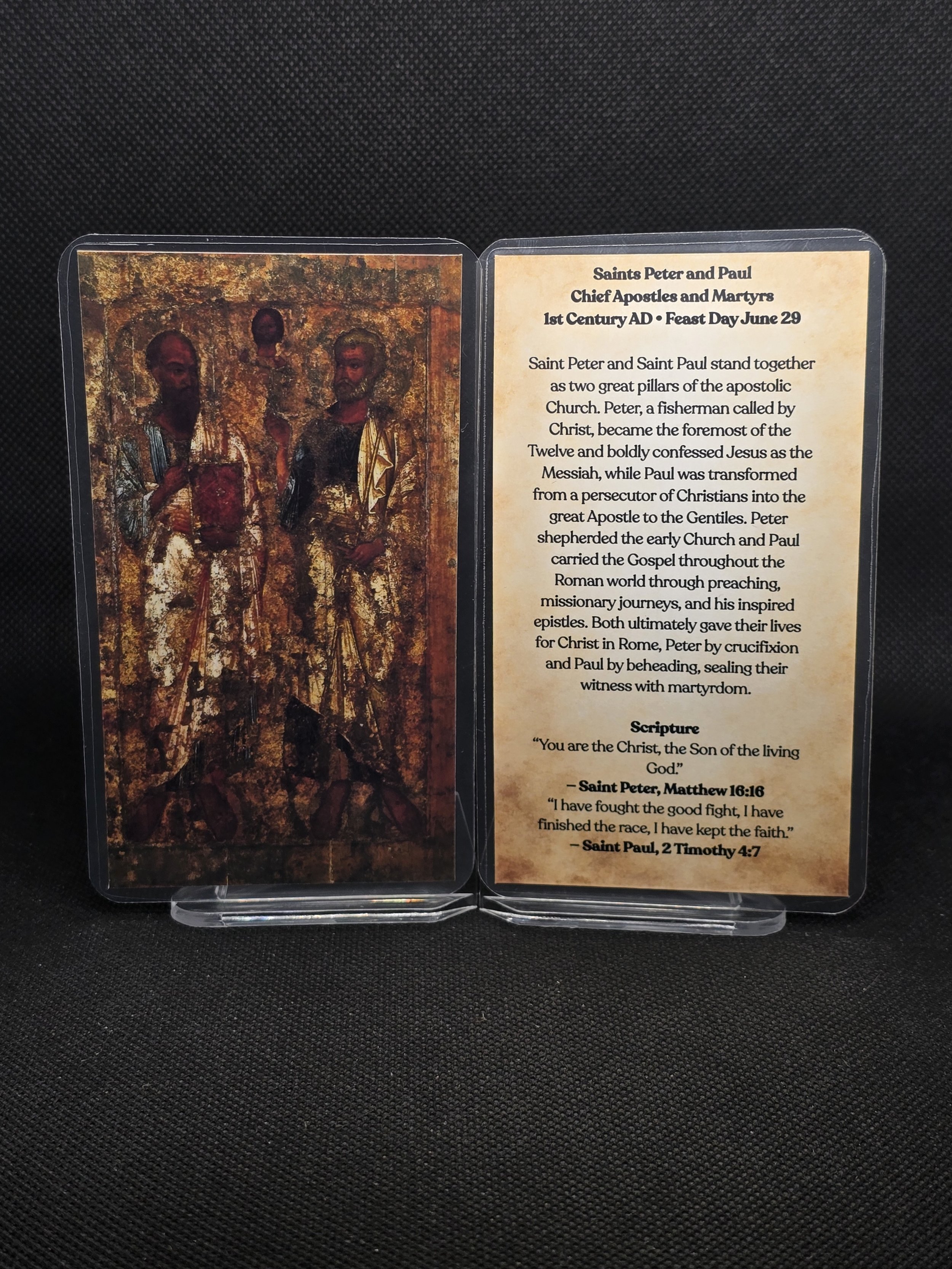
Saints Peter and Paul, the Holy Glorious and All-Praised Leaders of the Apostles, stand together as two of the greatest witnesses to the transforming power of Jesus Christ. Peter was the Galilean fisherman who followed Christ from the beginning, confessed Him as the Messiah, failed Him through fear, was restored by the risen Lord, and became a shepherd of the early Church. Paul began as a persecutor of Christians, encountered the risen Christ on the road to Damascus, and became the great Apostle to the Gentiles. The Eastern Church commemorates them together on June 29 and honors them as the foremost leaders of the Apostles.
Saints Peter and Paul are especially meaningful for anyone who believes past failures have made holiness impossible. Peter denied Christ three times. Paul actively persecuted the Church. Neither man's worst moment became the final definition of his life. Christ restored Peter and commanded him to feed His sheep. Christ confronted Paul, transformed his entire direction, and sent him to proclaim the Gospel he had once tried to destroy.
Together, they are powerful intercessors for conversion, returning to God after serious failure, perseverance in Christian vocation, courage to proclaim the faith, Church leadership, missionary work, reconciliation, and unity despite differences. Their paired feast is especially striking because Peter and Paul were not identical personalities who agreed effortlessly about everything. Scripture records real disagreement between them concerning the treatment of Gentile Christians, yet the Church remembers them together as brothers in faith whose different gifts ultimately served the same Gospel. The Catholic Church likewise venerates them together as pillars of the Church and patrons of Rome.
For someone who has failed publicly, fallen into serious sin, abandoned prayer, hurt others, walked away from Christianity, or simply believes God could never use them again, Peter and Paul offer an unmistakable answer. Peter's cowardice did not prevent him from becoming a courageous preacher. Paul's persecution did not prevent him from becoming an Apostle. Grace did not pretend their pasts had never happened. Grace transformed what came next.
They are equally important for Christians who need courage to speak openly about Jesus Christ. Peter stood before crowds at Pentecost and proclaimed Christ publicly. Paul crossed cities, cultures, and political boundaries preaching the Gospel despite imprisonment, beatings, rejection, danger, and eventually martyrdom. The men who had once been ruled by fear or misdirected zeal became fearless witnesses because they had encountered the risen Lord.
This prayer card is created for converts, people returning to the Church, clergy, seminarians, missionaries, evangelists, catechists, church leaders, Christians struggling after failure, those discerning a vocation, people seeking reconciliation, and anyone who needs courage to begin again after making serious mistakes. It is also especially fitting for friends or family members named Peter or Paul and as a gift for ordinations, professions of faith, conversions, missionary work, or the feast of the Holy Apostles.
Saints Peter and Paul's strongest traditional associations include apostleship, evangelization, missionary work, leadership in the Church, preaching, conversion, courage under persecution, perseverance, and the city of Rome. Their lives also make them especially meaningful devotional intercessors for restoration after failure and for unity among Christians with different personalities, backgrounds, and gifts.
Each card is handmade in Austin, TX and created to order. We do not keep stock, because every prayer card is treated as a unique devotional offering. They are printed on museum-quality photo paper, not cardstock. Every card is made slowly, during prayer, with intentional reverence for the saint or holy image and for the person who will receive it. Names are lifted before Christ. Intentions are held carefully. Each piece is handled multiple times in prayerful silence, asking God for mercy and asking the saints to intercede for the soul it is being made for. This is not production work. It is devotional craftsmanship shaped with patience, care, and spiritual responsibility, because every soul and every prayer matters.
THE LIFE & STORY
Saint Peter was originally named Simon. He came from Bethsaida in Galilee, was the brother of Saint Andrew the First-Called, and worked as a fisherman. Scripture also tells us that Peter was married, because Christ healed his mother-in-law from a fever. Jesus gave Simon the name Cephas, or Peter, meaning rock.
Peter became one of the disciples closest to Christ. Together with James and John, he witnessed moments that not every Apostle saw. His personality emerges throughout the Gospels with unusual clarity. He is passionate, impulsive, loyal, confident, frightened, courageous, confused, and deeply human.
At Caesarea Philippi, Jesus asked His disciples who they believed Him to be. Peter answered with the great confession that Jesus was the Christ, the Son of the living God. Christ blessed Peter and spoke of the rock upon which His Church would be built. This confession became central to Peter's place in Christian history.
Yet Peter's faith was not a simple upward progression from strength to greater strength.
On the night Christ was arrested, Peter insisted that even if others abandoned Jesus, he would remain faithful. Within hours, fear overtook him.
Three times Peter denied knowing Christ.
Then the rooster crowed.
The disciple who had declared that he was ready to die with Jesus discovered that courage built on self-confidence could collapse almost instantly.
Peter's denial makes him one of the most important saints for Christians who have failed after sincerely believing they would never fail.
He knew what it was like to love Christ and still behave like a coward.
He knew what it was like to discover something about himself that he did not want to know.
He knew shame.
But Peter's story did not end beside the fire where he denied Jesus.
After the Resurrection, Christ encountered Peter again. Three times He asked Peter whether he loved Him, corresponding strikingly with Peter's three denials. Each time Peter professed his love, and Christ commanded him to care for His flock. The Eastern tradition explicitly sees this threefold restoration as Christ loosening Peter from the threefold denial into which fear had bound him.
This is one of the most powerful moments of restoration in Scripture.
Christ did not say that Peter's failure was irrelevant.
He transformed failure into humility and renewed vocation.
The man who had denied Jesus in fear later stood publicly at Pentecost and preached Christ before the crowds. The Book of Acts presents Peter as one of the principal leaders of the earliest Christian community, preaching, healing, enduring imprisonment, and guiding the growing Church. He also baptized Cornelius, an event of enormous importance in the mission to the Gentiles.
Peter eventually traveled beyond Palestine and Christian tradition places his final ministry and martyrdom in Rome under Emperor Nero. According to ancient tradition, he was crucified and requested to be crucified upside down because he did not consider himself worthy to die in precisely the same manner as Jesus Christ.
Saint Paul's road to apostleship could hardly have been more different.
Paul was originally called Saul. He came from Tarsus in Cilicia, belonged to the tribe of Benjamin, was a Pharisee, worked as a tentmaker, and had studied the Jewish Law under Gamaliel in Jerusalem.
Unlike Peter, Paul was not among the Twelve who followed Jesus during His earthly ministry.
Worse, Saul became an enemy of the early Christian movement.
He was present when Saint Stephen, the first Christian martyr, was stoned. He participated in the persecution of Christians and obtained authority to pursue believers.
Then everything changed.
While Saul was traveling toward Damascus to continue his persecution, the risen Christ appeared to him.
The question Saul heard was devastating:
“Saul, Saul, why are you persecuting Me?”
Saul discovered that the Christians he believed he was serving God by destroying belonged so completely to Christ that persecuting them was persecution of Christ Himself.
The encounter left Saul blind.
He entered Damascus no longer as the powerful persecutor arriving to arrest Christians, but as a helpless man who had to be led by the hand.
The Lord then sent a Christian named Ananias to him.
Ananias understandably knew Saul's reputation and feared him. Yet Christ revealed that Saul had been chosen for an entirely different purpose. He would carry the name of Jesus before Gentiles, rulers, and the people of Israel, and he would suffer greatly for Christ.
Ananias went.
Saul regained his sight and received Baptism.
The persecutor became the preacher.
The man who entered Damascus intending to imprison Christians eventually became one of Christianity's greatest missionaries.
Saint Paul traveled extensively throughout the Mediterranean world proclaiming Jesus Christ, establishing and strengthening Christian communities, enduring repeated persecution and imprisonment, and writing letters that became part of the New Testament. The Orthodox tradition remembers his preaching throughout Greece, Asia Minor, and Rome.
Paul's life demonstrates that conversion is more than becoming slightly better behaved.
Sometimes conversion means discovering that the entire direction of one's life has been wrong.
Paul was sincere before Damascus. He was zealous. He believed he was defending God.
He was also wrong.
His greatness began when encountering Christ became more important than defending his previous certainty.
This makes Saint Paul one of Christianity's strongest intercessors for converts and those undergoing radical changes in belief.
A person can spend years believing one thing, build an identity around it, defend it publicly, and still be called by Christ into something different.
Humility allows the soul to say:
I was wrong. Lord, what do You want me to do now?
Paul would eventually suffer enormously for the Gospel. His own writings recount beatings, imprisonments, dangers, hunger, sleeplessness, opposition, and shipwreck. Yet the former persecutor continued preaching the Christ whose followers he once tried to silence.
According to Christian tradition, Paul was eventually martyred in Rome during Nero's reign, traditionally by beheading. Peter and Paul therefore completed very different earthly journeys in the same city and through the same ultimate testimony: giving their lives for Jesus Christ.
The Church consequently refuses to separate them.
Their feast is celebrated together on June 29.
The Orthodox Church calls them the leaders, or koryphaioi, of the Apostles, a title expressing their foremost place in the apostolic witness.
In Rome they are honored together as the great apostolic patrons of the city. Their different personalities, backgrounds, and missions became united in the same confession of Christ and ultimately in martyrdom.
FAILURE, CONVERSION & BEGINNING AGAIN
Few pairings of saints speak as powerfully about failure as Peter and Paul.
Peter failed after becoming a disciple.
Paul failed before becoming one.
Peter teaches that a Christian can genuinely love Christ and still fall terribly through weakness.
Paul teaches that a person can sincerely believe he is doing good while actually fighting against God.
Together they destroy two forms of despair.
The first says:
“I knew Christ and still failed Him, so there is no way back.”
Peter answers that.
The second says:
“I have done too much harm for God ever to use my life.”
Paul answers that.
Neither Apostle was chosen because his history was spotless.
Their greatness came from what divine grace accomplished in human beings who finally surrendered themselves completely to Christ.
Peter's restoration is particularly important for Christians burdened by shame.
After denying Christ three times, Peter could have defined himself forever by those few terrible minutes.
Christ did not allow that.
He called Peter back into relationship and responsibility.
This is important because forgiveness is sometimes easier to believe abstractly than personally. A Christian may accept that God forgives sins while secretly believing that a particular failure permanently disqualifies him from doing meaningful work for Christ.
Peter's life contradicts that conclusion.
The wounds of failure may remain part of a person's story, but they do not have to remain the final chapter.
Paul's conversion takes the same truth even further.
Paul had harmed other people because of his beliefs. His past was not merely private weakness. Christians had suffered because of him.
Grace still reached him.
This does not make the damage insignificant. It demonstrates the magnitude of conversion.
Paul did not spend the rest of his life pretending he had never persecuted Christians. He spoke openly about his past and used the memory of it to magnify the grace of God rather than himself.
For someone recovering from a destructive former life, this offers a powerful pattern.
Repentance does not require rewriting history.
It requires allowing God to write what happens next.
UNITY DESPITE DIFFERENCES
Saints Peter and Paul are also extraordinary patrons for unity without sameness.
They were remarkably different men.
Peter was a Galilean fisherman.
Paul was a highly educated Pharisee from Tarsus.
Peter had followed Jesus throughout His public ministry.
Paul encountered Christ after the Resurrection.
Peter's early mission was closely tied to Jewish believers.
Paul became known above all as the Apostle to the Gentiles.
Their personalities were different, their backgrounds were different, and Scripture even records serious disagreement between them.
Saint Paul recounts confronting Peter at Antioch over Peter's behavior toward Gentile believers.
The Church did not erase this disagreement from Scripture.
It remembered both men together anyway.
That is profoundly important.
Christian unity does not require pretending that disagreement never exists.
It requires something greater than agreement to hold Christians together.
Peter and Paul belonged to the same Christ.
Their differences did not disappear. Their brotherhood became larger than those differences. A recent papal reflection on their feast described precisely this communion as a unity that does not erase differing backgrounds, personalities, ideas, or gifts.
This makes Saints Peter and Paul particularly meaningful for families, parishes, ministries, clergy, coworkers, and Christians trying to remain united while disagreeing about secondary matters.
It is also an important image for marriage and friendship.
Unity is not sameness.
Two people can approach problems differently, possess different personalities, disagree strongly, correct one another, and still remain joined by something deeper than preference.
The paired icon of Peter and Paul often emphasizes precisely this communion. They may be shown together embracing or jointly holding an image of the Church, representing distinct apostolic ministries serving the one Body of Christ.
For Christians living in an age of constant division, the feast of Peter and Paul offers a needed correction.
Winning every argument is not the highest good.
Remaining faithful to Christ together is.
COURAGE TO PROCLAIM CHRIST
Both Peter and Paul eventually became fearless preachers, but neither began that way.
Peter's courage grew out of his experience of weakness.
The man who once denied Christ before people gathered around a fire later proclaimed Christ publicly before crowds and authorities.
That transformation matters.
Christian courage is not always a personality trait possessed from birth.
Sometimes it is produced through repentance.
Peter knew exactly what cowardice felt like. He therefore knew that his later courage was not something he could boast about as though it came entirely from himself.
Paul's courage developed through a different road.
He had once used power against Christians.
After conversion, he repeatedly became the powerless one: arrested, beaten, rejected, imprisoned, threatened, and eventually killed.
Yet he continued preaching.
Both men learned that the Gospel was worth suffering for.
This makes Saints Peter and Paul especially fitting intercessors for missionaries, evangelists, catechists, clergy, teachers, parents handing the faith to their children, Christians afraid to discuss religion publicly, and anyone who needs courage to say plainly:
Jesus Christ is Lord.
Their witness also guards evangelization from becoming self-promotion.
Peter and Paul were not spreading personal philosophies.
They were pointing away from themselves toward Christ.
The messenger mattered because of the message.
LEADERSHIP & VOCATION
Saints Peter and Paul are among Christianity's greatest models of spiritual leadership precisely because both men learned that leadership belonged to Christ before it belonged to them.
Peter was commanded:
“Feed My sheep.”
Not Peter's sheep.
Christ's sheep.
The distinction is essential.
The Orthodox reflection on Peter preserved for their joint feast emphasizes this point directly: the flock belongs to the Lord, and Christian shepherds receive responsibility for something that never becomes their personal possession.
For clergy, bishops, deacons, ministry leaders, catechists, parents, and anyone entrusted with other people, Peter teaches that authority is stewardship.
Paul teaches something complementary.
A vocation can arrive in a form a person never expected.
Saul did not spend his youth planning to become the Apostle to the Gentiles.
His entire life's direction changed through encounter with Christ.
This makes Paul especially meaningful for people discerning vocation later in life, converts who feel they have started too late, adults considering ministry, and people who discover that God's purpose for them does not resemble the future they had planned.
Both Apostles demonstrate that vocation requires movement.
Peter left his nets.
Paul abandoned the road he believed he was supposed to travel.
Following Christ often means leaving something behind.
MARTYRDOM IN ROME
Christian tradition remembers both Peter and Paul as martyrs in Rome during the persecution associated with Emperor Nero in the first century.
Peter was traditionally crucified, with the longstanding tradition that he requested crucifixion upside down because he considered himself unworthy to die in the same manner as Christ.
Paul, as a Roman citizen according to the New Testament tradition, is traditionally remembered as having been executed by beheading.
Their martyrdoms probably occurred during the Neronian period in the 60s AD. The Orthodox Church regards their martyrdom in Rome as historically well attested and celebrates their memory together even though their deaths were not necessarily on the exact same day.
Their association with Rome became so profound that both are honored as principal patrons of the city.
Two men who began thousands of miles away, with different educations, different personalities, and radically different relationships to the early Church eventually poured out their lives in the same imperial capital for the same Christ.
That is why their shared icon is so powerful.
The fisherman and the scholar stand together.
The denier and the persecutor stand together.
The restored sinner and the converted enemy stand together.
Both became saints.
THE APOSTLES' FAST
The importance of Saints Peter and Paul in Eastern Christianity is also visible in the liturgical calendar.
Their June 29 feast concludes the Apostles' Fast, one of the traditional fasting seasons of the Byzantine Christian year. The fast begins after the season of Pentecost and prepares the faithful for the feast of the great Apostles.
The existence of an entire fasting period connected with their feast demonstrates how seriously the Eastern Church receives the apostolic vocation.
The Apostles did not receive the Holy Spirit simply for private spiritual consolation.
Pentecost sent them outward.
Prayer became mission.
Grace became witness.
The Apostles' Fast therefore connects spiritual discipline with evangelization. Christians fast and pray not merely to become inwardly peaceful, but to become people capable of carrying Christ into the world.
Saints Peter and Paul embody that movement.
Both were changed by Christ.
Then both were sent.
PRAYERS
The traditional Orthodox Troparion for the feast addresses Peter and Paul together as the foremost of the Apostles and teachers of the inhabited earth and asks their intercession before Christ for peace and mercy.
A traditional short invocation may be prayed:
Holy Apostles Peter and Paul, pray to God for us.
Another traditional form using their Eastern titles is:
Holy, glorious and all-praised leaders of the Apostles, Peter and Paul, pray to God for us.
The Church's traditional Kontakion praises them as steadfast, divinely inspired heralds whose apostolic labors and deaths became offerings pleasing to God.
Those struggling after failure may keep this card nearby while praying for the repentance and renewed love shown in Saint Peter.
Those seeking radical conversion may invoke Saint Paul, remembering that Christ was able to transform a persecutor of Christians into one of Christianity's greatest Apostles.
Those struggling with division may invoke Peter and Paul together, asking through their intercession that differences not become hatred and that truth and communion remain joined.
Those discerning vocation, entering seminary, preparing for ordination, teaching the faith, evangelizing, or beginning missionary work may especially ask the prayers of the two great Apostles who gave everything to carry Christ to others.
This prayer card is especially fitting for a prayer corner, Bible, parish office, seminary room, ministry desk, missionary bag, catechism book, church office, or anywhere a person needs to remember that Christ can transform failure into vocation and very different people into fellow workers for the Gospel.
FAQ
Who are Saints Peter and Paul?
Saint Peter was one of the Twelve Apostles and a fisherman from Galilee who became a leading witness to Jesus Christ and a shepherd of the early Church. Saint Paul was originally a persecutor of Christians who encountered the risen Christ on the road to Damascus and became the great missionary Apostle to the Gentiles. Both were eventually martyred in Rome.
Why are Saints Peter and Paul celebrated together?
The Church celebrates them together because both hold a foremost place in the apostolic mission, both gave their lives proclaiming Jesus Christ, and Christian tradition associates both of their martyrdoms with Rome. Their shared feast also expresses unity between two very different apostles who served the same Gospel.
When is the feast of Saints Peter and Paul?
Their feast is celebrated on June 29 in both Eastern Orthodox and Catholic tradition.
What does the Orthodox Church call Saints Peter and Paul?
The Orthodox Church honors them as the Holy Glorious and All-Praised Leaders of the Apostles. They are also described as the foremost or chief Apostles.
Are Saints Peter and Paul Catholic saints?
Yes. Peter and Paul are foundational saints of Catholic Christianity and are particularly honored as patrons of the city and Diocese of Rome.
Are Saints Peter and Paul Orthodox saints?
Yes. They are among the most important saints in Eastern Orthodoxy and have a major joint feast on June 29, preceded by the Apostles' Fast.
Are Saints Peter and Paul Eastern Catholic saints?
Yes. Eastern Catholic Churches inherit the ancient Eastern devotion to the Apostles and celebrate Peter and Paul prominently within their liturgical traditions.
What are Saints Peter and Paul patron saints of?
Together they are especially associated with the apostolic mission, evangelization, preaching, Church leadership, missionary work, perseverance in faith, and Rome. Their biblical lives also make them particularly meaningful intercessors for conversion, restoration after failure, courage, and unity within the Church.
Are Saints Peter and Paul patron saints of Rome?
Yes. Catholic tradition venerates Saints Peter and Paul together as principal patrons of the city and Church of Rome.
Why is Saint Peter associated with fishermen?
Peter worked as a fisherman on the Sea of Galilee before becoming an Apostle of Christ.
Why is Saint Paul associated with missionaries?
Paul traveled extensively preaching the Gospel among Gentile populations throughout the ancient Mediterranean world. His missionary journeys and New Testament letters made him one of the foundational figures of Christian evangelization.
Why are Peter and Paul good saints for someone who has failed?
Peter denied knowing Jesus three times, while Paul had actively persecuted Christians. Both were transformed by grace and became great Apostles. Their lives show that serious past failure does not necessarily prevent a person from becoming holy or serving God faithfully.
Can I pray to Saints Peter and Paul after serious sin?
Yes. Their lives are especially meaningful for repentance and beginning again. Peter experienced restoration after denying Christ, while Paul's entire apostolic life began with radical repentance and conversion.
Can I give this card to a convert?
Yes. Saint Paul is one of Christianity's greatest models of radical conversion, while Saint Peter demonstrates the ongoing conversion required even after someone has already begun following Christ.
Can I give this card to someone returning to the Church?
Yes. Peter's restoration after denying Christ and Paul's complete change of direction make this an especially meaningful prayer card for someone returning to Christian life after a period of distance, sin, doubt, or spiritual failure.
Why did Peter deny Jesus?
During Christ's arrest and trial, Peter became afraid and three times denied knowing Him. After the Resurrection, Christ asked Peter three times whether he loved Him and entrusted him again with care of His flock.
Did Jesus forgive Saint Peter?
Yes. The encounter recorded in John 21 is traditionally understood as Peter's restoration after his threefold denial. Christ receives Peter's threefold profession of love and commands him to feed His sheep.
Was Saint Paul really a persecutor of Christians?
Yes. Before his conversion, Saul participated in persecution of the early Church and was present at the martyrdom of Saint Stephen.
What happened to Saint Paul on the road to Damascus?
The risen Jesus appeared to Saul while he was traveling toward Damascus. Saul was blinded, later received healing through Ananias, was baptized, and became a follower and Apostle of Christ.
Did Saints Peter and Paul ever disagree?
Yes. Saint Paul records confronting Peter at Antioch concerning Peter's conduct toward Gentile Christians. Their disagreement is important because the Church nevertheless remembers them together in apostolic communion.
Why are Peter and Paul a symbol of Christian unity?
They came from very different backgrounds, possessed different personalities, followed different paths to apostleship, and sometimes disagreed. Yet their differences were united in the same faith in Christ, the same Gospel mission, and ultimately the same witness of martyrdom.
Is Saints Peter and Paul a good prayer card for reconciliation?
Yes. Although reconciliation is best described as a devotional application rather than an official patronage title, their shared feast beautifully represents Christian communion strong enough to survive differences and disagreement.
Can I give this card to a priest, deacon, seminarian, or missionary?
Yes. Peter and Paul are among the most fitting saints for anyone serving or discerning ministry because their lives center on preaching, pastoral responsibility, missionary work, sacrifice, and complete dedication to Christ.
Is this a good ordination gift?
Yes. Their apostolic leadership and pastoral witness make a Saints Peter and Paul prayer card particularly meaningful for an ordination, seminary graduation, ministry anniversary, or vocational discernment.
What did Jesus mean when He told Peter to feed His sheep?
After the Resurrection, Christ entrusted Peter with pastoral responsibility for His people. The Eastern tradition emphasizes that the flock remains Christ's flock, making Christian leadership an act of stewardship rather than possession.
How did Saint Peter die?
Christian tradition holds that Peter was crucified in Rome during Nero's reign and requested crucifixion upside down because he felt unworthy to die exactly as Christ had died.
How did Saint Paul die?
Christian tradition holds that Paul was martyred in Rome during Nero's reign, traditionally by beheading. The Orthodox Church dates his martyrdom to approximately the late 60s AD.
Did Peter and Paul die on the same day?
The Church celebrates their martyrdom together on June 29, but ancient Christian tradition does not require that they were executed on the exact same calendar day. The significance of the joint feast lies in their united apostolic witness and martyrdom at Rome.
Where are Saints Peter and Paul buried?
Ancient Christian tradition associates Saint Peter's tomb with the site beneath Saint Peter's Basilica in Vatican City and Saint Paul's burial with the site of the Basilica of Saint Paul Outside the Walls in Rome.
What is the Apostles' Fast?
The Apostles' Fast is a traditional Eastern Christian fasting period following Pentecost that concludes with the June 29 feast of Saints Peter and Paul. Its length varies from year to year according to the date of Pascha.
Why are Saints Peter and Paul shown together in icons?
Their joint icon emphasizes that their distinct apostolic ministries belong to one Church and one Gospel. A common iconographic tradition depicts the two Apostles embracing, visually expressing communion despite their very different personalities and histories.
What is Saint Peter usually holding in icons?
Saint Peter is often depicted holding keys, referring to Christ's words concerning the keys of the Kingdom, or a scroll representing his apostolic teaching.
What is Saint Paul usually holding in icons?
Saint Paul is commonly depicted holding a book or scroll representing his teaching and his New Testament epistles. He may also be shown with a sword in Western iconography, connected both with the Word of God and with his traditional martyrdom by beheading.
Why is Saint Paul an Apostle if he was not one of the Twelve?
Paul was not one of the original Twelve disciples who accompanied Jesus during His earthly ministry. His apostleship came through his encounter and calling by the risen Christ, after which he was sent to proclaim the Gospel especially among the Gentiles.
What does Saint Peter teach about failure?
Peter teaches that genuine love for Christ does not mean a Christian will never fall. His life demonstrates the possibility of repentance, forgiveness, restoration, humility, and renewed vocation after serious failure.
What does Saint Paul teach about conversion?
Paul teaches that no identity, ideology, reputation, or past action is beyond the transforming call of Christ. Genuine conversion can require admitting that the road one has confidently traveled is the wrong road and allowing God to redirect an entire life.
What do Saints Peter and Paul teach about unity?
They show that Christian communion does not require identical backgrounds, personalities, opinions, or ministries. Their unity came from belonging to Christ, proclaiming the same Gospel, and ultimately laying down their lives for Him.
What is the main message of Saints Peter and Paul's lives?
Saints Peter and Paul teach that God can transform failure into mission. Peter denied Christ and became a fearless shepherd. Paul persecuted Christians and became the Apostle to the Gentiles. They differed, disagreed, suffered, persevered, preached, and ultimately gave their lives for the same Lord. Together they remind every Christian that the past need not dictate the future, differences need not destroy communion, and Christ can make extraordinary witnesses out of deeply imperfect people.
Saint Mary Magdalene, the Holy Myrrhbearer and Equal-to-the-Apostles, was one of the most faithful disciples of Jesus Christ. He delivered her from profound spiritual affliction, and from that moment she followed Him with extraordinary devotion. She remained near Christ through His ministry, stood near Him during His Crucifixion, came to His tomb while others hid in fear, and became one of the first witnesses of the Resurrection.
Saint Mary Magdalene is especially meaningful for anyone who has been healed or delivered from a painful past and is trying to build an entirely new life around Christ. The Gospel does not define her by what afflicted her before Jesus healed her. After her healing, Scripture presents her as a disciple, supporter of Christ's ministry, witness of His death and burial, and herald of His Resurrection. Her story is therefore one of Christianity's clearest images of what can happen when a life touched by Christ becomes wholly devoted to Him.
She is also a powerful intercessor for people experiencing grief. Mary knew what it meant to stand near someone she loved while He suffered and died. She followed Christ to the Cross when many others fled, watched where His body was laid, and returned to His tomb in mourning. Her encounter with the risen Christ began while she was weeping.
For anyone grieving a death, feeling abandoned, standing beside someone who is suffering, or struggling to believe that sorrow will ever give way to hope, Saint Mary Magdalene offers an extraordinary witness. She did not receive an explanation for every pain. She remained faithful, continued seeking Christ, and encountered Him precisely where she believed everything had been lost.
Mary Magdalene is also one of Christianity's great witnesses of spiritual courage. After encountering the risen Lord, she was sent to tell the disciples what she had seen. The grieving woman outside the tomb became a herald of the Resurrection. Eastern Christianity therefore honors her with the remarkable title Equal-to-the-Apostles, recognizing her role in proclaiming the risen Christ.
This prayer card is created for those seeking healing after trauma or spiritual affliction, freedom from a painful past, strength during grief, courage to follow Christ, perseverance when faith feels dark, renewed discipleship, and boldness to speak about what God has done. It is also especially fitting for women seeking a strong biblical saint, converts beginning a new Christian life, those returning to God after years away, and anyone who needs to remember that the Resurrection can transform even the darkest place of sorrow.
Saint Mary Magdalene is honored throughout the Catholic and Orthodox Churches. In Eastern Christianity she is especially known as Holy Mary Magdalene the Myrrhbearer and Equal-to-the-Apostles. Her strongest devotional associations include healing, deliverance, faithful discipleship, grief, perseverance, proclamation of the Resurrection, evangelization, and steadfast love for Christ.
Each card is handmade in Austin, TX and created to order. We do not keep stock, because every prayer card is treated as a unique devotional offering. They are printed on museum-quality photo paper, not cardstock. Every card is made slowly, during prayer, with intentional reverence for the saint or holy image and for the person who will receive it. Names are lifted before Christ. Intentions are held carefully. Each piece is handled multiple times in prayerful silence, asking God for mercy and asking the saint to intercede for the soul it is being made for. This is not production work. It is devotional craftsmanship shaped with patience, care, and spiritual responsibility, because every soul and every prayer matters.
THE LIFE & STORY
Saint Mary Magdalene takes her name from Magdala, a town associated with the region of Galilee. The Gospels first introduce her as a woman who had experienced extraordinary healing through Jesus Christ. Saint Luke records that Jesus had cast seven demons out of Mary Magdalene.
Scripture does not tell us exactly what her affliction looked like before her healing, and it is important not to add details that the Gospel itself does not give. What Scripture does make unmistakably clear is that Christ liberated her and that her life afterward became deeply connected with Him.
Mary joined the group of women who accompanied Jesus and the Twelve during His ministry. Saint Luke specifically records that these women helped support Christ and His disciples from their own resources. Mary Magdalene therefore was not merely someone who encountered Jesus once and disappeared from the Gospel story. She became an active disciple who helped sustain His ministry.
This detail reveals something important about her conversion. Healing was not simply something Christ did for Mary. It became the beginning of a life she offered to Christ. Gratitude became discipleship. Deliverance became service.
Mary Magdalene's faithfulness became even more visible during the Passion.
When Jesus was arrested, His followers were scattered and frightened. The Gospels nevertheless place Mary Magdalene among the women present near the Crucifixion. She witnessed the suffering and death of the Lord she loved.
She could not stop the Crucifixion. She could not rescue Him. She could not make the suffering disappear. She could only remain.
That simple fact makes Mary Magdalene one of Christianity's most powerful companions for people standing beside suffering they cannot fix. Sometimes love does not possess the power to remove the Cross. It possesses only the courage not to run away from it.
Mary also remained attentive after Christ's death. The Gospel accounts identify her among the women who observed His burial and knew where His body had been placed.
After the Sabbath, Mary Magdalene came to the tomb. The Gospel traditions describe Mary and the other Myrrh-bearing Women arriving with the intention of honoring Christ's body. Instead, they encountered the astonishing reality that the tomb was empty.
Saint John's Gospel gives an especially intimate account of Mary Magdalene at the tomb. After Peter and the beloved disciple departed, Mary remained outside weeping.
She looked into the tomb and saw angels, but even this extraordinary sight did not immediately overcome her grief. When Jesus Himself appeared, Mary initially failed to recognize Him and supposed Him to be the gardener.
Christ then spoke her name.
Mary.
Recognition came not through argument but through relationship. She knew the voice of the One who knew her.
Mary turned toward Him and addressed Him as Rabboni, meaning Teacher.
The woman who had come seeking the body of a dead Christ now stood before the living Lord.
Jesus then entrusted Mary with a mission. He told her to go to His brethren and announce what had happened. Mary Magdalene went to the disciples and proclaimed:
“I have seen the Lord.”
Those words summarize her place in Christian history.
Mary Magdalene had followed Christ in life. She had witnessed His death. She had mourned at His tomb. Now she became a witness that death had been defeated.
Because of this extraordinary role, Eastern Christianity honors her as Equal-to-the-Apostles. The title does not mean that she belonged to the Twelve. Rather, it recognizes the apostolic character of her witness and proclamation. She was sent to announce the Resurrection to those who would themselves carry the Gospel throughout the world.
Mary Magdalene is also numbered among the Myrrh-bearing Women, the faithful women who came to Christ's tomb intending to anoint His body. The Eastern Church celebrates the Sunday of the Myrrh-bearing Women shortly after Pascha, honoring their courage, love, and faithfulness.
Later Christian traditions concerning Mary Magdalene extend beyond what Scripture records. Eastern tradition associates her later ministry with the preaching of the Gospel and ultimately with Ephesus, where Saint John the Theologian also lived.
A particularly beloved tradition tells that Mary Magdalene appeared before the Roman Emperor Tiberius and proclaimed Christ's Resurrection. According to later tradition, she presented him with an egg while declaring:
“Christ is risen!”
The egg miraculously became red, giving rise to a popular explanation for the red Paschal eggs used throughout Eastern Christianity. This story belongs to Christian devotional tradition rather than to the biblical record, but it beautifully expresses how completely Mary became associated with proclaiming the Resurrection.
Tradition places the end of her earthly life in Ephesus. Her relics were later associated with Constantinople, and devotion to Saint Mary Magdalene spread throughout both Eastern and Western Christianity.
Her feast is celebrated on July 22.
HEALING, GRIEF & WITNESS TO THE RESURRECTION
Saint Mary Magdalene's life begins in the Gospel with deliverance.
Saint Luke tells us that seven demons had gone out from her. Whatever the precise nature of her suffering, Scripture deliberately places a dramatic contrast before us: Mary experienced profound affliction, Christ liberated her, and her life afterward became one of extraordinary faithfulness.
This makes Saint Mary Magdalene particularly meaningful for people recovering from painful or spiritually destructive periods of life.
Her story refuses to reduce a person to the worst thing that ever happened to them.
Mary is not continually introduced as the woman who once had seven demons. She becomes Mary Magdalene, disciple of Christ.
For Christians trying to leave behind addiction, destructive relationships, spiritual confusion, trauma, shame, or years lived far from God, her life points toward a Christian understanding of restoration. Christ does not merely remove something destructive. He calls the healed person into discipleship.
Mary Magdalene is therefore a powerful intercessor when someone needs to stop living as though the past still owns the future.
Her story is equally important for grief.
Mary did nearly everything a grieving person does. She remained near the dying. She witnessed death. She watched the burial. She returned to the grave. She wept.
Christianity does not portray her tears as failure.
The risen Christ met her while she was crying.
This makes Mary Magdalene an especially meaningful saint for widows, grieving parents, people mourning family members or friends, and anyone walking through the disorienting emptiness that follows death.
Her witness does not trivialize grief with easy answers. She demonstrates something deeper: Christian grief takes place in the shadow of a tomb that Christ has already emptied.
Mary's encounter with Jesus also reveals something profound about spiritual darkness. She stood physically near the risen Christ and still did not recognize Him.
Many Christians experience seasons when Christ seems absent precisely when they need Him most. Mary Magdalene reminds them that inability to perceive Christ is not proof of His absence.
Sometimes the Lord is closer than grief allows us to recognize.
Then He calls us by name.
Saint Mary Magdalene is also a powerful saint for evangelization and courage in speaking about faith.
Her first proclamation was remarkably simple:
“I have seen the Lord.”
She did not begin with a theological system or elaborate argument. She testified to what Christ had done.
This makes her especially meaningful for Christians who feel intimidated by evangelization. Mary shows that Christian witness begins by telling the truth about Christ.
She is therefore an important intercessor for converts, missionaries, catechists, teachers, writers, mothers and fathers teaching their children the faith, and ordinary Christians trying to speak openly about Jesus in a culture where doing so may feel uncomfortable.
She is also particularly important for women within Eastern Christianity. Mary Magdalene demonstrates that women were not incidental observers of Christ's ministry. Women supported His mission, followed Him to the Cross, came to the tomb, witnessed the Resurrection, and proclaimed what they had seen.
Her title Equal-to-the-Apostles reflects this extraordinary mission.
MARY MAGDALENE WAS NOT THE PROSTITUTE OF POPULAR LEGEND
One of the most persistent misconceptions about Saint Mary Magdalene is that the Bible identifies her as a prostitute.
It does not.
The Gospels never call Mary Magdalene a prostitute.
She has also frequently been confused with the unnamed sinful woman who anoints Jesus' feet in Saint Luke's Gospel and with Mary of Bethany, the sister of Martha and Lazarus.
The Eastern Christian tradition generally kept these women distinct.
Mary Magdalene is the woman from whom Christ cast out seven demons, the disciple who supported His ministry, the witness of His Crucifixion and burial, the Myrrhbearer who came to the tomb, and the woman sent to announce the Resurrection.
Recognizing this matters because Mary Magdalene's actual biblical story is powerful enough without inventing another one for her.
Her story certainly is about conversion and restoration, but Scripture does not tell us that her former life involved sexual immorality.
Her real transformation is even broader. A woman once afflicted by forces that oppressed her became one of the most courageous and faithful disciples in the Gospel.
PRAYERS
A simple traditional invocation may be prayed:
Holy Mary Magdalene, Equal-to-the-Apostles, pray to God for us.
The Byzantine tradition honors Saint Mary Magdalene with a Troparion recalling that she faithfully followed Christ, kept His commandments, and now intercedes for the faithful.
A traditional form of the Troparion begins:
“When Christ God had been born for our sake from the Virgin, you faithfully followed Him, Mary Magdalene...”
The Church's hymns particularly emphasize her faithful discipleship, her love for Christ, her presence at His Passion, and her witness to His Resurrection.
Another simple invocation may be repeated during grief or spiritual struggle:
Holy Myrrhbearer Mary Magdalene, pray to God for me.
Those recovering from a painful past may invoke Saint Mary Magdalene while placing their history before Christ and asking that healing become the beginning of deeper discipleship rather than merely escape from suffering.
Those who are grieving can ask her intercession remembering that Mary herself stood beside the Cross, approached the tomb in sorrow, and encountered the risen Lord while she was weeping.
Those seeking courage to speak about Christ can invoke the saint whom the Lord Himself sent to announce the Resurrection.
This prayer card is especially fitting for a prayer corner, Bible, bedside table, grief journal, hospital room, rehabilitation setting, women's ministry, catechism book, or anywhere a person needs to remember Mary's proclamation:
“I have seen the Lord.”
FAQ
Who is Saint Mary Magdalene?
Saint Mary Magdalene was one of the most prominent female disciples of Jesus Christ. Christ delivered her from seven demons, after which she followed Him and helped support His ministry. She witnessed His Crucifixion and burial, came to His tomb after His death, encountered the risen Christ, and announced His Resurrection to the disciples.
Why is Mary Magdalene called Equal-to-the-Apostles?
Eastern Christianity gives Saint Mary Magdalene the title Equal-to-the-Apostles because of her extraordinary role in proclaiming the risen Christ. Jesus sent her to announce His Resurrection to His disciples, giving her an apostolic mission of witness and proclamation.
Is Mary Magdalene an Orthodox saint?
Yes. Saint Mary Magdalene is deeply venerated throughout the Eastern Orthodox Church as the Holy Myrrhbearer and Equal-to-the-Apostles.
Is Mary Magdalene a Catholic saint?
Yes. Saint Mary Magdalene is also one of the most important women honored in the Catholic tradition. Her feast is celebrated on July 22.
Is Mary Magdalene an Eastern Catholic saint?
Yes. Eastern Catholic Churches following the Byzantine and other Eastern traditions honor Saint Mary Magdalene within their liturgical heritage, often using the traditional Eastern titles Myrrhbearer and Equal-to-the-Apostles.
What is Saint Mary Magdalene known for?
Saint Mary Magdalene is especially known for being healed by Christ, faithfully following Him, remaining near Him during His Crucifixion, visiting His tomb, encountering Him after His Resurrection, and announcing that He was alive.
What is Saint Mary Magdalene the patron saint of?
Different Christian traditions associate Saint Mary Magdalene with several forms of patronage. Her strongest biblical and devotional associations include conversion, healing, deliverance, grief, faithful discipleship, evangelization, proclamation of the Resurrection, and those seeking to follow Christ after a painful past.
Can I pray to Saint Mary Magdalene for healing?
Yes. Saint Mary Magdalene personally experienced profound deliverance through Jesus Christ. Christians may therefore ask for her intercession while praying to God for spiritual, emotional, or physical healing.
Can I pray to Saint Mary Magdalene for deliverance?
Yes. The Gospel specifically records that Christ delivered Mary Magdalene from seven demons. This makes her a particularly meaningful intercessor for Christians praying for freedom from spiritual oppression and other destructive influences.
Is Saint Mary Magdalene good to pray to after trauma?
Her life can be especially meaningful for someone rebuilding after a painful past because Scripture introduces her as someone profoundly afflicted and then shows the life she lived after Christ's healing. Her story emphasizes restoration, discipleship, courage, and a new identity centered on Christ.
Is Saint Mary Magdalene a saint for grief?
Yes. Mary witnessed Christ's Crucifixion and burial and returned to His tomb in grief. Saint John's Gospel portrays her standing outside the empty tomb weeping before encountering the risen Christ. This makes her a particularly meaningful intercessor for those mourning someone they love.
Why was Mary Magdalene crying at the tomb?
Mary believed Christ's body had been taken away. She had already endured His Crucifixion and burial, and the apparent disappearance of His body intensified her grief. While she was weeping, the risen Jesus appeared to her.
Why didn't Mary Magdalene recognize Jesus after the Resurrection?
Saint John's Gospel says that Mary initially believed Jesus was the gardener. She recognized Him when He called her by name.
What did Jesus say to Mary Magdalene after the Resurrection?
Jesus spoke Mary's name and then sent her to His disciples with the news of His Resurrection and Ascension to the Father.
What did Mary Magdalene tell the Apostles?
Saint John's Gospel records her proclamation:
“I have seen the Lord.”
This is one of the most important statements of Resurrection faith in the New Testament.
Was Mary Magdalene at the Crucifixion?
Yes. The Gospel accounts place Mary Magdalene among the women who remained near Jesus during His Crucifixion.
Was Mary Magdalene at Jesus' burial?
Yes. The Gospels identify Mary Magdalene among those who witnessed where Jesus was buried.
Was Mary Magdalene the first person to see Jesus after the Resurrection?
Saint John's Gospel gives Mary Magdalene the extraordinary distinction of encountering the risen Jesus outside the tomb and then being sent to announce His Resurrection to the disciples. Other Gospel accounts describe appearances involving the Myrrh-bearing Women together.
What is a Myrrhbearer?
The Myrrh-bearing Women were the women who came to Christ's tomb intending to honor His body with aromatic spices and burial preparations. Instead, they discovered the empty tomb and became witnesses of the Resurrection.
Is Mary Magdalene one of the Myrrh-bearing Women?
Yes. Saint Mary Magdalene is one of the most prominent Myrrh-bearing Women honored in Eastern Christianity.
When is the Sunday of the Myrrh-bearing Women?
In the Byzantine tradition, the Sunday of the Myrrh-bearing Women is celebrated on the second Sunday after Pascha, also called the third Sunday of Pascha when Pascha itself is counted as the first.
Was Mary Magdalene a prostitute?
No biblical passage identifies Saint Mary Magdalene as a prostitute. This is a later popular identification that confused her with other women in the Gospel narratives.
Is Mary Magdalene the sinful woman who washed Jesus' feet?
Scripture does not identify the unnamed sinful woman in Luke 7 as Mary Magdalene. Eastern Christian tradition generally treats them as different women.
Is Mary Magdalene the same person as Mary of Bethany?
Eastern Christian tradition generally distinguishes Mary Magdalene from Mary of Bethany, the sister of Martha and Lazarus.
What were the seven demons cast out of Mary Magdalene?
The Gospel tells us that seven demons had gone out from Mary Magdalene but does not describe precisely how that affliction manifested itself. Claims identifying it with a particular sin or medical condition go beyond what Scripture tells us.
Why is Mary Magdalene connected with red Easter eggs?
A later Christian tradition says that Mary Magdalene appeared before the Roman Emperor Tiberius and proclaimed the Resurrection while presenting him with an egg. According to the devotional story, the egg miraculously turned red. This tradition is commonly connected with the use of red Paschal eggs in Eastern Christianity.
Did Mary Magdalene really meet Emperor Tiberius?
The story of Mary Magdalene appearing before Tiberius belongs to later Christian tradition and cannot be established from the New Testament. It should therefore be understood as a beloved devotional tradition rather than as a fact directly recorded in Scripture.
Where did Mary Magdalene live after the Resurrection?
Eastern Christian tradition associates Mary Magdalene's later life and ministry with Ephesus, where Saint John the Theologian also lived.
Where did Saint Mary Magdalene die?
According to Eastern tradition, Saint Mary Magdalene reposed in Ephesus.
When is Saint Mary Magdalene's feast day?
Saint Mary Magdalene is commemorated on July 22.
Can I give this prayer card to someone grieving?
Yes. Saint Mary Magdalene is especially fitting for a grieving person because she remained with Christ through His suffering, witnessed His burial, stood outside His tomb weeping, and encountered the risen Lord in the midst of her sorrow.
Can I give this prayer card to someone recovering from addiction or a destructive past?
Yes. While Scripture does not say that Mary Magdalene herself suffered from addiction, her life is a powerful image of deliverance followed by complete dedication to Christ. The card can therefore be meaningful for someone beginning a new life after serious struggle.
Can I give this prayer card to a woman entering the Church?
Yes. Saint Mary Magdalene is an especially powerful saint for women entering Christianity because she was a direct disciple of Christ, supported His ministry, followed Him through the Passion, witnessed His Resurrection, and proclaimed Him to others.
Can I give this prayer card as an Easter or Pascha gift?
Yes. Few saints are more closely connected with the Resurrection than Saint Mary Magdalene. She is an especially fitting saint for Pascha, Easter, baptismal celebrations, conversions, or anyone beginning a new chapter of Christian life.
What is the main message of Saint Mary Magdalene's life?
Saint Mary Magdalene's life teaches that encounter with Christ can completely redirect a human life. She was delivered, became a disciple, remained faithful through suffering, searched for Christ through grief, encountered the risen Lord, and then carried the news of His victory to others. Her story moves from affliction to healing, from grief to Resurrection, and from discipleship to proclamation.
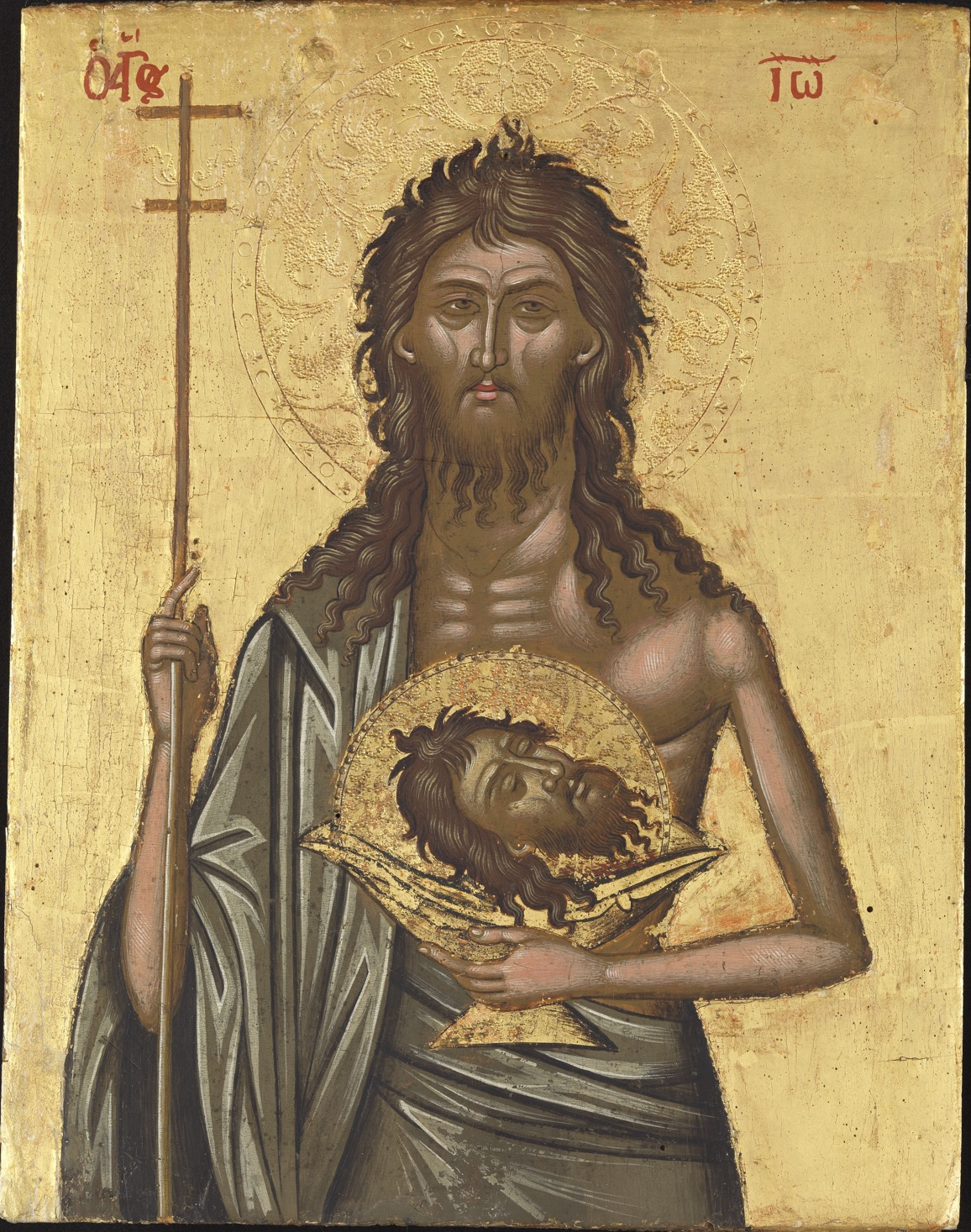
Saint John the Baptist, also called Saint John the Forerunner, stands at the threshold between the Old Covenant and the coming of Jesus Christ. He was the prophet chosen to prepare the way of the Lord, the voice calling God's people to repentance, the man who baptized Christ in the Jordan, and the martyr who refused to remain silent before sin even when speaking the truth cost him his life.
Saint John the Baptist is especially meaningful for anyone trying to return to God, repent of serious sin, break with an old way of life, strengthen a weak faith, or find the courage to speak truth when doing so is difficult. His entire mission was preparation. He called people away from complacency and toward conversion so that their hearts would be ready to receive Christ.
For Christians who feel spiritually stuck, Saint John is one of Scripture's strongest witnesses that repentance is not merely feeling guilty about the past. Repentance means turning around, clearing what blocks the path to God, and beginning to live differently. John did not call people simply to say they were sorry. He called them to bear fruit worthy of repentance and to make their lives ready for the Messiah.
His life also speaks powerfully to people who struggle with fear of other people's opinions. John preached to ordinary people, religious leaders, soldiers, tax collectors, and rulers without changing the truth according to his audience. When King Herod's conduct violated God's law, John confronted him directly. He eventually suffered imprisonment and martyrdom rather than pretend that evil had become acceptable because a powerful man committed it.
John's greatness, however, came together with extraordinary humility. Crowds gathered around him. People wondered whether he himself might be the Messiah. Yet John continually pointed beyond himself toward Jesus Christ. His mission was not to build his own following, but to lead others to the One whose coming he had been sent to announce. He is therefore a powerful intercessor for anyone trying to overcome pride, become less concerned with recognition, or learn how to place Christ rather than the self at the center of life.
This prayer card is created for those seeking repentance, conversion, freedom from habitual sin, courage to confess the faith, preparation for Baptism, renewed commitment to Christ, spiritual discipline, humility, and strength to speak the truth. It is also especially fitting for converts, catechumens, people returning to the Church after years away, those preparing for confession, and anyone asking God to clear away what prevents deeper communion with Him.
Saint John the Baptist is honored throughout the Catholic and Orthodox Churches as the Forerunner, Baptist, Prophet, and Martyr. His devotional associations include repentance, conversion, Baptism, preparation for Christ, spiritual courage, truthfulness, ascetic discipline, humility, and the willingness to decrease so that Christ may become greater within the soul.
Each card is handmade in Austin, TX and created to order. We do not keep stock, because every prayer card is treated as a unique devotional offering. They are printed on museum-quality photo paper, not cardstock. Every card is made slowly, during prayer, with intentional reverence for the saint or holy image and for the person who will receive it. Names are lifted before Christ. Intentions are held carefully. Each piece is handled multiple times in prayerful silence, asking God for mercy and asking the saint to intercede for the soul it is being made for. This is not production work. It is devotional craftsmanship shaped with patience, care, and spiritual responsibility, because every soul and every prayer matters.
THE LIFE & STORY
Saint John the Baptist's birth was announced before his conception. His parents, Zechariah and Elizabeth, were righteous before God but had grown old without having a child. While Zechariah was serving as a priest in the Temple, the Archangel Gabriel appeared to him and announced that Elizabeth would bear a son who would be named John. The child would have a unique mission in God's plan and would prepare a people for the coming of the Lord.
John's life was therefore tied to Christ before either of them was born. When the pregnant Virgin Mary visited Elizabeth, the unborn John leaped in his mother's womb at the presence of Christ within Mary. Christian tradition has always seen this moment as an extraordinary sign of John's vocation as the Forerunner. Even before his birth, his life pointed toward Jesus.
John later withdrew into the wilderness, where he lived a life of extraordinary simplicity and asceticism. The Gospels describe him wearing clothing made of camel's hair with a leather belt and eating locusts and wild honey. His appearance reflected the ancient prophetic tradition and particularly recalled the Prophet Elijah.
The wilderness was not an escape from his mission. It was where John was prepared for it. Far from the noise and ambitions of ordinary society, his life became stripped down to prayer, obedience, fasting, and complete dependence upon God. When the time came for him to preach, he emerged with a message that could not be softened: the Kingdom of Heaven was drawing near, and God's people needed to repent.
People came to John from Jerusalem, Judea, and the surrounding region. He baptized them in the Jordan River as they confessed their sins. This baptism was a baptism of repentance and preparation, distinct from Christian Baptism instituted in Christ, but it powerfully expressed the need to turn away from sin and prepare for the Messiah.
John did not allow religious identity to become a substitute for conversion. When people relied upon their ancestry or outward religious status, he warned them that genuine repentance must produce fruit. A person's relationship with God had to become visible in the way he or she lived.
Different groups asked John what repentance required of them. His answers were remarkably practical. Those with excess were told to share with those who had none. Tax collectors were told not to collect more than was required. Soldiers were warned against extortion, false accusation, and dissatisfaction with their wages. For John, conversion affected money, power, speech, possessions, justice, and everyday conduct.
As John's influence grew, people began wondering whether he might be the Christ. John rejected the suggestion. He told them that One far greater was coming after him. John's baptism used water, but the One coming after him would baptize with the Holy Spirit.
Then Jesus Himself came to the Jordan and asked John to baptize Him. John immediately recognized the apparent reversal and protested that he was the one who needed to be baptized by Jesus. Yet Christ instructed him to permit it.
At the Baptism of the Lord, also called the Theophany in the Eastern Churches, Jesus entered the Jordan. The Holy Spirit descended in the form of a dove, and the voice of the Father revealed Christ as His beloved Son. John therefore became a direct witness to one of the clearest manifestations of the Holy Trinity recorded in the Gospels.
John's mission reached its fulfillment when he identified Jesus to his disciples as the Lamb of God. Some of John's own followers then began following Christ. John did not resent losing disciples. This was precisely what his entire ministry had been for. He had prepared them so that when Christ appeared, they could leave the Forerunner and follow the Lord.
This is why one of the deepest spiritual themes associated with Saint John is humility. A lesser man might have tried to hold onto influence after becoming famous. John understood that his success consisted precisely in becoming less important once Christ had been revealed.
His preaching eventually brought him into conflict with Herod Antipas. Herod had taken Herodias, the wife of his brother, and John publicly condemned the unlawful union. Herod imprisoned him, but John refused to retract the truth.
At a banquet, the daughter of Herodias danced before Herod and his guests. Herod rashly promised to give her whatever she requested. Prompted by her mother, she asked for the head of John the Baptist. Though distressed, Herod valued his oath and reputation before his guests more than justice. He ordered John's execution.
Saint John was beheaded in prison, becoming a martyr for truth and righteousness. The man who had spent his life preparing the road for Christ ultimately gave his life because he would not call sin good simply to protect himself.
Eastern Christian tradition also gives John a profound place within the mystery of Christ's descent among the dead. Just as John had been the Forerunner of Christ among the living, liturgical tradition remembers him as announcing the coming of the Savior to those who had died before Christ's victory over death.
The Church therefore honors him not merely as one saint among many. Christ Himself gave extraordinary testimony concerning John. He stands as prophet, ascetic, preacher, baptizer, martyr, and Forerunner of the Lord.
REPENTANCE, COURAGE & PATRONAGE
Saint John the Baptist is above all associated with repentance and preparation for Christ. His preaching was not centered on vague spiritual encouragement. He called people to acknowledge sin, change their conduct, and prepare their hearts because God was acting decisively in human history.
For someone who has been away from God, John's message remains intensely relevant. The first movement does not have to be complicated. Turn around. Confess what is wrong. Stop defending it. Begin producing the fruits of a changed life. Make the road straight for Christ.
This makes Saint John a particularly fitting intercessor for converts and those returning to Christianity. Conversion rarely happens all at once. There may be habits that have to be broken, relationships that need healing, wrongs that must be corrected, pride that has to be surrendered, and fears that must be faced. John's life represents the uncompromising but hopeful truth that the old road does not have to remain the road we travel.
He is also a powerful saint for those preparing for confession. John teaches that repentance requires honesty. The soul cannot be healed while constantly explaining away what it already knows is wrong. His ministry invites Christians to name sin truthfully and then place themselves before the mercy of God.
Saint John's connection with Baptism is equally central. He is called the Baptist because he baptized in the Jordan and was chosen to baptize Jesus Christ Himself. For this reason, a Saint John the Baptist prayer card can be especially fitting for someone preparing for Baptism, entering the Church, becoming a godparent or sponsor, or commemorating a baptismal anniversary.
His martyrdom also makes him one of Christianity's clearest examples of courage in speaking truth. John did not condemn Herod because confrontation was enjoyable. He spoke because God's truth does not become false when the person violating it possesses political power.
For Christians afraid to defend their faith, correct an injustice, confront destructive behavior, or refuse social pressure, Saint John offers a demanding example. Courage does not mean enjoying conflict. It means becoming more afraid of betraying truth than of losing approval.
John is also deeply associated with asceticism and spiritual discipline. His life in the wilderness was stripped of luxury, comfort, reputation, and distraction. His fasting and simplicity were not ends in themselves. They made room for undivided attention to God.
This makes him meaningful for Christians trying to fast, simplify their lives, reduce distraction, resist compulsive habits, or regain spiritual discipline. John demonstrates that the heart sometimes becomes clearer when unnecessary things are removed.
His humility provides another essential form of patronage and devotion. John knew when his task was finished. He did not compete with Christ. He wanted people to leave him and follow Jesus. This makes him a powerful intercessor for clergy, teachers, parents, spiritual mentors, business owners, artists, creators, and anyone tempted to make their vocation primarily about recognition.
The goal of Christian life is not to make ourselves unforgettable. John teaches the soul to become transparent enough that others can see Christ through what we do.
People therefore seek Saint John the Baptist's intercession for repentance, conversion, Baptism, preparation for confession, courage to speak truth, freedom from fear of human opinion, spiritual discipline, fasting, humility, overcoming habitual sin, and returning to God after a period of spiritual distance.
PRAYERS
A simple traditional invocation may be prayed throughout the day: Holy Prophet, Forerunner and Baptist John, pray to God for us.
The Eastern Church honors Saint John the Baptist with the traditional Troparion that begins by declaring that the memory of the righteous is celebrated with praise, while the Lord's own testimony is sufficient witness to John's greatness. It remembers him as more honorable than the prophets because he was found worthy to baptize Christ Himself.
A traditional short invocation may also be prayed simply and repeatedly: Saint John the Forerunner, pray for me.
When preparing for confession, one may invoke him while asking God for honest repentance. Saint John's role is not to replace direct prayer to Christ, but to intercede that the heart may become willing to confess sin without excuses and receive God's mercy.
Those returning to the faith may pray the traditional invocation while specifically bringing their struggle before God: the years spent away, the habits that remain difficult to break, the shame that makes returning difficult, or the fear that too much time has been lost.
Someone preparing for Baptism may especially ask Saint John the Baptist to intercede for a sincere conversion of heart and a life that continues after the sacrament with genuine faithfulness.
Those who must speak a difficult truth may ask Saint John's prayers for courage without hatred, truth without pride, and firmness without unnecessary cruelty. His martyrdom teaches that speaking truth faithfully is very different from seeking conflict.
The invocation of Saint John is also fitting during fasting. His entire life testifies to simplicity, restraint, and preparation. He reminds the Christian that fasting is not merely refusing food but clearing space within the heart for Christ.
This prayer card is especially fitting for a prayer corner, Bible, wallet, desk, confession preparation area, catechism book, baptismal gift, or anywhere a person needs a physical reminder to turn toward Christ and prepare the way of the Lord within the heart.
FAQ
Who is Saint John the Baptist?
Saint John the Baptist was the prophet chosen by God to prepare the way for Jesus Christ. He preached repentance, baptized people in the Jordan River, baptized Jesus Himself, identified Christ as the promised Messiah, and was eventually martyred after condemning the unlawful marriage of Herod Antipas.
Why is Saint John called the Forerunner?
Saint John is called the Forerunner because he came immediately before Christ and prepared the people to receive Him. His entire mission was to announce that the Messiah was coming and to call God's people to repentance.
Is John the Baptist a Catholic saint?
Yes. Saint John the Baptist is one of the most important saints honored in the Catholic Church. He lived before the historical divisions between Catholic and Orthodox Christianity and belongs to the common apostolic heritage of the ancient Church.
Is John the Baptist an Orthodox saint?
Yes. The Eastern Orthodox Church holds Saint John the Baptist in extraordinary honor and commonly calls him Saint John the Forerunner. He appears prominently in Orthodox churches and iconography, particularly in the Deesis, where he is often shown alongside the Mother of God interceding before Christ.
What is Saint John the Baptist the patron saint of?
Saint John is traditionally associated with Baptism and those connected with baptismal ministry, but his broader devotional associations flow directly from his biblical life. These include repentance, conversion, preparation for Christ, truthfulness, spiritual courage, fasting, asceticism, humility, and returning to God.
Is Saint John the Baptist the patron saint of repentance?
It is appropriate to associate Saint John very strongly with repentance because repentance was at the center of his preaching and mission. Rather than relying on an artificial modern patronage title, his own words and life establish him naturally as one of Christianity's greatest intercessors for repentance and conversion.
Why should I pray to Saint John the Baptist when returning to God?
Saint John's entire ministry was devoted to preparing people to encounter Christ. He called sinners to turn around, confess their sins, change their behavior, and make themselves ready for the Lord. This makes his intercession especially meaningful for someone returning to Christianity after time away.
Can I pray to Saint John the Baptist before confession?
Yes. Saint John is an especially fitting saint to invoke before confession because his preaching emphasized genuine repentance rather than outward religious appearance. His example encourages honesty, humility, sorrow for sin, and concrete change.
Can I give a Saint John the Baptist prayer card to someone being baptized?
Yes. This is an especially appropriate baptismal gift because Saint John baptized in the Jordan River and was chosen to baptize Jesus Christ Himself. A Saint John prayer card can be given to an adult catechumen, a newly baptized Christian, parents at an infant Baptism, a godparent, or a baptismal sponsor.
Can I give this prayer card to a convert?
Yes. Saint John is one of the strongest saints for converts because his entire mission concerned conversion and preparation for Christ. The card is especially fitting for someone entering Christianity, becoming Catholic or Orthodox, returning after years away, or beginning a serious period of spiritual renewal.
Why is Saint John associated with courage?
Saint John publicly confronted Herod Antipas over his unlawful relationship even though Herod possessed the power to imprison and kill him. John ultimately accepted martyrdom rather than remain silent about what he knew to be wrong.
Is Saint John the Baptist good to pray to when I am afraid to speak the truth?
Yes. His life makes him a particularly meaningful intercessor for people who need courage to speak truth faithfully. His example also reminds Christians that truth should be spoken because of obedience to God, not because we enjoy argument or confrontation.
Why is Saint John associated with humility?
Although enormous crowds followed him and some people wondered whether he might be the Messiah, John consistently directed attention away from himself and toward Christ. He understood that his mission was successful when people stopped following him and began following Jesus.
Why did Saint John live in the wilderness?
The wilderness was the place of John's ascetic preparation and prophetic ministry. He lived simply, fasted, prayed, and separated himself from ordinary comforts so that his life could be wholly directed toward God and his mission.
What did Saint John eat?
The Gospels describe Saint John as eating locusts and wild honey while living in the wilderness. His simple diet became part of the Church's image of him as one of the great ascetics and prophets.
Did Saint John the Baptist baptize Jesus?
Yes. Jesus came to John at the Jordan River and received Baptism from him. At the Baptism of Christ, the Holy Spirit descended in the form of a dove and the voice of the Father revealed Jesus as His beloved Son.
Why is the Baptism of Jesus called Theophany in the Eastern Church?
The feast is called Theophany because Christ's Baptism revealed the Holy Trinity: the Son stood in the Jordan, the Holy Spirit descended upon Him, and the Father's voice was heard from heaven.
How did Saint John the Baptist die?
Saint John was imprisoned after condemning Herod Antipas's unlawful union with Herodias. During a banquet, Herodias's daughter requested John's head after being prompted by her mother. Herod ordered John to be beheaded in prison.
Why is Saint John considered a martyr?
Saint John died because he remained faithful to God's truth. His refusal to approve Herod's sinful conduct ultimately led to his imprisonment and execution, making him a martyr for righteousness and truth.
What is the Beheading of Saint John the Baptist?
The Beheading of Saint John the Baptist is a major Christian commemoration of his martyrdom. It is observed on August 29 and is kept as a strict fast day in the Eastern Orthodox tradition.
When is the Nativity of Saint John the Baptist?
The Nativity of Saint John the Baptist is celebrated on June 24. He is one of the very small number of saints whose earthly birth is celebrated liturgically, reflecting the extraordinary place he holds in salvation history.
When does the Eastern Church celebrate Saint John the Baptist?
Saint John has several commemorations throughout the Byzantine liturgical year. Among the most prominent are his Synaxis on January 7, the Nativity of Saint John on June 24, and the Beheading of Saint John on August 29.
What does Saint John the Baptist teach about repentance?
Saint John teaches that repentance must become visible in life. Genuine conversion affects generosity, money, honesty, justice, relationships, speech, power, and the way we treat other people. Repentance is not merely regret. It is a change of direction.
What does Saint John teach about pride?
Saint John teaches that even a successful spiritual mission must ultimately point away from ourselves and toward Christ. He did not attempt to preserve his own influence when Jesus appeared. His joy was fulfilled when people recognized and followed the Lord.
What is the main message of Saint John the Baptist's life?
The main message of Saint John's life is prepare the way for Christ. Remove what obstructs Him. Repent of sin. Tell the truth. Live simply. Refuse to make yourself the center. Have courage when faithfulness becomes costly, and direct every gift, vocation, accomplishment, and relationship toward Jesus Christ.
Saint Thomas the Apostle is a saint for anyone who has ever wanted to believe, but still felt the ache of doubt. He is a saint for the wounded heart, the questioning mind, the person who has prayed and still felt uncertain, and the soul that longs for proof that Christ is truly near. This prayer card is titled Doubting Thomas, not to shame Saint Thomas, but to honor the mercy of Jesus Christ, who did not reject him in his doubt, but invited him closer.
The image of Saint Thomas placing his finger into the wounds of the risen Christ is one of the most powerful scenes in Christian art and devotion. It shows the moment when doubt meets mercy, when fear meets the living Christ, and when a wounded apostle is invited to touch the wounds of God. Thomas had not been with the other disciples when Jesus first appeared after the Resurrection. When they told him, “We have seen the Lord,” Thomas struggled to believe. He wanted to see. He wanted to touch. He wanted to know that the Crucified One was truly alive.
Jesus answered him with mercy. He came to Thomas and invited him to place his finger in His wounds. Christ did not hide His scars. He revealed them. He did not crush Thomas for his weakness. He healed him by showing that the same wounds of the Cross had become signs of victory, love, and resurrection. From that encounter, Thomas cried out one of the greatest confessions of faith in the entire Gospel: “My Lord and my God.”
This Saint Thomas the Apostle prayer card is especially meaningful for those struggling with doubt, wounded faith, spiritual dryness, fear, uncertainty, grief, religious trauma, unanswered prayer, or the desire to return to Christ after a long season away. It is also a powerful devotional card for converts, catechumens, OCIA and RCIA candidates, Bible study groups, Easter devotion, Divine Mercy devotion, and anyone who finds comfort in the wounds of Christ.
Saint Thomas is often called “Doubting Thomas,” but his story is not the story of a failure. It is the story of a man who was honest about the gap between what he wanted to believe and what he could yet receive. His doubt became the doorway to one of the clearest declarations of Christ’s divinity. His hesitation became a witness. His weakness became a place where Jesus revealed His mercy.
This makes Saint Thomas a powerful intercessor for those who feel ashamed of their questions. Many people assume that doubt means they have no faith, but the Gospel shows something deeper. Thomas did not walk away forever. He stayed close enough to be found by Christ. He remained among the apostles. He was wounded, confused, and resistant, but he was still there. And because he was still there, the risen Jesus met him.
Saint Thomas is also beloved as the apostle connected with the ancient Christian tradition of India. The Saint Thomas Christians, especially in Kerala, have long honored him as the apostle who brought the Gospel to their land. For this reason, he is a deeply important saint for Indian Christians, Eastern Christians, Catholics, Orthodox Christians, Syro-Malabar Catholics, Malankara Christians, and all who honor the apostolic roots of Christianity in the East.
His patronage includes doubt, struggling faith, seekers, converts, wounded believers, those returning to Christ, India, architects, builders, stone masons, craftsmen, missionaries, and all who need the courage to move from uncertainty into confession. He is a saint for the person who says, “Lord, I want to believe. Help me come closer.”
Each card is handmade in Austin, TX and created to order. We do not keep stock, because every prayer card is treated as a unique devotional offering. They are printed on museum-quality photo paper, not cardstock. Every card is made slowly, during prayer, with intentional reverence for the saint or holy image and for the person who will receive it. Names are lifted before Christ. Intentions are held carefully. Each piece is handled multiple times in prayerful silence, asking God for mercy and asking the saint to intercede for the soul it is being made for. This is not production work. It is devotional craftsmanship shaped with patience, care, and spiritual responsibility, because every soul and every prayer matters.
THE LIFE & STORY
Saint Thomas the Apostle was one of the Twelve Apostles chosen by Jesus Christ. In the Gospel of John, he is also called Didymus, meaning “the Twin.” Though the Gospels do not give a long biography of his early life, they reveal enough to show a man of intensity, loyalty, realism, and deep feeling.
Saint Thomas appears at several important moments in the Gospel. When Jesus decided to return to Judea after the death of Lazarus, the disciples were afraid because danger awaited Him there. Thomas spoke with striking courage, saying to the other disciples that they should go with Jesus, even if it meant dying with Him. This is important because Thomas should not be remembered only for doubt. Before he was called “Doubting Thomas,” he was willing to walk toward danger with Christ.
At the Last Supper, Thomas also asked Jesus a question that opened the way for one of the most beloved sayings of the Lord. Jesus told His disciples that He was going to prepare a place for them, and that they knew the way. Thomas, honest and direct, said that they did not know where He was going, so how could they know the way? Jesus answered him: “I am the way, and the truth, and the life.” Thomas’s question gave the Church one of its clearest teachings on Christ as the way to the Father.
But Thomas is most remembered for what happened after the Resurrection. On the evening of Easter, Jesus appeared to the disciples, but Thomas was not with them. The others told him that they had seen the Lord, but Thomas could not receive their testimony. He said that unless he saw the mark of the nails, placed his finger in the wounds, and placed his hand in Christ’s side, he would not believe.
Eight days later, Jesus came again. This time, Thomas was there. The doors were locked, but Christ stood among them and said, “Peace be with you.” Then He turned to Thomas. Jesus did not ignore him. He did not shame him in front of the others. He answered the exact wound of Thomas’s doubt. He invited him to put his finger into the nail marks and place his hand into His side. Then He called him to believe.
Thomas responded with awe, repentance, and worship: “My Lord and my God.” These words are among the most direct confessions of Jesus Christ’s divinity in the New Testament. The man remembered for doubt became the man who spoke one of the Church’s greatest acts of faith.
After Pentecost, Christian tradition teaches that Saint Thomas carried the Gospel far beyond Jerusalem. He is especially associated with the evangelization of India, where the ancient Saint Thomas Christian communities trace their origins to his apostolic mission. Tradition holds that he preached, converted many, founded Christian communities, and was eventually martyred for Christ.
Saint Thomas is believed to have died as a martyr, traditionally associated with Mylapore, near present-day Chennai, India. Because of this, he is one of the great missionary apostles of the Church. His life moves from hidden doubt to bold confession, from the locked room to distant mission, from hesitation to martyrdom. The apostle who once needed to touch the wounds of Christ became a witness who gave his own life for the risen Lord.
MIRACLES & PATRONAGE
Saint Thomas the Apostle is not only remembered because he doubted. He is remembered because Christ met him in that doubt and transformed him into a missionary, confessor, and martyr. His life is a witness that Jesus can take a wounded, questioning heart and make it strong enough to carry the Gospel across the world.
His unofficial patronage of doubt and struggling faith comes directly from the Gospel account of his encounter with the risen Christ. Many Christians go through seasons when belief feels difficult. Some are grieving. Some have been hurt. Some are carrying intellectual questions. Some want to pray but feel nothing. Some believe in Christ, but still feel afraid to trust Him fully. Saint Thomas is a merciful companion for that kind of soul.
He is also a powerful saint for those who need to encounter the wounds of Christ. The scene of Doubting Thomas is not only about proof. It is about love. Jesus shows Thomas that the Resurrection does not erase the Cross as if suffering never happened. The risen Christ still bears His wounds. They are glorified, but they remain. For anyone carrying grief, trauma, betrayal, loss, illness, or spiritual pain, this is deeply consoling. Christ is not distant from wounds. He has wounds. And through His wounds, He heals.
Saint Thomas is especially meaningful for converts and catechumens because his journey reflects the movement from questioning to confession. Many people entering the Church do not arrive with every question answered. They come with longing, uncertainty, curiosity, fear, and hope. Thomas shows that honest questions can become part of the road to deeper faith, as long as the soul remains near Christ and open to His mercy.
He is also a traditional patron of India, because of the ancient Christian tradition that he preached the Gospel there. The Saint Thomas Christians of India have preserved a profound memory of his apostolic mission, making him a beloved saint not only in the West, but especially among Eastern Christians, Syro-Malabar Catholics, Malankara Christians, Indian Orthodox Christians, and many other Christians connected to India’s ancient apostolic heritage.
Saint Thomas is also known as a patron of architects, builders, stone masons, and craftsmen. This patronage is often connected to traditions about his missionary life and work. Because of this, he is a fitting saint for those who build with their hands, design homes, shape stone, create sacred spaces, or labor in practical trades.
People ask Saint Thomas’s intercession when they are struggling with doubt, trying to return to prayer, discerning conversion, preparing for Baptism or Confirmation, entering OCIA or RCIA, grieving, rebuilding faith after pain, or asking Jesus to reveal Himself more clearly. He is also a beautiful saint for anyone who wants to pray before a crucifix and meditate on the wounds of Christ.
Saint Thomas reminds the soul that doubt does not have to be the end of faith. Doubt can become the place where Christ comes near. The question is not whether the soul has ever struggled. The question is whether the soul will remain close enough to be found by Jesus.
PRAYERS
A simple invocation may be prayed often: Saint Thomas the Apostle, pray for us.
For those struggling with doubt, one may pray: Saint Thomas, you once longed to see and touch the wounds of the risen Christ. Pray for me, that my doubt may not drive me away from Jesus, but lead me closer to His mercy.
For wounded faith, one may pray: Lord Jesus Christ, You showed Your wounds to Saint Thomas with patience and love. Show mercy to my wounded heart, strengthen my faith, and help me confess with Thomas: My Lord and my God.
For those returning to Christ, one may pray: Saint Thomas the Apostle, pray for all who feel far from God, all who are afraid to believe again, and all who need to encounter the risen Christ in mercy.
For converts and catechumens, one may pray: Saint Thomas, guide those who are seeking the truth. Pray for those preparing to enter the Church, that their questions may be purified, their faith strengthened, and their hearts brought fully to Christ.
For those meditating on the wounds of Jesus, one may pray: Lord Jesus, by Your holy wounds, heal my unbelief. By Your pierced hands and side, draw me into deeper trust. Saint Thomas, pray that I may never be afraid to come near the wounded and risen Lord.
For courage in mission, one may pray: Saint Thomas the Apostle, missionary and martyr, pray that I may not keep my faith hidden in fear, but may confess Jesus Christ with courage, humility, and love.
This prayer card is especially fitting for a prayer corner, Bible, missal, catechism, chapel bag, Easter basket, OCIA or RCIA gift, Confirmation gift, or as a devotional card for anyone who is struggling to believe. It is also meaningful for those devoted to the wounds of Christ, the Resurrection, Divine Mercy, the apostles, and the ancient Christian heritage of India.
FAQ
Who is Saint Thomas the Apostle?
Saint Thomas the Apostle was one of the Twelve Apostles of Jesus Christ. He is also called Didymus, meaning “the Twin.” He is best known for his encounter with the risen Christ after the Resurrection, when Jesus invited him to see and touch His wounds.
Why is Saint Thomas called Doubting Thomas?
Saint Thomas is called Doubting Thomas because he struggled to believe the other apostles when they told him they had seen the risen Lord. He said he wanted to see the wounds of Christ for himself. Jesus later appeared to him and invited him to believe.
Is Doubting Thomas a negative title?
It can sound negative, but the story is much deeper than that. Saint Thomas’s doubt became the setting for one of the greatest confessions of faith in the Gospel: “My Lord and my God.” His story is not only about doubt, but about mercy, healing, and faith.
What did Jesus say to Doubting Thomas?
Jesus invited Thomas to place his finger in the nail marks and his hand in His side. He then called Thomas to believe. This moment shows the patience and mercy of Christ toward a soul struggling with doubt.
Did Saint Thomas actually touch the wounds of Jesus?
Christian art often shows Saint Thomas placing his finger in the wound of Christ. The Gospel records Jesus inviting Thomas to do this, followed by Thomas’s confession of faith. The scene has become one of the most powerful images of doubt being healed by the mercy of the risen Christ.
What did Saint Thomas say when he saw Jesus?
Saint Thomas responded to the risen Christ by saying, “My Lord and my God.” This is one of the clearest and most beautiful confessions of faith in the New Testament.
What is Saint Thomas the Apostle the patron saint of?
Saint Thomas is traditionally associated with India, architects, builders, stone masons, and craftsmen. He is also a powerful unofficial patron for those struggling with doubt, wounded faith, seekers, converts, catechumens, and anyone asking Jesus for deeper faith.
Is Saint Thomas connected to India?
Yes. Ancient Christian tradition strongly connects Saint Thomas the Apostle with the evangelization of India. The Saint Thomas Christians of India, especially in Kerala, trace their Christian heritage to his apostolic mission.
Is Saint Thomas venerated by Catholics and Orthodox Christians?
Yes. Saint Thomas the Apostle is venerated by Catholics, Orthodox Christians, Eastern Catholics, Oriental Orthodox Christians, and many other Christians. He is one of the Twelve Apostles and is honored throughout the Christian world.
When is Saint Thomas the Apostle’s feast day?
In the Roman Catholic Church, Saint Thomas the Apostle is celebrated on July 3. In the Orthodox Church, he is commemorated on October 6 and is also strongly associated with Thomas Sunday, the Sunday after Pascha, when the Gospel account of his encounter with the risen Christ is remembered.
Is Saint Thomas a good saint for someone struggling with doubt?
Yes. Saint Thomas is one of the most meaningful saints for someone struggling with doubt because he personally experienced the movement from uncertainty to faith. His story shows that Jesus is merciful toward those who honestly struggle and still remain open to Him.
Is this prayer card good for OCIA or RCIA candidates?
Yes. This Doubting Thomas prayer card is especially fitting for OCIA and RCIA candidates, converts, catechumens, Confirmation students, and anyone learning to confess Jesus Christ more fully.
Can this prayer card be used for Easter devotion?
Yes. The image of Saint Thomas with the risen Christ is deeply connected to Easter, the Resurrection, and the wounds of Jesus. It is especially fitting during the Easter season, Divine Mercy devotion, and Thomas Sunday.
Why are the wounds of Christ important in this image?
The wounds of Christ show that the risen Jesus is the same Jesus who was crucified. His wounds are signs of His love, sacrifice, mercy, and victory. For Saint Thomas, seeing the wounds became the path from doubt to worship.
What is the main message of Saint Thomas’s story?
The main message of Saint Thomas’s story is that Jesus does not abandon the doubting heart. He comes with mercy, reveals His wounds, and calls the soul into deeper faith. Doubt does not have to be the end. In Christ, it can become the beginning of a stronger confession: My Lord and my God.
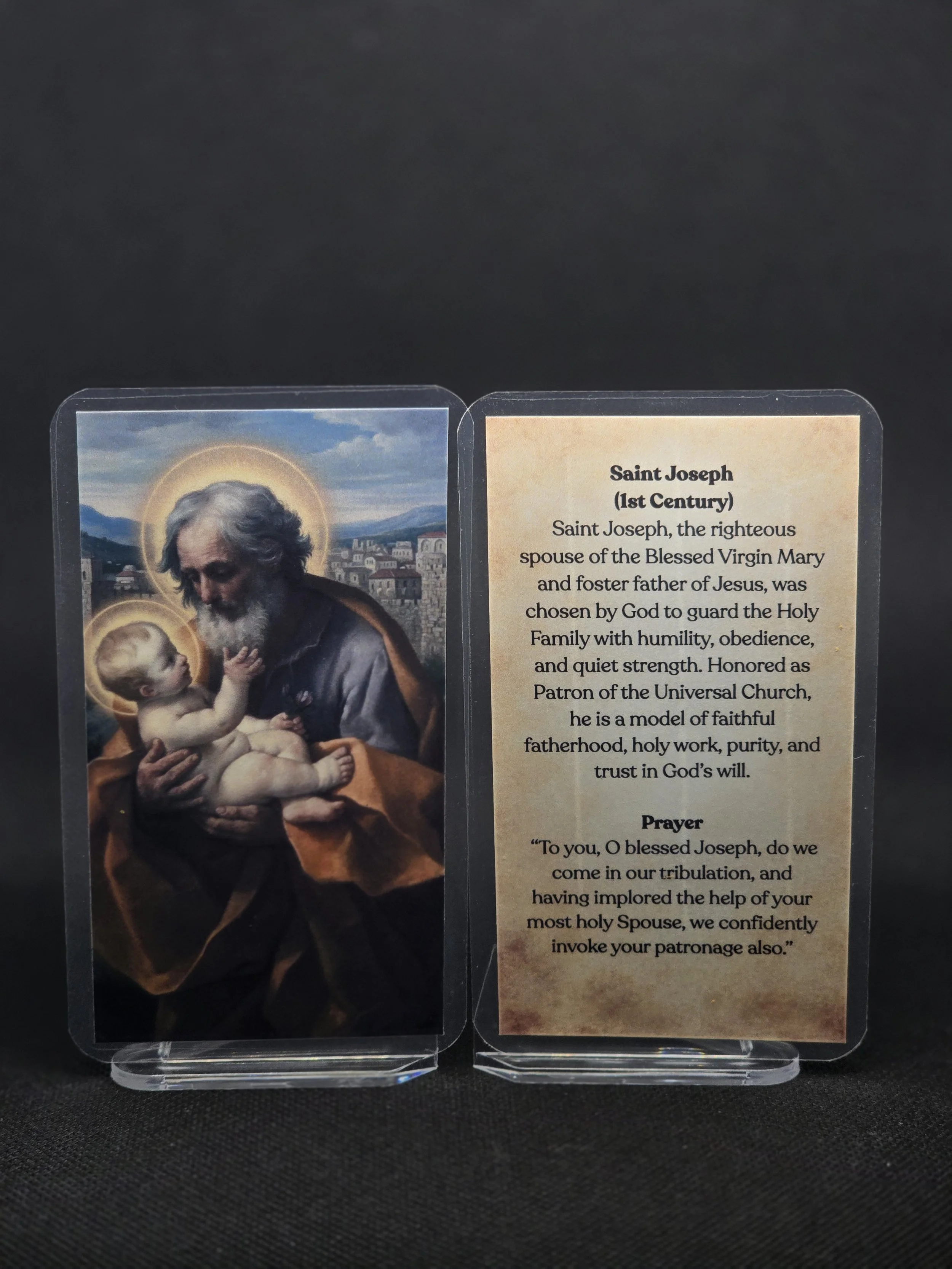
Saint Joseph, the earthly guardian of Jesus Christ and the spouse of the Virgin Mary, is one of the most honored saints in all of Christianity. Though the Gospels record none of his spoken words, his life became a testimony of obedience, humility, purity, courage, and unwavering faithfulness to God. He is venerated throughout Eastern Orthodox, Roman Catholic, Oriental Orthodox, and Eastern Catholic traditions as protector of families, patron of fathers and workers, defender of marriages, guardian of the dying, and the mighty “Terror of Demons.”
Joseph was not chosen because of earthly power.
He was chosen because of holiness.
When God entrusted the Virgin Mary and the Christ Child into Joseph’s care, Joseph accepted the responsibility without hesitation. He protected them during danger, led them safely into Egypt during Herod’s persecution, worked faithfully to provide for them, and remained steadfast through uncertainty and hardship.
His silence was not weakness.
It was strength under perfect obedience.
Saint Joseph became known as the Terror of Demons because evil cannot endure true humility and purity. Christian tradition teaches that demons fear Joseph because his life completely opposed pride, rebellion, lust, and disobedience. He guarded Jesus Himself, protected the Virgin Mary, and lived in total submission to God’s will. Through centuries of Christian devotion, believers have invoked Saint Joseph for protection against spiritual attack, temptation, fear, oppression, and evil influences within the home.
He is also one of the Church’s greatest patron saints of marriage. Joseph’s love for Mary was sacrificial, protective, patient, and holy. He remained faithful during confusion, hardship, poverty, exile, and danger. Because of this, married couples throughout the world pray for his intercession for stronger marriages, faithful spouses, peaceful homes, purity, wisdom, patience, and perseverance during trials.
Each prayer card is handmade in Austin and created to order. We do not keep stock, because every prayer card is treated as a unique devotional offering. They are printed on museum-quality photo paper, not cardstock, and each one is made during prayer. The saints are venerated throughout the entire process, and prayers are intentionally offered for the person who will receive the card. These are not mass-produced items. They are created slowly, reverently, and with spiritual intention, because every soul and every prayer matters.
The Life & Story
Saint Joseph was a righteous Jewish man of the House of David who lived in Nazareth during the time of Christ.
He was a carpenter.
A protector.
A provider.
And the chosen guardian of the Holy Family.
When Joseph discovered that Mary was with child before they lived together, he intended to quietly separate from her rather than expose her publicly. Yet after an angel appeared to him in a dream revealing God’s plan, Joseph immediately obeyed and took Mary as his wife.
From that moment forward, Joseph devoted his life to protecting Jesus and Mary.
When King Herod sought to kill the Christ Child, an angel again warned Joseph in a dream, and he led his family into Egypt to escape the massacre. Later, he safely returned them to Nazareth, where he faithfully raised Jesus and taught Him the trade of carpentry.
Though Scripture records no words from Joseph, his actions revealed extraordinary holiness.
He obeyed instantly.
Protected courageously.
Worked faithfully.
And trusted God completely.
Christian tradition has long honored Joseph not only as guardian of the Holy Family, but as guardian of the Church itself.
Miracles & Patronage
Saint Joseph is remembered as a powerful protector, intercessor, and defender against evil.
Patron Saint Of:
Marriage
Families
Fathers
Husbands
Workers and carpenters
Protection against evil
The universal Church
A happy death
Homes and households
Spiritual fathers
Purity and chastity
Miracles and Ongoing Intercession
Saint Joseph is associated with countless miracles throughout Christian history, especially involving:
Protection from demonic oppression
Financial provision during hardship
Healing within marriages and families
Protection of homes from danger
Guidance through dreams
Powerful intercession for employment and housing
Peaceful deaths and final perseverance
Many Christians also practice the ancient devotion of burying a Saint Joseph medal or statue while praying for help in selling a home, a tradition connected to his patronage over households and provision.
His title “Terror of Demons” has become one of the most beloved devotions associated with him, especially among Christians seeking spiritual protection and peace within the home.
Prayers & Traditional Devotion
Traditional Prayer
O Saint Joseph, faithful guardian of Jesus and chaste spouse of the Virgin Mary, pray for us and protect our families. Terror of Demons, defend us in spiritual battle, obtain for us purity of heart, strength in temptation, and unwavering trust in God. Amen.
Personal Prayer
Saint Joseph, protector of the Holy Family and mighty defender against evil, pray for me.
Protect my home from darkness.
Strengthen my marriage and family.
Help me remain faithful when life becomes difficult.
Teach me humility when pride rises.
Teach me courage when fear overwhelms me.
Teach me obedience when God’s path feels uncertain.
As you protected Jesus and Mary, protect those I love.
Guard my soul.
Guard my home.
Guard my heart.
Saint Joseph, Terror of Demons and faithful servant of God, intercede for me before the throne of Christ.
Amen.
Common Questions (FAQ)
Q: Why is Saint Joseph called the “Terror of Demons”?
Christian tradition teaches that demons fear Saint Joseph because of his profound humility, purity, obedience, and closeness to Jesus and Mary. His holiness stands in complete opposition to evil.
Q: Why is Saint Joseph the patron saint of marriage?
Saint Joseph’s relationship with the Virgin Mary is viewed as one of perfect sacrificial love, protection, faithfulness, patience, and purity. Married couples often seek his intercession for stronger marriages and peaceful homes.
Q: Which Christian traditions honor Saint Joseph?
Saint Joseph is deeply venerated across Roman Catholic, Eastern Orthodox, Oriental Orthodox, and Eastern Catholic traditions.
Q: What is Saint Joseph the patron saint of?
He is the patron saint of marriages, fathers, workers, families, carpenters, protection against evil, the universal Church, and a happy death.
Q: Did Saint Joseph perform miracles?
Though Scripture does not directly record miracles performed by Joseph, Christians throughout history have attributed countless answered prayers, protections, healings, and spiritual deliverances to his intercession.
Q: When is Saint Joseph’s feast day?
His primary feast day is celebrated on March 19, with additional commemorations in many Christian traditions.
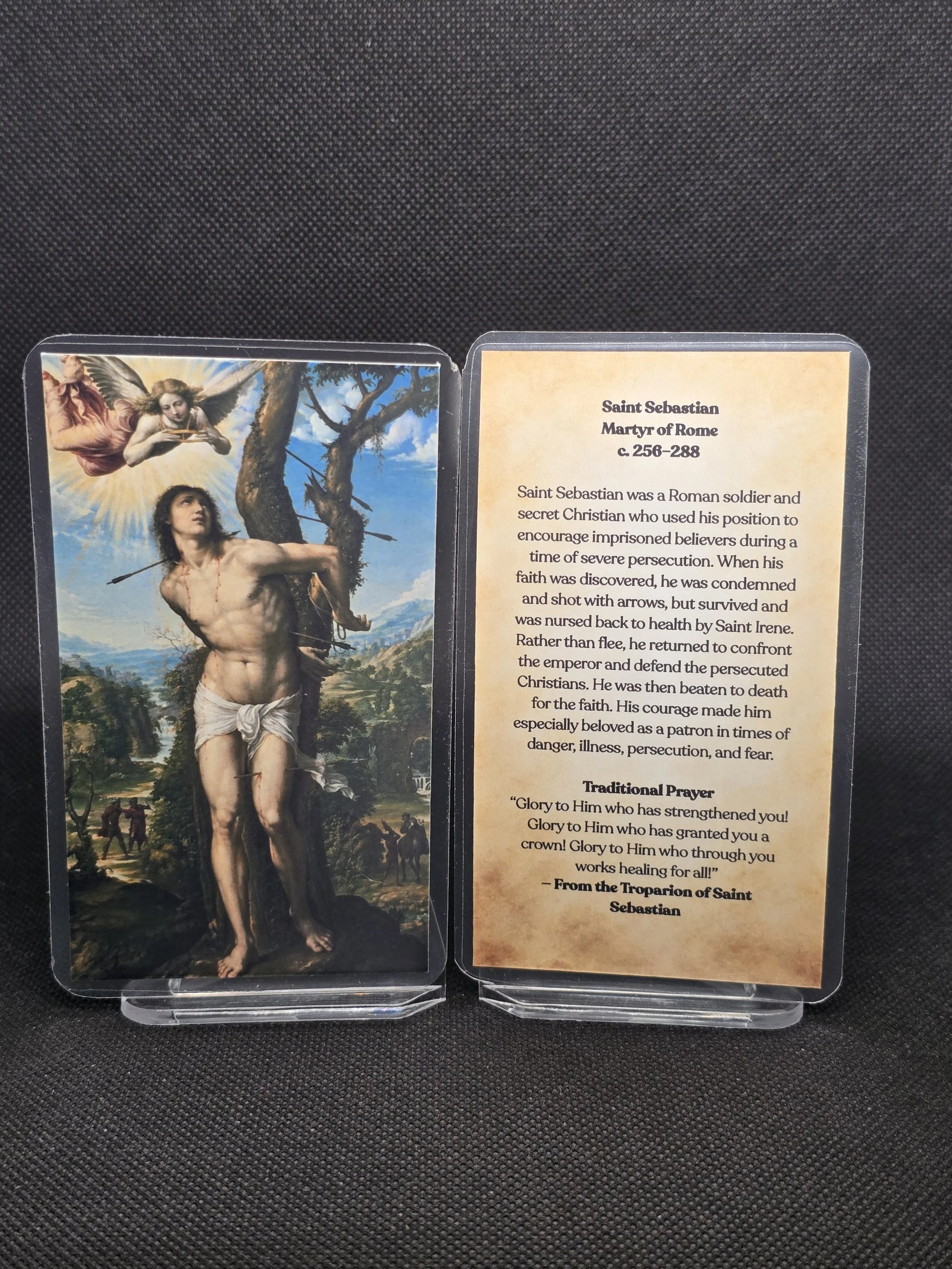
Saint Sebastian is one of Christianity’s most enduring martyrs, venerated across both Eastern and Western Christian traditions as a powerful witness of courage, endurance, and unwavering faith under persecution. His feast is celebrated on January 20 in the Roman Catholic Church and December 18 in many Eastern Orthodox calendars.
Sebastian was not merely a martyr.
He was a soldier of Christ hidden within the Roman army.
Born in the third century, Sebastian served as an officer in the Imperial Roman military under Emperor Diocletian. Outwardly, he appeared to be a loyal servant of Rome.
Inwardly, he belonged fully to Christ.
Sebastian used his position to secretly support imprisoned Christians, strengthen martyrs awaiting execution, and encourage believers facing torture. He brought courage where fear reigned.
He strengthened the persecuted.
He chose Christ over empire.
When his faith was discovered, Sebastian was sentenced to death by arrows. Bound to a tree and pierced repeatedly, he was left for dead. Yet he survived this first execution through divine providence and the care of Saint Irene.
He could have fled.
Instead, he returned.
Sebastian boldly confronted Emperor Diocletian for his cruelty toward Christians, proclaiming the truth of Christ openly. For this, he was ultimately beaten to death and martyred.
His life became a testimony not only of suffering, but of fearless spiritual defiance.
Today, Saint Sebastian is invoked by those seeking:
Strength during persecution
Courage under suffering
Protection from disease
Athletic endurance
Military protection
Perseverance in faith
Healing during plague or epidemic
This prayer card honors a saint whose body was pierced, but whose faith remained unconquered.
Each card is handmade in Austin and created to order. We do not keep stock, because every prayer card is treated as a unique devotional offering. They are printed on museum-quality photo paper, not cardstock, and each one is made during prayer. The saints are venerated throughout the entire process, and prayers are intentionally offered for the person who will receive the card. These are not mass-produced items. They are created slowly, reverently, and with spiritual intention, because every soul and every prayer matters.
The Life & Story
Saint Sebastian was born around the mid-third century, likely in Gaul or Italy, during one of Christianity’s most dangerous eras.
The Roman Empire demanded loyalty.
Sebastian gave his loyalty to Christ.
Rising through military ranks, he became a captain of the Praetorian Guard under Emperor Diocletian. His status gave him unusual access to imprisoned Christians and condemned martyrs.
Rather than abandon them, he strengthened them.
Sebastian visited prisoners, encouraged confessions of faith, and reportedly converted several individuals, including Roman officials, through his witness.
Eventually, his Christian identity was exposed.
As punishment, he was bound to a tree and shot with arrows until presumed dead.
Yet God was not finished with him.
Rescued and healed by Saint Irene, Sebastian recovered. Rather than retreat into hiding, he directly confronted the emperor over his persecution of Christians.
This boldness sealed his fate.
Sebastian was clubbed to death and his body discarded. Christians later recovered and buried him in the catacombs along the Appian Way, where devotion to him spread rapidly.
Throughout the Middle Ages, Sebastian became especially associated with protection from plague, as arrows symbolized both his martyrdom and the sudden strikes of disease.
He remains one of Christianity’s most iconic saints of resilience, physical suffering, and fearless confession.
Miracles & Patronage
Saint Sebastian is remembered as both a martyr and protector.
His intercession has long been sought in times of physical danger and widespread illness.
Patron Saint Of:
Athletes
Soldiers
Archers
Plague victims
Protection from epidemics
Persecuted Christians
Strength under suffering
Courage in adversity
Miracles and Ongoing Intercession
For centuries, Saint Sebastian has been invoked during outbreaks of plague and pestilence. Entire cities entrusted themselves to his prayers during medieval epidemics.
Countless churches were dedicated to him as a protector against sudden death and disease.
His witness continues to inspire:
Those facing persecution
Those suffering physically
Those enduring hardship
Those called to stand firm in hostile environments
Sebastian reminds believers that survival is not enough.
Faithfulness matters most.
Prayers & Traditional Devotion
Traditional Prayer
Glorious Saint Sebastian, faithful soldier and courageous martyr, pray for us. Obtain for us strength in suffering, courage in persecution, and steadfast devotion to Christ in all trials. Amen.
Personal Prayer
Holy Saint Sebastian, brave defender of Christ, pray for me.
When fear weakens me, strengthen me.
When suffering pierces me, sustain me.
When the world pressures me to compromise, preserve my faith.
Teach me courage.
You endured arrows, pain, and death without abandoning Christ.
Help me endure my trials with similar steadfastness.
Protect me from illness.
Guard my body and soul.
Intercede for my family in times of suffering.
May your witness remind me that true victory is not comfort, but faithfulness.
Through your prayers, may I stand firm until the end.
Amen.
Common Questions (FAQ)
Q: What is Saint Sebastian known for?
He is known as an early Christian martyr, Roman soldier, and powerful intercessor for courage, plague protection, and perseverance.
Q: When is Saint Sebastian’s feast day?
January 20 in the Roman Catholic Church; December 18 in many Eastern traditions.
Q: Why is Saint Sebastian associated with plague protection?
Because his martyrdom by arrows became symbolically linked with protection against sudden pestilence and disease outbreaks.
Q: Which Christian traditions venerate Saint Sebastian?
He is honored by Roman Catholics, Eastern Orthodox Christians, Oriental Orthodox traditions, and many Eastern Catholic Churches.
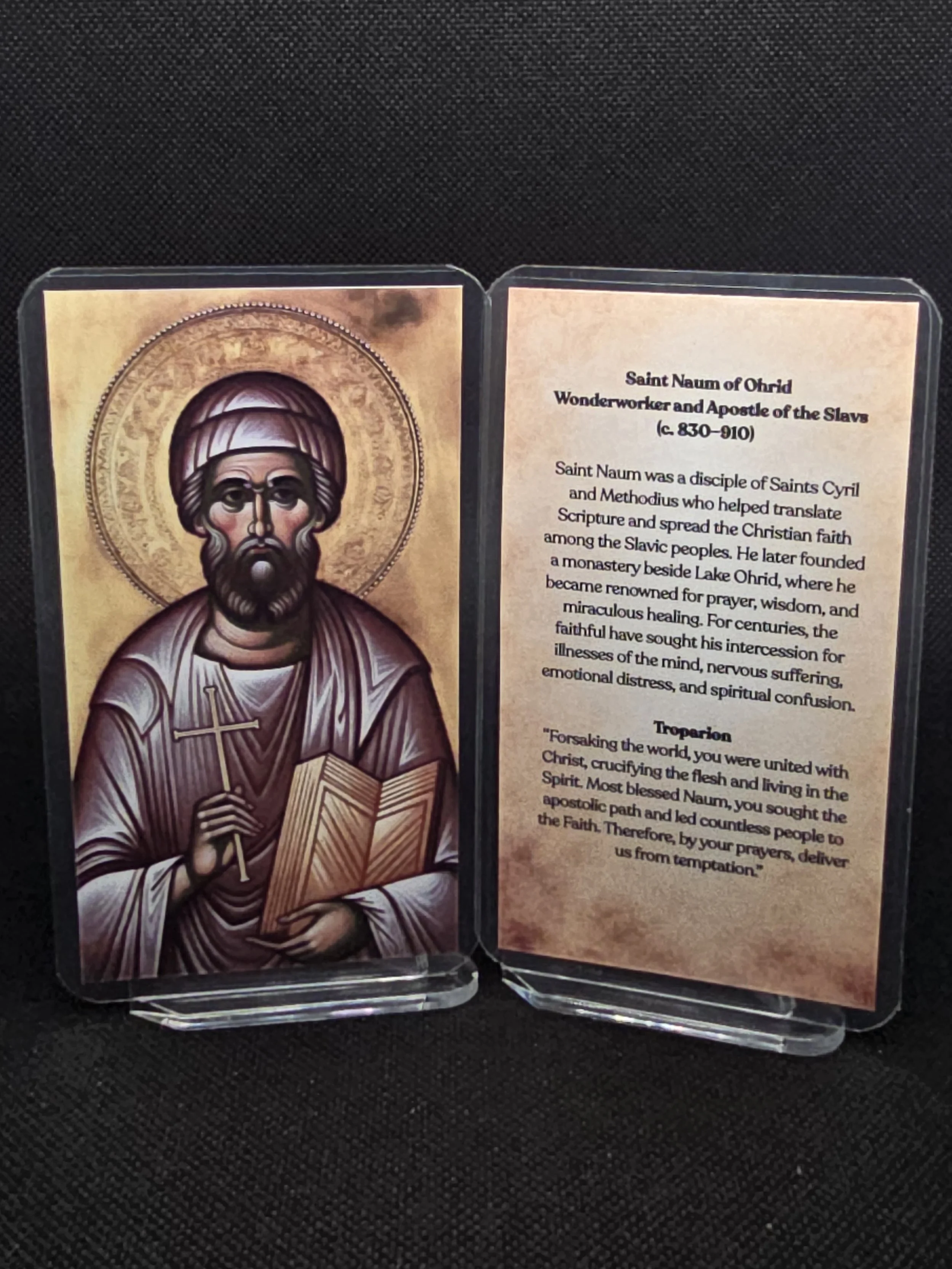
Saint Naum of Ohrid is one of the great missionary saints of the Slavic Christian world, venerated in the Eastern Orthodox Church and deeply honored throughout the Balkans for his healing intercession. His feast is celebrated on December 23 in many Orthodox calendars, with some traditions commemorating him also on June 20.
Naum was not only a monk.
He was a teacher, a builder of faith, and a healer of wounded minds.
A disciple of Saints Cyril and Methodius, Naum helped bring Christianity to the Slavic peoples during the ninth century. He helped shape their language, teach their clergy, and root their faith deeply in Scripture and prayer. But what makes Saint Naum beloved to this day is not simply his scholarship or missionary courage.
It is his compassion for those suffering in mind and spirit.
Near the end of his life, he founded a monastery on the shores of Lake Ohrid. There, people began bringing those tormented by mental illness, nervous disorders, emotional instability, and spiritual confusion. Naum did not dismiss them. He prayed over them. He fasted for them. He stayed with families through seasons of fear and exhaustion.
Tradition holds that even after his repose, healing continued at his tomb. Pilgrims describe placing their ears near his relics and hearing what sounds like a heartbeat, as though the saint remains alive in prayer for the afflicted.
Today, Saint Naum is sought by those suffering from anxiety, nervous breakdown, emotional imbalance, and spiritual disorientation. He is especially prayed to by families caring for loved ones with mental illness, by individuals overwhelmed by intrusive thoughts, and by those who feel their inner world unraveling.
This prayer card honors his enduring ministry to troubled minds and restless hearts.
Each card is handmade in Austin and created to order. We do not keep stock, because every prayer card is treated as a unique devotional offering. They are printed on museum-quality photo paper, not cardstock, and each one is made during prayer. The saints are venerated throughout the entire process, and prayers are intentionally offered for the person who will receive the card. These are not mass-produced items. They are created slowly, reverently, and with spiritual intention, because every soul and every prayer matters.
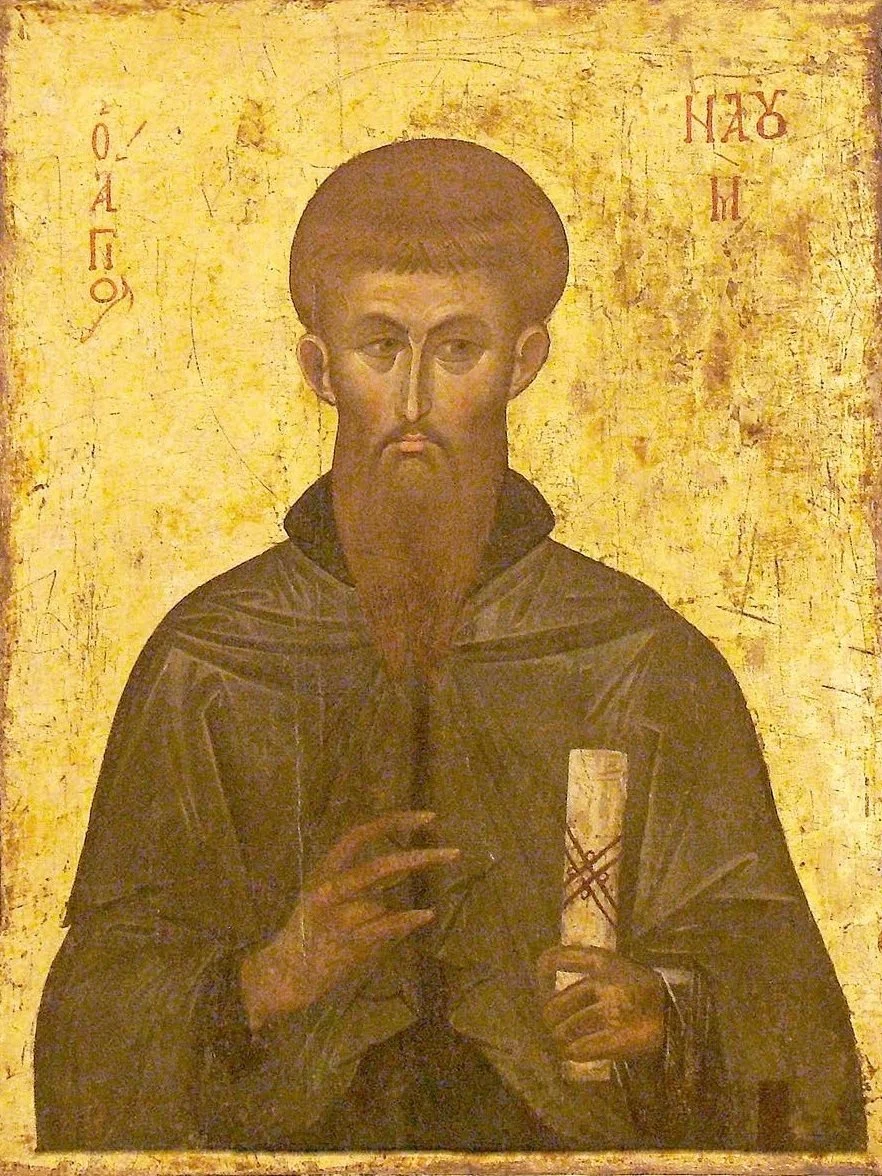
Saint Naum of Ohrid was one of the closest disciples of Saints Cyril and Methodius, a missionary monk, teacher of the Slavs, and quiet healer of troubled minds whose life was shaped by exile, perseverance, and deep interior prayer. He is venerated in the Eastern Orthodox Church and honored within Eastern Catholic devotional tradition as a faithful servant who carried the Gospel forward when political power tried to silence it.
Saint Naum is commemorated on December 23 in the Orthodox calendar. In many Slavic regions he is also honored on July 3, especially together with Saint Clement of Ohrid and the disciples of Saints Cyril and Methodius. Eastern Catholic communities that honor him observe these same dates locally.
He lived during a time when Christian mission meant imprisonment, expulsion, and uncertainty. After the death of Saint Methodius, Naum and the other disciples were driven from Great Moravia. Some were beaten. Some were enslaved. Naum survived displacement and found refuge in Bulgaria, where he devoted the rest of his life to teaching, forming clergy, and building spiritual communities rooted in prayer rather than power.
People pray to Saint Naum of Ohrid today for mental peace, emotional healing, and strength after forced change or loss. He understands what it feels like to lose home, to rebuild from nothing, and to carry faith forward while grieving what was left behind. He also became known in later tradition as an intercessor for those suffering from inner turmoil, anxiety, and disturbances of the mind.
This prayer card is for anyone carrying invisible wounds, for families navigating mental or emotional hardship, and for believers trying to rediscover peace after life has been uprooted. Saint Naum does not offer quick fixes. He offers quiet stability and spiritual grounding.
Each card is handmade in Austin, TX and created to order. We do not keep stock, because every prayer card is treated as a unique devotional offering. They are printed on museum-quality photo paper, not cardstock, and every card is made slowly during prayer. Saint Naum is venerated throughout the entire process, and prayers are intentionally offered for the person who will receive the card. Each piece is handled multiple times in prayerful silence, asking Christ to strengthen the faithful and asking Saint Naum to intercede for the soul it is being made for. These are not mass-produced items. They are created carefully, reverently, and with deep spiritual responsibility, because every soul and every prayer matters.
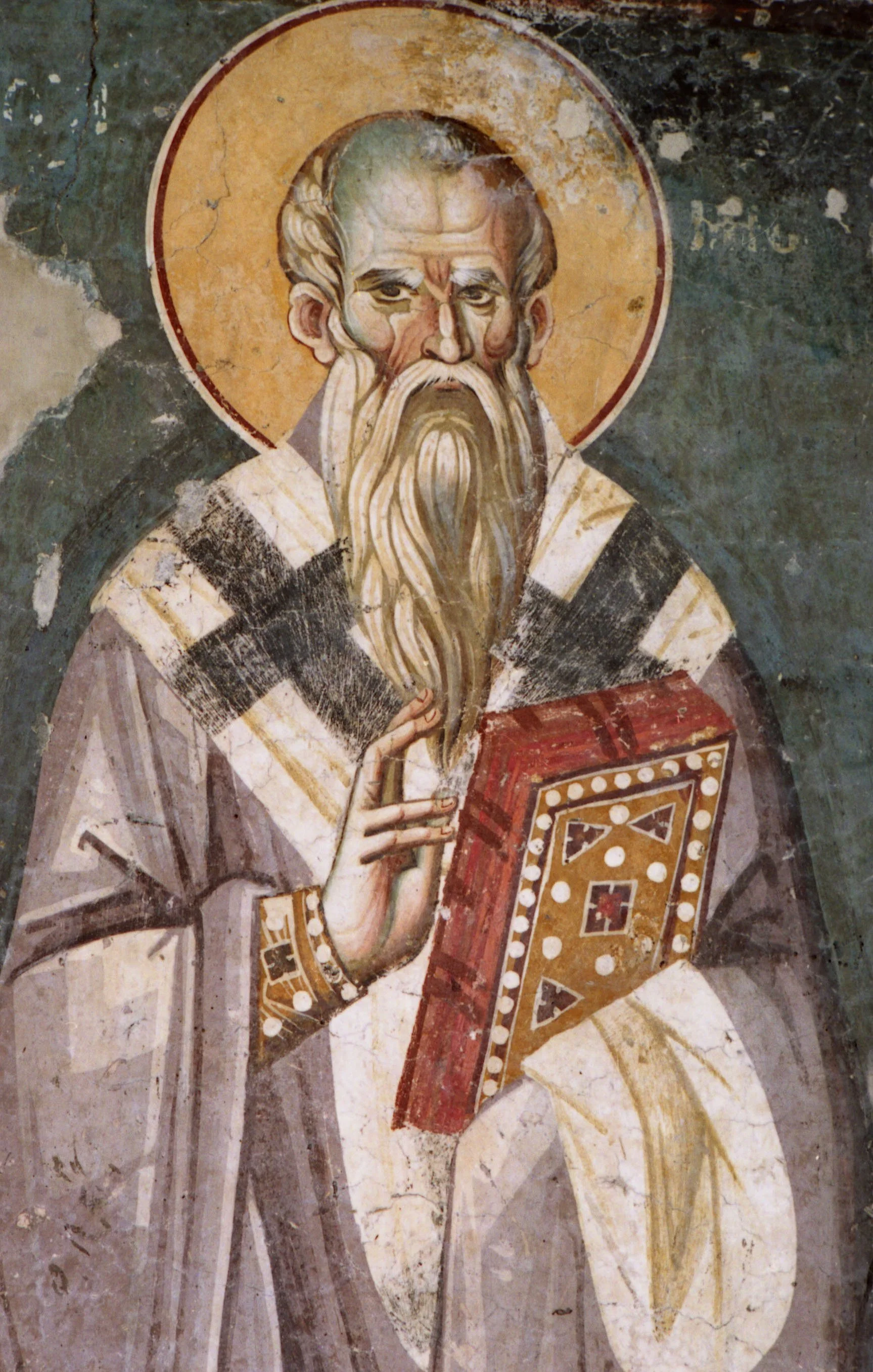
Saint Clement of Ohrid stands as one of the great spiritual architects of Slavic Christianity, a disciple of Saints Cyril and Methodius and a quiet giant whose faith shaped generations long after imperial powers tried to silence the Gospel. He is venerated in the Eastern Orthodox Church, honored deeply throughout Slavic lands, and respected within Eastern Catholic tradition for his role in preserving authentic Christian teaching during cultural and political upheaval.
Saint Clement is commemorated on November 25 in the Orthodox calendar. In some local Slavic and Eastern Catholic traditions, he is also honored on July 27, alongside the disciples of Saints Cyril and Methodius. Both dates are observed where his legacy is held with particular reverence.
He lived in a world where faith was constantly under threat. After the death of Saints Cyril and Methodius, their disciples were expelled, imprisoned, and sold into slavery. Clement was driven from Great Moravia and forced into exile, carrying with him sacred texts, fragile manuscripts, and a calling that could not be erased.
People pray to Saint Clement of Ohrid today when they are exhausted from teaching the faith in a culture that resists God, when they fear losing Christian identity under social or political pressure, and when they long for wisdom that is steady rather than loud. He understands what it means to build quietly while opposition surrounds you. He understands the pain of watching truth be distorted. He understands the loneliness of being faithful when others abandon the work.
This prayer card is for parents forming children in faith, for teachers and catechists stretched thin, and for believers trying to remain rooted while everything around them shifts. Saint Clement does not call attention to himself. He points steadily to Christ and teaches by endurance.
Each card is handmade in Austin, TX and created to order. We do not keep stock, because every prayer card is treated as a unique devotional offering. They are printed on museum-quality photo paper, not cardstock, and every card is made slowly during prayer. Saint Clement is venerated throughout the entire process, and prayers are intentionally offered for the person who will receive the card. Each piece is handled multiple times in prayerful silence, asking Christ to strengthen the faithful and asking Saint Clement to intercede for the soul it is being made for. These are not mass-produced items. They are created carefully, reverently, and with spiritual responsibility, because every soul and every prayer matters.

Blessed Mieczysław Bohatkiewicz was a Polish Catholic priest and martyr whose quiet pastoral faith was tested inside Nazi prisons and execution grounds during World War II. He is venerated in the Roman Catholic Church and honored by Eastern Catholics as a modern witness to sacramental courage, obedience unto death, and fidelity to Christ when violence ruled everyday life.
Blessed Mieczysław is commemorated on June 12 in the Catholic calendar with the 108 Martyrs of World War II. He is also remembered on the same date within Eastern Catholic devotional tradition, and locally among communities honoring the twentieth-century martyrs of Poland and Belarus.
He did not die on a battlefield.
He died because he would not abandon his priesthood.
People pray to Blessed Mieczysław Bohatkiewicz today for strength during wrongful imprisonment, courage under hostile occupation, and endurance when faith becomes dangerous. He understands what it feels like to be arrested without cause. He understands the terror of interrogation. He understands the ache of shepherding souls while knowing your own life may soon be taken.
He also understands how Christ enters jail cells and execution yards.
This prayer card is for clergy serving under pressure, for families living through political violence, and for anyone trying to remain faithful when evil systems threaten life itself. Blessed Mieczysław does not offer safe faith. He offers faithful courage.
Each card is handmade in Austin, TX and created to order. We do not keep stock, because every prayer card is treated as a unique devotional offering. They are printed on museum-quality photo paper, not cardstock. Every card is made slowly, during prayer, with deliberate reverence for Blessed Mieczysław and for the person who will receive it. Intentions are lifted quietly before God. Names are remembered. Each piece is handled multiple times in prayerful silence, asking Christ to strengthen the faithful and asking Blessed Mieczysław to intercede for the soul it is being made for. This is not production work. It is devotional craftsmanship shaped with patience, care, and spiritual responsibility, because every soul and every prayer matters.
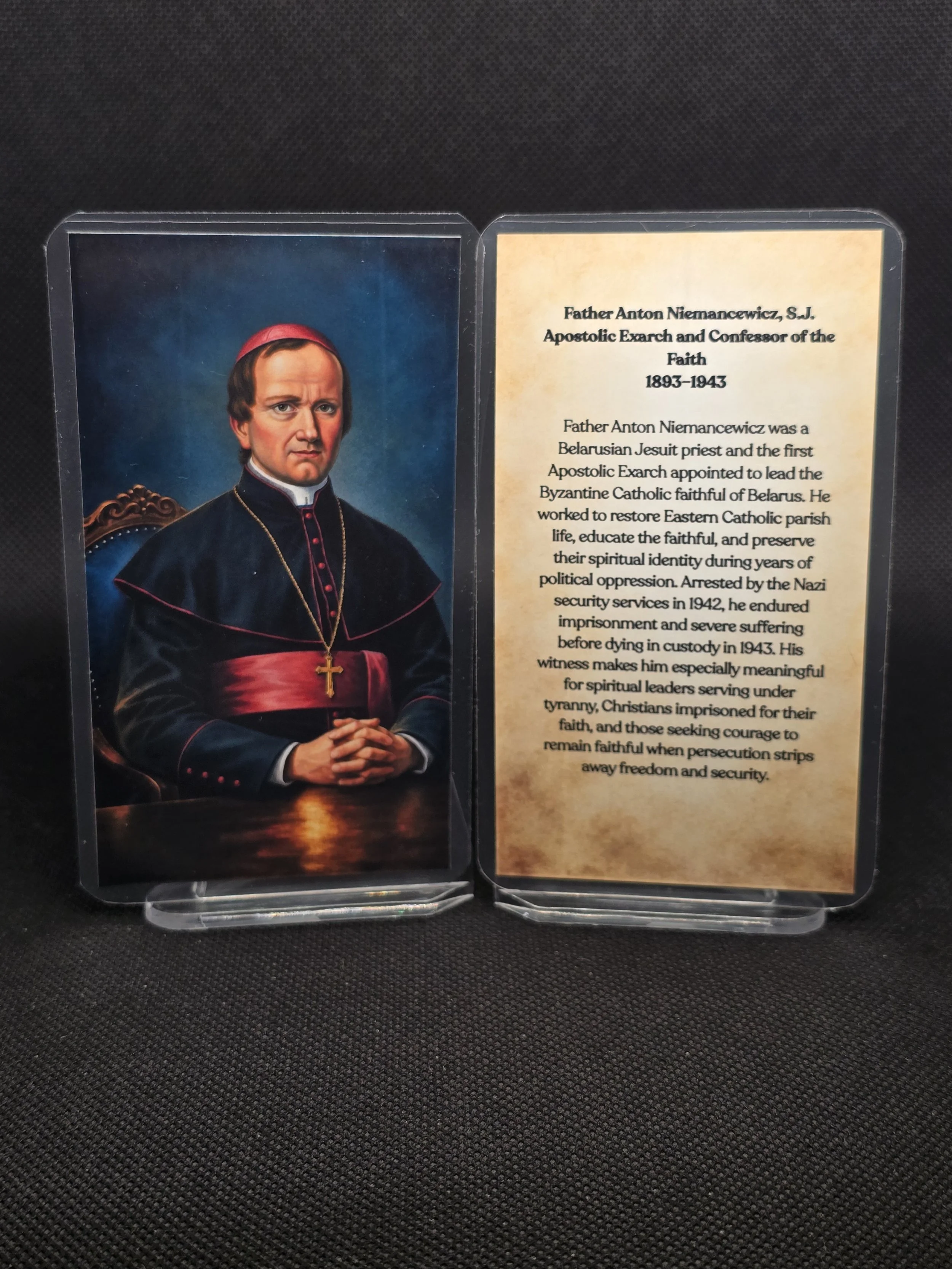
Blessed Anton Niemancewicz was a Catholic priest and martyr whose faith was tested not in ancient arenas, but in Soviet prisons. He is venerated in the Roman Catholic Church and honored by Eastern Catholics as a modern witness to pastoral courage, interior perseverance, and loyalty to Christ when atheistic power demanded silence.
Blessed Anton is commemorated on May 19 in the Catholic calendar as part of the group of Belarusian martyrs, and he is also remembered within Eastern Catholic devotional tradition on the same date.
He lived during one of the darkest chapters of Eastern Europe, when priests were arrested simply for celebrating the sacraments and believers were punished for attending church. Faith was labeled subversive. Clergy were treated as enemies of the state.
Anton remained a priest anyway.
People pray to Blessed Anton Niemancewicz today for strength during unjust imprisonment, courage when questioned or threatened for faith, and endurance when political systems try to crush spiritual life. He understands what it feels like to be watched. He understands the terror of interrogation. He understands the weight of knowing your faith may cost you freedom or life.
He also understands how Christ walks into prison cells.
This prayer card is for clergy under pressure, for believers navigating hostile environments, and for anyone afraid of standing openly for Christ. Blessed Anton does not promise safety. He offers holy endurance.
Each card is handmade in Austin, TX and created to order. We do not keep stock, because every prayer card is treated as a unique devotional offering. They are printed on museum-quality photo paper, not cardstock. Every card is made slowly, during prayer, with deliberate reverence for Blessed Anton and for the person who will receive it. Intentions are lifted quietly before God. Names are remembered. Each piece is handled multiple times in prayerful silence, asking Christ to strengthen the faithful and asking Blessed Anton to intercede for the soul it is being made for. This is not production work. It is devotional craftsmanship, shaped with care, patience, and spiritual responsibility, because every soul and every prayer matters.
Blessed Mark Çuni was a young Albanian Roman Catholic whose faith was tested under brutal Communist persecution. He lived in Albania during the regime’s systematic attempt to erase Christianity from public and private life, when even teenagers were interrogated, beaten, and pressured to deny God.
He is commemorated with the Albanian martyrs on November 5.
Blessed Mark was not a priest. He was not a monk. He was a young lay believer whose only “crime” was refusing to abandon Christ.
He was arrested as a youth.
He was tortured.
He was ordered repeatedly to renounce his faith.
He refused.
People pray to Blessed Mark Çuni today for courage under torture or abuse, for strength to remain faithful when pressured to compromise, and for young people struggling to stand firm in hostile environments. He understands what it means to be afraid and still choose Christ. He understands the loneliness of suffering when adults in power try to crush your conscience. He understands how terrifying it feels to be young and trapped inside systems designed to break you.
He also understands how to remain faithful anyway.
This prayer card is for teenagers facing spiritual pressure, for parents praying over their children, and for anyone whose faith is being tested through intimidation or coercion. Blessed Mark does not offer comfort without cost. He offers courage rooted in truth.
Each card is handmade in Austin and created to order. We do not keep stock, because every prayer card is treated as a unique devotional offering. They are printed on museum-quality photo paper, not cardstock, and each one is made during prayer. The saints are venerated throughout the entire process, and prayers are intentionally offered for the person who will receive the card. These are not mass-produced items. They are created slowly, reverently, and with spiritual intention, because every soul and every prayer matters.
Blessed Shtjefën Kurti, widely known as Blessed Dom Kurti, was an Albanian Roman Catholic priest whose final act of ministry was secretly baptizing a child. For that single act of obedience, he was arrested, sentenced to death, and executed by firing squad.
He lived in Albania during one of the most aggressive atheist regimes in modern history, when churches were closed, clergy were imprisoned, and even whispered prayer could result in torture or execution. His feast is kept with the Albanian martyrs on November 5.
Blessed Dom Kurti did not die preaching publicly.
He died serving quietly.
He baptized in kitchens.
He prayed behind closed doors.
He carried Christ into homes where fear lived.
People pray to Blessed Dom Kurti today for hidden faith, unjust imprisonment, and courage to obey God when obedience risks everything. He understands what it means to live under total surveillance. He understands the weight of protecting families while still serving Christ. He understands the interior battle between safety and fidelity.
He chose fidelity.
This prayer card is for believers practicing faith in silence, for parents raising children spiritually in hostile environments, and for anyone navigating systems that punish conscience. Blessed Dom Kurti does not promise protection from danger. He offers strength to remain faithful inside it.
Each card is handmade in Austin and created to order. We do not keep stock, because every prayer card is treated as a unique devotional offering. They are printed on museum-quality photo paper, not cardstock, and each one is made during prayer. The saints are venerated throughout the entire process, and prayers are intentionally offered for the person who will receive the card. These are not mass-produced items. They are created slowly, reverently, and with spiritual intention, because every soul and every prayer matters.
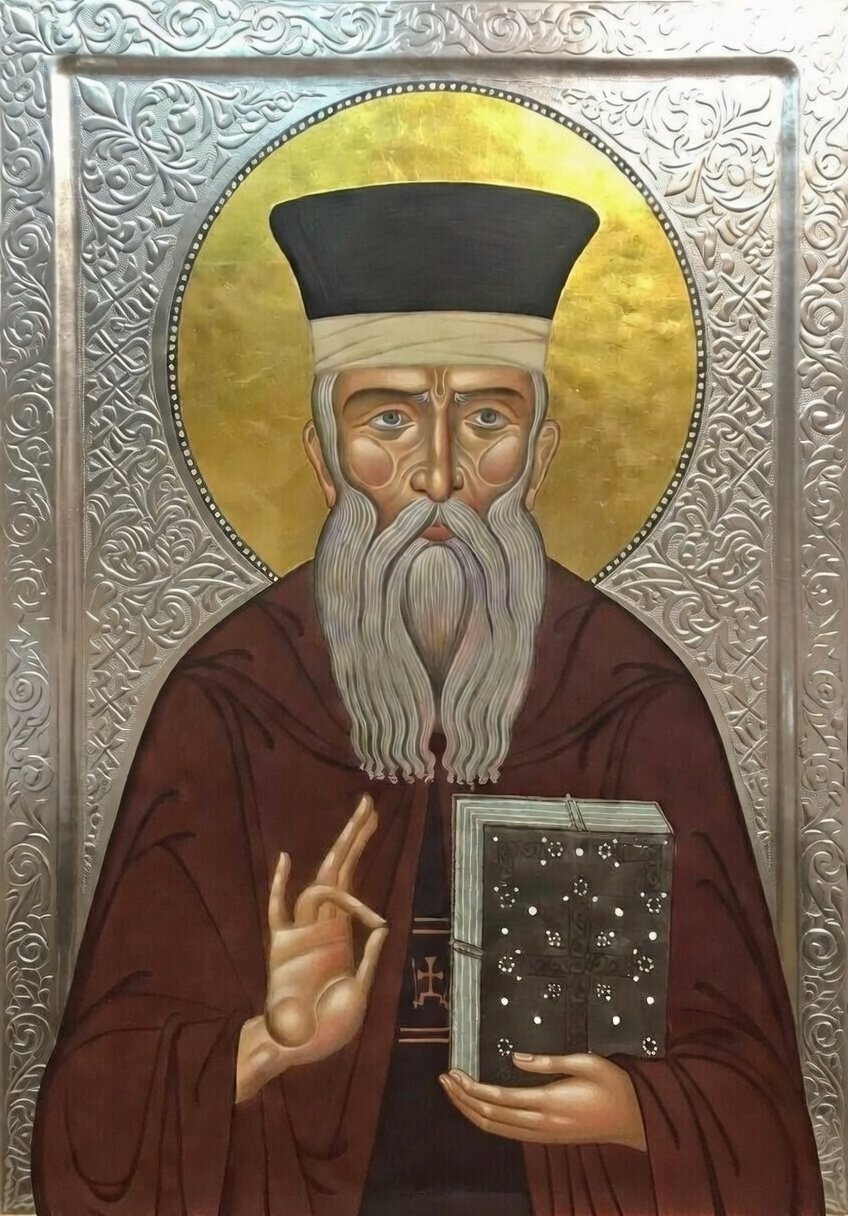
Saint Cosmas of Aetolia, known throughout Albanian lands as Shën Kozmai, was an Orthodox monk, missionary, and martyr whose entire life became a walking sermon of repentance, education, and spiritual awakening. He lived in the eighteenth century, preaching across villages and mountains in what is now Greece and Albania, at a time when Christian communities were crushed by poverty, illiteracy, and Ottoman oppression.
His feast is celebrated on August 24 in the Orthodox calendar.
Saint Cosmas did not serve from behind monastery walls.
He walked.
He preached in marketplaces.
He taught children under trees.
He gathered broken families and reminded them who they were.
He carried no weapons and sought no power. His authority came from holiness, tears, and relentless compassion for souls that had forgotten God.
People pray to Saint Cosmas today for spiritual blindness, for restoration of families drifting from faith, and for courage to live Christianity openly in hostile environments. He understands what it means to watch communities decay spiritually. He understands the grief of seeing children grow up without prayer. He understands how fear and hardship slowly erode belief.
He also understands how to bring light back.
This prayer card is for parents praying over wandering children, for believers who feel spiritually numb, and for anyone longing to rekindle faith in themselves or their household. Saint Cosmas does not merely comfort. He awakens.
Each card is handmade in Austin and created to order. We do not keep stock, because every prayer card is treated as a unique devotional offering. They are printed on museum-quality photo paper, not cardstock, and each one is made during prayer. The saints are venerated throughout the entire process, and prayers are intentionally offered for the person who will receive the card. These are not mass-produced items. They are created slowly, reverently, and with spiritual intention, because every soul and every prayer matters.
Blessed Dom Anton Muzaj was an Albanian Roman Catholic priest whose faith was tested not in moments of public spectacle, but in long seasons of surveillance, pressure, and quiet endurance. He lived in Albania during the Communist campaign to erase Christianity from daily life, when priests were watched constantly and ordinary believers learned to pray in whispers.
He is commemorated with the Albanian martyrs on November 5.
Blessed Dom Anton did not seek confrontation. He simply continued being a priest.
He heard confessions in secret.
He offered spiritual guidance behind closed doors.
He encouraged frightened families.
He refused to abandon Christ even when it meant isolation, interrogation, and eventual imprisonment.
His suffering was slow.
He lived for years knowing he was being observed. He ministered while aware that every word could be used against him. When he was finally arrested, it was not because of a single dramatic act, but because faith itself had become a crime.
People pray to Blessed Dom Anton Muzaj today for strength when faith must be hidden, for endurance during unjust arrest or legal pressure, and for perseverance when suffering stretches on without clear resolution. He understands what it feels like to live under constant threat. He understands the exhaustion of carrying spiritual responsibility while walking on fragile ground.
This prayer card is for believers practicing quiet courage, for those navigating unjust systems, and for anyone whose suffering unfolds slowly rather than suddenly. Blessed Dom Anton does not offer escape. He offers faithful companionship.
Each card is handmade in Austin and created to order. We do not keep stock, because every prayer card is treated as a unique devotional offering. They are printed on museum-quality photo paper, not cardstock, and each one is made during prayer. The saints are venerated throughout the entire process, and prayers are intentionally offered for the person who will receive the card. These are not mass-produced items. They are created slowly, reverently, and with spiritual intention, because every soul and every prayer matters.
Blessed Dom Mikel Beltoja was a Roman Catholic priest of Albania who refused to dilute the Gospel when atheistic ideology demanded silence. He lived in Albania during the harsh Communist persecution of the Church, a time when sermons were monitored, confessionals were infiltrated, and priests were pressured to serve the state instead of Christ.
He is commemorated with the Albanian martyrs on November 5.
Blessed Dom Mikel did not hide his convictions. He preached openly about moral truth, about the dignity of the human soul, and about the impossibility of replacing God with political power. He knew the consequences. The regime was already arresting clergy, closing churches, and executing those who would not cooperate.
He was arrested.
He was interrogated.
He was sentenced to death.
His execution was carried out publicly to intimidate others. Yet the attempt to silence him only strengthened the faith of those who heard his final words.
People pray to Blessed Dom Mikel Beltoja today for courage to preach truth in hostile environments, for strength when facing unjust execution or severe legal persecution, and for perseverance during interrogation when pressure feels crushing. He understands what it means to speak boldly while knowing the cost. He understands the fear of public accusation. He understands the interior battle between self-preservation and fidelity.
He chose fidelity.
This prayer card is for priests who feel watched, for believers pressured to compromise moral truth, and for anyone facing institutional injustice because of conscience. Blessed Dom Mikel does not offer comfort without cost. He offers strength that endures it.
Each card is handmade in Austin and created to order. We do not keep stock, because every prayer card is treated as a unique devotional offering. They are printed on museum-quality photo paper, not cardstock, and each one is made during prayer. The saints are venerated throughout the entire process, and prayers are intentionally offered for the person who will receive the card. These are not mass-produced items. They are created slowly, reverently, and with spiritual intention, because every soul and every prayer matters.
Blessed Alfons Tracki was a Roman Catholic Franciscan priest whose life ended in sudden violence while he was doing exactly what he had devoted himself to doing: caring for the dying. He lived in northern Albania during the chaotic years surrounding World War II, when political instability, armed conflict, and ideological hatred made ordinary ministry a dangerous act.
He is commemorated with the Albanian martyrs on November 5.
Blessed Alfons was not arrested in secret. He was not slowly broken in prison. His martyrdom came abruptly, in the open, while bringing the sacraments to a woman who was near death. Armed militants intercepted him on the road, accused him of helping enemies, and executed him on the spot.
There was no trial.
No defense.
No farewell.
People pray to Blessed Alfons Tracki today for sudden violent loss, for courage when life feels unsafe, and for faith in crisis when everything changes without warning. He understands what it feels like to be caught in danger while simply trying to serve. He understands the shock of violence. He understands how fragile life can become in a single moment.
He also understands what it means to remain faithful until the very end.
This prayer card is for those grieving unexpected deaths, for believers living in unstable environments, and for anyone whose faith has been shaken by trauma or sudden tragedy. Blessed Alfons does not offer explanations. He offers presence.
Each card is handmade in Austin and created to order. We do not keep stock, because every prayer card is treated as a unique devotional offering. They are printed on museum-quality photo paper, not cardstock, and each one is made during prayer. The saints are venerated throughout the entire process, and prayers are intentionally offered for the person who will receive the card. These are not mass-produced items. They are created slowly, reverently, and with spiritual intention, because every soul and every prayer matters.
Blessed Fran Mirakaj was a young Albanian Roman Catholic layman whose life was crushed under Communist persecution, yet whose faith never collapsed. He lived in Albania during the brutal atheist regime that targeted believers with arrests, labor camps, starvation, and psychological torture.
He is commemorated with the Albanian martyrs on November 5.
Blessed Fran was not clergy. He was not famous. He was an ordinary young man trying to live faithfully in an extraordinary season of terror. That is precisely what makes his witness so powerful.
He was arrested simply for being Catholic.
He was imprisoned without fair trial.
He was subjected to forced labor and deliberate deprivation.
He was slowly destroyed by exhaustion, malnutrition, and untreated illness.
He died young, not in dramatic public execution, but in quiet abandonment, his body worn down by a system designed to erase faith through attrition.
People pray to Blessed Fran Mirakaj today for strength during unjust imprisonment, for emotional endurance when suffering feels endless, and for faith under oppression when life feels controlled by forces beyond your reach. He understands what it means to lose freedom. He understands the loneliness of confinement. He understands how despair creeps in when every door feels closed.
He also understands how to keep believing when hope feels thin.
This prayer card is for those facing legal injustice, emotional captivity, or long seasons of hardship that do not resolve quickly. It is for anyone who feels forgotten, trapped, or spiritually exhausted. Blessed Fran does not offer quick deliverance. He offers companionship in endurance.
Each card is handmade in Austin and created to order. We do not keep stock, because every prayer card is treated as a unique devotional offering. They are printed on museum-quality photo paper, not cardstock, and each one is made during prayer. The saints are venerated throughout the entire process, and prayers are intentionally offered for the person who will receive the card. These are not mass-produced items. They are created slowly, reverently, and with spiritual intention, because every soul and every prayer matters.
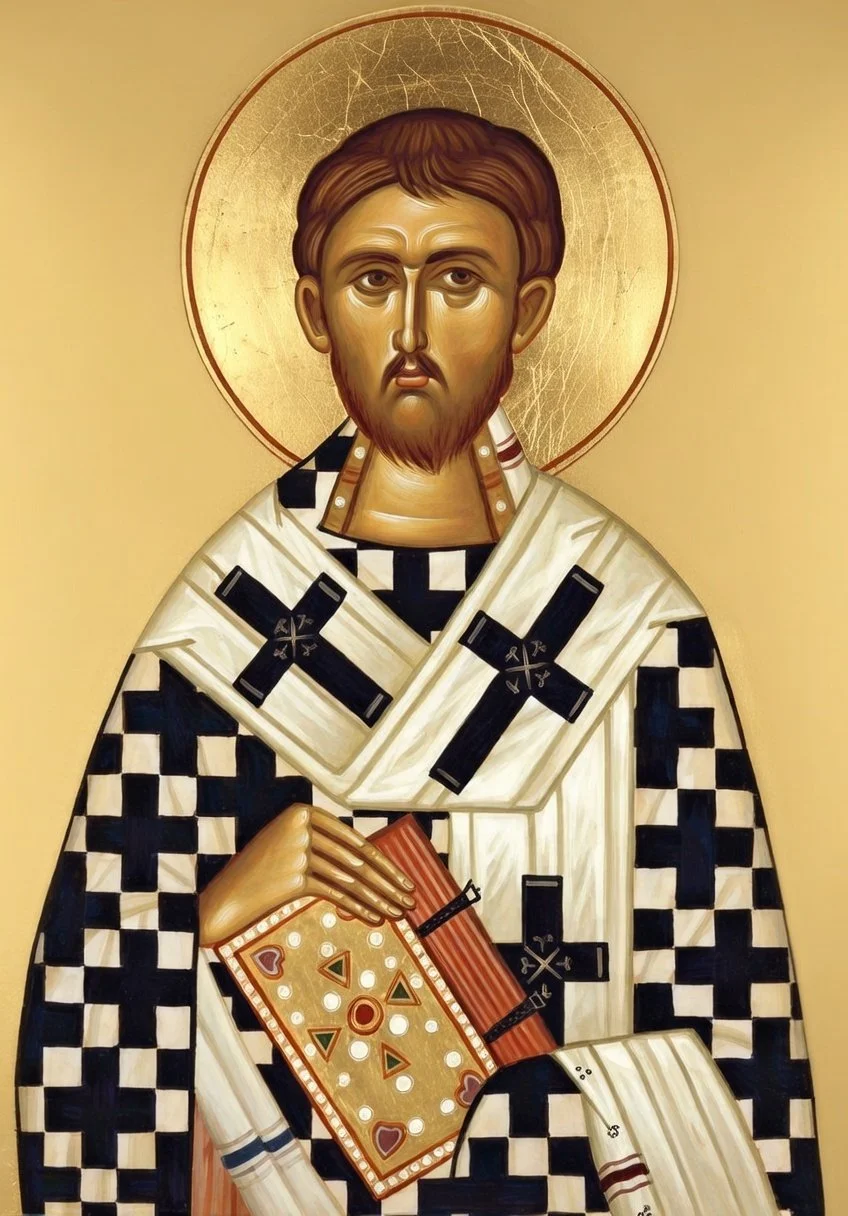
Saint Eleutherius of Illyria, known locally as Shën Lefteri, was an early Christian bishop and martyr whose witness still echoes across the southern Balkans. He lived during the Roman persecutions, serving the faithful in the ancient lands of Illyria, in what is now modern Albania and surrounding regions.
He is venerated in both Orthodox and Catholic traditions, especially among Albanian Christians who have preserved his memory for centuries. His feast is traditionally kept on December 15, though some local calendars observe him on nearby dates.
Saint Eleutherius lived in a time when Christianity was punishable by death. Bishops were hunted. Families were interrogated. Children were threatened to force compliance. Yet Eleutherius continued preaching Christ openly, baptizing converts, and strengthening believers who were terrified of what tomorrow might bring.
His martyrdom was not only personal.
His own mother stood beside him and was martyred as well.
People pray to Saint Eleutherius today for sudden death anxiety, for protection over their families, and for courage when faith feels threatened. He understands what it means to face violence with your loved ones at your side. He understands the terror of watching family suffer. He understands how fragile life feels when danger arrives without warning.
This prayer card is for those afraid of unexpected loss, for parents praying over their children, and for anyone living with quiet anxiety about mortality or safety. Saint Eleutherius does not promise escape from hardship. He offers holy steadiness inside it.
Each card is handmade in Austin and created to order. We do not keep stock, because every prayer card is treated as a unique devotional offering. They are printed on museum-quality photo paper, not cardstock, and each one is made during prayer. The saints are venerated throughout the entire process, and prayers are intentionally offered for the person who will receive the card. These are not mass-produced items. They are created slowly, reverently, and with spiritual intention, because every soul and every prayer matters.
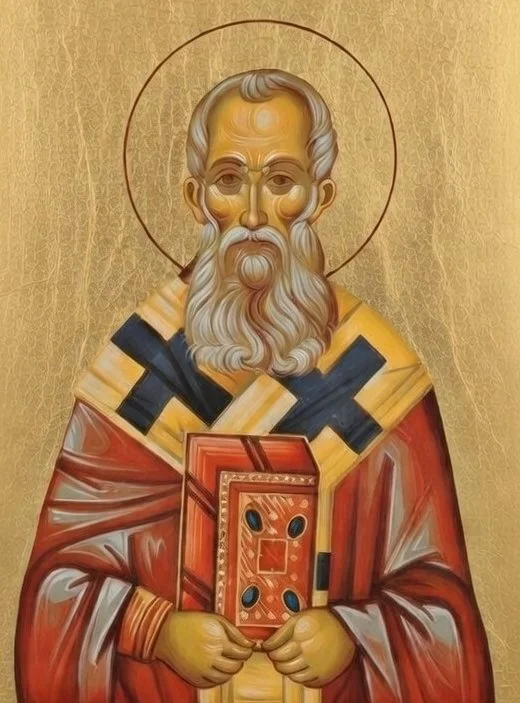
Saint Donatus of Euroea, known in Albanian tradition as Shën Donati, was an early Christian bishop and martyr who lived and died along the southern Balkan frontier during the Roman persecutions. He shepherded believers in the region historically called Euroea, in what is now modern Albania, during a time when openly following Christ could cost you everything.
He is venerated in both Orthodox and Catholic traditions, especially among Albanian Christians who have preserved his memory for centuries. His feast is traditionally kept on April 30, though some local calendars observe him on nearby dates.
Saint Donatus lived in an age when Christianity was fragile and dangerous. Churches met quietly. Converts risked arrest. Bishops were targeted first. Yet Donatus continued preaching, baptizing, and strengthening the faithful, knowing full well that martyrdom was a real possibility.
His death was violent.
He was arrested, tortured, and executed for refusing to sacrifice to pagan gods. Ancient sources remember him not only for his courage, but for the healings and spiritual authority associated with his ministry both before and after his martyrdom.
People pray to Saint Donatus today for sudden illness, for spiritual protection in hostile environments, and for courage under persecution. He understands what it means to live with constant threat. He understands how fear can invade the body. He understands what it feels like to entrust your life to God when safety is no longer guaranteed.
This prayer card is for those facing unexpected medical crises, for believers living under pressure, and for anyone who feels spiritually exposed or vulnerable. Saint Donatus does not offer comfort from a distance. He stands with you inside uncertainty.
Each card is handmade in Austin, TX and created to order. We do not keep stock, because every prayer card is treated as a unique devotional offering. They are printed on museum-quality photo paper, not cardstock, and each one is made during prayer. The saints are venerated throughout the entire process, and prayers are intentionally offered for the person who will receive the card. These are not mass-produced items. They are created slowly, reverently, and with spiritual intention, because every soul and every prayer matters.
Blessed Lazër Shantoja was an Albanian Roman Catholic priest, poet, translator, and martyr whose voice refused to be silenced even when tyranny demanded obedience. He is venerated among the Albanian martyrs of the twentieth century and remembered especially on November 5 in the Roman Catholic calendar.
Born in Albania during a turbulent political era, Lazër Shantoja combined deep priestly devotion with intellectual brilliance. He was not only a shepherd of souls but also a writer, cultural advocate, and defender of Christian truth in a nation increasingly threatened by ideological extremism. His life became a collision between conscience and dictatorship.
When the Communist regime rose to power, it sought to erase religious influence and silence Christian thinkers. Priests were arrested, churches closed, and public expressions of faith treated as rebellion. Lazër refused to compromise. He continued to speak, to write, and to stand publicly for Christ. For this, he was hunted, imprisoned, tortured, and eventually executed.
People pray to Blessed Lazër Shantoja today for courage to speak truth in hostile environments, for strength during unjust imprisonment or legal persecution, and for perseverance when artistic or intellectual gifts are suppressed. He understands what it means to be punished for integrity. He understands the fear of losing freedom. He understands the agony of watching truth distorted and feeling powerless to stop it.
He also understands how to remain faithful without surrendering the mind or the heart.
This prayer card is for writers who feel silenced, believers facing hostile institutions, artists pressured to compromise their values, and anyone unjustly targeted for standing by conscience. Blessed Lazër does not promise safety. He offers interior freedom and holy boldness.
Each card is handmade in Austin and created to order. We do not keep stock, because every prayer card is treated as a unique devotional offering. They are printed on museum-quality photo paper, not cardstock, and each one is made during prayer. The saints are venerated throughout the entire process, and prayers are intentionally offered for the person who will receive the card. These are not mass-produced items. They are created slowly, reverently, and with spiritual intention, because every soul and every prayer matters.

Blessed Maria Tuci was a young Albanian Roman Catholic woman whose life was violently interrupted by one of the most brutal atheist regimes in modern history. She is remembered today as a virgin martyr, a quiet heroine of purity, and a witness to Christ whose body was broken but whose faith could not be conquered.
She lived in Albania during the rise of Communist persecution, when churches were closed, clergy imprisoned, and believers hunted. Her feast is commemorated with the Albanian martyrs on November 5.
Blessed Maria was not a public figure. She was not a nun, not a preacher, not a revolutionary. She was a young woman preparing for religious life, serving quietly, praying deeply, and trying to follow Christ in ordinary ways. That is what makes her witness so piercing.
She was arrested, imprisoned, tortured, and sexually abused because she refused to abandon her faith or betray her conscience.
Her suffering was intimate and humiliating. She endured violence designed to destroy both body and spirit. She was beaten, mocked, and violated, then left untreated as her injuries became infected. She died slowly, alone, and in pain.
People pray to Blessed Maria Tuci today for healing after sexual trauma, for courage under persecution, and for emotional restoration when suffering feels unbearable. She understands what it means to have your dignity attacked. She understands what it feels like to be powerless. She understands how deeply wounds can reach when they touch both flesh and soul.
She also understands what it means to remain faithful when everything inside you is screaming for relief.
This prayer card is for survivors of abuse. It is for those carrying shame that does not belong to them. It is for anyone who has been spiritually or emotionally violated and needs gentle restoration. Blessed Maria does not offer shallow comfort. She offers sacred solidarity.
Each card is handmade in Austin and created to order. We do not keep stock, because every prayer card is treated as a unique devotional offering. They are printed on museum-quality photo paper, not cardstock, and each one is made during prayer. The saints are venerated throughout the entire process, and prayers are intentionally offered for the person who will receive the card. These are not mass-produced items. They are created slowly, reverently, and with spiritual intention, because every soul and every prayer matters.
Saint Longinus the Centurion is traditionally identified as the Roman officer who stood beneath the Cross of Jesus Christ and, after witnessing His death and the signs surrounding it, confessed: “Truly this was the Son of God.” He is also identified in received Christian tradition with the unnamed soldier in John 19:34 who pierced Christ's side with a lance, causing blood and water to flow. From a man participating in a Roman execution, Longinus became in Christian memory a convert, preacher, martyr, and one of the most striking examples of a life transformed by encountering the Crucified Christ.
Saint Longinus is especially meaningful for soldiers, military personnel, veterans, converts, people returning to Christianity, those seeking courage to confess their faith, and people praying for healing of the eyes or restoration of sight. His military connection is obvious from the Gospel setting and later tradition, while devotion concerning eyesight comes from the tradition that an affliction of his eyes was healed when blood and water from Christ's pierced side touched him. The Cathedral of Milan identifies Longinus traditionally as a patron of soldiers and the blind, while the Orthodox Church preserves both his military identity and his connection with miraculous healing.
What makes Longinus especially powerful as a devotional figure is that his story begins at the Cross itself. He did not encounter Christ first through a sermon, theological book, or peaceful miracle. He watched Jesus beaten, crucified, and dying, yet what he witnessed there convinced him that the condemned Man before him was unlike any other prisoner he had ever guarded. The Roman officer standing beneath an instrument of execution became one of the first Gentile voices in the Passion narrative to recognize who Christ truly was.
His prayer card can therefore be especially meaningful for someone whose faith begins, returns, or deepens through suffering. Longinus reminds us that a person can arrive at the Cross as an outsider, skeptic, sinner, soldier simply doing his duty, or even someone participating in terrible events, and still leave transformed by grace.
Each 2.5" x 4.25" prayer card is handmade in Austin, Texas and prepared prayerfully with each order. It is printed on museum-quality photo paper rather than cardstock, double-laminated for durability, and made while the recipient and their intentions are lifted before Christ in prayer, with Saint Longinus the Centurion asked to intercede for them.
THE LIFE & STORY
The canonical Gospels give us several pieces of the story that later Christian tradition joined together in Saint Longinus. Matthew 27:54 describes the centurion and the soldiers guarding Jesus seeing the earthquake and the events surrounding His death and confessing that He was the Son of God. Mark 15:39 focuses specifically upon the centurion standing opposite Jesus, while Luke 23:47 records the centurion glorifying God and declaring Jesus righteous or innocent.
Then John 19:34 records a different detail. An unnamed Roman soldier pierced the side of the already-dead Jesus with a spear, and immediately blood and water came forth. Scripture itself does not give that soldier a name, nor does it explicitly state that the soldier with the lance and the confessing centurion were the same man.
Christian tradition eventually identified both figures with Saint Longinus. That identification became deeply embedded in Eastern and Western Christianity, sacred art, liturgical commemoration, and devotion to the Passion of Christ.
WHAT THE GOSPELS ACTUALLY SAY
This distinction is important because Longinus presents an unusual case where the biblical event is certain but the personal identification comes from later tradition. There certainly was a centurion at the Crucifixion who responded dramatically to Christ's death, and there certainly was a Roman soldier who pierced Christ's side, but neither is named Longinus in Matthew, Mark, Luke, or John.
The name appears later in Christian literature. Oxford's Cult of Saints research project notes that the Acts of Pilate, incorporated into the tradition of the Gospel of Nicodemus, is the earliest surviving text to give the name Longinus to the lance-bearing soldier. A form of that text dating to about 425 AD names the soldier Longinus, while later forms identify him with the confessing centurion.
That means the safest product wording is not “the Bible says his name was Longinus.” It is “Christian tradition identifies the centurion and lance-bearing soldier as Saint Longinus.”
THE TRADITION MAY BE OLDER THAN THE NAME
Interestingly, parts of the Longinus tradition existed before surviving writers actually used his name. Oxford's research notes that Saint John Chrysostom already knew a tradition that the centurion at the Cross later became a martyr, while Saint Gregory of Nyssa knew a tradition connecting the converted centurion with missionary activity in Cappadocia. Neither Father calls him Longinus in the surviving passages.
This is historically significant. It suggests that the Christian memory of the centurion's conversion and later witness was circulating before the surviving written tradition firmly attached the name Longinus to him.
“TRULY THIS WAS THE SON OF GOD”
The defining moment of Saint Longinus' story is his confession beneath the Cross. Matthew records that the centurion and those guarding Jesus were terrified by the earthquake and surrounding events and declared, “Truly this was the Son of God.”
Mark places the centurion directly opposite Jesus and makes his confession an immediate response to the way Christ died. Luke gives another perspective, saying the centurion glorified God and proclaimed Jesus righteous. Together, the Gospel accounts present a Roman military officer recognizing something extraordinary at the very moment many others believed Christ's claims had been finally defeated.
This makes Longinus one of the great saints of conversion at the Cross. The suffering and death of Christ did not destroy his faith because, paradoxically, those very events appear to have awakened it.
A GENTILE SOLDIER RECOGNIZES CHRIST
There is a powerful biblical reversal in the scene. Jesus has been rejected by many of His own people, condemned by religious and political authorities, abandoned by frightened followers, and handed over to Roman execution.
Yet beneath the Cross stands a Gentile Roman officer, and it is from him that the Gospel records one of the Passion's clearest confessions concerning Christ.
The man responsible for overseeing death recognizes Life. The representative of imperial power looks upon the apparently powerless Christ and recognizes divine authority.
THE SPEAR THAT PIERCED THE SIDE OF CHRIST
John tells us that soldiers came to break the legs of the crucified men to hasten death. Finding Jesus already dead, they did not break His legs, but one soldier pierced His side with a spear and blood and water flowed out.
Christian theology has meditated upon this scene for centuries. The blood and water became connected with the Eucharist and Baptism, the sacramental life of the Church, and the opening of Christ's side as a sign of the Church being born from the wounded Savior.
Later Christian tradition identified the soldier holding that spear as Longinus. The spear consequently became known as the Lance of Longinus or Holy Lance.
THE BLOOD & WATER
The blood and water are not an invention from Longinus' later Life because they come directly from John 19:34. The association between them and the soldier's personal healing, however, belongs to later devotional tradition.
The Orthodox Church preserves the tradition that Longinus suffered from an eye ailment and that some of the blood and water from Christ's side reached his eyes, bringing healing. His physical sight was restored at the same moment his spiritual sight was opening to the identity of Jesus.
That symbolism is one reason he became especially meaningful to Christians praying for eyesight and spiritual illumination.
A SAINT FOR EYESIGHT
Saint Longinus has a longstanding devotional connection with the blind and people suffering from disorders of sight. The Cathedral of Milan explicitly identifies him as a patron of the blind, while the Orthodox Life preserves multiple traditions involving miraculous restoration of eyesight.
The spiritual symbolism is unusually fitting. Longinus is remembered as a man who learned to see at the Cross, both physically in the later healing tradition and spiritually when he recognized the Son of God.
A Saint Longinus prayer card can therefore be especially meaningful before eye surgery, during treatment for declining vision, or for someone praying for greater spiritual clarity.
DID LONGINUS REALLY HAVE BAD EYES?
The eye-healing story should be described as Church tradition, not as a detail recorded in Scripture. Modern historical research indicates that the blindness or poor-eyesight motif developed considerably later than the earliest traditions about the centurion.
That does not mean the tradition has no devotional importance. It means the product description should carefully say, “According to later Christian tradition, Longinus suffered from an eye condition and was healed by the blood and water from Christ's side.”
THE GUARD AT THE TOMB
Eastern Orthodox tradition goes beyond Golgotha and identifies Longinus as one of the officers involved in guarding Christ's tomb after the burial. According to this tradition, Longinus and the soldiers witnessed the events surrounding the Resurrection.
Matthew's Gospel itself records that guards were stationed at the tomb and that after the Resurrection money was given to soldiers so they would report that Jesus' disciples had stolen His body. The Gospel does not name Longinus as one of those guards, but later Eastern tradition places him among them.
HE REFUSED THE BRIBE
The Orthodox Life says Longinus and two fellow soldiers refused money offered in exchange for supporting the false explanation of Christ's missing body. Instead of remaining silent, they testified to what they believed had occurred.
This part of his tradition gives Longinus an especially strong connection with integrity, truthfulness, and refusing corruption. The Roman officer who once followed orders now had to decide whether money and political pressure could persuade him to deny what he had seen.
FROM WITNESS TO CONVERT
According to the Orthodox tradition, Longinus and two fellow soldiers received Baptism from the apostles and left military service. Longinus then returned to his native Cappadocia, where he began preaching Christ.
The transformation is remarkable. The soldier who had once stood guard over the Crucifixion becomes a missionary proclaiming the Crucified and Risen Lord.
The imagery gives Longinus particular meaning for converts. Christianity did not merely add another belief to his life because accepting Christ changed his loyalties, profession, future, and eventually the reason for which he was willing to die.
A SAINT FOR CONVERTS
Saint Longinus is especially meaningful for people entering Christianity from outside the faith. His traditional Life begins with an outsider looking at Jesus from the perspective of the Roman world and ends with that same man openly preaching Christ.
He can also be meaningful for someone returning to faith after years away. Longinus reminds the believer that what matters is not how close or far away someone appeared yesterday, but what that person does once Christ becomes recognizable.
THE CENTURION BECOMES A MISSIONARY
The tradition connecting Longinus with Cappadocia appears surprisingly early. Oxford's study of his cult notes that Saint Gregory of Nyssa already knew of a tradition concerning the centurion as an apostolic evangelizer of Cappadocia, even though Gregory did not use the name Longinus.
This makes the missionary element more than a very late medieval embellishment. The exact details of his preaching cannot be reconstructed historically, but the idea that the converted centurion carried Christianity into Cappadocia was already known in the patristic era.
PILATE SENDS SOLDIERS AFTER HIM
The received Orthodox Life says that reports of Longinus' preaching eventually reached Jerusalem. Pilate was persuaded to send soldiers to Cappadocia with orders to kill Longinus and his companions.
The story then takes an extraordinary turn. The soldiers arrived without recognizing the man they sought, and Longinus himself welcomed them into his home and fed them.
Only after offering hospitality did he discover why they had come.
HE FED THE MEN SENT TO KILL HIM
According to the tradition, Longinus did not immediately reveal his identity. He treated the soldiers as guests and served them before they explained that they had been sent to find and kill a man named Longinus.
He then told them who he was.
The scene is one of the strongest parts of his later Life because the former Roman officer understood exactly what the soldiers were experiencing. They were men under orders, sent into an unfamiliar place to complete a grim assignment, and the person they were hunting had just welcomed them as guests.
THE SOLDIERS WANTED HIM TO ESCAPE
The soldiers were horrified when they discovered the truth. According to the Orthodox account, they urged Longinus and his companions to escape rather than force them to execute men who had treated them kindly.
Longinus refused to flee. His traditional Life presents him as accepting martyrdom deliberately, not because he despised life, but because he would not deny the Christ whom he had recognized beneath the Cross.
MARTYRDOM BY BEHEADING
Saint Longinus and his two companions were ultimately beheaded, according to the Eastern Christian tradition. His body was buried in Cappadocia, while his head was sent back as proof that the order had been carried out.
The Oxford Cult of Saints project dates the surviving developed Greek Martyrdom of Longinus probably to the sixth or seventh century, while noting that elements of the centurion's martyr tradition are already known centuries earlier. This distinction allows the story to be told devotionally without pretending the full later Passion is an eyewitness court record.
THE BLIND WIDOW & THE HEAD OF SAINT LONGINUS
Eastern tradition preserves another remarkable eyesight miracle after Longinus' death. A blind widow from Cappadocia traveled to Jerusalem hoping to receive healing, but her son became ill and died during the journey, leaving her both blind and overcome with grief.
Longinus appeared to her in a dream and directed her toward the place where his discarded head could be found. When she reached the place and touched the martyr's head, the tradition says her sight was restored.
The story strengthened Longinus' association with vision and healing. It also connects physical sight with consolation in grief, because the widow's journey ends not only with restored eyes but with reassurance concerning her son.
A SAINT FOR GRIEF AS WELL AS HEALING
The widow's story means Saint Longinus can also be meaningful to someone grieving the death of a child or loved one. Her prayer began as a request for one kind of healing, yet according to the traditional Life she received consolation concerning something even more devastating.
The Church does not promise visions or miraculous cures to everyone who invokes a saint. The story instead points toward the Christian conviction that physical death does not have the final word over those who belong to Christ.
LONGINUS IN THE EARLIEST CHRISTIAN ART
The name Longinus appears very early in Christian Crucifixion art. The famous Rabbula Gospels, an illuminated Syriac Gospel manuscript completed in 586 AD, contains a Crucifixion scene in which the lance-bearing figure beside Christ is labeled with a form of the name Longinus. The Smithsonian's National Museum of Asian Art confirms the manuscript's date and Syrian origin, while scholarly analysis identifies the labeled spear-bearing figure as Longinus.
This is important because it demonstrates that by the sixth century the name had already become visually attached to the Crucifixion scene. Longinus was no longer only a character in apocryphal literature but part of established Christian sacred imagery.
THE HOLY LANCE
The spear associated with Longinus became one of Christianity's most famous Passion relics. Saint Peter's Basilica in Rome currently preserves a relic traditionally identified with the Lance that pierced Christ's side, and the Basilica continues to expose it solemnly for veneration during Lent.
The Basilica itself carefully uses the language of tradition. Its official 2026 announcement calls it the Lance of Saint Longinus and explains that, according to tradition, it is identified with the weapon used by the Roman soldier in John 19:34.
This is the right level of certainty for product copy as well. The relic is genuinely and officially venerated, while its identification with the exact first-century weapon remains a matter of sacred tradition rather than something archaeology can independently prove.
THE LANCE IS STILL DISPLAYED AT SAINT PETER'S
This is not merely an obsolete medieval custom. In 2025 and again in 2026, Saint Peter's Basilica publicly announced the solemn Lenten display of the Lance of Longinus during the ancient Roman Statio observance.
That gives Saint Longinus a living connection with one of Christianity's most important churches. Pilgrims entering Saint Peter's are encountering not merely old legends in books, but a devotional tradition that remains part of the Basilica's prayer today.
BERNINI'S SAINT LONGINUS
One of the most spectacular artistic representations of Longinus stands inside Saint Peter's Basilica. Gian Lorenzo Bernini created the monumental statue of Saint Longinus placed beneath the great dome, near the area associated with the Passion relics. The Basilica's official Bernini tour specifically lists the statue of Saint Longinus among Bernini's masterpieces in Saint Peter's.
The sculpture shows the former centurion dramatically opening his arms toward heaven, no longer merely holding the weapon connected with Christ's death but transformed by the revelation of the Cross.
LONGINUS & THE PRECIOUS BLOOD IN MANTUA
A separate Western tradition became particularly strong in Mantua, Italy. The Diocese of Mantua preserves a tradition that Longinus brought earth soaked with Christ's Precious Blood to the city, where the relic became associated with the Basilica of Sant'Andrea.
This tradition differs from the Eastern account that places Longinus' later life and martyrdom in Cappadocia. It is therefore better not to force the Eastern and Western Lives into one seamless biography.
What can be said securely is that both East and West developed major devotion to Longinus, but sometimes preserved different accounts concerning what happened after the Crucifixion.
EASTERN & WESTERN LONGINUS TRADITIONS
Modern scholarship has specifically examined this difference. The Eastern tradition tended to emphasize Longinus the centurion, his confession, conversion, missionary activity, and martyrdom in Cappadocia, while Western devotion particularly developed the identity of Longinus the lance-bearing soldier, connecting him with the Precious Blood and Holy Lance.
Over time, the identities largely merged in popular Christian devotion. This is why modern icons, statues, prayer cards, and Lives normally treat the confessing centurion and the soldier with the lance as the same Saint Longinus.
A SAINT FOR SOLDIERS
Saint Longinus is particularly meaningful for soldiers and military personnel because his entire conversion unfolds inside military duty. He knew chain of command, Roman discipline, execution orders, guard duty, political pressure, and the expectation that a soldier would obey.
Yet his story eventually asks what happens when a soldier encounters a truth greater than the authority issuing the orders.
Western Catholic tradition explicitly identifies Longinus as a patron of soldiers, and Eastern devotion remembers him first and foremost as Longinus the Centurion.
A SAINT FOR VETERANS
Longinus can be especially meaningful for veterans because his traditional Life includes leaving military service and discovering an entirely new mission. The skills and experiences of his previous life were not erased, but his identity could no longer be reduced to his uniform.
For a veteran facing the question of what comes next, Longinus offers a powerful Christian image of the soldier becoming witness, missionary, and eventually martyr.
A SAINT FOR PEOPLE WHO CARRY REGRET
Few saintly conversions begin at a scene as morally heavy as the Crucifixion. Christian tradition identifies Longinus with men directly involved in guarding and carrying out the execution of Christ, yet it does not allow his worst moment to become the final definition of his life.
That makes Longinus especially meaningful for someone burdened by regret over serious past decisions. Christianity does not teach that the past is unreal, but it does teach that grace can transform what happens afterward.
The spear does not disappear from Longinus' iconography. Instead, the instrument connected with his former act becomes the very object by which Christians recognize the transformed saint.
THE SPEAR AS A SYMBOL OF CONVERSION
This gives the lance a profound spiritual meaning. Longinus is not usually depicted hiding the spear from his past because Christian iconography can place it directly in his hand after his conversion.
The object therefore stops functioning only as evidence against him. It becomes testimony to the moment when Christ's wounded side opened and the centurion's life changed.
For Christians struggling with shame, this is powerful imagery. God can transform even the memory of sin into a place from which repentance and testimony begin.
A SAINT FOR COURAGE TO SPEAK THE TRUTH
The centurion's first recorded Christian act is fundamentally speech. Surrounded by soldiers, authorities, terrified spectators, and the aftermath of a public execution, he says what he has come to believe about Jesus.
Longinus is therefore especially meaningful for someone who knows what is true but is frightened to say it publicly. His story joins military courage with courage of confession.
A SAINT FOR INTEGRITY
The later tomb-guard tradition adds another dimension. Longinus is presented as someone who cannot be paid to deny what he has witnessed, even when powerful people want a convenient story repeated.
That makes his prayer card meaningful for soldiers, law-enforcement personnel, witnesses, investigators, public officials, employees confronting corruption, or anyone whose integrity is being tested by money or pressure.
A SAINT FOR PEOPLE RETURNING TO CHRIST
Longinus did not spend decades gradually approaching Jesus before his conversion. His traditional identity is formed through a sudden confrontation with the Cross.
For someone who has lived far from Christianity, his story offers a simple message: the distance between a person and Christ can change very quickly when grace opens the eyes.
A prayer card of Saint Longinus can therefore make a meaningful gift for someone coming back to the Church, preparing for Baptism or Chrismation, or struggling to believe that a past life disqualifies them from holiness.
A SAINT FOR SPIRITUAL SIGHT
Physical eyesight is only one layer of the Longinus tradition. His deeper story is about recognizing reality when almost everyone around him sees only defeat.
He looks at a crucified prisoner and sees the Son of God.
For someone praying for discernment, conversion, or freedom from spiritual blindness, that makes Longinus a powerful intercessor even apart from the later traditions of physical eye healing.
HOW HISTORICAL IS SAINT LONGINUS?
The best answer requires separating three levels. First, the canonical Gospels securely record an unnamed centurion confessing Christ at the Crucifixion and an unnamed soldier piercing Jesus' side. Second, patristic sources already knew traditions that the centurion converted, preached, and became a martyr. Third, later apocryphal and hagiographic traditions supply the name Longinus and the detailed narrative now found in his Life.
That means Longinus should not be described either as a completely invented medieval legend or as though every detail of his later Life appears in Scripture. The reality is more interesting: his cult developed around genuine unnamed Gospel figures, received an early Christian identity, and accumulated a rich sacred tradition across centuries.
FEAST DAY
In the Byzantine Orthodox tradition, Saint Longinus the Centurion is commemorated on October 16. The Orthodox Church in America and the Greek Orthodox Patriarchate of Antioch both preserve that date and provide liturgical hymns for his feast.
The Coptic Orthodox tradition also venerates Longinus. Coptic sources commemorate his martyrdom on 23 Abib, while 5 Hator commemorates the finding of his head. Pope Shenouda III specifically referred to both commemorations when discussing the centurion of the Crucifixion.
Western Catholic tradition also preserves devotion to Longinus, historically particularly around March 15, while the saint remains closely associated with the Passion observances at Saint Peter's Basilica. Because this product emphasizes the ancient Eastern saintly tradition, October 16 is the clearest principal feast date to display.
ICONOGRAPHY
Saint Longinus is usually depicted as a Roman centurion or soldier, wearing military clothing or armor and carrying a spear or lance. The lance immediately identifies him with the piercing of Christ's side and with the blood and water of John 19.
Some icons emphasize Longinus at the Cross, while individual saint icons show him after conversion holding the martyr's cross as well as military attributes. The combination tells the story visually: Roman soldier, witness of Golgotha, convert, and martyr.
Early Christian art already associates the name with the spear-bearer. The 586 Rabbula Gospels famously labels the soldier at Christ's side with a form of the name Longinus, demonstrating the antiquity of the visual tradition.
THE “SPEAR OF DESTINY”
The weapon associated with Longinus is properly called the Holy Lance or Lance of Longinus in Christian tradition. “Spear of Destiny” is a much later popular term heavily associated with legends, novels, occult speculation, and modern entertainment rather than the Church's ordinary devotional vocabulary.
For a Christian product page, Holy Lance is therefore the better wording. Saint Peter's Basilica itself uses “Lance of Saint Longinus” when announcing the relic's solemn exposition.
PRAYERS
Saint Longinus has established Byzantine liturgical hymns, so there is no reason to invent a new prayer for him. His Orthodox Troparion remembers him looking upon the crucified King of Glory, becoming enlightened, receiving the martyr's crown, and continuing as an instrument of healing.
The Greek Orthodox Patriarchate of Antioch publishes an established Apolytikion ending with the invocation:
This is an excellent traditional prayer for the back of a Longinus card because it keeps Christ clearly at the center. Longinus is asked to intercede, while salvation and mercy come from Christ.
FAQ
Who was Saint Longinus the Centurion? Saint Longinus is the name Christian tradition gives to the Roman centurion associated with Christ's Crucifixion and confession beneath the Cross. Later tradition also identifies him with the soldier who pierced Jesus' side with a lance.
Is Saint Longinus actually in the Bible? The centurion and the lance-bearing soldier are in the canonical Gospels, but the name Longinus is not. The name enters surviving Christian literature later through the Acts of Pilate and the developing Longinus tradition.
What did the centurion say when Jesus died? Matthew records the centurion and those with him declaring, “Truly this was the Son of God.” Mark similarly places that confession upon the lips of the centurion standing opposite Christ.
Is Longinus the soldier who pierced Jesus with the spear? Christian tradition identifies him that way, but John 19:34 does not name the soldier. The identification became firmly established in later Christian devotion and iconography.
Were the centurion and the spear-bearing soldier definitely the same person? Scripture does not explicitly say so. Eastern and Western traditions gradually combined the confessing centurion and the lance-bearing soldier into the single figure now venerated as Saint Longinus.
Where did the name Longinus come from? The earliest surviving text known to use the name for the Crucifixion soldier is the apocryphal Acts of Pilate. By the sixth century, a form of the name also appears above the spear-bearing figure in the famous Rabbula Gospels Crucifixion image.
How old is devotion to Saint Longinus? Elements of his tradition were already known to major fourth-century Fathers, and his named image appears in sixth-century Christian art. His veneration therefore has genuinely ancient roots even though the complete later Life developed over time.
Did Saint Longinus become Christian at the Cross? Christian tradition interprets the centurion's confession at Christ's death as the beginning of his conversion. The Orthodox Life then describes him receiving Baptism and becoming a missionary.
Did Saint Longinus witness the Resurrection? Eastern tradition places Longinus among the guards associated with Christ's tomb and says he witnessed the Resurrection. The canonical Gospel account mentions guards but does not identify Longinus by name.
Did Longinus refuse money to deny the Resurrection? According to Orthodox tradition, Longinus and two companions refused the money offered to support the claim that Christ's disciples had stolen His body. This episode belongs to his received Church Life rather than an explicit naming in Matthew's Gospel.
Did Saint Longinus leave the Roman army? The Orthodox Life says that after becoming Christian he received Baptism, left military service, and returned to Cappadocia. There he preached the Gospel with two companions.
Was Saint Longinus from Cappadocia? Eastern tradition identifies Cappadocia as his homeland and the place of his later missionary work. A connection between the converted centurion and evangelization of Cappadocia was already known to Saint Gregory of Nyssa.
How did Saint Longinus die? The Eastern Christian tradition says Longinus and two fellow converts were executed by beheading. The developed martyrdom account places their deaths in Cappadocia.
Why is Saint Longinus associated with eyesight? Later Christian tradition says he suffered from an eye problem that was healed when blood and water from Christ's pierced side touched him. Orthodox tradition also preserves a miracle in which a blind widow recovered her sight after finding his head.
Is Saint Longinus a patron of the blind? Western Catholic devotion identifies Saint Longinus as a patron of the blind and soldiers. His Orthodox Life likewise contains prominent traditions involving restoration of sight.
Can I pray to Saint Longinus before eye surgery? Yes, his long devotional association with eyesight makes this a fitting use of his intercession. The prayer should accompany responsible medical care while entrusting healing and the outcome to God.
Is Saint Longinus a patron of soldiers? Yes, Western Catholic tradition explicitly identifies him with soldiers, and Eastern Christianity venerates him specifically as Longinus the Centurion. His own military identity gives the association a direct foundation.
Can veterans pray to Saint Longinus? Yes, especially because his later Life involves leaving military service and discovering a completely new Christian mission. His story can speak powerfully to someone whose identity after military life is changing.
Is Saint Longinus good for converts? Yes, because conversion is at the center of his entire story. The Roman officer who arrived at Golgotha as part of the execution force became, in Christian tradition, a preacher and martyr of the very Christ he had watched die.
Is Saint Longinus good for someone returning to Christianity? Yes, especially for someone who believes past actions place holiness permanently beyond reach. His story is built around the Christian conviction that encountering Christ can redirect even a life burdened by serious regret.
Is Saint Longinus associated with healing? Yes. His Byzantine Troparion explicitly remembers healing in connection with his intercession, while his Life includes traditions of restored sight.
What is the Holy Lance? The Holy Lance is the weapon traditionally identified with the spear used to pierce Christ's side in John 19:34. Christian tradition connects it with Saint Longinus, giving rise to the name Lance of Longinus.
Is the Holy Lance still preserved? Saint Peter's Basilica preserves and publicly venerates a relic traditionally identified as the Lance of Longinus. The Basilica solemnly displayed it during Lenten observances in both 2025 and 2026.
Can historians prove the lance at Saint Peter's is the actual spear? No modern historical or scientific method can establish an unbroken first-century chain of identity beyond dispute. The Basilica itself appropriately presents the identification as a sacred tradition.
Is the “Spear of Destiny” the same thing as the Holy Lance? The expression normally refers to the same traditional Passion weapon, but “Spear of Destiny” is a later popular and sometimes occult term. Christian sources such as Saint Peter's Basilica use Holy Lance or Lance of Longinus instead.
Is there a statue of Saint Longinus in Saint Peter's Basilica? Yes. Bernini's monumental Saint Longinus stands inside Saint Peter's and is included by the Basilica among the master's major works there.
What is Saint Longinus' connection with the Precious Blood? Western tradition links Longinus closely with the Blood that flowed from Christ's side and with a relic of the Precious Blood preserved at Mantua. The Diocese of Mantua continues to preserve this tradition today.
When is Saint Longinus' feast day? The principal Byzantine Orthodox feast of Saint Longinus is October 16. The Coptic Church commemorates his martyrdom on 23 Abib and separately remembers the discovery of his head on 5 Hator.
Does the Coptic Orthodox Church venerate Saint Longinus? Yes. Coptic sources identify the centurion with Saint Longinus and preserve specific Synaxarium commemorations for his martyrdom and the finding of his head.
Do Catholics venerate Saint Longinus? Yes. His devotion is deeply embedded in Catholic tradition, especially at Saint Peter's Basilica and in Mantua, and the Cathedral of Milan likewise recognizes him as a saint and patron of soldiers and the blind.
Do Orthodox Christians venerate Saint Longinus? Yes. The Orthodox Church commemorates him on October 16 as the Martyr Longinus the Centurion who stood at the Cross of the Lord and preserves a full Life, Troparion, and Kontakion for him.
Is there a traditional prayer to Saint Longinus? Yes. Byzantine Christianity has established hymns for his feast, and the Greek Orthodox Patriarchate of Antioch publishes an Apolytikion asking Christ to save the faithful through Longinus' prayers.
What does Saint Longinus teach about conversion? His story teaches that conversion can begin at the very place where a person's past appears most condemning. The soldier associated with Christ's execution becomes a saint because the Cross does not merely expose sin, it also opens the possibility of repentance and transformation.
What does Saint Longinus teach soldiers? His Life teaches that discipline and obedience are real virtues, but no military identity is greater than truth once Christ has been recognized. The centurion eventually becomes willing to lose his profession and life rather than deny what he believes he has witnessed.
What does Saint Longinus teach about regret? His iconography gives an unusually powerful answer because he is still shown carrying the spear associated with Christ's wounded side. The past is not erased, but grace changes what the past means and what the person does with the rest of his life.
What is the main message of Saint Longinus the Centurion's life? Saint Longinus represents the man who came to the Cross as part of the machinery of execution and left it seeing Christ differently. Scripture records an unnamed centurion confessing the Son of God and an unnamed soldier opening Christ's side with a lance; ancient Christian tradition gradually identified both with Longinus, remembered his conversion, connected him with the Resurrection, sent him preaching into Cappadocia, and finally honored him as a martyr. His story became so deeply rooted that sixth-century Christian art already placed his name beside the spear at the Cross, Byzantine Christians gave him an annual feast and hymns, Coptic Christians preserved their own commemorations, and Saint Peter's Basilica still solemnly displays the Lance associated with him. For soldiers, converts, people carrying deep regret, those seeking healing of sight, and Christians afraid to confess what they know to be true, Longinus gives one enduring message: what matters most is not only where you were standing when you first encountered Christ, but what you do once you recognize who He is.